Guida di viaggio generale: L'anima della Spagna
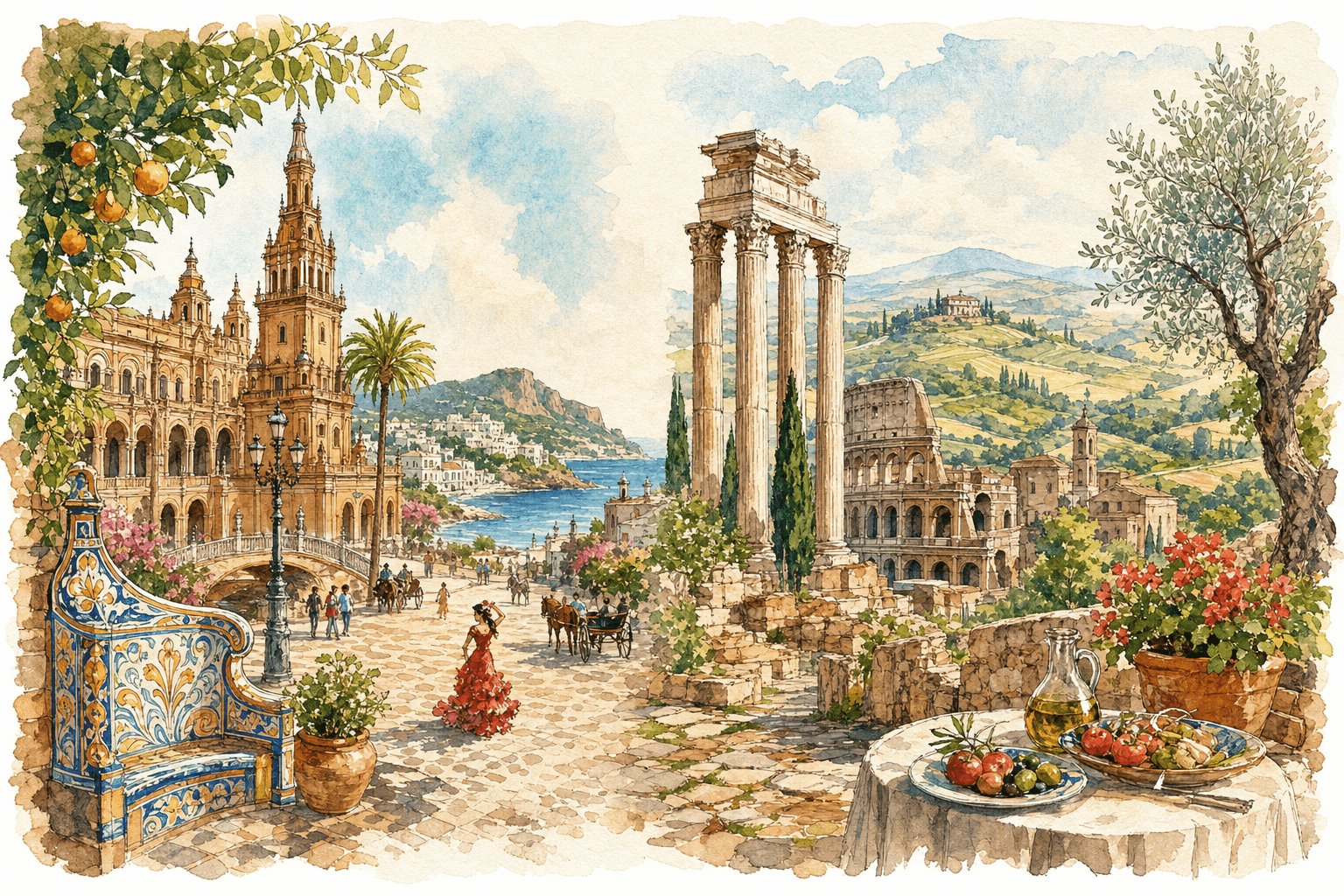
La Spagna è molto più di una destinazione; È un'esperienza vibrante che si vive con i cinque sensi. È un paese dai contrasti spettacolari, dove la storia antica di romani, visigoti e arabi convive con l'avanguardia artistica e la modernità. Dalle verdi montagne del nord alle spiagge dorate del sud, passando per la sobrietà dell'altopiano castigliano e il trambusto delle sue città cosmopolite, la Spagna ti invita a un viaggio indimenticabile. Preparati a scoprire una cultura forgiata dalla passione, una gastronomia che ti fa innamorare e una città il cui calore e gioia di vivere sono la sua migliore lettera di presentazione. Questo è un paese da esplorare senza fretta, da assaporare, da sentire.
Capitale
Madrid
Popolazione
47.519.628
Lingua
Español, Catalán, Gallego, Euskera
Siti patrimonio dell'UNESCO
50
Indici di viaggio
Punteggi basati su dati reali da 0 a 100
Il meglio di Spagna
Esperienze uniche
Scegli Tapas: gastronomia in miniatura
La tapa è una religione in Spagna. Non è solo mangiare, è socializzare. Consiste nel andare di bar in bar, assaggiando piccole porzioni di delizie culinarie accompagnate da una birra, un vino o un vermouth. Città come Granada, León, Logroño o San Sebastián sono templi delle tapas. È il modo più autentico per immergersi nella vita locale, condividendo conversazioni e risate e scoprendo a piccoli bocconi la ricchezza gastronomica del Paese.
Vivi la passione del flamenco
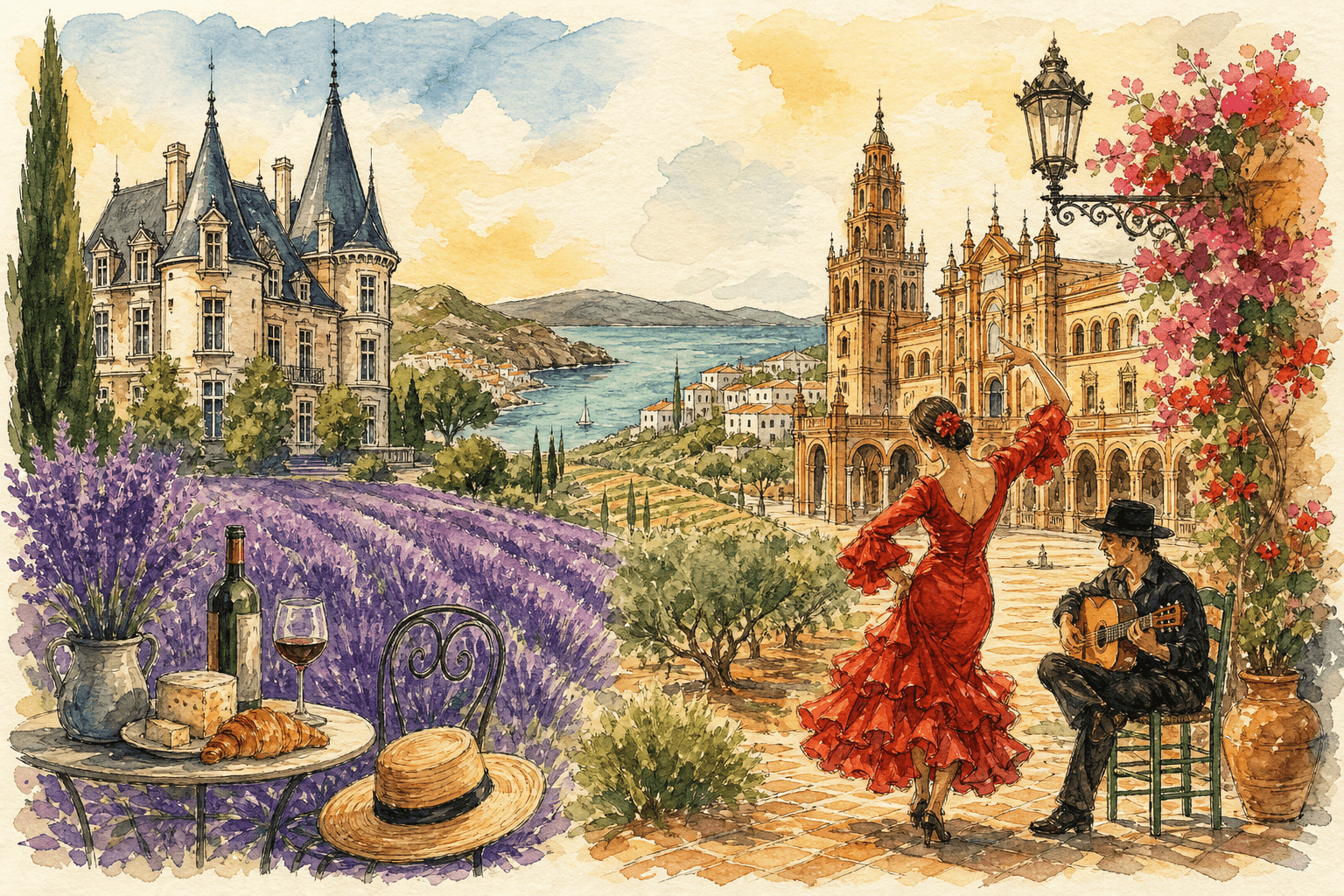
Nato nel cuore dell'Andalusia, il flamenco è un'arte viscerale che esprime le emozioni più profonde dell'animo umano: amore, dolore, gioia, tragedia. Assistere ad uno spettacolo in un tablao a Siviglia, Jerez de la Frontera o nel quartiere Sacromonte a Granada è un'esperienza catartica. Il quejío del canto, il virtuosismo della chitarra e la forza della danza vi lasceranno senza fiato.
Scopri il patrimonio di Al-Andalus
Per quasi otto secoli gran parte della penisola fu sotto il dominio musulmano. Questa eredità, conosciuta come Al-Andalus, ha lasciato un patrimonio architettonico e culturale di incalcolabile valore. La Moschea-Cattedrale di Cordoba, con la sua foresta di colonne; l'Alhambra di Granada, un palazzo da sogno; e la Giralda di Siviglia sono i fiori all'occhiello di un patrimonio che si respira nei cortili fioriti, nelle strade imbiancate e nella gastronomia del sud.
Perdersi in una Festa Popolare
La Spagna è un paese di partiti. Ogni paese, ogni città, ha la sua festa che riempie le strade di musica, colori e tradizione. Dall'esplosione di fuoco e polvere da sparo di Las Fallas a Valencia, passando per la solennità e l'arte della Settimana Santa di Siviglia o Zamora, fino alla battaglia del vino di Haro o alla famosa Tomatina di Buñol. Vivere una festa popolare significa comprendere la gioia e la devozione del popolo spagnolo.
Percorri una sezione del Camino de Santiago
Che sia per motivi spirituali, sportivi o culturali, il Cammino di Santiago è uno dei percorsi di pellegrinaggio più importanti del mondo. Camminare, anche un piccolo tratto, permette di entrare in contatto con la natura, scoprire borghi medievali dal fascino unico ed entrare a far parte di una comunità di pellegrini provenienti da tutto il mondo. Il paesaggio cambia drasticamente dai Pirenei alla maestosa Cattedrale di Santiago de Compostela.
Esplora un mercato locale
Visitare un mercato come La Boquería a Barcellona o il Mercado de San Miguel a Madrid è una festa per i sensi. È il luogo perfetto per vedere, annusare e gustare la qualità dei prodotti locali, dalla frutta esotica al pesce fresco, ai prosciutti e ai formaggi. È un vibrante microcosmo della vita e della gastronomia spagnola.
Una festa per il palato
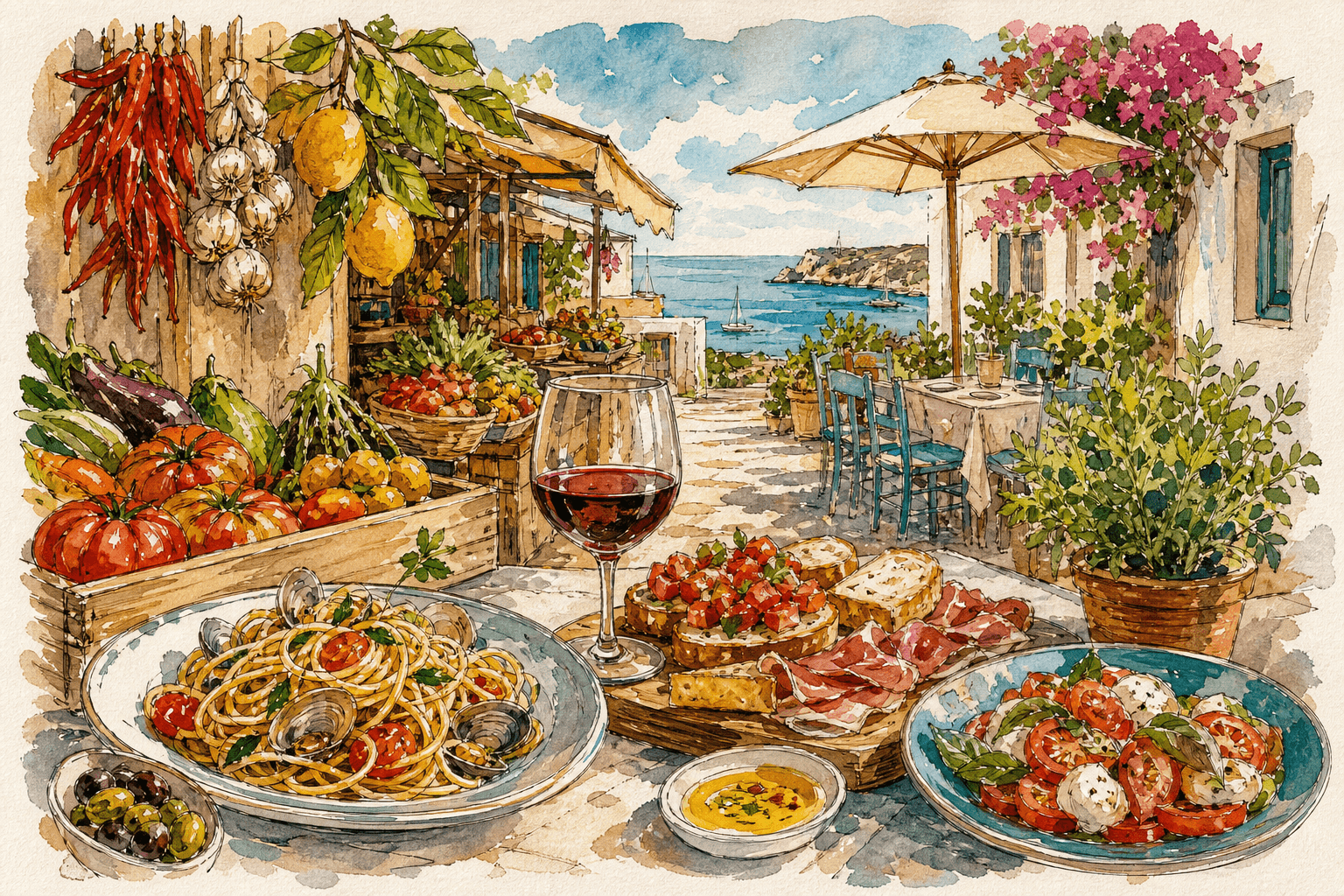
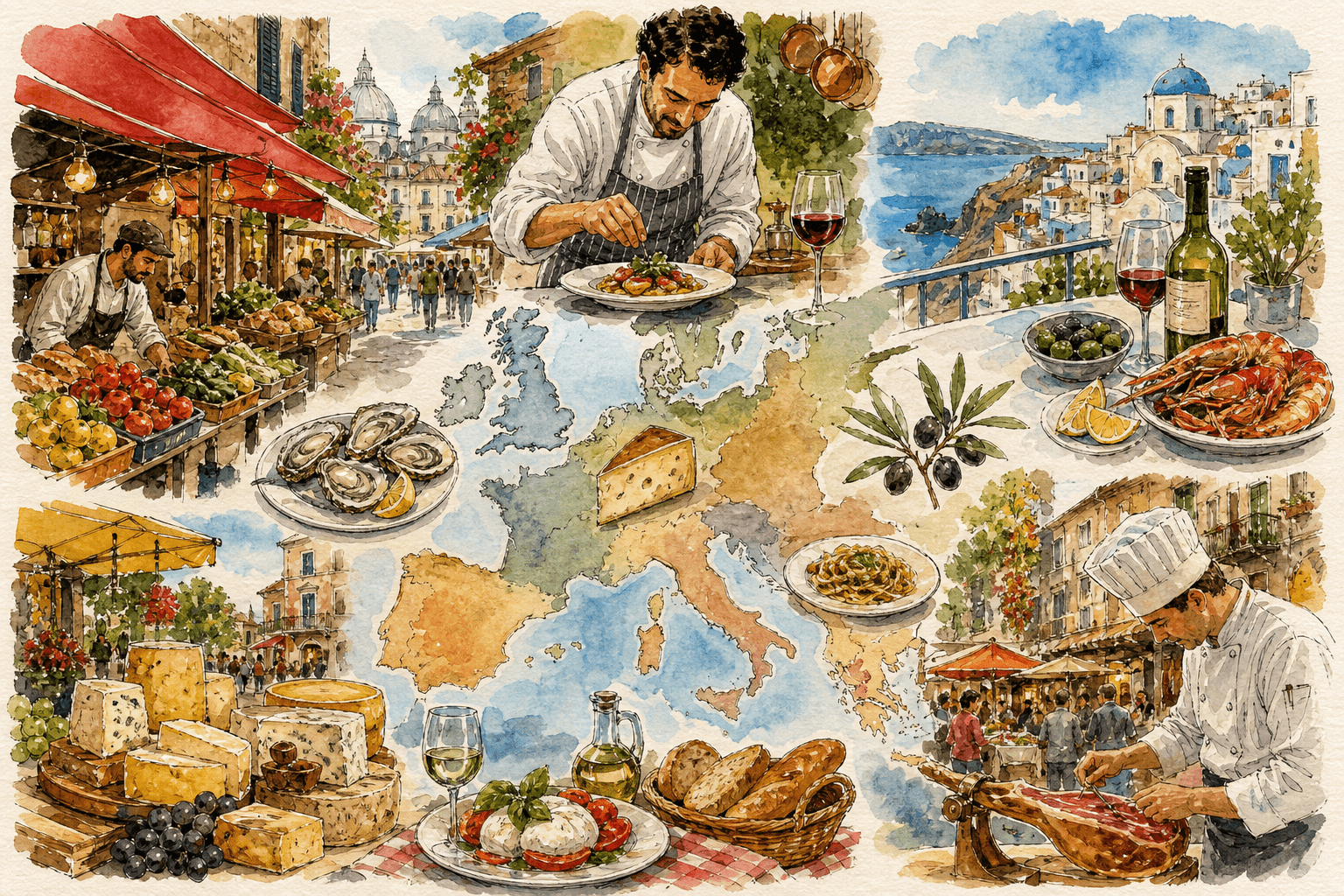
Parlare di Spagna significa parlare di cibo. La gastronomia è una parte fondamentale della cultura, basata sulla dieta mediterranea, sulla qualità dei suoi prodotti e su una sorprendente diversità regionale. Ogni regione è un universo culinario da scoprire, ma ci sono dei pilastri che definiscono la cucina spagnola nel suo insieme.
Prossimità e stagionalità del prodotto
La cucina spagnola si basa sull'utilizzo di ingredienti freschi e di stagione. L'olio extra vergine di oliva è oro liquido ed è la base di quasi tutto. I frutteti forniscono frutta e verdura eccezionali, i mari forniscono pesce e frutti di mare freschi e i pascoli forniscono il miglior maiale iberico.
Il cibo come atto sociale
I pasti sono eventi lunghi e sociali. Il dopocena, quell'abitudine di restare a chiacchierare a tavola dopo aver mangiato, è sacro. Le tapas, i pasti domenicali in famiglia o le cene con gli amici sono rituali che rafforzano i legami.
Piatti Iconici
Prosciutto Iberico
Il gioiello della corona. Proveniente da maiali iberici allevati liberamente al pascolo, il suo sapore, aroma e consistenza sono inimitabili. Tagliato a mano a fettine sottili, è una prelibatezza che si scioglie in bocca. La 'ghianda' è la massima espressione di qualità.
Paella Valenciana (e altri piatti a base di riso)
Anche se la paella autentica è quella valenciana (con pollo, coniglio e verdure), la Spagna è il paese del riso. Dal riso nero con calamari, al riso con fascia di pesce, al brodo con aragosta. È un piatto di festa, da condividere la domenica in famiglia o con gli amici.
Frittata Di Patate
Il piatto umile che conquista tutti i cuori. Una combinazione semplice ma deliziosa di uova, patate e, per l'eterno dibattito nazionale, con o senza cipolla. Succoso dentro, dorato fuori, può essere gustato come tapa, come panino o come piatto unico in ogni momento della giornata.
Gazpacho e Salmorejo
Zuppe fredde del sud, perfette per l'estate. Il gazpacho andaluso è una zuppa liquida di pomodoro, peperone, cetriolo e aglio. Il salmorejo di Cordoba è più denso e cremoso, preparato principalmente con pomodoro e pane, e viene solitamente servito con scaglie di prosciutto e uova sode.
Polpo alla Galizia (Polbo á Feira)
Un classico galiziano che si è diffuso in tutto il paese. Il polpo viene cotto finché è tenero, tagliato a fette e servito su una base di patate cotte, condite generosamente con paprika, sale grosso e olio extravergine di oliva. Semplice, rustico e delizioso.
Gamberetti All'Aglio
Una delle tapas più popolari e deliziose. Si compone di gamberi freschi saltati a fuoco vivo in una pentola di terracotta con abbondante olio d'oliva, aglio a fettine e peperoncino. Viene servito frizzante ed è perfetto per inzuppare il pane.
Bevande tipiche
Venni
La Spagna è una potenza vinicola mondiale. Denominazioni di origine come Rioja e Ribera del Duero sono famose per i loro rossi robusti. Ruota attorno ai bianchi freschi, al Jerez per i vini liquorosi unici al mondo e al Penedès per il Cava, lo spumante spagnolo.
Sangria e Tinto de Verano
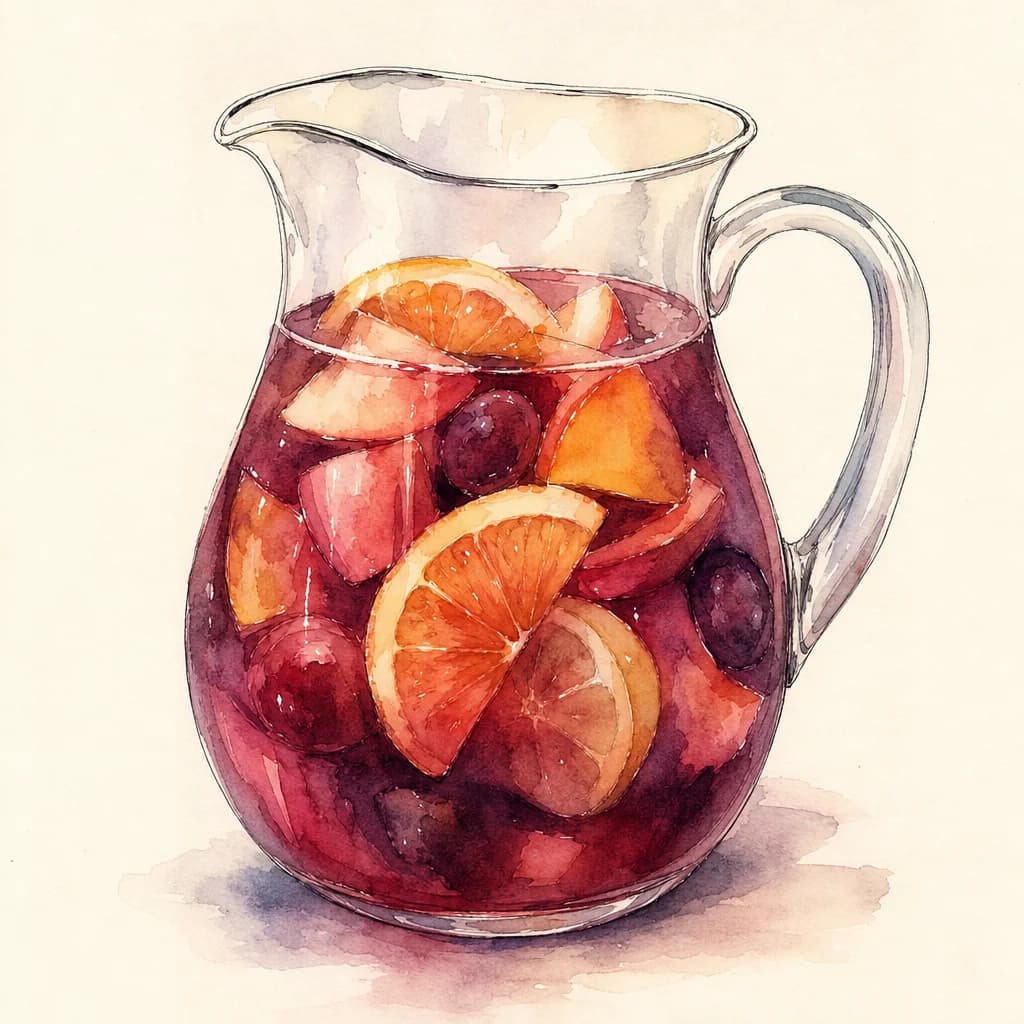
La bevanda estiva per eccellenza. La sangria è una preparazione a base di vino rosso, frutta tritata, un liquore e zucchero. Tinto de Verano è più semplice e rinfrescante: vino rosso mescolato con soda o soda al limone.
Sidro
La bevanda emblematica delle Asturie e dei Paesi Baschi. È una bevanda a basso contenuto alcolico a base di mela fermentata. Nelle Asturie, il rito dell'escanciarla (servirlo dall'alto per ossigenarlo) è uno spettacolo.
Vermut
L'antipasto per eccellenza, soprattutto nei fine settimana prima di mangiare. Questo vino aromatizzato viene tradizionalmente servito con ghiaccio e una fetta di arancia o un'oliva. L'ora del vermouth è un'istituzione sociale in molte città.
Dolci Tradizionali
Churros al cioccolato
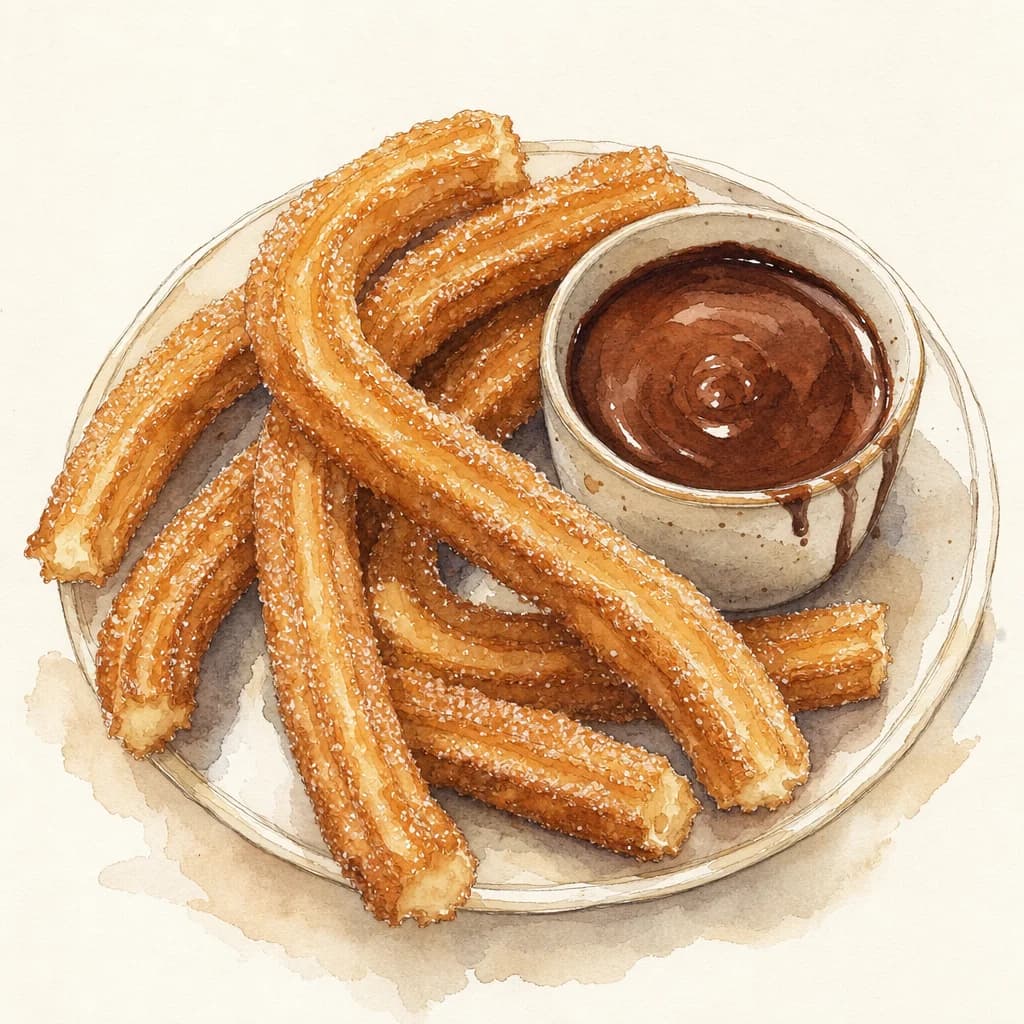
La colazione o lo spuntino perfetto, soprattutto nelle giornate fredde. I churros sono un impasto fritto, croccante fuori e tenero dentro, che viene immerso in una tazza di cioccolata calda e densa. Una delizia che crea dipendenza.
Crema Catalana
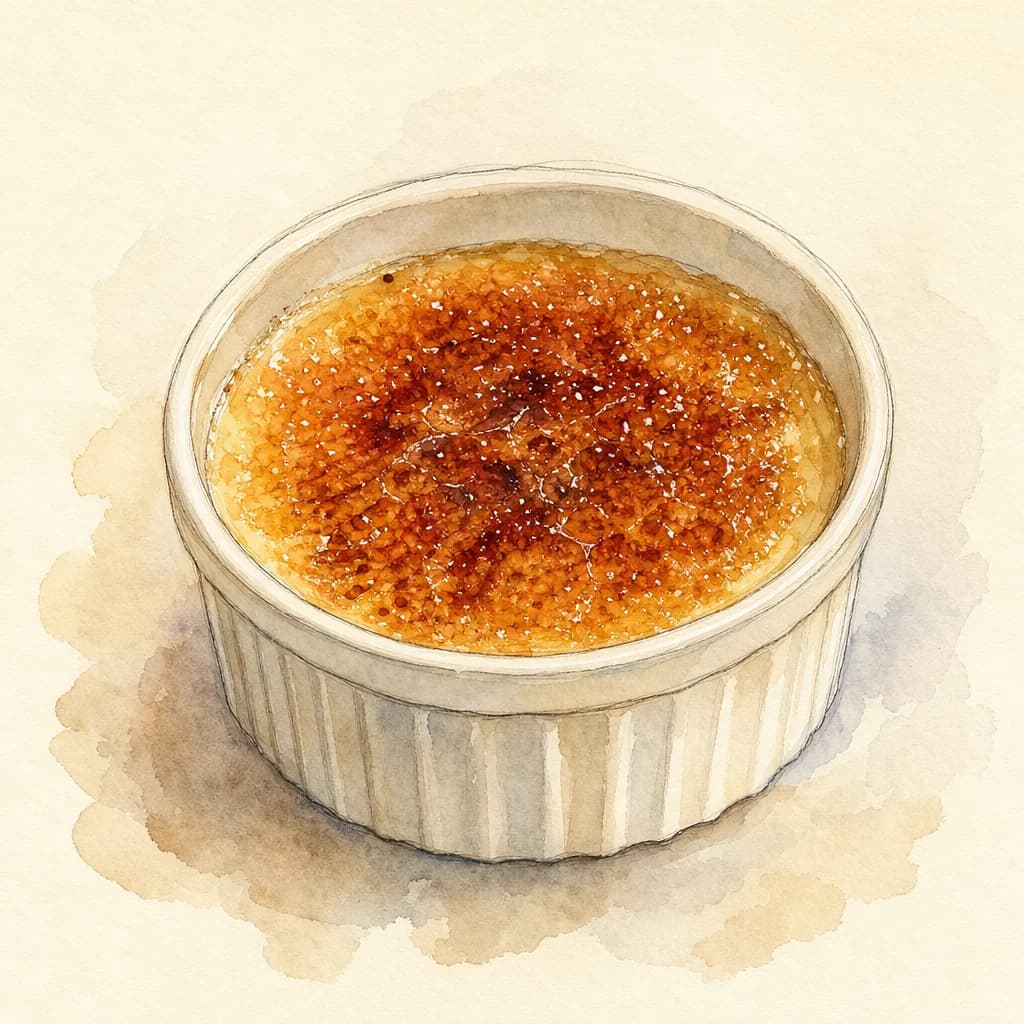
Un dessert simile alla crème brûlée francese, ma con un tocco agrumato di limone e cannella. È costituita da una crema pasticcera ricoperta da uno strato di zucchero caramellato che viene spezzato con un cucchiaio. È il dolce protagonista della Catalogna.
Torta di Santiago
Una torta densa e umida a base di mandorle tritate, senza farina, tipica della Galizia. Si riconosce facilmente dalla Croce di Santiago cosparsa di zucchero a velo sulla sua superficie.
Budino di riso
Un classico dolce fatto in casa, cremoso e confortante. Si prepara cuocendo lentamente il riso nel latte con zucchero, bastoncini di cannella e scorza di limone. Viene servito freddo e spesso è cosparso di cannella in polvere.
Cosa vedere per tema
La ricchezza della Spagna risiede nella sua incredibile varietà. Successivamente, vi suggeriamo di esplorare il Paese attraverso diversi argomenti che vi porteranno a scoprirne le molteplici sfaccettature.
Città Monumentali con Storia
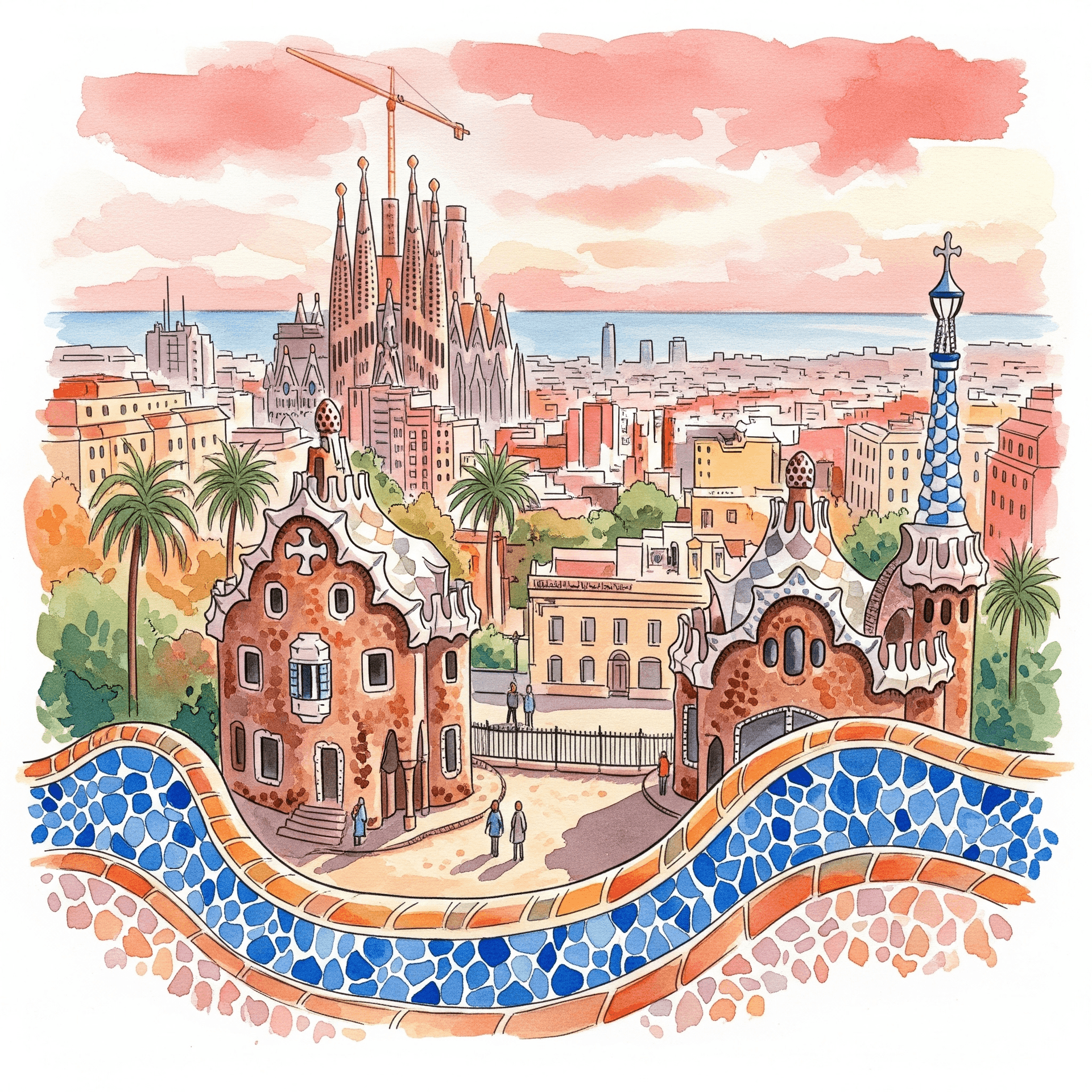
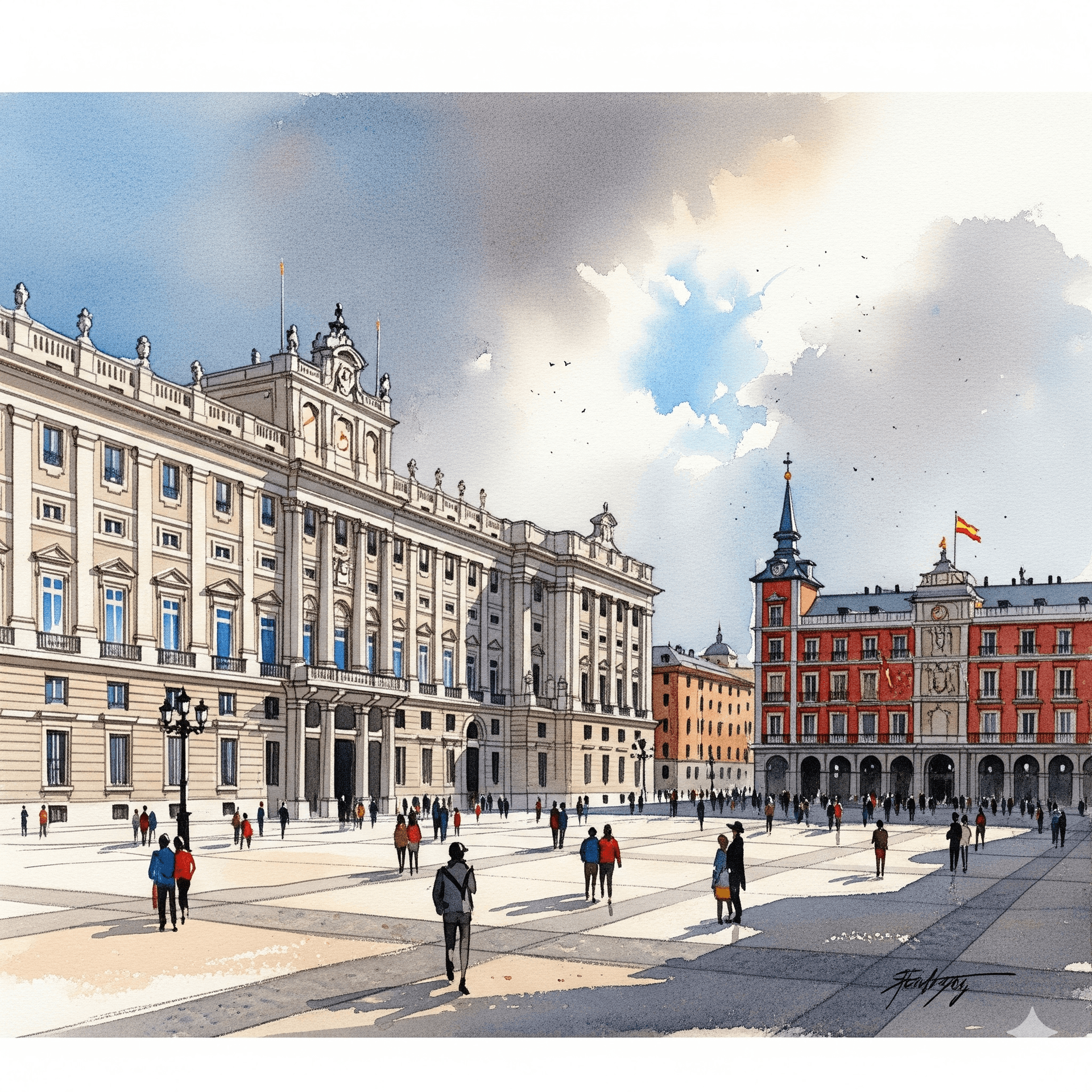
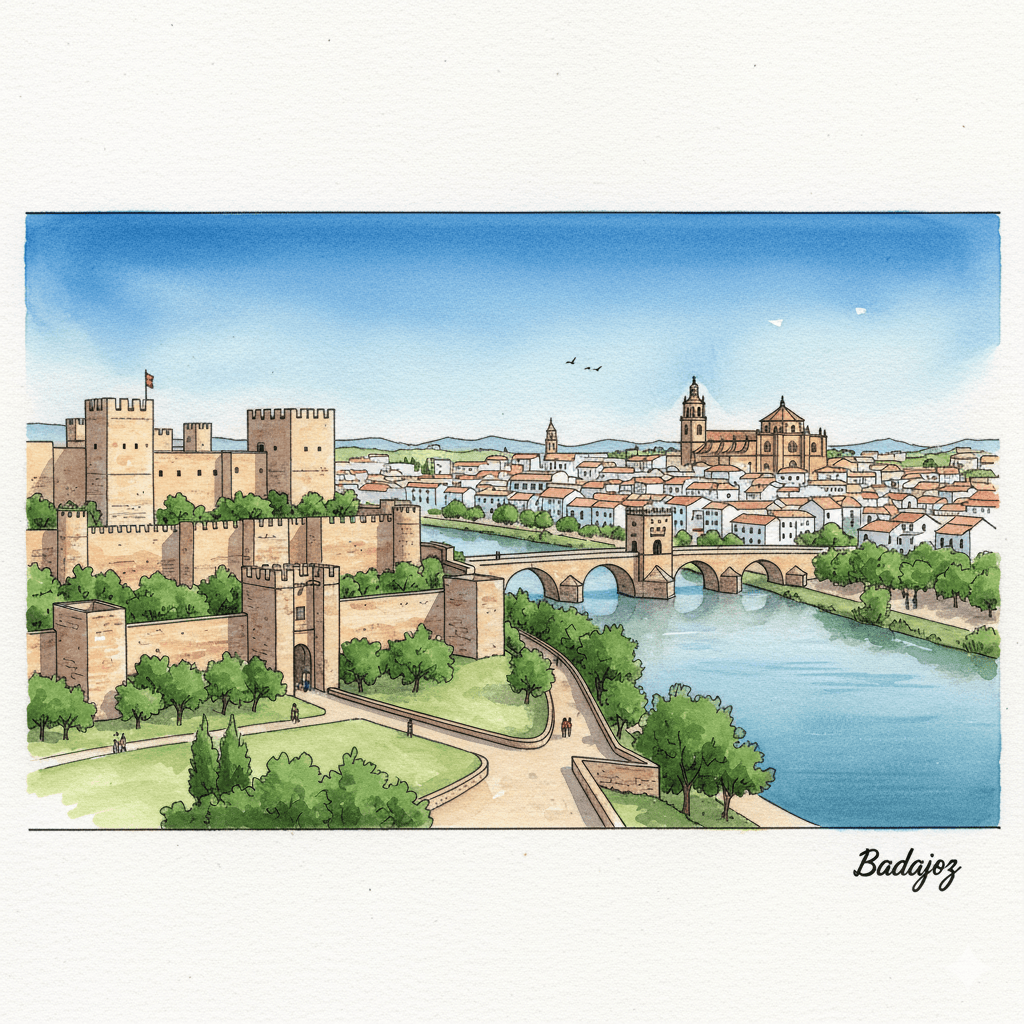
La Spagna è costellata di città che sono autentici musei a cielo aperto. Madrid, la vibrante capitale, con il suo Triangolo dell'Arte. Barcellona, la capitale del modernismo di Gaudí. Siviglia, il cuore dell'Andalusia, con il suo fascino del flamenco. Oltre ai grandi, gioielli come Toledo (la città delle tre culture), Salamanca (con la sua università d'oro), Segovia (con il suo acquedotto romano) o Santiago de Compostela (destinazione dei pellegrini) ti trasporteranno in altri tempi.
Coste e Spiagge per Tutti i Gusti
Con quasi 8.000 chilometri di costa, c'è una spiaggia per ogni viaggiatore. Il Mediterraneo offre di tutto, dalle calette nascoste della Costa Brava e delle Isole Baleari (Maiorca, Minorca, Ibiza) alle estese spiagge sabbiose della Costa del Sol. L'Atlantico meridionale, sulla Costa de la Luz, è un paradiso per il windsurf. Il nord, bagnato dal Mar Cantabrico, presenta paesaggi selvaggi e spettacolari, come la Playa de las Catedrales in Galizia o le spiagge da surf dei Paesi Baschi e della Cantabria. E non possiamo dimenticare le Isole Canarie, con le loro spiagge di sabbia nera vulcanica e il clima primaverile tutto l'anno.
Natura selvaggia e parchi nazionali
La Spagna è uno dei paesi con la maggiore biodiversità in Europa. I Picos de Europa offrono uno spettacolare paesaggio alpino tra Asturie, Cantabria e León. Il Parco Nazionale di Ordesa e Monte Perdido, nei Pirenei, è un paradiso per l'escursionismo. Il Parco Nazionale di Doñana, in Andalusia, è una zona umida cruciale per gli uccelli migratori. Nelle Isole Canarie, il Parco Nazionale del Teide ospita la vetta più alta della Spagna e un paesaggio vulcanico che sembra provenire da un altro pianeta.
Itinerari culturali e di pellegrinaggio
Esplorare la Spagna attraverso i suoi itinerari storici è un modo meraviglioso per conoscerla. Il più famoso è il Cammino di Santiago. La Vía de la Plata segue un'antica strada romana da Siviglia ad Astorga. L'Itinerario del Don Chisciotte ti porta attraverso i paesaggi della Mancia che hanno ispirato Cervantes. E i Castelli e le Strade del Vino ti immergono nella storia e nell'enologia del paese.
Arte, Architettura e Musei
Il patrimonio artistico spagnolo è immenso. Il Triangolo dell'Arte di Madrid (Musei Prado, Reina Sofía e Thyssen-Bornemisza) è un must per gli amanti della pittura. Il Museo Guggenheim di Bilbao è un'icona dell'architettura contemporanea. L'eredità di geni come Gaudí a Barcellona, Picasso a Malaga e Dalí a Figueres può essere esplorata nelle rispettive città e musei.
Le città bianche e affascinanti
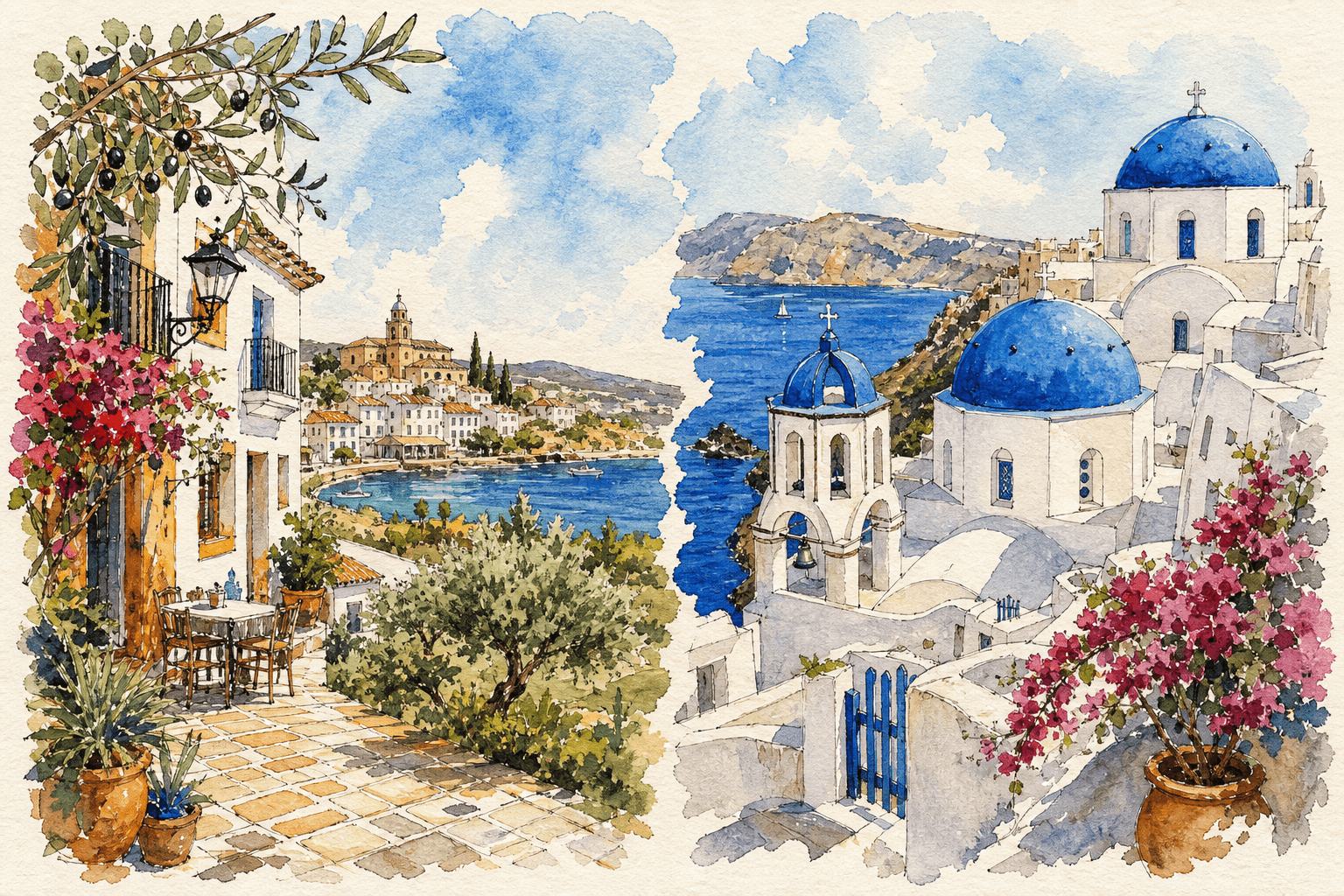
Al di là delle grandi città, l'essenza della Spagna si trova nei suoi paesi. I "Villaggi Bianchi" dell'Andalusia, con le loro case bianche e le strade piene di fiori, sono cartoline viventi. Borghi medievali come Albarracín in Aragona, Cudillero nelle Asturie o Santillana del Mar in Cantabria sembrano fermi nel tempo e offrono un'esperienza più tranquilla e autentica.
Consigli di viaggio
Orari
Gli spagnoli vivono più tardi rispetto al resto d'Europa. Il pranzo è solitamente tra le 14:00 e le 14:00. e 15:30, e la cena non prima delle 21:00. Molti piccoli negozi chiudono a mezzogiorno (la famosa 'siesta'), anche se le grandi catene e i centri commerciali di solito hanno orario continuato.
Trasporto interno
Muoversi in Spagna è facile. La rete dei treni ad alta velocità (AVE) collega le principali città in modo rapido ed efficiente. C'è anche una rete di autobus estesa ed economica. Per raggiungere le isole ci sono numerosi voli interni e traghetti.
Lingua
La lingua ufficiale è il castigliano (spagnolo). Tuttavia, in alcune comunità autonome esistono altre lingue coufficiali, come il catalano in Catalogna, il galiziano in Galizia e il basco nei Paesi Baschi. Nelle zone turistiche è comune trovare persone che parlano inglese.
Suggerimenti
La mancia non è obbligatoria come in altri paesi. Il servizio è già incluso nel conto. Tuttavia, se il servizio è stato molto buono, è consuetudine lasciare una piccola mancia (solitamente arrotondando il conto o lasciando qualche moneta) in segno di gratitudine.
Questa guida è solo l'antipasto di tutto ciò che la Spagna ha da offrire. Ognuna delle sue 17 comunità autonome è un mondo a sé, con la propria cultura, gastronomia, paesaggi e tradizioni. Vi invitiamo ad immergervi nelle guide specifiche per ogni regione per pianificare un viaggio su misura e scoprire i segreti meglio custoditi di questo affascinante Paese. Buon viaggio!
Caricamento forse...
Mappa interattiva
Esplora le diverse regioni di Spagna
Explore Regions of Spagna
Discover the most beautiful regions and plan your perfect trip
Andalucía
Andalucía offers distinctive landscapes, culture and experiences in Spagna.
Aragón
Aragón offers distinctive landscapes, culture and experiences in Spagna.
Asturias
Asturias offers distinctive landscapes, culture and experiences in Spagna.
Cantabria
Cantabria offers distinctive landscapes, culture and experiences in Spagna.
Principali città
Scopri le città più affascinanti e il loro fascino unico
Pianificatore di viaggio
Crea il tuo itinerario perfetto
Caricamento...
Il tuo profilo viaggiatore
Scopri il tuo stile di viaggio
Caricamento...