宛先を読み込んでいます...
宛先を読み込んでいます...
宛先を読み込んでいます...
宛先を読み込んでいます...
宛先を読み込んでいます...
宛先を読み込んでいます...

Conoce la conectividad, el coste y la vida cotidiana para nómadas digitales en Salvador.
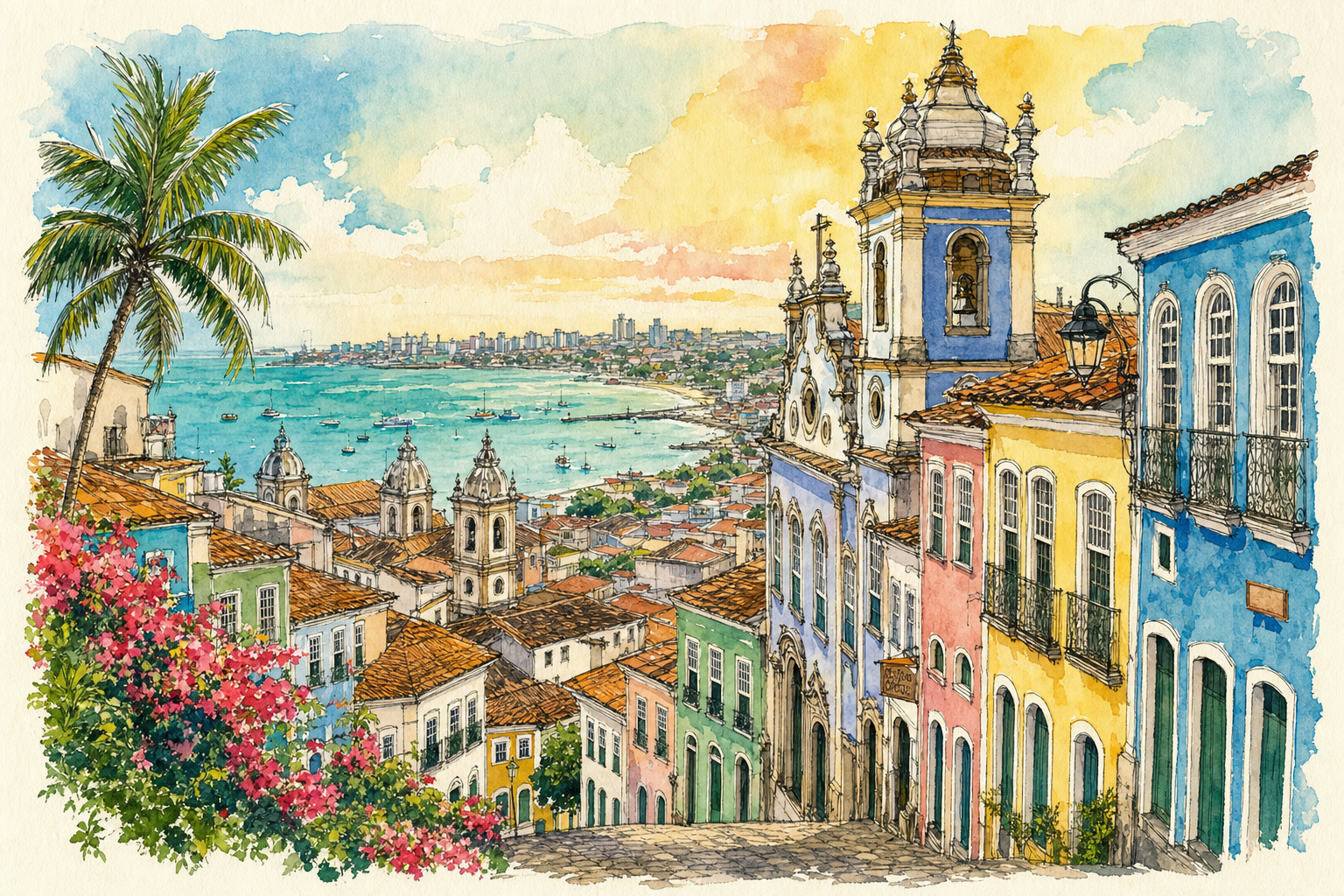
Salvador, the capital of Brazil's northeastern state of Bahia, is known for its Portuguese colonial architecture, Afro-Brazilian culture, and a tropical coastline. The historic Pelourinho neighborhood is a UNESCO World Heritage site, famous for its colorful buildings and cobblestone alleys.
Salvador offers wifi cafés and a few coworking spaces in Barra and Rio Vermelho, but the infrastructure for digital nomads is less developed than in São Paulo or Florianópolis.
デジタルノマド評価:60/100
Visiting Salvador is relatively inexpensive compared to other large Brazilian cities such as Rio de Janeiro or São Paulo. Costs vary depending on the type of tourism, but in general it offers affordable options for travelers with different budgets.
Salvador Conectada, municipal public Wi-Fi
In Salvador and other cities across Bahia, state and municipal governments have installed free Wi-Fi hotspots in squares, parks, transport terminals, and other public spaces in the historic center. Access is also available in libraries, cultural centers, and some public facilities. In most cases you just need to accept the terms on the login page. Many cafés, restaurants, and hotels also offer free Wi-Fi for customers. For better mobile coverage, consider a local SIM from Brazilian carriers such as Vivo, Claro, or TIM.
The main mobile carriers in Salvador and Brazil are Vivo, Claro, and TIM. These providers offer extensive 4G and 5G coverage with prepaid SIM cards suitable for tourists. SIM cards can be purchased at the airport, official stores, and many convenience shops.
追加費用をかけずにSalvadorを発見する
Strong value for money. You can travel comfortably without a high budget.
カテゴリ別スコア
Salvador offers wifi cafés and a few coworking spaces in Barra and Rio Vermelho, but the infrastructure for digital nomads is less developed than in São Paulo or Florianópolis.
Strong value for money. You can travel comfortably without a high budget.
Salvador has an extensive bus network, a two-line metro, and ferries to Itaparica, though traffic and poor signage can complicate getting around.
Visit the Ribeira neighborhood at sunset to try the traditional ice cream at Ribeira Sorvetes with a view over the Bay of All Saints.
Avoid the heaviest rains (November to March if you want fewer downpours, or book ahead if traveling during Carnival) and visit Pelourinho early in the morning to enjoy it without the crowds.
The official language is Portuguese. Useful phrases include 'Onde fica...?' (Where is...?), 'Obrigado/a' (Thank you), and 'Por favor' (Please). English is limited outside hotels and tour agencies.
Bahians are very warm and expressive; it's common to greet with a handshake or a kiss on the cheek in informal settings.
Salvador has good public and private hospitals. For urgent medical care, it's advisable to go to a private hospital if you have travel insurance.
Pharmacies are abundant in urban areas, with many open 24 hours in Barra and Pituba. Always carry basic medications and mosquito repellent.
Salvador, like most large Brazilian cities, requires the usual precautions: avoid displaying valuables, jewelry, or expensive cameras on the street, especially in the historic center and on public transport.
It's advisable to avoid outlying neighborhoods and quiet beaches after sunset, and to stick to the well-lit tourist areas of Pelourinho, Barra, and Rio Vermelho at night.