宛先を読み込んでいます...
宛先を読み込んでいます...
宛先を読み込んでいます...
宛先を読み込んでいます...
宛先を読み込んでいます...
宛先を読み込んでいます...
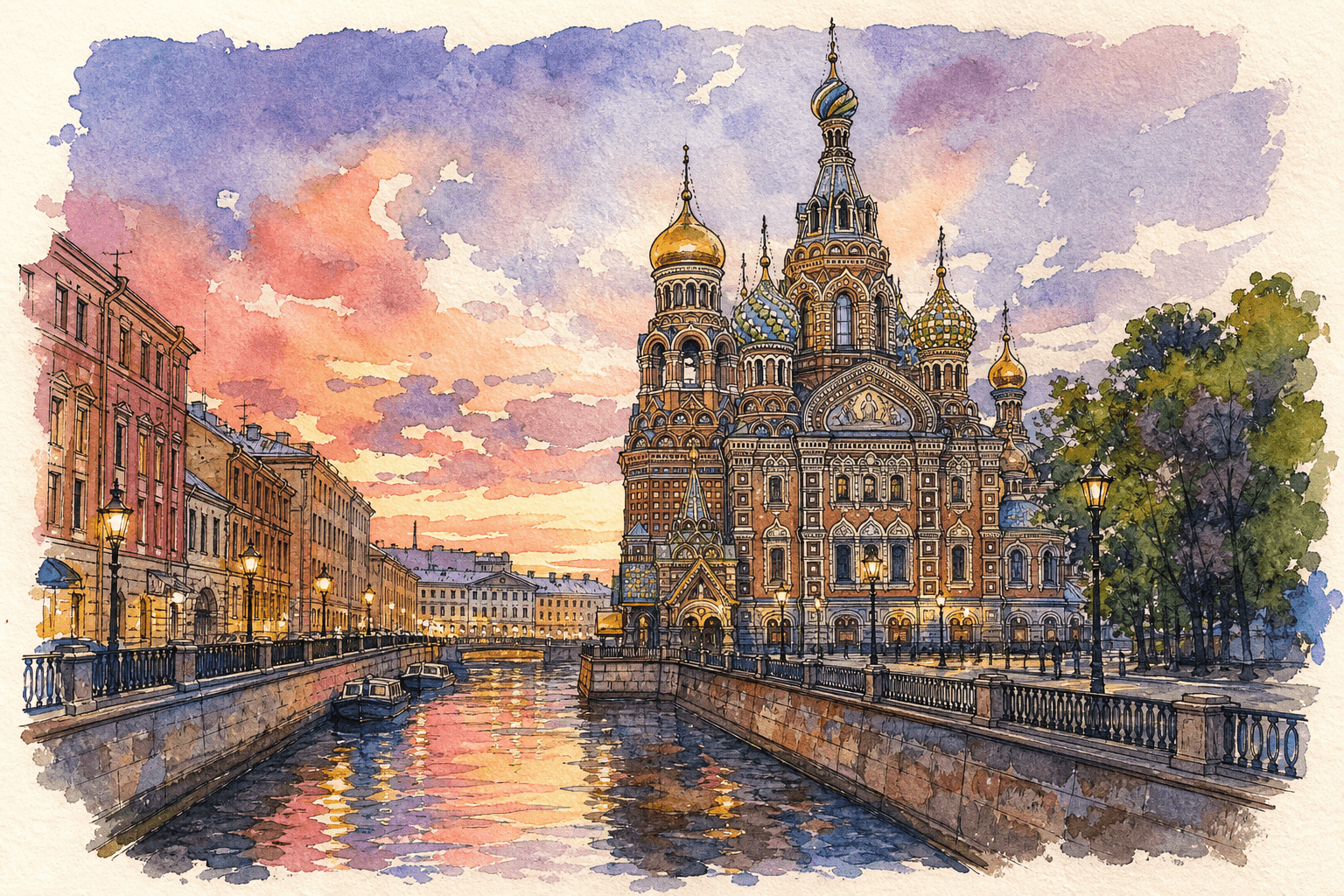
Sumérgete en la rica historia y cultura de Saint Petersburg a través de sus museos y monumentos.
St. Petersburg, the dazzling former imperial capital of Russia, is a city of breathtaking beauty and grandeur. Built on the Neva River delta by Tsar Peter the Great as his 'window to Europe', it is an open-air museum of baroque palaces, monumental cathedrals and elegant canals. From the endless splendor of the Hermitage Museum to the magic of summer's White Nights, St. Petersburg is a treasure trove of art, history and culture that evokes the opulence and drama of Tsarist Russia.

Saint Petersburgの豊かな歴史、芸術、伝統を発見してください。
The cultural capital of Russia. Home to one of the largest museums in the world, the legendary Mariinsky ballet and the heritage of literary greats.
One of the largest and most prestigious art museums in the world. Housed in the spectacular Winter Palace, the former residence of the Tsars, its collection ranges from prehistory to 20th century European art.
A stunning neo-Russian style church built on the site where Tsar Alexander II was assassinated. Its interior is completely covered by more than 7,500 square meters of mosaics.
Known as the 'Russian Versailles'. A spectacular complex of palaces and gardens founded by Peter the Great, famous for its Great Waterfall, a system of more than 150 fountains and golden statues.
The sumptuous summer residence of the tsars in the city of Pushkin. Famous for its baroque façade and, above all, for the legendary and reconstructed Amber Room.
An arts festival that fills the city with opera, ballet and classical music to celebrate the summer solstice.
A huge public spectacle with fireworks and a boat with red sails, celebrating the end of the school year.
Founded in 1703 by Tsar Peter the Great on territory recently conquered from Sweden, the city was built from scratch by European architects and engineers. Conceived as a modern city, with grid planning and canals, it became the capital of Russia in 1712, taking the status away from Moscow.
During the 18th and 19th centuries, Saint Petersburg flourished as the center of power and culture of the Russian Empire. The tsars and aristocracy embellished it with sumptuous palaces, theaters and cathedrals, such as the Winter Palace and St. Isaac's Cathedral. It was the setting for the great literature of Pushkin and Dostoevsky.
The city was the birthplace of the Russian Revolution of 1917, after which the capital returned to Moscow. Renamed Petrograd and then Leningrad, it suffered the brutal 900-day Siege during World War II, one of the longest and most destructive in history. After the fall of the Soviet Union, it regained its original name and has been meticulously restored, reaffirming its status as the cultural capital of Russia.
カテゴリ別スコア
The cultural capital of Russia. Home to one of the largest museums in the world, the legendary Mariinsky ballet and the heritage of literary greats.
It was the capital of the vast Russian Empire for two centuries and the scene of the revolution that changed the world in the 20th century.
One of the most beautiful cities in the world. A planned and harmonious urban complex of baroque and neoclassical palaces, canals and bridges that is unsurpassed.
The center of St. Petersburg is full of connecting courtyards ('prokhodnye dvory'). Entering them is discovering a hidden world of cafes, bars and the real life of the city, far from the grandeur of the facades.
Some small museums recreate the 'kommunalkas', the communal apartments of the Soviet era. It is a fascinating insight into the city's social history.
Going to the ballet or the opera is an important part of cultural life. People dress elegantly for the occasion. A tuxedo is not necessary, but avoid clothing that is too casual.
Even in the dead of winter, it is a sign of respect to remove your glove before shaking hands.
The cold in winter is a serious matter. You will need well-insulated shoes, a hat, gloves and a quality coat. The humid wind makes the thermal sensation much lower.
It is not recommended to drink tap water. Drink bottled water.
In summer, the bridges over the Neva are raised at dawn (approximately from 1:30 to 5:00 a.m.) and leave the islands cut off. Plan your night or you'll be stuck until morning.
As in Moscow, visa registration is mandatory within 7 business days of arrival. The hotel does it for you. Always carry your passport and registration.