Bestemming laden...
Bestemming laden...
Bestemming laden...
Bestemming laden...
Bestemming laden...
Bestemming laden...

Sumérgete en la rica historia y cultura de Thessaloniki a través de sus museos y monumentos.
Thessaloniki, the second largest city in Greece, is a cultural and historical destination of great importance. Founded in 315 BC. by Cassander, has been a communications hub between the West and the East for centuries. The city has been influenced by various civilizations, including Macedonians, Romans, Byzantines, Arabs and Ottomans, which is reflected in its rich architectural and cultural heritage. Thessaloniki is known for its ancient buildings, churches, monasteries and mosques, some of which are UNESCO World Heritage Sites. The city also houses important museums that tell its ancient history. In the 20th century, Thessaloniki suffered a major fire in 1917 and was liberated from the Ottomans in 1912. Today, it is a commercial and business center, and its International Fair is one of the largest in Greece. The city has a population of approximately 800,000 inhabitants in its urban area and more than one million in its metropolitan area.
TripMatches · Onthouden · Plan
Ben jij al geweest of wil je nog graag gaan? Maak uw keuze en wij brengen u direct naar de actie.
Importeer uw reis naar Thessaloniki en sla op wat u hebt meegemaakt.
Reis importerenBewaar Thessaloniki onder uw bestemmingen of start een nieuw abonnement.
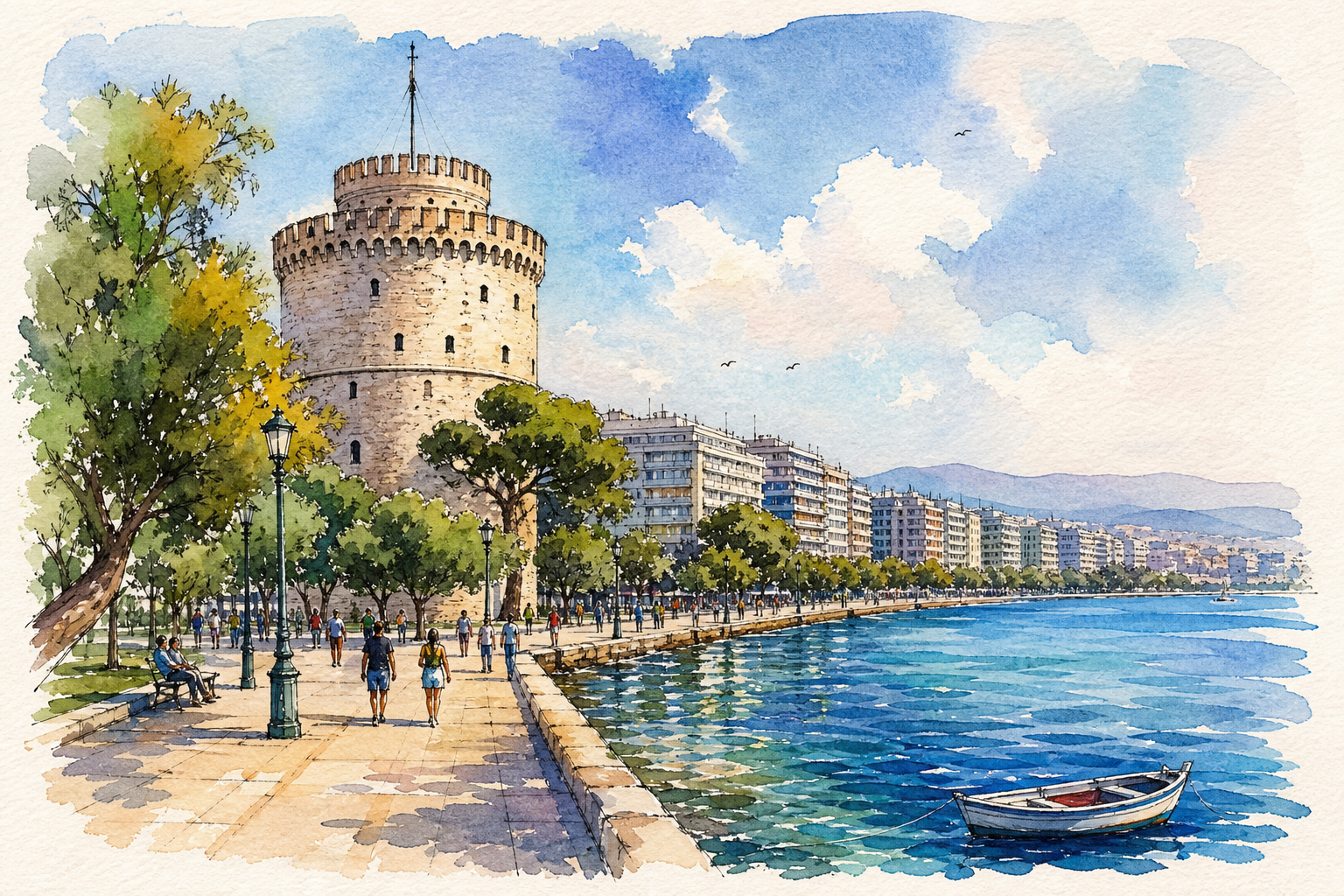
Ontdek de rijke geschiedenis, kunst en tradities van Thessaloniki
Thessaloniki is a vibrant cultural center with numerous festivals, museums and an active arts scene reflecting its rich history and diversity.
Museum dedicated to the preservation and exhibition of Byzantine art and history in Thessaloniki and Macedonia. It houses mosaics, icons, manuscripts and archaeological objects that illustrate the cultural wealth of the Byzantine period.
Museum that houses a wide collection of Macedonian archaeological artifacts, including the famous Derveni papyrus, considered the oldest manuscript found. It exhibits objects from prehistory to classical antiquity.
A major international trade fair featuring exhibitions across multiple industries such as technology, agriculture, and tourism.
A prominent film festival showcasing Greek and international cinema.
A cultural festival honoring Saint Demetrius, featuring music, theater, dance, and art exhibitions.
Thessaloniki was founded in 315 BC. by Cassander, a general of Alexander the Great, who gave him the name of his wife, Thessalonika. The city developed rapidly under the Roman Empire, especially with the construction of the Via Egnatia. During the Byzantine Empire, it became a political, economic and cultural center of great importance.
In the Middle Ages, Thessaloniki was an important center of the Byzantine Empire. In the 15th century, it was conquered by the Ottomans, who transformed churches into mosques. The city became a center of Sephardic Judaism after the arrival of Jews expelled from Spain in 1492. In the 20th century, the city was liberated from the Ottomans in 1912 and suffered a major fire in 1917.
In the 20th century, Thessaloniki experienced significant urban growth. During World War II, the city suffered under German occupation, and the Sephardic Jewish community was nearly exterminated. In the postwar period, the city was transformed urbanly and became a commercial and business center. Today, Thessaloniki is a modern and lively city, with a major international fair and a rich cultural heritage.
Scores per categorie
Thessaloniki is a vibrant cultural center with numerous festivals, museums and an active arts scene reflecting its rich history and diversity.
Thessaloniki is a city of great historical importance, with vestiges from the Roman, Byzantine and Ottoman times that make it a top-level cultural destination.
The architecture of Thessaloniki combines historical Byzantine, Ottoman and modern elements, offering a diverse and attractive urban landscape.
Ontdek de complete gids met geschiedenis, gedetailleerde routes, praktische tips en alle informatie die je nodig hebt.
Zie volledige gidsVisit the Ano Poli neighborhood for panoramic views and traditional architecture, less crowded by tourists.
Avoid peak times in summer (July and August) and visit sites like the White Tower early in the morning to avoid crowds.
Greek is the official language. Learn basic phrases like 'kalimera' (good morning) and 'efharisto' (thank you). English is common in tourist areas.
Greet with a handshake or a kiss on both cheeks in informal contexts. Punctuality is valued, but social life is usually relaxed.
Thessaloniki has well-equipped public and private hospitals. In case of emergency, call 112 or go to the nearest hospital.
Pharmacies are open from 8 am to 2 pm and from 5 pm to 9 pm. There are pharmacies on duty 24 hours a day, check the signs on the streets to locate them.
Thessaloniki is a mostly safe city, with a low incidence of serious crime. However, it is recommended to maintain basic precautions such as taking care of your belongings in busy tourist areas and avoiding displaying valuables.
Avoid walking alone at night in neighborhoods such as Lahanokipoi (near the bus station) and some downtown areas near Kamara and Aristotle University, where higher crime rates are reported.
TripMatches · Onthouden · Plan
Ben jij al geweest of wil je nog graag gaan? Maak uw keuze en wij brengen u direct naar de actie.
Importeer uw reis naar Thessaloniki en sla op wat u hebt meegemaakt.
Reis importerenBewaar Thessaloniki onder uw bestemmingen of start een nieuw abonnement.
Toegang tot het volledige dossier: attracties, klimaat, gastronomie, evenementen en nog veel meer.
Ontdek deze bestemming diepgaand