Preparing the experience...
Brittany is a land of legends, with a fierce character and a deep bond with the sea. This peninsula in the far west of France has a unique cultural identity, with its own language (Breton) and Celtic traditions. Its landscape is a constant contrast between the rugged and wild coast (Armor, the 'land of the sea') and the green and mystical interior (Argoat, the 'land of the forests'), dotted with medieval stone villages and legendary forests such as Brocéliande, home of King Arthur and the wizard Merlin. It is a destination for lovers of nature, history and good food, where every lighthouse, every cliff and every fishing port tells a story.
Descubre las ciudades más fascinantes de Brittany
Rennes estará disponible próximamente con información completa y detallada.
Brest estará disponible próximamente con información completa y detallada.
Quimper estará disponible próximamente con información completa y detallada.
Lorient estará disponible próximamente con información completa y detallada.
Brittany proudly celebrates its culture in numerous festivals that fill the region with music and tradition.
Early August.
The largest Celtic festival in the world. For ten days, Lorient becomes the capital of the Celtic nations with parades, concerts and shows from Scotland, Ireland, Wales, Galicia, Asturias and more.
Mid July.
One of the largest music festivals in France, held in Carhaix and attracting major international and national pop, rock and electro stars.
Every four years in July.
A spectacular international concentration of traditional sailboats, historic ships and vessels of all types. An unmissable nautical event.
Mid August.
A rock and indie music festival held in Saint-Malo, with concerts in a historic fort and on the beach.
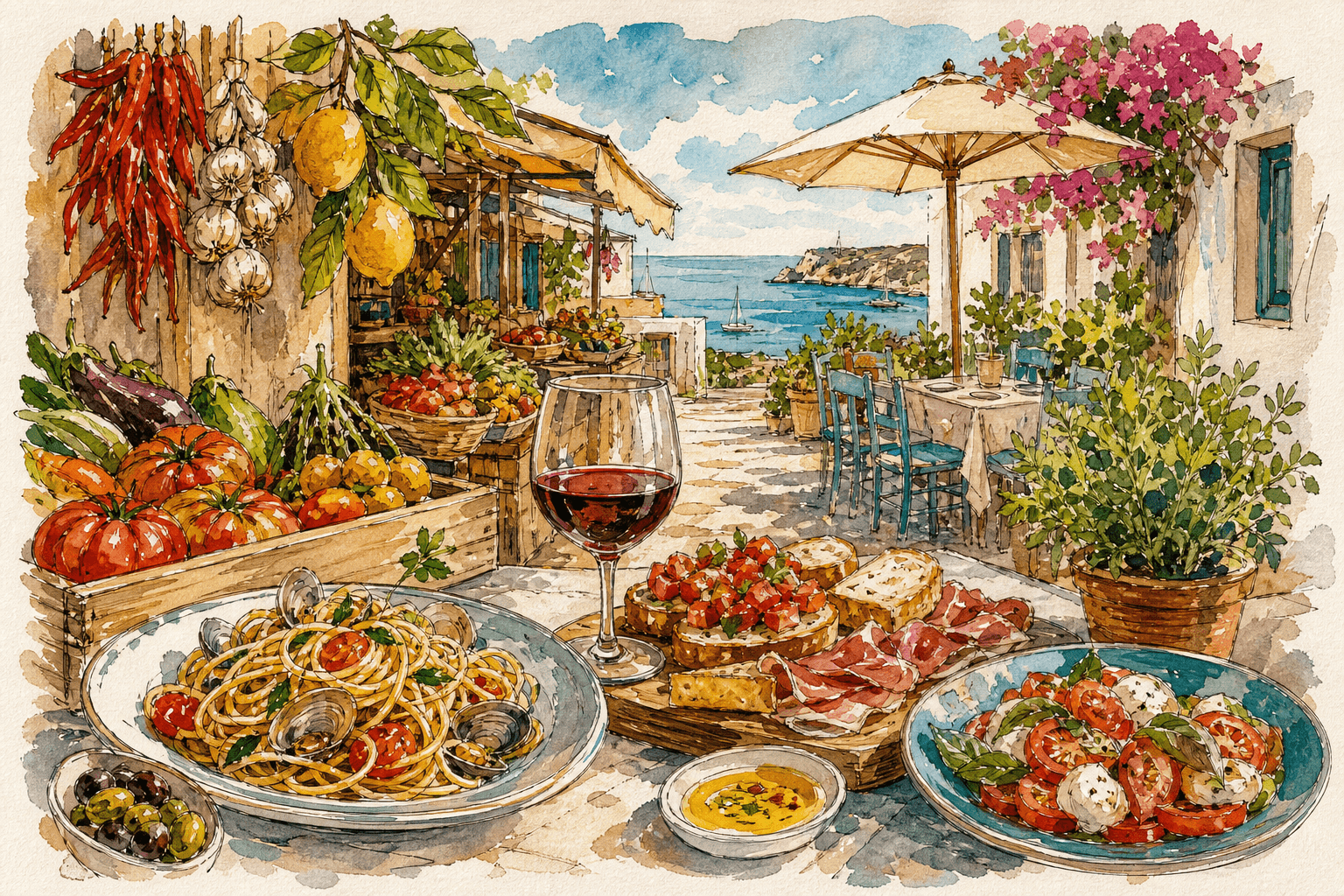
Breton gastronomy is a reflection of its territory: generous, tasty and based on products from the sea (Armor) and the land (Argoat). It is the paradise of seafood, salted butter, crêpes and galettes, always accompanied by a good cider.
The basis of Breton cuisine. The galette, made with buckwheat flour, is savory and filled with ingredients such as egg, ham and cheese (the famous 'complète'). The crêpe, made from wheat flour, is sweet and is enjoyed with sugar, chocolate or salted butter caramel.
A spectacular seafood platter served on a multi-tiered tray with ice. Includes Cancale oysters, mussels, clams, prawns, periwinkles, sea oxen and lobsters.
Mussels cooked 'marinera' style (with white wine and shallots) and served with a portion of French fries. A popular dish throughout the coast.
The Breton stew. A hearty inland dish consisting of various meats (pork, beef) slowly cooked with vegetables and two types of 'farz', a kind of dough or pudding made of buckwheat and white wheat cooked in a sack in the broth.
The quintessential Breton street food. A grilled pork sausage, rolled in a cold galette. It is found in all markets and festivals.
The emblematic drink of Brittany. Made from apples, it can be 'brut' (dry), 'demi-sec' (semi-dry) or 'doux' (sweet). It is traditionally served in a ceramic cup called a 'bolée'.
Breton mead. A sweet alcoholic beverage obtained from the fermentation of honey in water or cider. It is drunk as an aperitif or digestif, very cold.
The Breton aperitif. A variant of Kir Royal, which replaces white wine or champagne with cider, mixed with cassis (blackcurrant) liqueur.
The 'butter cake' in Breton. A delicious calorie bomb made with bread dough, layers of butter and sugar, which caramelize when baked, creating a crispy crust and a tender interior. Originally from Douarnenez.
A dense, moist dessert, similar to a flan or clafoutis, made with eggs, flour, milk and sugar. The more traditional version includes prunes (Far aux pruneaux).
Two types of shortbread cookies. The 'palets' are thick, soft and rich in butter, while the 'galettes' are thin and crispy.
Salted butter caramel. A Breton invention found in the form of sauce, chocolates, lollipops or as a filling and flavoring for many other desserts.
The Solidor Tower in Saint-Malo and the citadel of Belle-Île-en-Mer are part of this serial site that recognizes the work of Louis XIV's military engineer.
The practice of traditional Breton dance festivals, with live musicians, is inscribed on the list of Intangible Cultural Heritage of Humanity.
The best time is summer (July-August), due to the warmer and sunnier climate, ideal for enjoying the beaches and festivals. However, it is the busiest season. Spring (May-June) and early autumn (September) are excellent alternatives, with often pleasant weather, fewer tourists and nature in all its splendor. Winter can be wet and windy, but it offers a more dramatic and authentic view of the Breton coast.
The weather in Brittany is very changeable; It is possible to experience 'all four seasons in one day', so always wear warm, waterproof clothing. Be very careful with the tides, which are among the strongest in the world, especially in the Saint-Malo and Mont Saint-Michel area. In summer, book accommodation and activities well in advance, as it is a very popular destination.
Start planning your perfect trip to this amazing region