Preparing the experience...
The Grand Est is an extensive region in northeastern France, bordering Germany, Switzerland, Luxembourg and Belgium. Its identity is deeply marked by a turbulent history and a double culture, especially in Alsace and Lorraine. It is a land of incredible diversity, ranging from the sunny vineyards of the Alsace Wine Route to the dense forests of the Ardennes, passing through the plains of Champagne and the Vosges mountains. The region is home to cities of art and history such as Strasbourg, with its medieval charm, Nancy and its Art Nouveau heritage, and Reims, the city of the coronations of the kings of France. It is a destination that combines idyllic landscapes, strong gastronomy, world-famous wines and a palpable historical memory at every step.
Descubre las ciudades más fascinantes de Great East
Strasbourg estará disponible próximamente con información completa y detallada.
Reims estará disponible próximamente con información completa y detallada.
Metz estará disponible próximamente con información completa y detallada.
Mulhouse estará disponible próximamente con información completa y detallada.
The region is world-renowned for the magic of its Christmas markets, but it also hosts festivals celebrating wine and music.
From the end of November to the end of December.
The tradition par excellence of the region, especially in Alsace. Those in Strasbourg ('Christmas Capital') and Colmar are the most famous, but almost every town has its own market with lights, crafts and the aroma of mulled wine ('vin chaud') and gingerbread.
Summer.
Throughout the summer, the towns along the Wine Route hold festivals to honor their winegrowers, with parades, tastings, dances and a very festive atmosphere.
End of August.
A great festival celebrating the mirabelle plum, the emblematic fruit of Lorraine, with a large market, parades, concerts and the election of the Queen of the Mirabelle.
Septiembre/Octubre.
An important international contemporary music festival that offers concerts and shows in different venues in the city of Strasbourg.
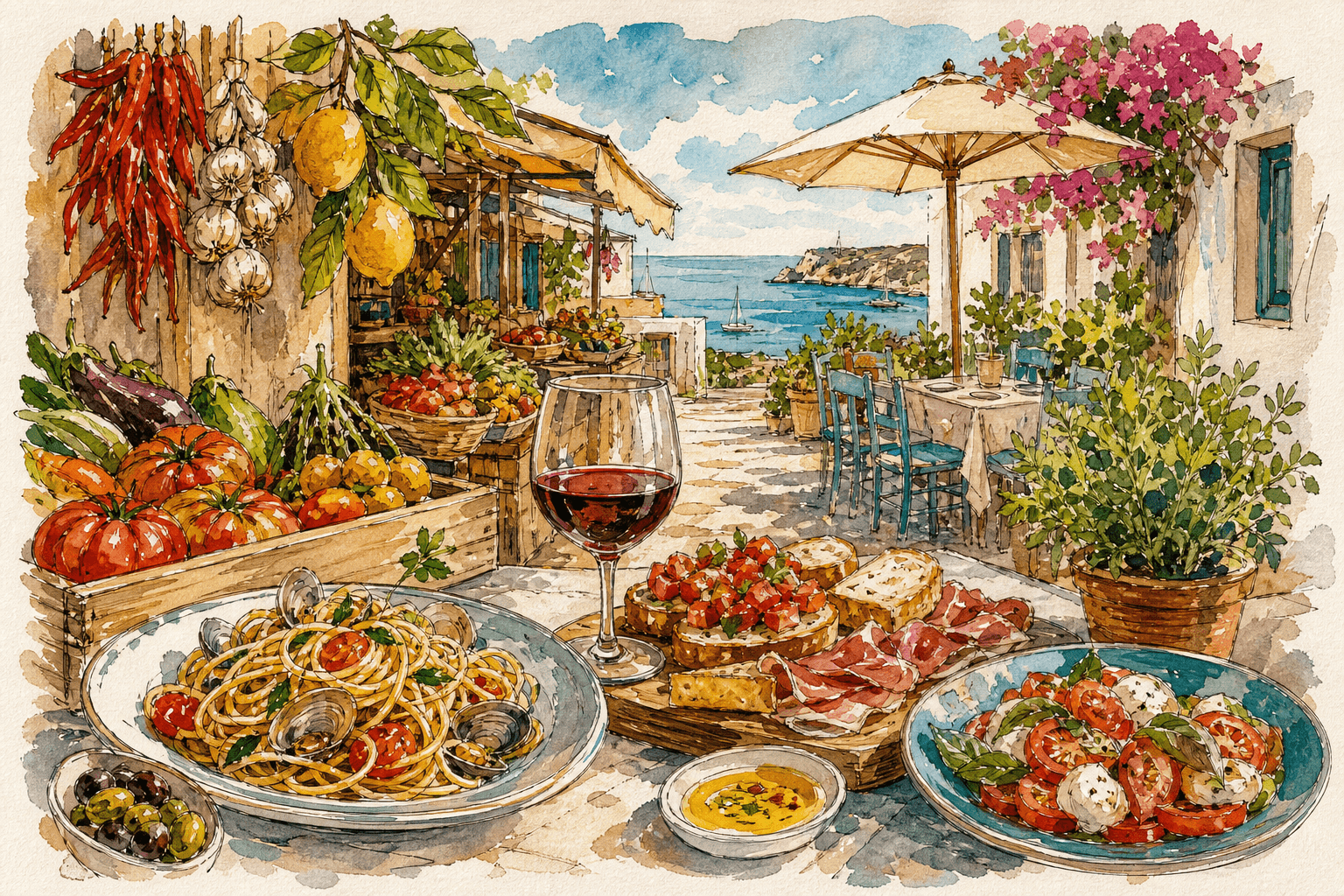
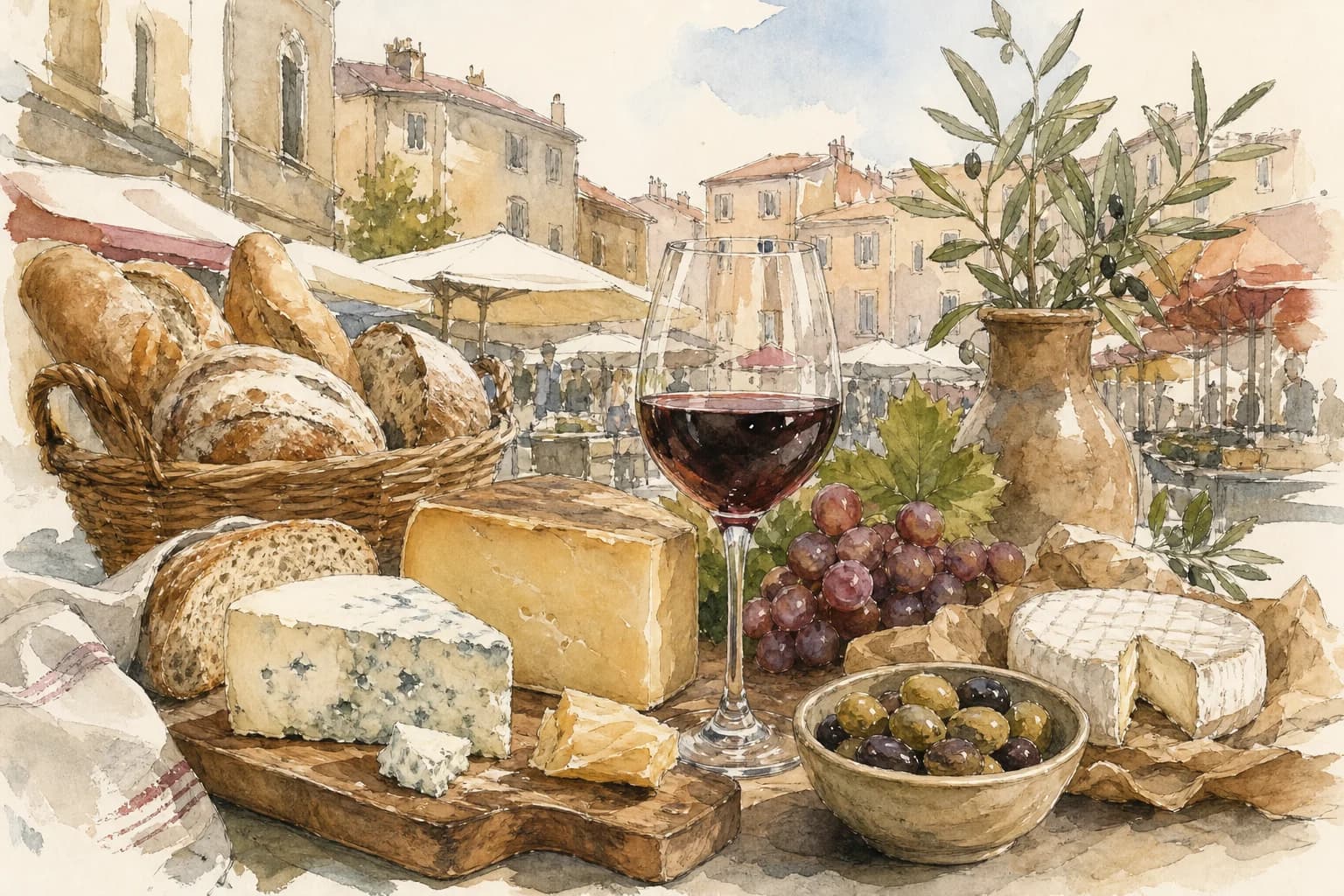
The gastronomy of the Great East is rich, tasty and comforting, with a strong Germanic influence. It is the land of 'choucroute', 'quiche lorraine', 'baeckeoffe' and 'flammekueche', generous dishes that pair perfectly with Alsace wines and local beer.
The most emblematic dish of Alsace. Sauerkraut (fermented cabbage) cooked in white wine and served with a variety of pork and sausages, and potatoes.
A thin bread dough base topped with fresh cream, thinly sliced onion and bacon. It is cooked quickly in a wood-fired oven.
A savory shortcrust pie filled with a mixture of eggs, fresh cream and smoked bacon. Originally from Lorraine.
A hearty Alsatian stew of three types of meat (pork, beef, lamb) and potatoes, marinated in white wine and slowly cooked for hours in a sealed clay terrine.
Small, very sweet yellow plums, an emblematic product of Lorraine that is enjoyed fresh, in cakes, jams or distilled as a brandy.
Famous for their dry and aromatic white wines, bottled in their characteristic tall bottle ('flûte'). The best known varieties are Riesling, Gewürztraminer, Pinot Gris and Sylvaner.
The western part of the region is the heart of Champagne, the only area in the world where this famous sparkling wine can be produced.
Alsace is an important beer region, home to big brands like Kronenbourg, and with a growing craft brewery scene.
Fruit distillates very popular as digestives, especially kirsch (cherry), mirabelle (mirabelle plum) and poire williams (pear).
A tall, fluted brioche, often with kirsch-soaked raisins and almonds, cooked in a traditional ceramic mold. It is eaten both for breakfast and for dessert.
Spice bread, very popular at Christmas time. A dense and aromatic cake made with honey and a mixture of spices such as cinnamon, cloves, anise and ginger.
Different from the famous Parisian macarons, they are almond, sugar and egg white cookies, crunchy and with a crackled surface.
The Alsatian term for cookies and pastries that are made in large quantities during Advent for the Christmas holidays. They come in countless shapes and flavors.
Renowned for its characteristic Middle Rhine urban complex, which includes the cathedral and the 'Petite France' quarter, and its 19th-century German quarter.
An outstanding example of Enlightenment urban planning, a monumental complex that celebrates the king of France.
It recognizes the cultural landscape where the method of making sparkling wines was developed, from the vineyards to the underground cellars.
A transnational site that includes numerous cemeteries and memorials in the region, testimony to the Great War.
The best time to visit is very varied. Winter (late November to December) is magical because of the famous Christmas markets, although it is a cold and busy time. Spring (April-June) and Autumn (September-October) are ideal for exploring the cities and the Wine Route, with pleasant temperatures and fewer tourists. Autumn is especially beautiful because of the vintage colors. Summer is perfect for hiking in the Vosges and enjoying the wine village festivals.
During the Christmas markets, especially on weekends, cities like Strasbourg and Colmar can be extremely busy; It is essential to reserve accommodation many months in advance. Many of the mountain roads in the Vosges, such as the Route des Crests, may be closed in winter due to snow. To visit the great champagne cellars, it is almost always necessary to book the visit in advance.
Start planning your perfect trip to this amazing region