Preparing the experience...
Campania is a region of overwhelming intensity and beauty, where history, art, gastronomy and nature intertwine in spectacular ways. Dominated by the imposing silhouette of Vesuvius, this land was the 'Campania Felix' (Happy Land) of the Romans. Its capital, Naples, is a city with a unique soul, full of life and artistic treasures. From the ruins of Pompeii that transport us back in time, to the glamorous islands of Capri and Ischia, to the picture-postcard villages perched on the cliffs of the Amalfi Coast, Campania is a feast for the senses and an unforgettable travel experience.
Descubre las ciudades más fascinantes de Campania
Naples estará disponible próximamente con información completa y detallada.
Salerno estará disponible próximamente con información completa y detallada.
Giugliano in Campania estará disponible próximamente con información completa y detallada.
Torre del Greco estará disponible próximamente con información completa y detallada.
Campania is a region of deep traditions, where religious festivals and cultural events are lived with great passion.
September 19, and also in May and December.
The most important festival in Naples. Thousands of faithful gather in the Cathedral to witness the miracle of the liquefaction of the blood of the city's patron saint.
Summer.
A prestigious festival of classical music and art held in the town of Ravello, on the Amalfi Coast. The concerts in the gardens of Villa Rufolo overlooking the sea are unforgettable.
Easter week.
Especially in the Sorrento Peninsula, solemn and moving processions of medieval origin are held, where participants parade hooded through the streets.
Throughout the year.
Almost every town has its 'sagra' dedicated to a local product: chestnut, mushroom, eggplant, wine... They are the perfect opportunity to try authentic local cuisine in a festive atmosphere.
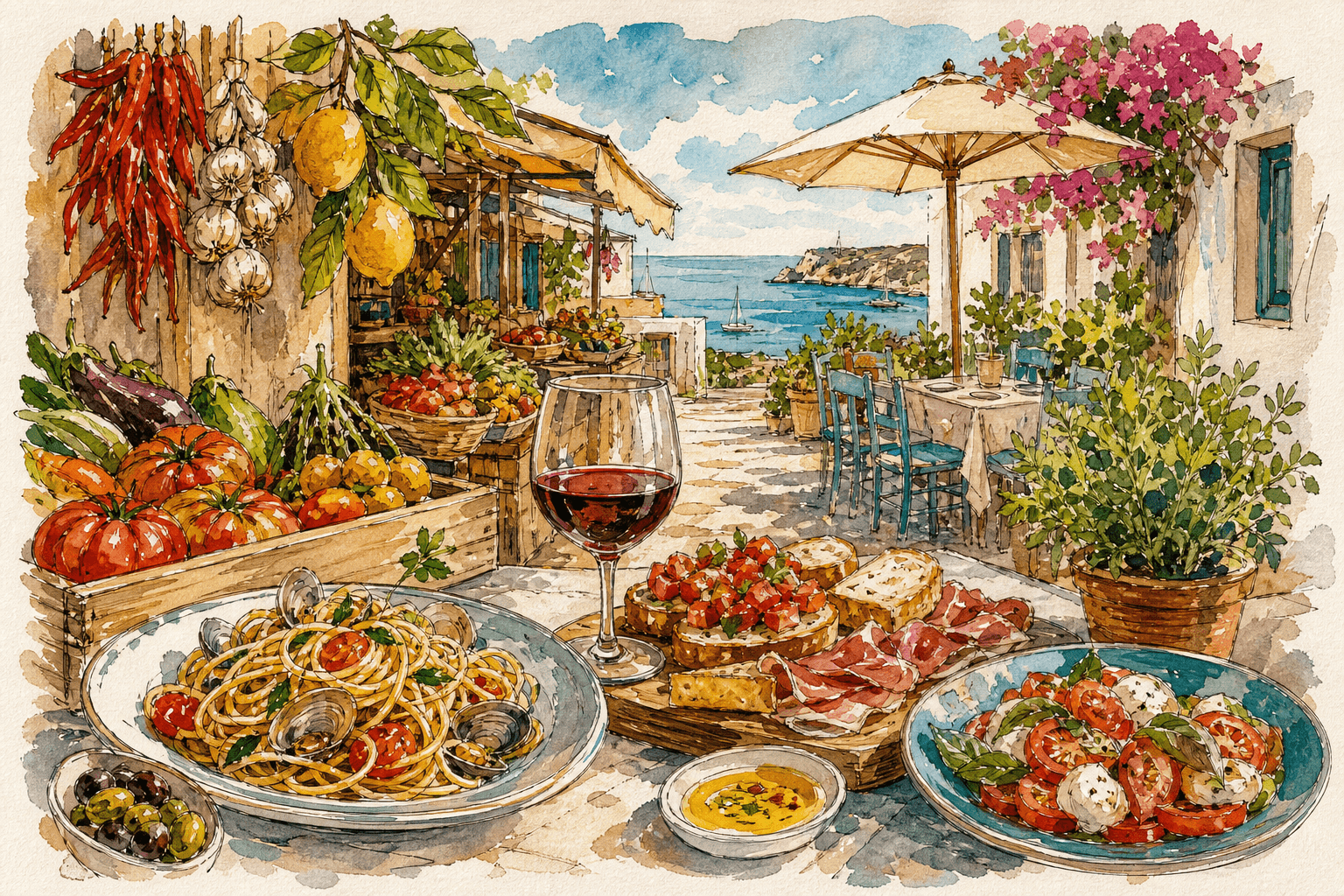
Talking about Campania is talking about Italian cuisine at its best. It is the birthplace of pizza and many iconic dishes, based on simple ingredients of exceptional quality: San Marzano tomato, Mozzarella di Bufala, olive oil and fresh fish.
The authentic, the original. Made of tender, thin dough with thick edges (cornicione), traditionally in its Margherita (tomato, mozzarella, basil) or Marinara (tomato, garlic, oregano) versions. World Heritage Site.
A fresh and juicy cheese made with buffalo milk. It is enjoyed alone, with a drizzle of olive oil, or in the famous Caprese salad, with tomato and basil.
A simple and delicious dish of spaghetti with fresh clams, garlic, olive oil, chilli and parsley. A classic of Neapolitan coastal cuisine.
Soft and fluffy potato gnocchi, baked in a clay pot with tomato sauce, melted mozzarella and fresh basil. Pure comfort food.
A dish of mussels cooked in their own steam with garlic, parsley and a generous amount of black pepper (hence the name 'impepata'). It is served with slices of bread to dip in the broth.
A crispy fry of various small fish and seafood (squid, shrimp), typical of coastal areas. It is eaten hot with a splash of lemon.
Although disputed by other regions, Campania's version is iconic. Layers of fried eggplant, tomato sauce, mozzarella and parmesan, all baked until tender and golden.
The quintessential liquor of the region, especially the Sorrento Peninsula and the Amalfi Coast. A sweet and powerful digestive made with the peel of local lemons. It is served very cold.
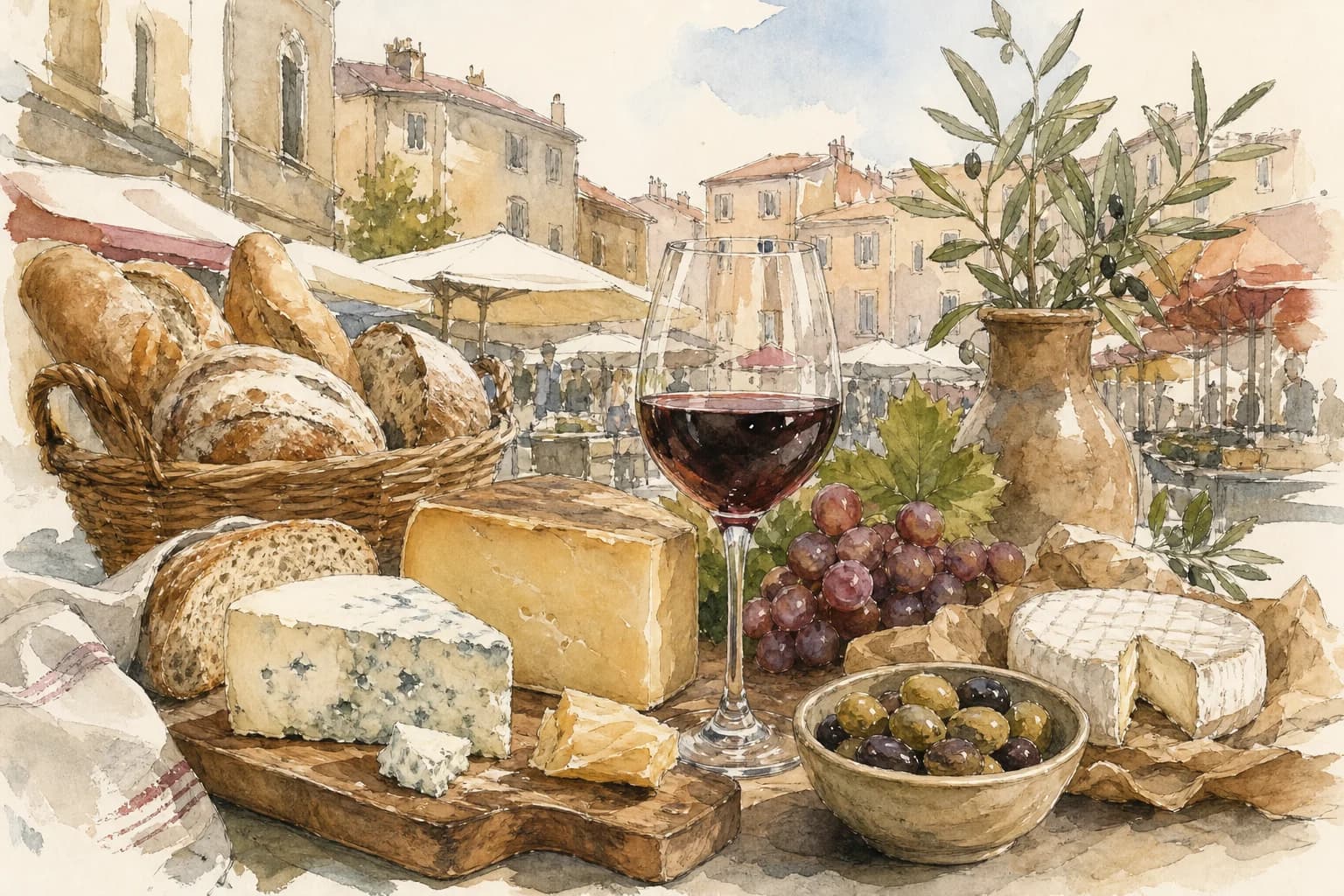
The region has excellent wines. Aglianico is a robust red from the interior (Taurasi DOCG), while Falanghina and Greco di Tufo are fresh and aromatic white wines, perfect to accompany fish.
Having a coffee in Naples is a ritual. Strong, short, creamy and served in a hot cup. It is considered one of the best coffees in all of Italy.
An iconic sweet. The 'riccia' has a crunchy shell-shaped puff pastry dough, while the 'frolla' is round and made of shortcrust pastry. Both are filled with a mixture of ricotta, semolina and candied fruit.
A spongy, mushroom-shaped sponge cake, soaked in a rum syrup. It is often served filled with cream or custard.
The Easter cake par excellence, but available all year round. A shortcrust pie filled with a mixture of ricotta, cooked wheat, eggs and orange blossom aroma.
A heavenly dessert from the Amalfi Coast. A small dome of sponge cake filled and covered with a delicate lemon cream.
A dense and moist chocolate and almond cake originating from the island of Capri, which has the particularity of not using flour.
One of the largest old towns in Europe, an open-air museum showing 2,500 years of history.
An incomparable testimony of daily life in ancient Rome, preserved by volcanic ash.
A cultural landscape of extraordinary beauty, where the towns integrate perfectly into a spectacular natural environment.
A monumental work of the Italian Baroque, created to rival Versailles.
Part of the serial site 'Power Centers of the Lombards in Italy (568-774 AD)', an important example of medieval architecture.
The best time to visit Campania is spring (April-June) and autumn (September-October). During these months, the weather is warm and pleasant, ideal for exploring both the archaeological sites and the coast, and the crowds are smaller than in summer. Summer (July-August) is very hot and the busiest and most expensive season, especially on the Amalfi Coast and the islands. Winter (November-March) is the quietest and most economical season, but the weather can be rainy and some tourist services, such as ferries, may have reduced schedules.
The Amalfi Coast road is very narrow and suffers from major traffic jams in high season; Consider using the ferry as an alternative. To visit Pompeii, Herculaneum and the main museums, it is highly recommended to buy tickets online in advance. Be careful of pickpockets in busy areas of Naples and on public transport such as the Circumvesuviana train. There is a tourist tax that is paid per night directly at the accommodation.
Start planning your perfect trip to this amazing region