The wild and mystical Atlantic coast of Galicia, known for its dramatic beauty of cliffs, lonely lighthouses, shipwrecks and a deep roots in seafaring traditions and i...
Todo lo que necesitas saber sobre Coast of Death
Tipo
Destino Costero
Extensión
200 km
Estancia recomendada
5 días
Región
Galicia
The Costa da Morte extends across the northwest of Galicia, from Malpica to Cape Finisterre, the Roman 'end of the world'. Its name, 'Costa de la Muerte', evokes its history of numerous shipwrecks due to the strong currents, winds and rugged nature of its coastline. However, this harshness gives it an overwhelming beauty: vertiginous cliffs, virgin and wild beaches, iconic lighthouses that guide sailors and an untamed sea that shapes the landscape. It is a destination for lovers of nature, hiking, maritime history, authentic gastronomy and those seeking a deep and less conventional experience, away from the crowds.
Destino costero excepcional
Finisterre Lighthouse: the 'end of the world' and final point for many pilgrims on the Camino de Santiago.
Impressive cliffs and rock formations sculpted by the Atlantic.
Wild and secluded beaches, some ideal for surfing and others for tranquility.
Rich seafood and fresh fish, with authentic seafood cuisine.
Coastal hiking routes, such as the Camiño dos Faros, that run through spectacular landscapes.
Charming fishing villages with a strong bond with the sea and its traditions.
Iconic lighthouses dot the coast, offering panoramic views.
History of shipwrecks and legends that give it a mystical aura.
10-16°C
18-23°C
14-19°C
8-12°C
Temperate oceanic climate. Mild summers and often cloudy or foggy, with less heat than in the south of Spain. Precipitation is frequent throughout the year, especially in autumn and winter, contributing to the lush vegetation and dramatic atmosphere.
The Atlantic waters on the Costa da Morte are cold, even in summer, with temperatures rarely exceeding 18-19°C. In winter, they drop to 12-14°C. They are very white waters with strong currents.
Due to its location and exposure to the Atlantic, the Costa da Morte has very strong waves and currents. Many beaches are dangerous for swimming and extreme caution is recommended.
HighCoastal fog is common, especially in summer in the morning, which can reduce visibility and add a mystical touch, but also caution on the road.
MediumThe oldest Roman lighthouse in operation in the world, an emblem of the Galician coast.
The extension of the Camino de Santiago to Finisterre and Muxía is a spiritual and cultural route.

📍 80 km • ⏱️ 1h 15min
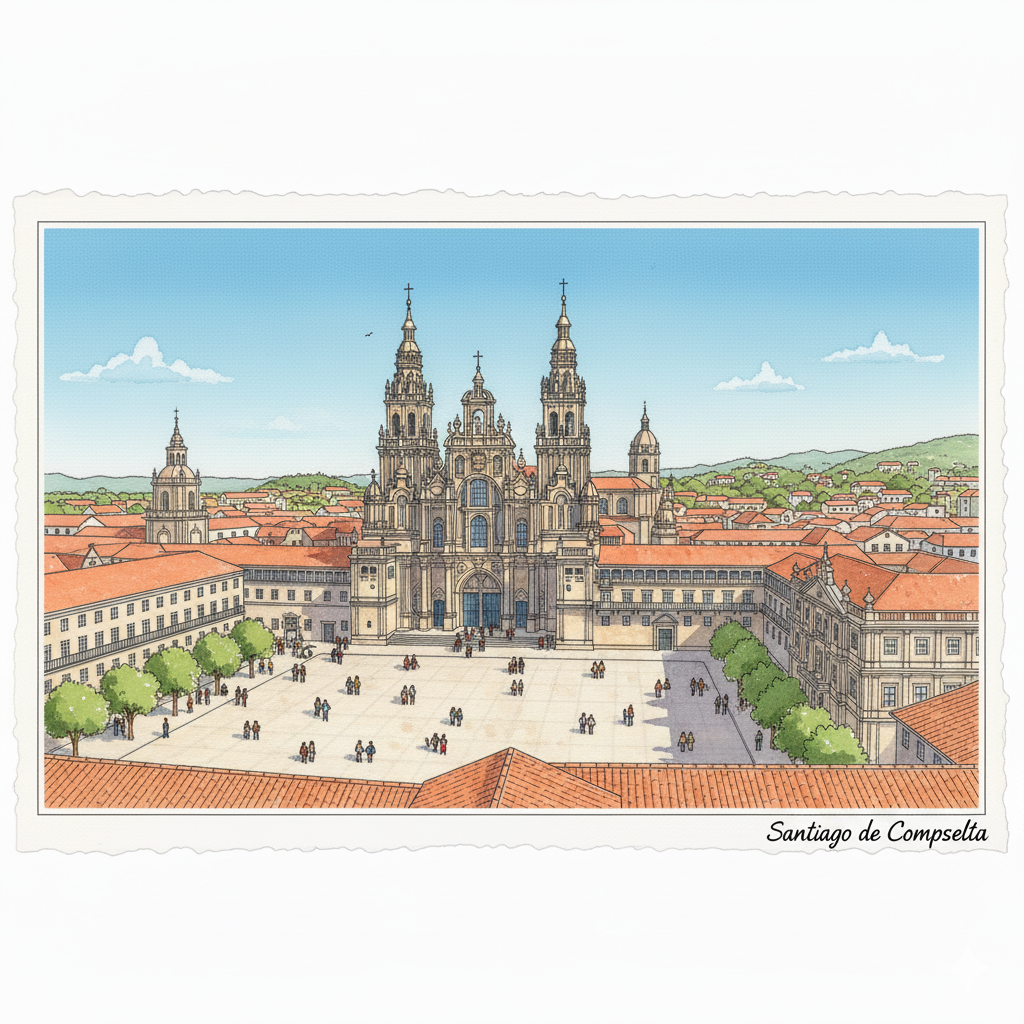
Capital of Galicia and final destination of the Camino de Santiago

📍 45 km • ⏱️ 45min
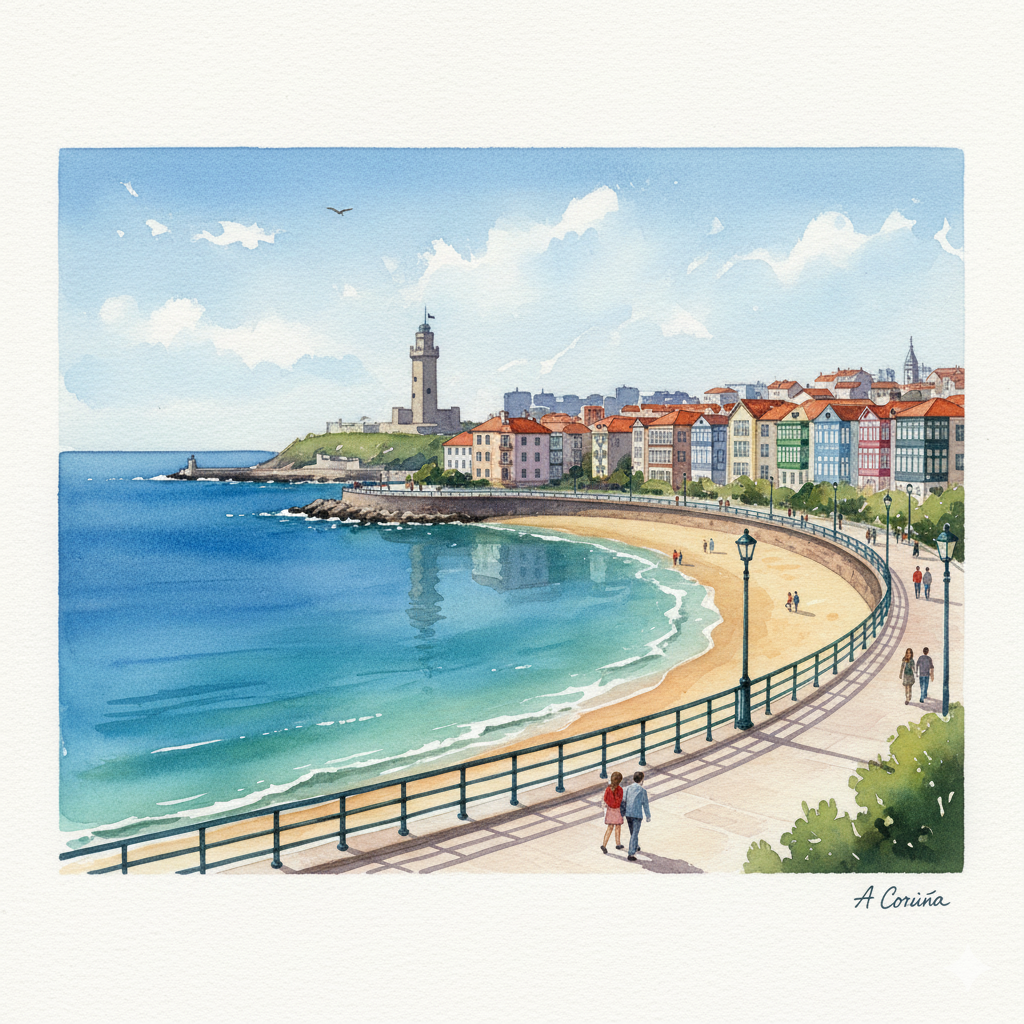
Main coastal city of Galicia with the famous Torre de Hércules lighthouse
Distance: 95 km • Time: 1h 30min
Main access airport to Galicia
Distance: 55 km • Time: 1h
Regional airport with domestic flights
Distance: 80 km
Connection with Madrid and other Spanish cities
Distance: 45 km
Main station of the province
Atlantic Highway - main connection with Santiago and A Coruña
Coastal road that runs along the entire Costa da Morte
Access to Finisterre from Santiago
Car rental highly recommended for coastal exploration
Frequency: Limited - mainly connects major towns
Recommendation: Car rental highly recommended for coastal exploration
Official: Spanish, Galician
Tourist support: English (limited), French (basic)
Euro (EUR)
ATMs: Available in main towns
Emergencies: 112
Police: 092
Medical: 061
Central European Time
UTC +1/+2
natural monument
First place on the Spanish coast to receive this protection
Natural space
Known as the 'Celtic Olympus', a special protection area
Conservation of coastal habitats and marine species
AssetLocal marine cleanup and conservation initiatives
PermanentDolmens and megalithic settlements such as Dombate
Finisterre as 'Finis Terrae' - the end of the known world
Development of the Camino de Santiago and seafaring traditions
Construction of lighthouses and fishing development
supernatural legend
Procession of souls in pain that travels the night roads
religious legend
Sacred stones with healing powers and special properties
Maritime history
Tales of the numerous shipwrecks in these white waters
March, April, May
Famous for:
destinations.coasts.activities:
Camino dos Faros, bird watching, Photography, Cultural visits
June, June, August
Famous for:
destinations.coasts.activities:
Beach visits, water sports, Outdoor dining, Festival attendance
September, October, November
Famous for:
destinations.coasts.activities:
Storm watching, Gastronomy tours, Hiking, Photography
December, January, February
Famous for:
destinations.coasts.activities:
Storm watching, Indoor cultural visits, Local cuisine, thermal spas
Discover everything Coast of Death has to offer
Discover the incredible coasts and marine landscapes of this destination
An extensive wild and windy beach, open to the Atlantic, famous for its waves ideal for surfing and its unspoilt natural environment.
Fine, golden sand.
Open waters of the Atlantic, with strong waves and currents. Cold. Not suitable for quiet bathing.
Not guarded. Very dangerous for bathing due to strong currents. Only for experienced surfers. Informal nudist area.
Access via dirt track, with limited parking. A short walk is required.
This is a naturist beach where nudity is allowed.
Small dirt parking lot at the beach access.
None on the beach. The closest services are in Muxía.
None. It is a virgin beach.
One of the wildest and most spectacular beaches on the Costa da Morte, with large dunes and strong waves. A place of impressive natural beauty.
Fine, golden sand.
Open and very rough waters of the Atlantic, with very strong currents. Extremely dangerous for the bathroom.
Not guarded. Absolutely not recommended for bathing due to its currents and undertows. Only for contemplation and very expert surfers.
Access by road with parking at the end, and then a walk through dunes.
Dirt parking near access, but can be busy in season.
None on the beach. The closest services are in Fisterra.
None. Completely virgin beach.
A unique beach where, instead of sand, you find millions of small colored crystals, the result of spillage from an old glass factory.
Polished colored crystals.
Calm waters in the Laxe estuary, suitable for bathing.
Urban beach, supervised in high season. Safe for the bathroom. The crystals do not cut when they are polished.
Easy access from the town of Laxe, with a promenade.
Parking on the streets of Laxe can be complicated in summer.
Bars and restaurants in Laxe, very close to the beach.
Showers, toilets, beach bars nearby.
A lonely and desolate beach, surrounded by a wild landscape and dunes. Part of the Camiño dos Faros, ideal for solitude and pure nature.
Fine, golden sand.
Open waters of the Atlantic, with strong waves and currents. Not suitable for the bathroom.
Unsupervised and dangerous for the bathroom. The natural environment must be respected. Informal nudist area.
Access via dirt track, a section of walking is required. Remote.
This is a naturist beach where nudity is allowed.
Small parking area on the access road.
None on the beach. The closest services are in Camariñas.
None. It is a virgin and remote beach.
Explore the charming towns that give life and character to this coast
The 'end of the world' and an important point on the Camino de Santiago. Famous for its lighthouse, its panoramic views and its mystical atmosphere at sunset.
A fishing village with a special charm, famous for the Santuario da Virxe da Barca, the 'stones that abalan' and a deep link with the sea and legends.
Capital of the Encaixe de Camariñas (bobbin lace), with a fishing port, beaches and a traditional atmosphere. Access to the Vilán Lighthouse.
The first port on the Costa da Morte, with a picturesque fishing district, a good viewpoint and starting point to the Sisargas Islands.
A small town with a declared historical-artistic complex, with emblazoned houses and a quiet promenade. Considered 'Heart of the Costa da Morte'.
Dive into unique adventures and discover the sea from another perspective
Beaches like Nemiña, Rostro or Traba are famous for their waves, but they are only for experienced surfers due to the sea conditions.
The coast offers excellent spots for rock fishing, although caution is required due to the waves.
There are options for quieter walks in the estuaries or more sheltered areas to enjoy the landscape from the sea.
Descubre los secretos mejor guardados y rincones únicos que pocos conocen
An impressive 200 km hiking route that runs along the entire Costa da Morte, connecting lighthouses, beaches, cliffs and towns, offering spectacular views.
It can be done in sections. Requires physical preparation. Ideal to connect with wild nature.
The only waterfall in continental Europe that flows directly into the sea (with flow control to generate hydroelectric energy, check fall times).
Spectacular, especially in winter or with rain. At night, it is usually illuminated.
One of the best preserved and most impressive dolmens in Galicia, a megalithic monument of great historical and spiritual value.
Interpretation Center to learn about megalithic culture.
A small and curious museum dedicated to shipwrecks on the coast, with recovered objects and the history of the 'Santo Cristo de Finisterre'.
Interesting to learn about the tragic and fascinating history of the coast.
Conecta con la naturaleza y descubre paisajes únicos que te dejarán sin aliento
First point on the Spanish coast declared a Place of National Interest. An impressive lighthouse on cliffs, with spectacular views of the Atlantic.
Known as the 'Celtic Olympus', a sacred mountain with unique rock formations and panoramic views of the coast and inland.
Although technically in Rías Baixas, it is a large dune complex that can be visited if the trip is extended, offering a coastal desert landscape.
The gastronomy of the Costa da Morte is a feast for lovers of seafood and fresh fish, with products extracted from a rough sea that gives them a unique flavor.
The 'king' of seafood from the Costa da Morte, collected from the cliffs. Its flavor is intense and pure of the sea.
Fresh and tasty bivalves, grown in the rafts of the nearby estuaries, prepared steamed, marinated or in empanadas.
Fish such as seabream, sea bass, conger eel (dried or fresh) or grouper, caught in the white waters and prepared grilled or Galician style.
Cooked and chopped octopus, seasoned with olive oil, paprika and coarse salt, served on boiled potatoes. Fundamental.
The empanada is a classic, here often filled with tuna, scallops, octopus or cod.
Seafood highly appreciated in the area, delicious grilled or steamed.
Although the Costa da Morte is not a production area, Albariño from the nearby Rías Baixas is the perfect accompaniment to your seafood.
Another Galician white wine, fresh and light, ideal to pair with seafood.
Digestive liquors very popular in Galicia, the brown liquor is sweet and aromatic, the pomace (brandy) stronger.
Almond cake with the cross of Santiago, popular throughout Galicia.
Thin crepes, often filled with cream or cream.
The Costa da Morte celebrates festivals linked to its seafaring tradition, gastronomy and unique cultural events.
An Holy Week with deep local roots and peculiar events, such as the 'Os Caladiños' procession.
One of the most important pilgrimages in Galicia, with pilgrims, ancestral rituals in the 'stones' and a great party.
Festival dedicated to onions, with demonstrations and tastings, celebrating a local agricultural product.
A gastronomic festival dedicated to the barnacle, the most emblematic seafood in the area, with tastings and music.
Although it is in the Ría de Arousa, it is a very popular seafaring festival, with dorna regattas and a very fun atmosphere.
Descubre los lugares más fascinantes e imperdibles de esta costa
Attend the fresh fish and seafood auction at the fish market, an authentic experience to understand the seafaring life of the area.
Check the auction times, they are usually in the afternoon.
Visit the traditional open-air drying rooms where the conger eel is dried, an ancient technique and a local gastronomic product.
Unique in Spain, an ethnographic curiosity.
A spectacular viewpoint with views of the waterfall and the mouth of the Xallas River into the Atlantic.
A must to see the waterfall, especially at sunset.
Each point of interest has its own unique history and magic
Complete evaluation based on multiple quality criteria
"Beaches of great wild beauty, many of them virgin and exposed to the waves. They are not ideal for quiet bathing, but they are ideal for contemplation, walks and surfing (in specific areas and with experience)."
"Rich seafaring culture, legends of shipwrecks, ancestral traditions and the mysticism of the end of the world. Little monumental heritage, but a lot of authenticity."
"Very limited. There are a few bus lines between the main towns, but to explore the coast, coves and lighthouses, a car is essential."
"Good main roads, although those leading to the lighthouses or coves can be narrow and curvy. Parking generally easy, except in small towns in high season."
"Generally very affordable, especially outside of high season. It offers excellent value for money in accommodation and local cuisine."
"More suitable for families who enjoy nature and hiking. Fewer beach options for safe bathing with small children due to the waves. Active tourism is more suitable."
"Exceptional, based on seafood and fresh fish of unsurpassed quality. Simple cuisine that enhances the product. Especially barnacles and rock shellfish."
"A destination that promotes tourism that is respectful of the natural environment and local traditions. The landscapes are the main attraction, which encourages their conservation."
"It attracts more adventurous tourism that seeks authenticity, untamed nature and a more mystical and reflective experience. Far from mass tourism."
"Excellent for hiking (Camiño dos Faros), surfing (on specific beaches for experts), sport fishing, and adventure sports in nature."
"Generally high, both in towns and on natural beaches. Respect for the environment is a norm."
"Very safe region in terms of crime. However, extreme caution should be taken with the sea (currents, waves) and when walking along cliffs."
"Charming fishing villages with a strong character, such as Muxía, Fisterra or Corme. It highlights its authenticity and its connection with the sea."
"Breathtaking natural beauty: towering cliffs, wild beaches, lonely lighthouses, rock formations and a pounding sea. Landscapes that inspire."
"The waters are rich in fish and shellfish, making it an important fishing area. Whale watching is less common than in other areas, but biodiversity is high."
"An overall score that reflects a destination of indomitable and mystical natural beauty, sublime seafood gastronomy and rich seafaring history and culture. It is a place for the active and contemplative traveler who seeks a more authentic and wild Galicia, away from the crowds."
✨ Destino Excelente
💭 "An overall score that reflects a destination of indomitable and mystical natural beauty, sublime seafood gastronomy and rich seafaring history and culture. It is a place for the active and contemplative traveler who seeks a more authentic and wild Galicia, away from the crowds."
Everything you need to know to plan your visit
Spring (May-June) and early fall (September-October) are the best times. The weather is mild, there are fewer crowds, and the light is spectacular for photography. Summer (July-August) is the warmest, but it can be foggy and the beaches are busier. Winter is ideal for lovers of tranquility and the power of the sea, although with more rain.
The sea is very dangerous on many beaches. Always respect the signs and do not swim if there are strong waves. The roads to some lighthouses can be narrow and winding. Fog can appear suddenly, reducing visibility. Be prepared for wind and rain any time of year.
Available in most hotels and restaurants in towns. In more remote areas, coverage may be limited.
Prepaid SIM cards are easily accessible in nearby cities (A Coruña, Santiago). Mobile coverage can be patchy in cliff areas.
Never underestimate the power of the Atlantic. Find out about the state of the sea and always respect the warnings and flags on the beaches. Don't get too close to cliffs with surf.
If you are going hiking along the Camiño dos Faros or through rocky areas, wear appropriate mountain footwear.
It is almost essential to explore the Costa da Morte at your leisure, since public transport is very limited.
If you encounter fog, reduce speed, turn on your fog lights and keep a safe distance.
Ask about seasonal seafood. Barnacles are a delicacy, but their price can vary greatly.
Look for the small restaurants in the fishing ports, where the fish and seafood are fresh from the day.
The Costa da Morte is a sensitive natural area. Do not leave waste, respect the flora and fauna and follow the marked trails.
The inhabitants of the Costa da Morte have many stories and legends to tell. Allow yourself to be enveloped in the mystique of the place.