Preparing the experience...
Catalonia is a universe in itself, a region of extraordinary wealth and diversity with a strong cultural identity. Its capital, Barcelona, is a global magnet for art and design. But the soul of Catalonia lies in its contrasts: the wild Costa Brava against the golden Costa Daurada; the majestic Pyrenees facing the fertile plains of the interior; the ancient history of Tarraco and the medieval towns against the surrealist avant-garde of Dalí. It is a destination to explore without haste, savoring its cuisine, participating in its festivities and discovering a landscape that changes at every step.
Descubre las ciudades más fascinantes de Catalonia

Barcelona estará disponible próximamente con información completa y detallada.

Girona estará disponible próximamente con información completa y detallada.
Lleida estará disponible próximamente con información completa y detallada.

Tarragona estará disponible próximamente con información completa y detallada.
Catalan culture is lived in the streets. If your trip coincides with any of these festivities, do not hesitate to participate.
Mid May.
Girona is transformed into a giant garden. Courtyards, monuments and corners of the city are decorated with spectacular artistic floral installations. A unique visual spectacle.
Constitution Bridge (early December).
The old town of Vic travels to the Middle Ages. Streets full of artisans, food stalls, music and shows that recreate medieval life with an incredible atmosphere.
Around September 24th.
The 'Festa Major' of Barcelona. A week of concerts, street shows and Catalan traditions at their best, including 'correfocs', 'gegants' and the best 'castells' exhibitions of the year.
Corpus Christi.
World Heritage Site. A festival of medieval origin with parades of giants, big heads and mystical figures who dance to the sound of the drum in the town square.
Throughout the year at major festivals
Declared a World Heritage Site. One of the most exciting and representative traditions of Catalonia. Groups ('colles') compete to build the tallest and most complex human towers. Check the calendar of the 'human tower days'.
Throughout the year at major festivals
A spectacle of fire, percussion and adrenaline. Groups of 'diables' (devils) dance and run through the streets throwing sparks from their pitchforks, creating a tunnel of fire and noise. A visceral and unforgettable experience at many major festivals.
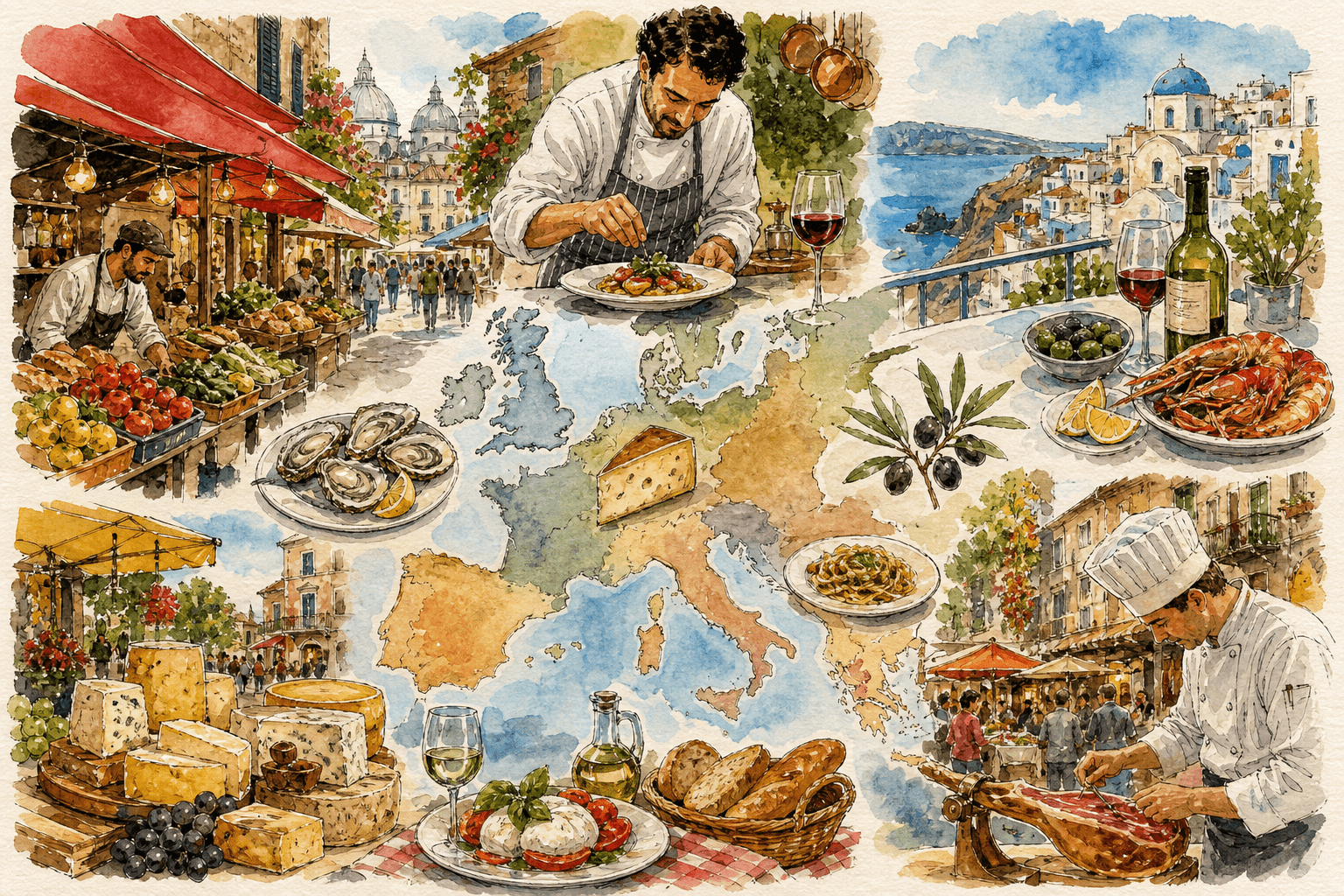
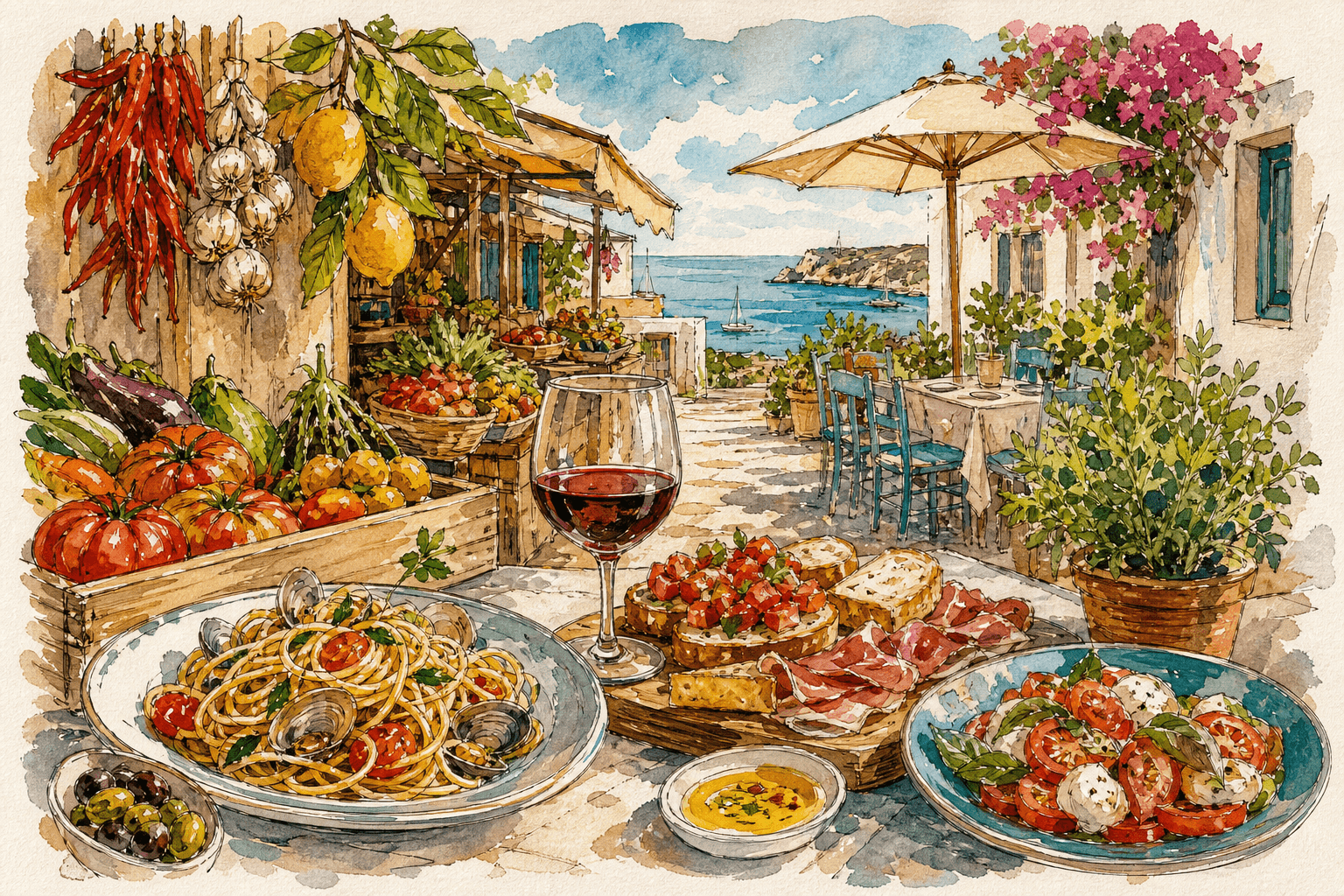
Catalan cuisine is a reflection of its landscape, based on the 'Mar i Muntanya' philosophy. Each area has its own specialties, from the fish stews of the coast to the hearty dishes of the Pyrenees.
The appetizer par excellence. Fuet and secallona are thin cured sausages, while butifarra is a fresh white, black or egg sausage (typical of Jueves Lardero). Essential on any charcuterie board.
More than a dish, a social party ('calçotada'). Tender chives roasted over the flame, eaten with your hands after dipping them in a delicious sauce of nuts, ñora and tomato.
The Christmas dish. A hearty stew that is served in two parts: first the soup with its large pasta shells ('galets'), and then the meats ('carn d'olla') and vegetables.
Typical of Lleida. Snails cooked in the oven on a tin tray ('llauna') with a tasty mixture of oil, garlic and parsley, accompanied by aioli.
A tender stew of thin beef fillets with mushrooms. The sauce, thickened with chopped nuts, is for dipping bread.
A sweet stew of veal head and leg with a powerful sauce and chickpeas. For lovers of intense flavors.
Two classic sailors. Fideuà replaces rice with thin toasted noodles, and Arròs Negre owes its color and flavor to the cuttlefish ink.
The seafood stew by definition. Potatoes and different rock fish in a tasty broth that varies in each coastal town.
A comforting mountain dish made with winter cabbage, potato and bacon, all well mashed and browned in the pan.
Two star starters. Escalivada are roasted vegetables (pepper, eggplant, onion), while Xató is an endive salad with cod, anchovies and a special sauce.
The dish of family celebrations. They are filled with roasted meat that has been aged for several days, covered with bechamel and baked in the oven.
The Catalan gastronomic gesture. Toasted country bread rubbed with ripe tomato, garlic (optional) and dressed with a good extra virgin olive oil.
The most famous sparkling wine in Spain, produced mainly in the Penedès region. It is made using the traditional method and is the celebration drink par excellence throughout the country.
Catalonia has a huge vermouth tradition, especially around the city of Reus. 'Fer el vermut' (making vermouth) is a weekend social ritual that consists of having this aperitif before eating.
In addition to Cava, Catalonia has world-class wine regions. Priorat is known for its powerful and mineral red wines, while Penedès stands out for its diversity of white and red wines.
A traditional sweet liqueur made by macerating green walnuts and a mixture of aromatic herbs in brandy. It is a very popular digestive in rural and Pyrenean areas.
The Catalan dessert par excellence. A soft pastry cream with a burnt sugar crust that breaks with a spoon.
The godparents' gift at Easter. Formerly a roscón with hard-boiled eggs, today they are spectacular chocolate sculptures.
A fried cylindrical dough, filled with pastry cream and covered with sugar. Addictive.
Panellets are almond sweets typical of Todos los Santos. Carquinyolis are dry and crunchy almond cookies, perfect for dipping.
Neules are thin and crispy wafers, typical for Christmas. 'Músic' is a dried fruit dessert served with a glass of sweet wine.
Seven of his most iconic creations, including the Sagrada Familia and Park Güell.
An extraordinary testimony of the Roman capital in the Iberian Peninsula.
An impressive fortified Cistercian abbey that was the royal pantheon of the Crown of Aragon.
A set of nine perfectly preserved Romanesque churches in the spectacular landscape of the Pyrenees.
Catalonia is enjoyed all year round. Spring (April-June) is ideal for urban and nature tourism, coinciding with events such as 'Temps de Flors'. Summer (July-August) is perfect for the coasts, although it is high season. Autumn (September-October) offers pleasant temperatures and spectacular colors in the forests. Winter (December-March) is the ski season in the Pyrenees and gastronomic festivals such as 'calçotades'.
Extreme caution with pickpockets in tourist areas of Barcelona. During July and August, the Costa Brava can be very busy; reserve in advance. It is almost mandatory to buy tickets online for popular attractions (Sagrada Familia, Park Güell, Dalí Museum) to avoid lines and ensure access. There is a tourist tax that is paid per night directly at the accommodation.
Start planning your perfect trip to this amazing region