Preparing the experience...
Galicia is a magical and mysterious land, an 'end of the world' (Finisterre) forged by rain, granite and the power of the Atlantic Ocean. It is a place of deep traditions, legends of 'meigas' (witches) and a culture with strong Celtic roots. Its capital, Santiago de Compostela, is the final destination for thousands of pilgrims who travel the Camino, creating a unique and universal atmosphere. The Galician landscape is an infinite green that merges with the sea in the Rías, flooded river valleys that create a perfect ecosystem for the best seafood in the world. It is a land of wild cliffs on the Costa da Morte, spectacular canyons in the Ribeira Sacra and paradisiacal beaches like the Cíes Islands. Visiting Galicia is letting yourself be embraced by its nature, surrendering to its gastronomy and feeling the energy of a place with soul.
Descubre las ciudades más fascinantes de Galicia

Vigo estará disponible próximamente con información completa y detallada.

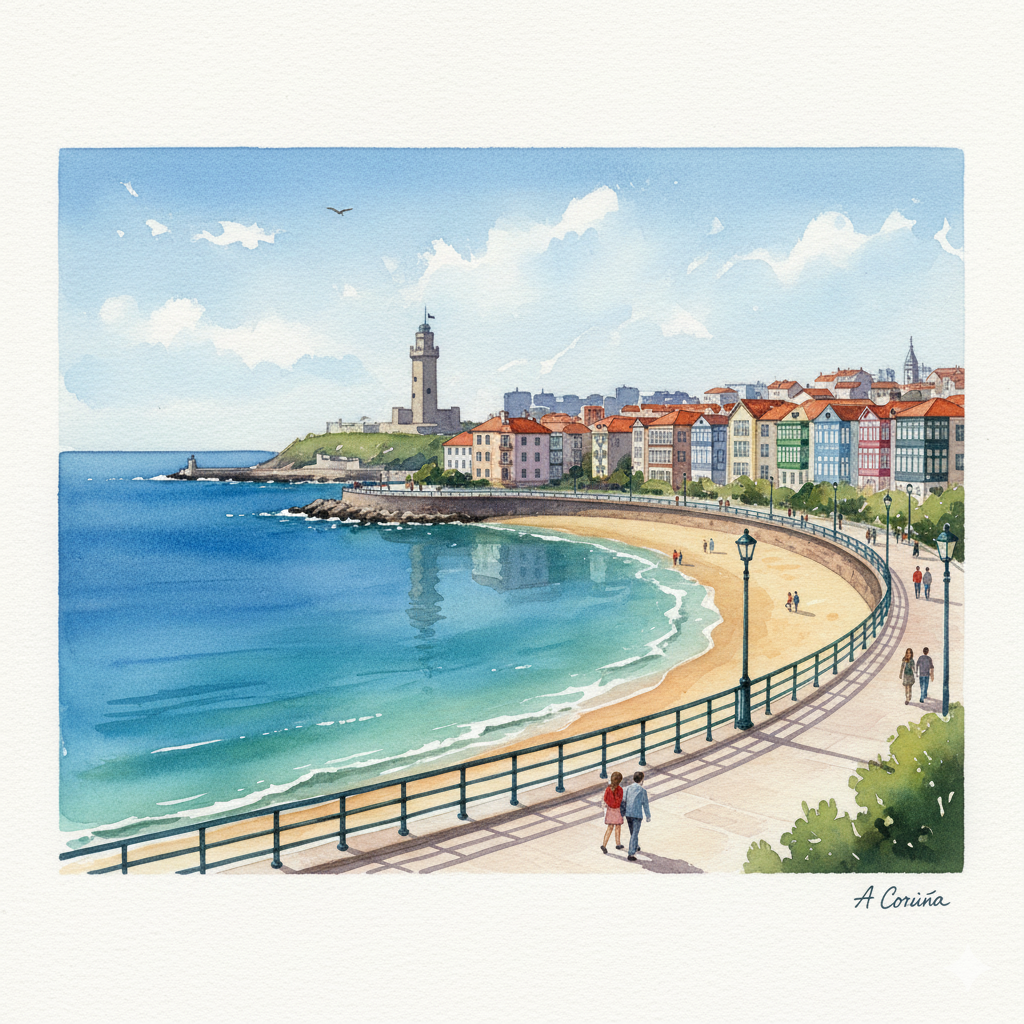
A Coruña estará disponible próximamente con información completa y detallada.
Ourense estará disponible próximamente con información completa y detallada.

Lugo estará disponible próximamente con información completa y detallada.

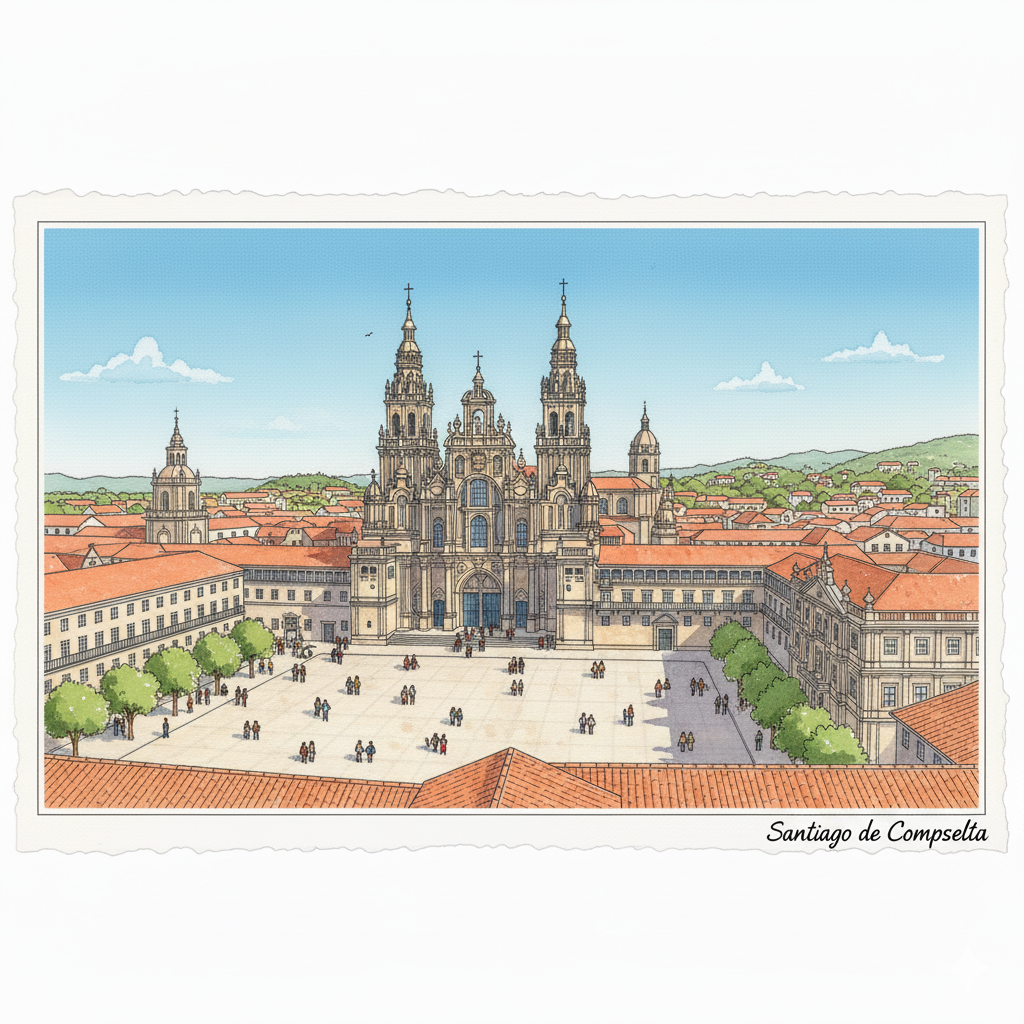
Santiago de Compostela estará disponible próximamente con información completa y detallada.
The festivals in Galicia ('festas') are closely linked to gastronomy, religion and pagan traditions. The 'entroido' (carnival) and gastronomic festivals are the soul of the festive calendar.
Second half of July, with the big day on July 25.
The great festivals of Galicia. Santiago de Compostela is filled with concerts, cultural events and an incredible atmosphere. On the night of the 24th, a fireworks show and projections on the facade of the Cathedral is the central event.
Early October.
One of the most important gastronomic exaltations in Spain. For ten days, you can taste all types of Galician seafood (crabs, spider crabs, barnacles, clams...) at popular prices in tents located in the port.
Night of June 23.
The most magical night of the year. Thousands of bonfires ('cacharelas') are lit on the beaches and towns to scare away the 'meigas' (witches). It is a tradition to celebrate the ritual of 'queimada', a brandy burned with sugar, fruits and coffee beans while reciting a spell ('conxuro').
July.
One of the most important folk and Celtic music festivals in the world, free of charge, which attracts thousands of people to this fishing village on the north coast.
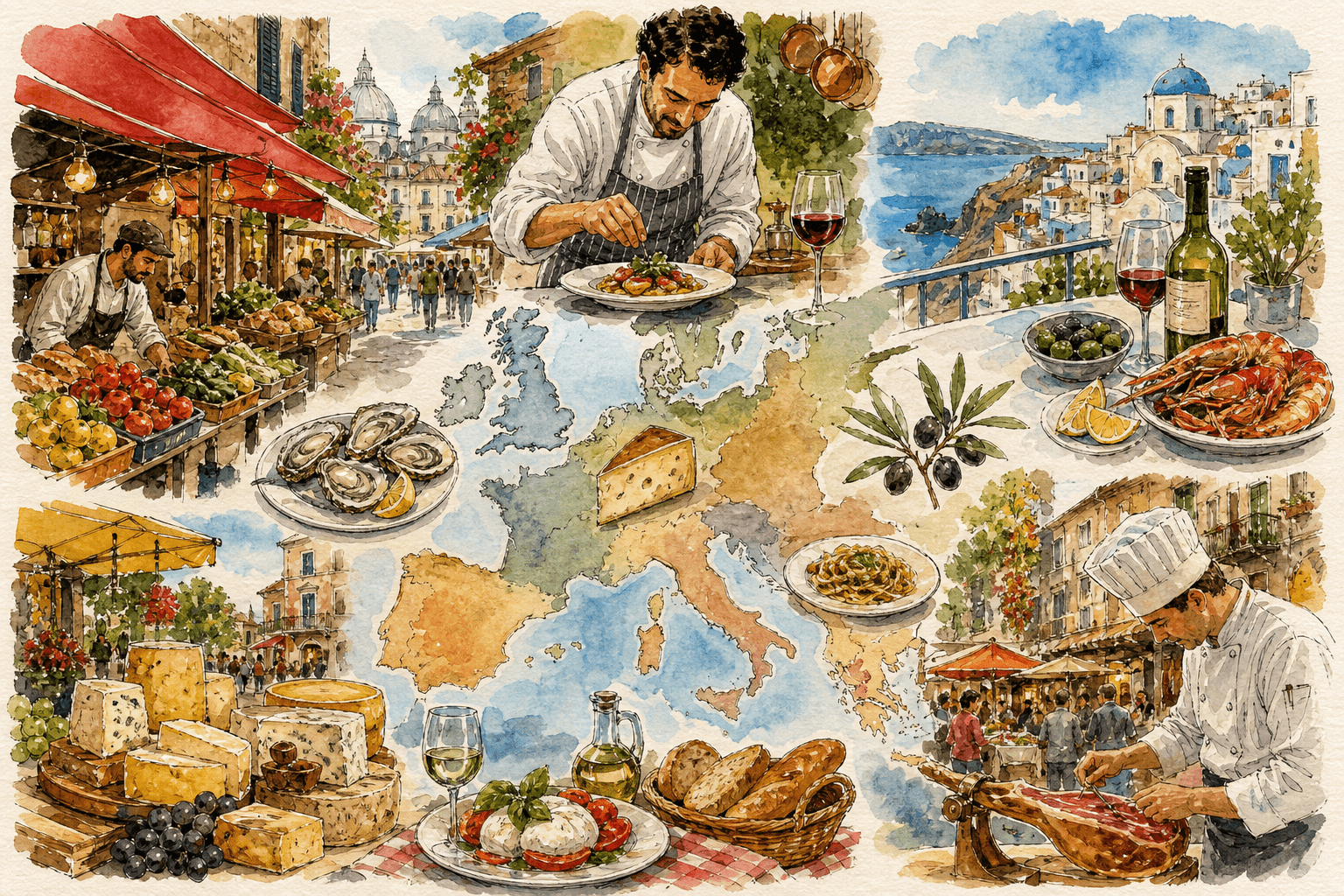
Galician gastronomy is a cult of the highest quality products, both from the sea and the land. It is an honest cuisine, without great artifices, where the flavor of seafood, fish, beef or vegetables is the real protagonist.
The quintessential feast. A tray with the best of Galician seafood, cooked or grilled: crabs, crabs, sea oxen, crayfish, prawns and, of course, barnacles, the treasure of the cliffs.
The most iconic dish. Whole cooked octopus, cut into slices with scissors, and served on a wooden plate with cachelos (cooked potatoes). It is seasoned with coarse salt, paprika (sweet and spicy) and a generous splash of olive oil.
A bread or puff pastry dough filled with a sauce ('zaragallada'). The most famous are those with tuna, cod with raisins, zamburiñas (small scallops) or meat.
The comforting spoon dish. A steaming soup based on turnip greens (turnip sprouts), collard greens or cabbage, with potatoes, white beans and unto (rancid pork fat) that gives it its characteristic flavor.
The famous saying: 'some sting and others don't'. Small green peppers fried and served with coarse salt. Eating them is a fun game of gastronomic chance.
The star dish of the Galician carnival. Lacón (the front leg of the pig, cured and salted) slowly cooked with turnip greens, potatoes and chorizo. A hearty and delicious dish.
A meat with Protected Geographical Indication, famous for its tenderness and flavor. Ideal to enjoy a good grilled steak.
The most famous white wine from Galicia and one of the most important in Spain. It is an aromatic, fresh wine with vibrant acidity, perfect to accompany the region's seafood.
A traditional high-proof liquor made by macerating naturally roasted coffee in brandy. There is no self-respecting Galician after-dinner meal that does not end with a 'shot' of homemade coffee liqueur.
Pomace is a distillate from grape bagasse. It is the basis of the 'queimada', a magical ritual in which the pomace is burned with sugar, coffee and fruits while a spell ('conxuro') is recited to scare away evil spirits.
Along with the coffee liquor, it is the other great Galician digestive liquor. It is made by macerating a selection of aromatic herbs in brandy, resulting in a sweet drink with a greenish or yellowish color.
The most famous dessert. A dense and moist cake made from ground almonds, sugar and egg, without any flour. It is decorated with the Cross of Santiago sprinkled with icing sugar.
Similar to French crêpes, but thinner and lighter. They can be made from milk, water or blood (during slaughter time). They are eaten alone, with sugar, or filled with cream or honey.
A traditional homemade dessert. A dough of milk, flour and sugar that is left to cool, cut into portions, coated in egg and flour and fried. It is served sprinkled with sugar and cinnamon.
Fried and crispy dough eclairs, traditionally rolled in river reeds, which are filled with pastry cream. Typical of the O Carballiño area.
An extraordinary monumental complex that has grown around the Cathedral, destination of the largest Christian pilgrimage route.
The best example of a late Roman military fortification in Europe, and the only one that remains intact in the entire world.
The only lighthouse of Roman origin that has maintained its original function from its construction to the present.
The pilgrimage routes that cross the north of Spain, with an immense associated cultural and spiritual heritage.
Summer (late June to early September) is the most popular time with the most stable weather, ideal for enjoying the beaches and parties. Spring and autumn are excellent to do the Camino de Santiago and enjoy the landscape with fewer people. Winter is rainy and cool, but it has a special charm to enjoy spoon-fed cuisine and see the power of the sea on the coast.
The weather in Galicia is very unpredictable and can change several times in the same day. It is essential to always wear warm clothing and a raincoat. Coastal and inland roads are often narrow and winding, drive with caution. To visit the Cíes Islands or the Playa de las Catedrales in high season, it is mandatory to request an online authorization in advance, as capacity is limited.
Start planning your perfect trip to this amazing region