Preparing the experience...
La Rioja is a hospitable and vibrant land whose name is synonymous with wine throughout the world. It is a small community, centered around the Ebro River, where the landscape is dominated by a sea of vineyards that changes color with each season. Its capital, Logroño, is famous for having one of the best tapas cultures in Spain, with its mythical Calle Laurel as its epicenter. But La Rioja is much more than wine: it is a land of deep history, with the monasteries of Suso and Yuso in San Millán de la Cogolla, considered the cradle of the Spanish language. It is also a land of footprints, those of the pilgrims on the Camino de Santiago and those of the dinosaurs that left their icnites marked on the rock millions of years ago. Visiting La Rioja is to immerse yourself in the culture of wine, enjoy exceptional gastronomy and discover a surprising monumental and natural heritage.
Descubre las ciudades más fascinantes de Rioja

Logroño estará disponible próximamente con información completa y detallada.
Calahorra estará disponible próximamente con información completa y detallada.
Arnedo estará disponible próximamente con información completa y detallada.
Haro estará disponible próximamente con información completa y detallada.
The festivals in La Rioja revolve, as it could not be otherwise, around wine. The grape harvest festivals and the famous Battle of Wine are its most unique events.
The week of September 21.
The great festivals of the capital. The central act is the 'Treading of the Grape' and the offering of the first must to the Virgin of Valvanera. The city is filled with float parades, concerts, tastings and an incredible atmosphere.
June 29 (Saint Peter).
One of the most fun and unique festivals in Spain, of National Tourist Interest. Thousands of people dressed in white climb the Bilibio Cliffs and engage in a peaceful battle, throwing thousands of liters of red wine.
Third weekend in June.
The town travels to the Middle Ages. Thematic portals are recreated (stonemasons, blacksmiths, weavers...), there are knight battles and payment is made with maravedíes. One of the most careful medieval recreations in the country.
Holy Week (Holy Thursday and Good Friday).
One of the most famous and oldest penances in Spain. Anonymous brothers, with their backs exposed, flagellate themselves as an act of faith during the processions. An overwhelming and deeply rooted tradition.
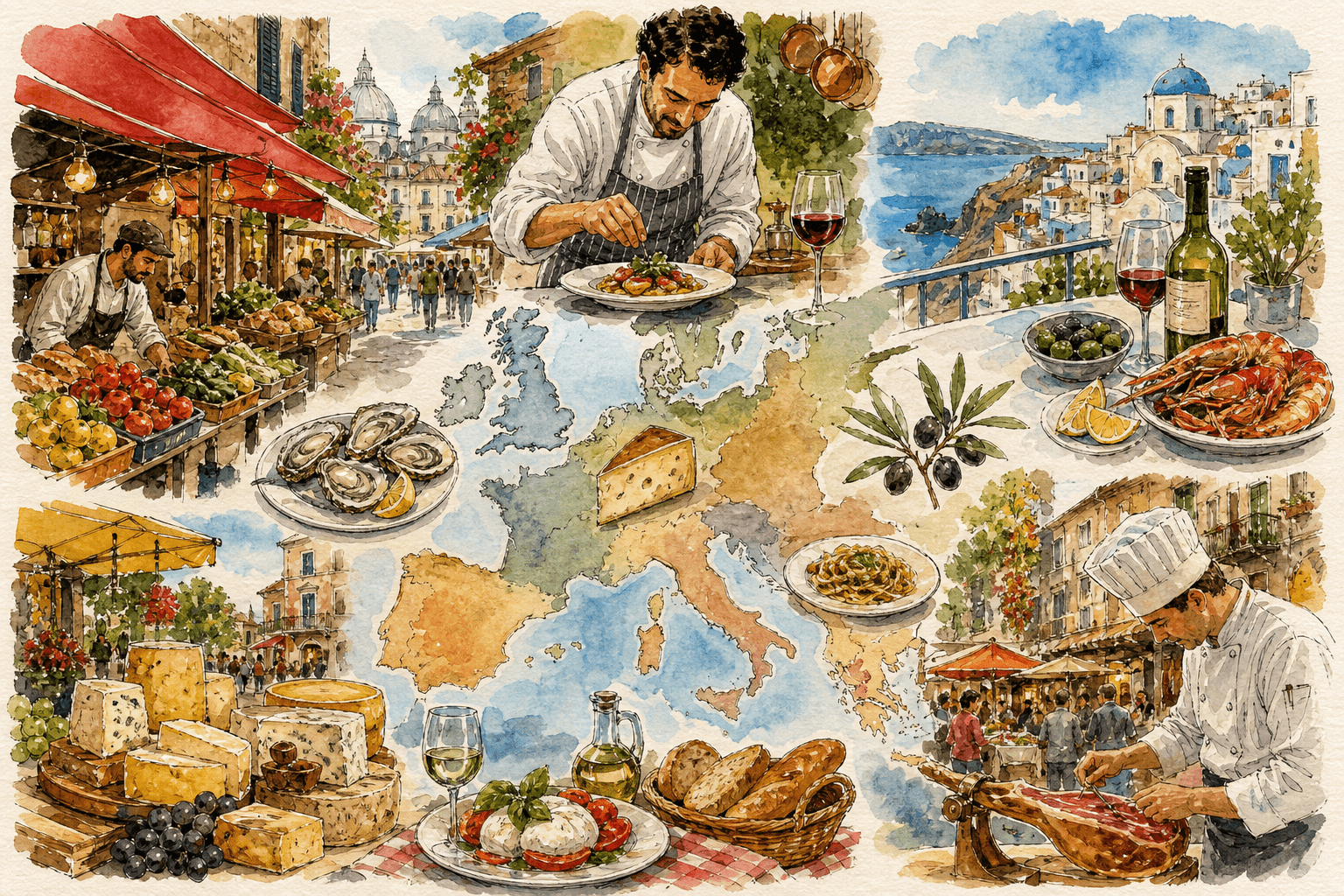
Rioja gastronomy is a cuisine of products, honest and tasty, based on the extraordinary quality of the vegetables from its Ebro garden, the meats from its mountains and the perfect harmony with its wines. The 'pincho' culture is a hallmark.
The most emblematic spoon dish. A simple but delicious stew of potatoes with chorizo and chorizo pepper, which gives it its characteristic color and flavor.
A delicacy of wineries and grills. Baby lamb chops grilled on shoots (the dry branches of the vine), which give them a unique aroma and flavor.
Pochas are a variety of fresh, tender and buttery white beans. Stewed with quail, it is a delicious and delicate seasonal dish.
The quality is exceptional. Don't miss the stew of fresh vegetables from the Ribera del Ebro, artichokes, thistle or borage.
The traditional cheese of La Rioja, with Designation of Origin. Made with goat milk in the Sierra de Cameros, it can be found fresh, tender, semi-cured and cured.
The drink that defines the region and one of the D.O. most prestigious in the world. Famous for its red wines based on Tempranillo, with aging categories (Crianza, Reserva, Gran Reserva) that mark their aging in barrels.
A drink similar to sangria, very typical of popular Rioja festivals. It is made with red wine macerated with fruits such as peaches and lemons, sugar and cinnamon. Each crew has its secret recipe.
A simple dessert that unites the two great products of the region. Rincón de Soto pears slowly cooked in Rioja red wine with sugar and cinnamon.
A sweet of Arab origin. A very thin and crispy puff pastry, filled with a ground almond dough.
Unlike the one from Toledo, this marzipan from Soto en Cameros is lighter and fluffier, made with ground almonds and lemon essence.
Two typical sweets from Santo Domingo de la Calzada. Ahorcaditos are scallop-shaped puff pastries filled with almond cream, and molos are mill-shaped pasta.
Recognized for their architectural value and, above all, for being the symbolic birthplace of the written Spanish language.
The Jacobean route crosses La Rioja from east to west, passing through Logroño, Nájera and Santo Domingo de la Calzada, leaving an immense cultural legacy.
Spring and, above all, Autumn are the best times. Autumn, with the grape harvest, colors the vineyards with spectacular colors and the atmosphere in the wineries is unique. Summer is pleasant, although it can be hot. Winter is cold, but ideal to enjoy spoon-fed cuisine and tranquility.
To visit wineries, especially the most famous ones or on a weekend, it is highly recommended to book in advance. Calle Laurel in Logroño is filled with people, especially on weekends; Be patient and enjoy the atmosphere. If you want to experience the Battle of Wine, be prepared to get soaked and wear clothes that you don't mind getting stained.
Start planning your perfect trip to this amazing region