Loading destination...
Loading destination...
Loading destination...
Loading destination...
Loading destination...
Loading destination...
Vibrant and warm Caribbean city, famous for being the cradle of the Cuban Revolution, the birthplace of son and for its passionate Afro-Cuban culture.
TripMatches · Remember · Plan
Been to Santiago de Cuba or still want to go? Pick one and we'll take you straight to it.
About Santiago de Cuba - Culture, History & Character
Cuban Spanish is spoken with a very strong and fast Caribbean accent. English is less common than in Havana. Communication, even basic, in Spanish is almost essential for a complete experience.
Quick answers to plan your trip with confidence
 100
100 98
98 95
95 95
95 95
95Easy day trips and short hops to stretch your itinerary
10098959595 100
100 95
95 95
95 90
90


Places that share a similar travel vibe
More ideas travelers often discover next
RankingRanked by art and culture: museums, heritage, and creative scenes.
RankingWhere the night is alive: bars, energy, and after-dark atmosphere.
RankingUrban bases with the most nature nearby.
RankingCities with plenty of nature nearby — city life plus beach access.
RankingBalearics and Canaries ranked by natural beauty and island experience.
Plan your perfect trip with our personalized recommendations and local insights.
Plan my tripExplore the fascinating past of Santiago de Cuba and discover how it has developed over the centuries.
Founded in 1515 by Diego Velázquez, Santiago was one of the first seven towns in Cuba and its first capital. Its deep, protected bay made it a strategic port, but also a target for pirates like Henry Morgan. It was the gateway for the first African slaves to Cuba, which forged their cultural identity forever.
The city was a hotbed of rebellion during Cuba's Wars of Independence in the 19th century, being the home of heroes such as Antonio Maceo. In 1898, naval battles in its bay and the Battle of San Juan Hill on its outskirts were decisive in the Spanish-American War, which ended Spanish rule.
On July 26, 1953, a young Fidel Castro led an attack on the city's Moncada Barracks, a military failure that nevertheless ignited the spark of the Cuban Revolution, earning Santiago the title of 'Hero City'. It was from the balcony of its town hall that Fidel Castro proclaimed the victory of the Revolution on January 1, 1959. Today, the city remains a bastion of revolutionary fervor and a cultural center of immense importance.
The historical timeline shows the key moments that have defined the development of Santiago de Cuba through the centuries.
Discover what makes this city special with our comprehensive scoring system
Like the rest of Cuba, it is very safe when it comes to violent crime. Standard precautions against theft apply.
The historic center is compact, but the topography is a challenge. Be prepared to go up and down hills constantly.
Very difficult for tourists. The city is mountainous and relies on a difficult-to-navigate network of trucks and jeepneys.
Strong value for money. You can travel comfortably without a high budget.
Legendary, but focused on live music. It is the best place in the world to listen to and dance authentic Cuban son.
The undisputed heart of Afro-Cuban culture and Cuban music. It is a place to feel and live culture on the street.
It offers solid, authentic Creole cuisine, although with less variety and sophistication than Havana's paladare scene.
Limited to the essentials: rum, cigars and some local crafts.
Guaranteed Caribbean heat, but summer can be sweltering for some.
Santiago rewards the independent traveler. It is incredibly welcoming, but requires more effort, patience and Spanish than other Cuban destinations.
Very safe for families and the locals are very welcoming to children, but the intense heat and hills can be a challenge.
It is a traditional and conservative society. Tolerance exists, but there is no visible or dedicated LGTBQ+ scene.
The 'Santiagueros' are famous for their extroverted, passionate and incredibly friendly nature. Interaction with locals is one of the strong points of the trip.
A dramatic and Caribbean beauty, where the mountains meet the sea in one of the most spectacular bays on the island.
An eclectic and fascinating mix of Caribbean colonial architecture, massive fortresses and relics of its revolutionary past.
Absolutely crucial. As the first capital, cradle of the Revolution and home of the heroes of independence, its importance in the history of Cuba is incalculable.
The city is nestled in a spectacular natural environment, with the Caribbean Sea at its feet and the majestic Sierra Maestra behind it.
It is a busy city with a suffering infrastructure. It is not known for its cleanliness, but for its energy.
Non-existent.
Absolutely not a destination for digital nomads. Internet connectivity is extremely poor.
Comprehensive assessment of this destination
For the traveler looking for the soul of Cuba, Santiago is an unbeatable destination. Its historical importance, vibrant musical culture and the passion of its people offer one of the most authentic and memorable experiences in the Caribbean.
Discover the best times to visit Santiago de Cuba and what to expect throughout the year.
Guaranteed Caribbean heat, but summer can be sweltering for some.
Very hot and increasingly humid climate. Good time to visit before the intense summer heat.
Extremely hot and humid. It is the rainy season, but also that of the famous Santiago Carnival.
The heat persists with a high risk of hurricanes, especially in September and October.
The best season, with a warm and dry climate. Ideal for exploring its steep streets.
Warm and sunny winters.
It's never cold.
The heat and humidity in summer are intense and oppressive.
Santiago is generally hotter and more humid than Havana throughout the year.
The dry season (November-April) is the most comfortable to visit.
Plan your expenses and discover the best shopping areas
Daily spending per person
Santiago is considerably cheaper than Havana. It is a very affordable destination where you can enjoy the local culture without spending a fortune.
per day
per day
per day
Best Areas
1 area • Recommended Areas
Click for details
1 area • Recommended Areas
Click for details
1 area • Recommended Areas
Click for details
Explore the most fascinating places this city has to offer
An immense and spectacular stone fortress, declared a World Heritage Site by UNESCO. It is perched on a cliff at the entrance to the bay and offers the best views of the coast.
An impressive monumental cemetery, considered an open-air museum. It is the final resting place of national heroes such as José Martí and Fidel Castro. Don't miss the solemn changing of the guard.
The military barracks whose assault in 1953 by Fidel Castro marked the beginning of the Cuban Revolution. Today it is a school and houses the 26 de Julio History Museum.
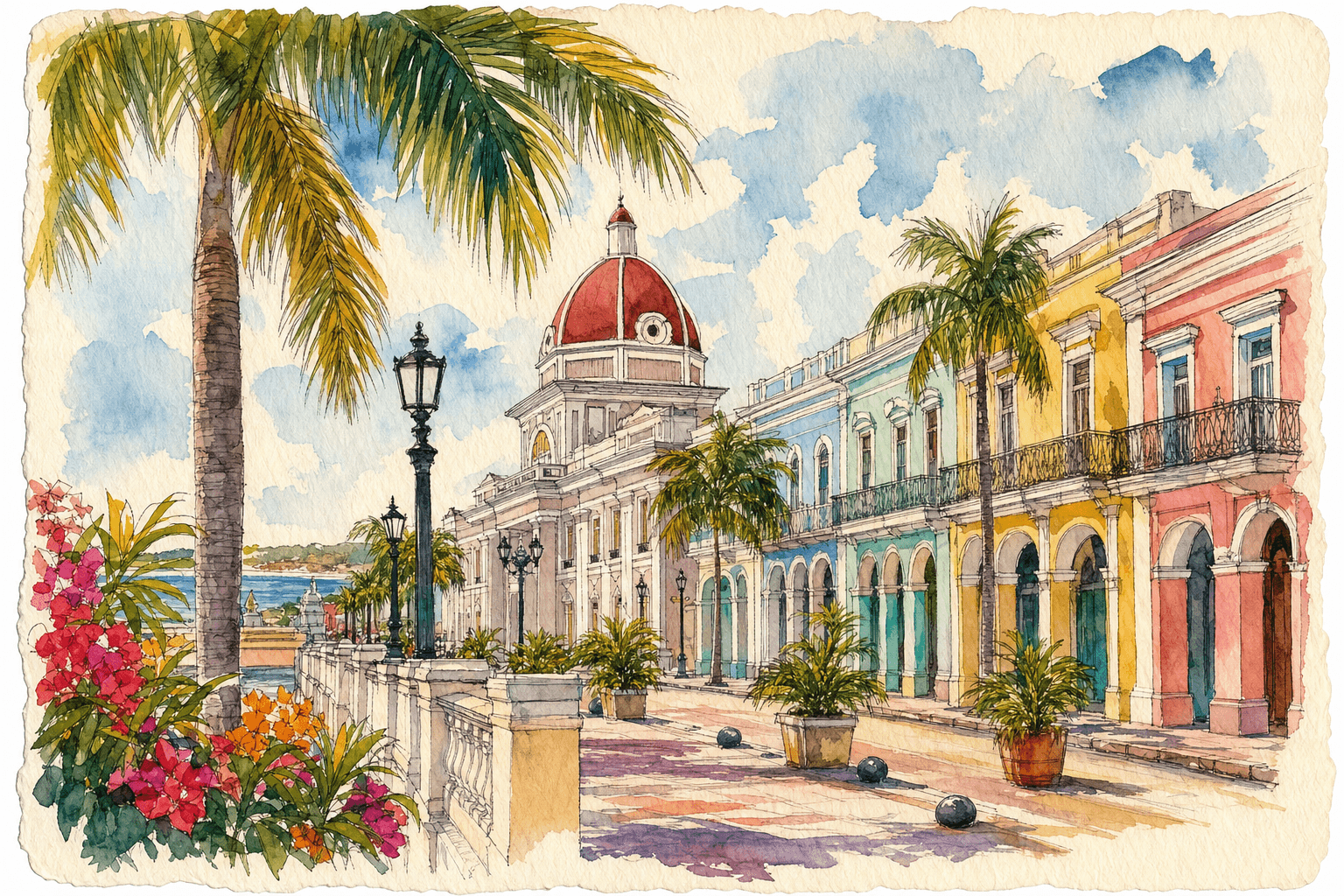
The main square and the heart of Santiago's life. It is surrounded by the Cathedral, the City Hall and the House of Diego Velázquez, the oldest house in Cuba.
A temple of traditional Cuban music. A legendary place where some of the best musicians on the island play son, bolero and trova every afternoon and night.
The most sacred basilica in Cuba, home of the island's patron saint. An important pilgrimage site located in a picturesque mining town in the hills.
Considered the oldest stone house in Cuba (built at the beginning of the 16th century). Today it is a museum that shows Spanish colonial life.
A small viewpoint on the edge of the historic center that offers one of the best views of the Bay of Santiago and the rooftops of the Tivolí neighborhood.
Haz clic en "Tours" para encontrar las mejores actividades y entradas, o usa "Planificar" para crear tu itinerario personalizado.
Discover fascinating destinations near Santiago de Cuba perfect for day getaways
A huge volcanic rock 1,234 meters above sea level, which can be climbed by 459 steps. It offers spectacular panoramic views and is surrounded by a botanical garden in a unique microclimate.
Nature, views, Hiking
A vast biosphere reserve with quirky attractions like a valley with life-size dinosaur sculptures, an aquarium and a lagoon.
Family, Nature, peculiar
The closest local beach to Santiago. It is not a postcard Caribbean beach, but a rocky beach popular with Cubans for a day of relaxation and music.
Beach, local atmosphere
Haz clic en "Tours" para encontrar excursiones organizadas, o usa "Plan" para crear tu itinerario personalizado.
Discover the unique character and charm of each city district.
The colonial heart. Centered on Parque Céspedes, with most of the museums and music.
Caribbean and sloping. A historic neighborhood with French and Haitian influences, famous for its stairs and its musical atmosphere.
Residential and stately. An old elite neighborhood with large mansions from the early 20th century.
Revolutionary and civic. Home of the Plaza de la Revolución and the Moncada Barracks.
Discover the best experiences and activities for each time of year
The oldest, most famous and vibrant carnival in Cuba. Unlike others, it is not pre-Lenten. It is an explosion of color, music and Afro-Cuban dance that takes over the streets for a week. An intense and spectacular cultural experience.
A great festival celebrating Caribbean culture, dedicated each year to a different country or region. There are parades, concerts, workshops and the 'Burning of the Devil' as the closing ceremony.
A local commemoration of the 1956 uprising in support of the landing of Fidel Castro. There are civic events and an atmosphere of revolutionary pride in the city.
Discover the most important events and festivals celebrated throughout the year
Cuba's most famous and energetic carnival, a massive celebration of Afro-Cuban culture.
A week-long celebration of Caribbean cultures.
A festival that celebrates the musical genre of trova, which has deep roots in Santiago.
Essential advice and local insights to make your trip memorable and safe
Choose a category above to see relevant tips and advice
Fotos reales compartidas por la comunidad de viajeros que han estado en Santiago de Cuba.