Tahiti
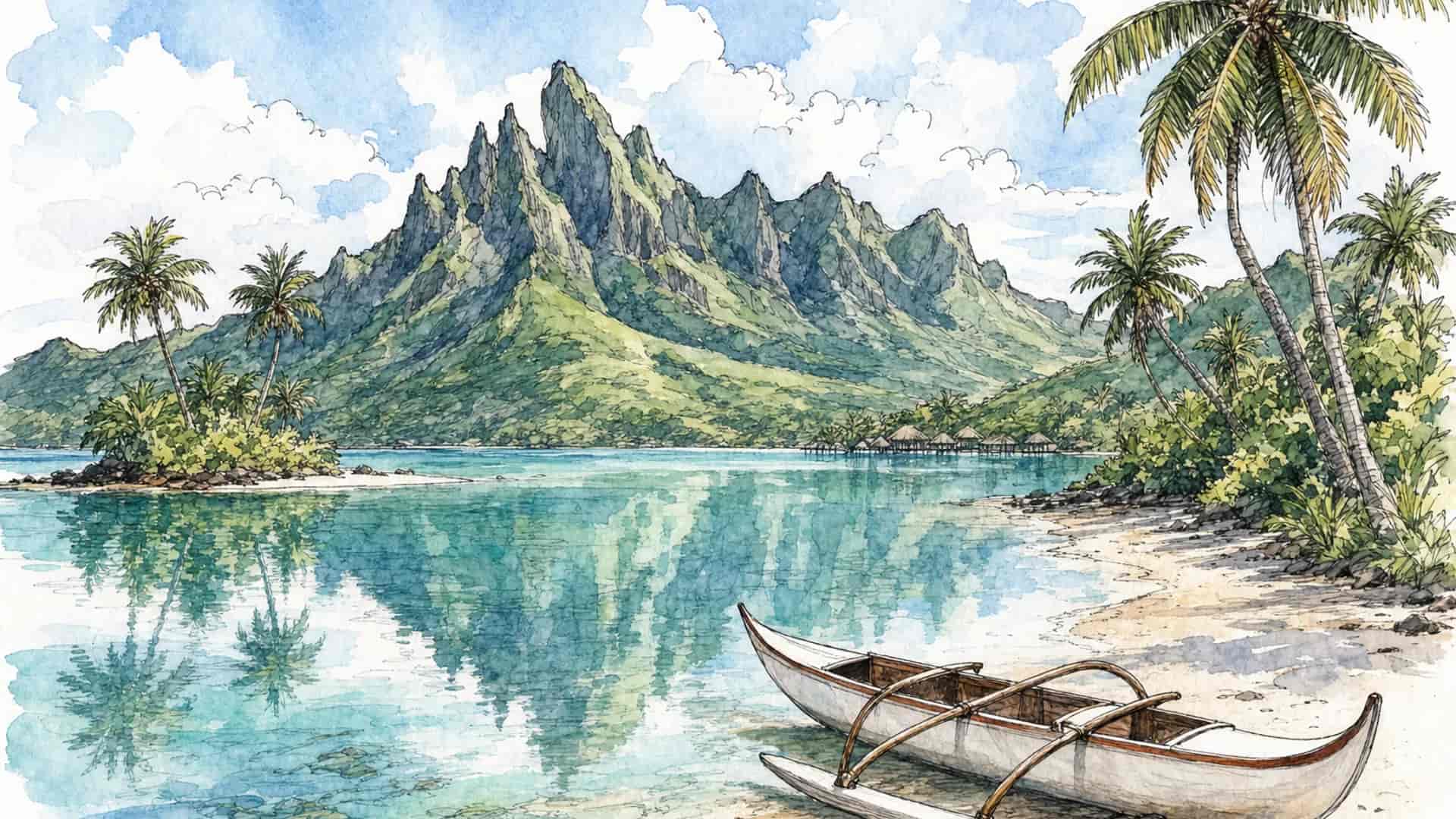
The largest and most populated island in French Polynesia, a volcanic paradise of rugged mountains, lush jungles, majestic waterfalls and unique black sand beaches.
Before you go
Quick answers to plan your trip with confidence

The largest and most populated island in French Polynesia, a volcanic paradise of rugged mountains, lush jungles, majestic waterfalls and unique black sand beaches.
Quick answers to plan your trip with confidence
Everything you need to know about Tahiti
Type
Island Destination
Length
45 km
Recommended Stay
5 days
Region
Society Islands
Tahiti is the beating heart of French Polynesia. Divided into two parts, Tahiti Nui (the largest) and Tahiti Iti (the peninsula), the island offers a fascinating contrast between the vibrant urban life of its capital, Papeete, and the wild, untamed nature of its interior. It is world famous for its volcanic landscapes, vanilla plantations, black pearls and the legendary Teahupo'o wave. Although it often serves as a gateway to other islands, Tahiti is deeply culturally rich, with ancient temples (marae) and legendary hospitality that defines the Polynesian spirit.
Papeete and its Municipal Market, the ideal place to feel local life and buy crafts.
Teahupo'o, home of the most extreme surfing competitions in the world.
Papenoo Valley, an unspoiled hinterland with rivers, waterfalls and impressive volcanic peaks.
Faarumai Waterfalls, three spectacular waterfalls surrounded by tropical vegetation.
Point Venus, historic site with an iconic lighthouse and black sand beaches.
Marae Arahurahu, a restored ancient Polynesian temple displaying sacred architecture.
Vaipahi Gardens, botanical trails with exotic flowers and sacred springs.
Humpback whale watching (July to November).
Discover the most fascinating and unmissable places on this coast
The best museum in the region to understand the history, culture and ethnography of Polynesia.
Recently renovated.
Each point of interest has its own unique history and magic
24-30°C
25-31°C
24-29°C
22-28°C
Maritime tropical climate. Wet season from November to April (more rain and humidity). Dry season from May to October, with cooler temperatures and clear skies.
The waters surrounding Tahiti are warm all year round, ranging between 26°C in August and 29°C in March. Visibility is excellent, especially outside of the rainy season.
At reef passes and surf breaks like Teahupo'o, the currents can be extremely powerful.
HighCoral is sharp and can cause cuts. It is recommended not to step on it to protect the ecosystem and avoid injuries.
MediumAlthough the main UNESCO site (Taputapuātea) is on the neighboring island of Raiatea, Tahiti is the center of preservation of the arts and traditions that form part of the region's intangible cultural heritage.
Descubre Papeete
Descubre Punaauia
Descubre Faa a
Everything you need to know to plan your visit
The best time is during the dry season, from May to October. July is especially vibrant because of the Heiva festival. If you are looking to see whales, travel between August and October.
Mosquitoes can transmit Dengue or Zika; use repellent. The sun is extremely strong. In Papeete, avoid walking alone through poorly lit areas of the port late at night.
Available in hotels and some cafes in Papeete. Don't expect a good connection in the interior of the island.
Buy a Vini or Vodafone SIM card at the airport upon arrival.
Use biodegradable sunscreen to avoid damaging the coral and wear booties to avoid cuts.
It's the only real way to explore the island at your own pace, especially to get to the remote viewpoints and beaches.
Don't miss the experience of dining at the food trucks at Place Vai'ete in Papeete to try local food at a good price.
'Ia Orana' (Hello) and 'Mauruuru' (Thank you) will open many doors and smiles for you.
Discover everything Tahiti has to offer
Discover the incredible coasts and marine landscapes of this destination
Famous beach of fine black sand where explorers such as Cook and Bligh landed. It offers calm waters and views of the historic lighthouse.
Fine black volcanic sand.
Calm waters, ideal for families.
Very safe, popular with locals.
Easy access by car, ample parking.
Free and extensive.
Several snacks and cafes nearby.
Showers, toilets, food and craft stalls.
The most popular white sand beach on the island, with great views of Moorea and crystal clear waters ideal for snorkeling.
Fine white/golden sand.
Clean, shallow and full of marine life.
Safe, protected by the reef.
Easy access via the ring road.
Parking available, but fills up on weekends.
Street vendors of fruit and snacks.
Public toilets and showers.
World famous for its heavy left wave. It is not a traditional bathing beach, but a place of pilgrimage for surfing and observing the power of the sea.
Stones and thick black sand.
Extremely dangerous in the wave area; quiet near the shore.
Only for expert surfers. Visitors must go by boat to see the wave.
End of the road in Tahiti Iti. Requires walking or going by boat.
Small parking lot at the end of the road.
A couple of local snacks (Roulottes).
Limited. Small guest houses.
Explore the charming towns that give life and character to this coast
The administrative capital. A bustling port with a vibrant market, waterfront gardens and a lively nighttime food scene.
Luxury residential area with the best hotels, spectacular views of Moorea and access to white sand beaches.
The isthmus that connects Tahiti Nui with Tahiti Iti. A rural center with a cooler climate and landscapes reminiscent of Normandy.
Dive into unique adventures and discover the sea from another perspective
From July to November, humpback whales visit Tahitian waters to breed. Respectful tours are organized to swim with them.
Protected areas where you can see reef sharks, rays and thousands of tropical fish in shallow waters.
From waves for beginners in Papenoo to the legendary Teahupo'o for professionals.
The national sport. It is possible to see the teams training at dusk or even take an introductory class.
Discover the best-kept secrets and unique corners few people know
The wild heart of the island. A 4x4 tour reveals gigantic waterfalls, archaeological remains and the original volcanic crater.
Only accessible with a guide or powerful 4x4 vehicle.
Grottoes surrounded by ferns with crystalline freshwater lakes inside. A cool and mystical place.
Free access to the main roadside.
A town at the end of the road in Tahiti Iti, considered by many to be the most beautiful place on the island for its views of the deep valleys.
Ideal to experience the most authentic Polynesian life.
Connect with nature and discover unique landscapes that will leave you breathless
The most famous hiking route. It offers incredible views of the island's ridges, although it is physically demanding.
A historic garden with exotic species from around the world and access to the lagoon.
Tahitian cuisine is a fresh mix of local products (fish, roots, fruits) with French and Chinese techniques.
Raw tuna marinated in lime juice and fresh coconut milk, served with chopped vegetables. The national dish.
Slow cooked pork, often served in markets.
Fish marinated in fermented seawater. Only for the most adventurous palates due to its strong smell.
Roasted breadfruit, a basic side dish rich in carbohydrates.
Natural juice from local pineapples, famous for their sweetness.
Tahiti's iconic beer, light and refreshing.
Tropical cocktail based on rum, fruit juices and almond liqueur.
A dessert pudding made with taro or banana, starch, and coconut milk.
Sweet bread made with coconut milk, sold hot on the roads.
Life in Tahiti is marked by vibrant cultural celebrations where dance and music are essential.
The most important cultural festival. Traditional dance, music and ancestral sports competitions that last all month.
World Surf League competition that brings together the best surfers in the world on the most dangerous wave.
The largest Polynesian canoe race in the world, which begins on the neighboring islands but is celebrated with fervor throughout Polynesia.
Complete evaluation based on multiple quality criteria
"Different from the typical image of white sand; Beautiful black volcanic sand beaches predominate here, although there are some white sand beaches in Punaauia."
"It is the cultural center of Polynesia. Museums, dance festivals (Heiva i Tahiti) and archaeological sites are abundant."
"There are local buses ('Le Truck'), but their schedules are irregular. Public transportation is limited outside the urban area of Papeete."
"A main road circles the island. It's easy to drive, although traffic in Papeete can be heavy at rush hour."
"Expensive destination. Most of the products are imported. However, eating at the 'Roulottes' (food trucks) is a cheaper option."
"Very safe and family-friendly, with parks, museums and quiet lagoons for children."
"Exquisite fusion of French and Polynesian cuisine. Raw fish with coconut milk is the national dish."
"Increasing efforts in reef protection and waste management, although mass cruise tourism is a challenge."
"It attracts adventurers and surfers as well as travelers seeking luxury and authentic culture."
"Paradise for surfing, diving, mountain hiking and Polynesian canoeing (Va'a)."
"Generally clean, especially in hotel areas and natural parks."
"Very safe for tourists. Basic caution is recommended in Papeete at night."
"Papeete has a chaotic, colonial charm, but the real beauty lies in the coastal towns and the Tahiti Iti peninsula."
"Dramatic landscapes of green mountains that fall vertically to the sea, hidden waterfalls and deep blue lagoons."
"Rich in reef sharks, rays, turtles and, seasonally, humpback whales."
"Tahiti is much more than a stopover; It is an island of powerful contrasts, vibrant culture and overwhelming volcanic nature."
✨ Destino Excelente
💭 "Tahiti is much more than a stopover; It is an island of powerful contrasts, vibrant culture and overwhelming volcanic nature."