Loading destination...
Loading destination...
Loading destination...
Loading destination...
Loading destination...
Loading destination...
Disfruta de las mejores playas y calas de Lhasa en una experiencia costera inolvidable.
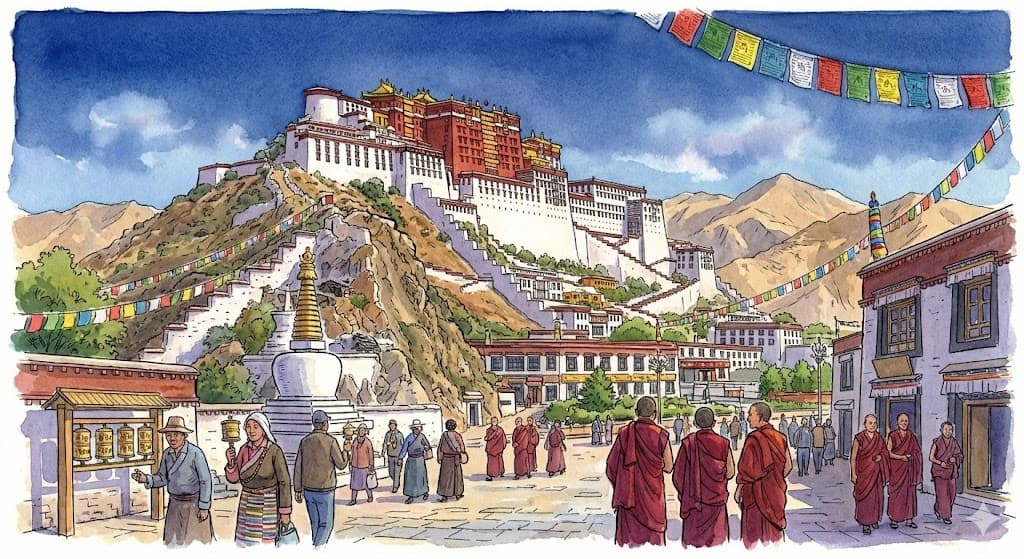
Lhasa, the spiritual and cultural capital of the Tibetan plateau at 3,656 meters above sea level, is one of the most fascinating and mystical cities on the planet. Crowned by the majestic Potala Palace and scented by juniper smoke and yak butter lamps, Lhasa offers a moving immersion into Tibetan Buddhism, where devout pilgrims perform continuous prostrations around the sacred Jokhang Temple.
TripMatches · Remember · Plan
Been to Lhasa or still want to go? Pick one and we'll take you straight to it.
One of the most crowded festivals. It begins at dawn at Drepung Monastery with the display of a gigantic Thangka tapestry of Buddha on the mountainside, followed by performances of traditional Tibetan opera (Ache Lhamo) and consumption of yak yogurt in the Norbulingka Gardens.
It commemorates the birth, enlightenment and entry into Parinirvana of Buddha Shakyamuni. Thousands of pilgrims dressed in their best traditional clothes make the sacred circuit around the Potala and Jokhang, giving alms and releasing captive animals.
The most endearing family and religious festival. Houses are decorated with auspicious symbols ('Dhar-chok'), fried pastries ('Kapse') are prepared and incense is burned on the roofs to welcome the new year.
One of the three great sacred lakes of Tibet. A mirror of unreal turquoise waters winding between mountains crowned by the snow-capped Mount Noijin Kangsang (7,191 m).
The 'Heavenly Lake', one of the highest salt lakes in the world (4,718 m). Framed by the imposing snow-capped Nyenchen Tanglha mountain range and sacred karst peninsulas (Tashi Dor).
One of the most sacred hermit centers in Tibet, carved into steep limestone cliffs where Guru Rinpoche and King Songtsen Gampo meditated.
The first Buddhist monastery founded in Tibet (8th century), designed as a cosmic three-dimensional mandala, located in the cradle of Tibetan civilization.
Historic citadel dominated by an imposing fort ('Dzong') and the great nine-story Kumbum stupa with dozens of chapels full of 15th century mural frescoes.
Scores by category
Nestled in a valley flanked by colossal desert mountains under a cobalt blue sky of unsurpassed clarity.
One of the safest cities on the planet in terms of street crime or common crimes.
The city has a very efficient urban maintenance and cleaning service both in the monumental squares and in the historic districts.
Discover the full guide with history, detailed itineraries, practical tips and all the information you need.
View full guidePause your morning walk through Barkhor to eat homemade momos and drink sweet tea in the flowery courtyard of the Ani Tsankhung Female Nunnery, away from the crowds.
Arrive at Sera Monastery promptly at 3pm Monday to Saturday to stand in the shade of the gravel courtyard and watch the vibrant monastic debates.
Always walk clockwise around temples, stupas ('Chortens'), monasteries and prayer wheels. Never turn in the opposite direction (reserved only for the Bön shamanic religion).
Take off hats, sunglasses and dress warmly with covered shoulders and legs. Do not touch the heads of children or consecrated images.
Always carry lip balm, factor 50+ sunscreen, polarized sunglasses and a hat. Ultraviolet radiation at this altitude burns quickly.
In any pharmacy or store in Lhasa you can buy small bottles of compressed oxygen for 20-30 yuan if you feel fatigue or dizziness when walking.
Lhasa is at 3,656 meters. The first day, rest completely at the hotel, do not make physical efforts, drink at least 3 liters of water and avoid showering with very hot water to prevent headaches or hypoxia.
On the outskirts of monasteries and rural areas there may be shepherd dogs loose. Do not try to pet them or approach them without the presence of a local guide.
TripMatches · Remember · Plan
Been to Lhasa or still want to go? Pick one and we'll take you straight to it.
Access the full profile: attractions, weather, gastronomy, events and more.
Discover this destination in depth