Guide de voyage général : La perle de la mer orientale
Les Philippines sont un archipel qui vous ravira le cœur. Avec son slogan « C'est plus amusant aux Philippines », le pays promet et tient ses promesses, en proposant une aventure sur chacune de ses milliers d'îles. C'est un endroit où la nature se montre dans sa splendeur maximale : des plages qui semblent tout droit sorties d'un rêve et des fonds marins qui sont un arc-en-ciel de vie, jusqu'aux volcans parfaits et aux rizières qui escaladent les montagnes. Mais le véritable trésor des Philippines, ce sont ses habitants. Les Philippins, avec leur sourire éternel et leur incroyable hospitalité, vous feront sentir comme chez vous. Sa culture est un melting-pot fascinant, un mélange de traditions malaises, d'héritage colonial espagnol et de touches américaines modernes. Préparez-vous pour un voyage de paysages à couper le souffle, de saveurs exotiques et d'expériences humaines inoubliables.
Capital
Manila
Population
109.581.078
Langue
TL, Anglais
Sites du patrimoine de l'UNESCO
0
Indices de voyage
Scores basés sur des données réelles de 0 à 100
Le meilleur de Philippines
Expériences uniques
Faites un « tour d'île en île » à Palawan
C'est l'expérience philippine par excellence. Elle consiste à naviguer à bord d'un 'bangka' (bateau traditionnel à balancier) pour explorer des îles désertes, des lagons secrets aux eaux turquoise et des plages de sable blanc. El Nido et Corón sont les points de départ les plus célèbres de ces excursions, qui incluent souvent un délicieux déjeuner de poisson grillé préparé par l'équipage sur une plage paradisiaque.
Voyager en Jeepney
Les jeepneys sont le moyen de transport public coloré et emblématique des Philippines. Fabriqués à l’origine à partir de jeeps militaires américaines de la Seconde Guerre mondiale, ils se parent aujourd’hui de designs extravagants et vibrants. Monter à bord et voyager aux côtés des locaux est une immersion culturelle bruyante, chaotique et absolument authentique dans la vie philippine.
Chanter dans un karaoké
Le karaoké est plus qu'un passe-temps aux Philippines ; C'est une passion nationale. Vous le trouverez partout, des bars et restaurants aux maisons. Peu importe que vous ayez une bonne ou une mauvaise voix, les Philippins vous encourageront à prendre le micro et à chanter. C'est une façon incroyablement amusante de socialiser et de partager des rires.
Vivez une fête locale (Fiesta)
Les Philippines ont un calendrier rempli de « jours fériés » en l'honneur des saints patrons, des événements historiques ou des récoltes. Des festivals comme Sinulog à Cebu ou Ati-Atihan à Kalibo remplissent les rues de défilés, de danses en costumes colorés et de musique tonitruante. Participer à une fête, c'est être témoin du dévouement, de la joie et de l'esprit communautaire du peuple philippin.
Manger avec les mains (Kamayan)
La façon traditionnelle de manger aux Philippines est le « Kamayan », avec les mains. La nourriture est servie sur une grande feuille de bananier et partagée entre tous. C'est une expérience tactile et communautaire qui vous connecte plus profondément à la cuisine et à la culture locales. De nombreux restaurants proposent cette option pour les groupes.
Explorez les rizières en terrasses de Batad
Considérées par beaucoup comme la « huitième merveille du monde », ces terrasses vieilles de 2 000 ans ont été creusées dans les montagnes par la tribu Ifugao. Trekking à travers ces paysages spectaculaires, voir comment les locaux continuent de cultiver du riz de manière traditionnelle et se baigner dans la cascade de Tappiya est une expérience qui vous transporte dans un autre monde.
Un festin de saveurs acidulées, salées et sucrées
La cuisine philippine est une fusion passionnante d'influences malaises-polynésiennes, chinoises, espagnoles et américaines. Il se caractérise par sa combinaison unique de saveurs acides, salées (alat) et sucrées (tamis). Le riz est le pilier de chaque repas, et le vinaigre, la sauce soja et le calamansi (un citron vert local) sont des ingrédients essentiels dans votre garde-manger.
Sawsawan (sauces trempettes)
Aucun repas philippin n'est complet sans une variété de « sawsawan ». Chaque convive prépare généralement sa propre sauce en mélangeant des ingrédients tels que la sauce soja, le vinaigre, le calamansi, l'ail, l'oignon et le piment. Cette personnalisation permet à chacun d'équilibrer les saveurs du plat à sa guise.
Collation
Les Philippins ne mangent pas seulement trois repas par jour. Le « snack » est un repas léger qui se prend en milieu de matinée et en milieu d'après-midi. C'est un élément important de la culture sociale et une occasion de savourer des spécialités telles que le pancit, le kakanin (gâteaux de riz) ou un halo-halo rafraîchissant.
Plats Iconiques
Pansement
Considéré officieusement comme le plat national, l'adobo est un ragoût qui peut être composé de poulet, de porc ou des deux, mariné et mijoté dans une sauce composée de vinaigre, de sauce soja, d'ail, de feuilles de laurier et de grains de poivre noir. Chaque famille a sa propre recette, mais le résultat est toujours un plat savoureux et réconfortant.
Sinigang
Une soupe aigre et savoureuse qui définit l'amour des Philippins pour les saveurs acidulées. Traditionnellement, l'acidité vient du tamarin, mais d'autres fruits comme le calamansi ou le kamias peuvent également être utilisés. Il est préparé avec de la viande (porc, bœuf) ou du poisson et une grande variété de légumes.
porcelet
Le plat star de toute célébration. Il s'agit d'un cochon entier rôti lentement sur du charbon de bois jusqu'à ce que la peau soit incroyablement croustillante et que la viande soit tendre et juteuse. Le cochon de Cebu est particulièrement réputé dans tout le pays.
Sisig
Originaire de la région de Pampanga, ce plat est une entrée populaire servie grésillante sur une assiette chaude. Il est composé de parties de tête de porc finement hachées et cuites, assaisonnées de calamansi, d'oignons et de piments.
Kare-Kare
Un ragoût riche et crémeux avec une sauce aux arachides épaisse et caractéristique. Traditionnellement, il est préparé avec de la queue de bœuf, mais il peut également inclure d'autres viandes et une variété de légumes comme des aubergines et des haricots verts. Il est servi avec du « bagoong » (pâte de crevettes fermentée) en accompagnement.
Pancit
Introduit par les commerçants chinois, le « pancit » (nouilles) est devenu un pilier de la cuisine philippine. Il en existe d'innombrables variétés, mais l'une des plus courantes est le Pancit Bihon, de fines nouilles de riz sautées avec des morceaux de viande, des crevettes et des légumes.
Boissons typiques

Bière San Miguel
La bière la plus connue et consommée du pays. Le San Miguel Pale Pilsen est une icône nationale, mais la marque propose de nombreuses autres variétés. C'est le compagnon idéal du climat tropical des Philippines.
Jus de Calamansi
Le Calamansi est un petit agrume, hybride entre la mandarine et le kumquat, et son jus est incroyablement rafraîchissant. Il est servi froid, souvent sucré avec un peu de miel ou de sucre.
Jus de Buko (eau de coco)
Directement issue de la jeune noix de coco (buko), cette boisson est la quintessence de l'hydratation tropicale. La noix de coco est souvent servie entière, froide, avec une paille. Parfois, la chair tendre de la noix de coco est également ajoutée.
Sago't Gulaman
Une boisson sucrée et rafraîchissante très appréciée dans les échoppes de rue. Il se compose d'un sirop de cassonade (arnibal) avec des perles de tapioca (sago) et des cubes de gélatine (gulaman).
Desserts traditionnels
Halo-Halo
Le dessert philippin par excellence, qui signifie « mélange-mélange ». Il s'agit d'un mélange coloré et extravagant de glace pilée, de lait concentré et d'une variété de garnitures comme des haricots sucrés, des gelées, des fruits confits et du « flan au leche », le tout surmonté d'une boule de glace « ube » (igname violette).
Flan au Lait
Hérité de la cuisine espagnole, c'est un flan aux œufs incroyablement riche et crémeux. La version philippine utilise beaucoup de jaunes d'œufs et de lait concentré, ce qui lui donne une texture plus dense et une saveur plus intense que le flan traditionnel.
Ube Halaya
Un pudding épais et sucré composé d'ube (igname violette) râpée, de lait de coco et de sucre. Sa couleur violette vibrante est totalement naturelle. Il peut être consommé seul ou comme ingrédient dans d'autres desserts comme le halo-halo.
Biko
Un gâteau de riz gluant (kakanin) très populaire. Le riz est cuit avec du lait de coco et du jaggery, et est souvent garni de « latik », qui sont les restes solides et grillés laissés lorsque le lait de coco est réduit.
Que voir par thème
Les Philippines sont un pays si diversifié qui offre des possibilités infinies. Nous vous proposons ici différentes manières de découvrir ses nombreux trésors, des plages de rêve aux cultures anciennes.
Plages paradisiaques et vie insulaire
Avec plus de 7 000 îles, le choix de plages est infini. Palawan (El Nido et Corón) est célèbre pour ses lagons et ses falaises. Boracay pour son sable blanc et fin. Siargao pour ses vagues parfaites pour le surf et son ambiance détendue. Et des moins connues comme Malapascua ou Bantayan offrent une escapade plus tranquille.
Un monde sous-marin spectaculaire
Les Philippines sont l’une des meilleures destinations de plongée et de snorkeling au monde, située au cœur du Triangle de Corail. Le parc naturel du récif de Tubbataha est un sanctuaire marin protégé par l'UNESCO. À Corón, vous pourrez explorer des épaves de la Seconde Guerre mondiale. À Malapascua, vous pouvez plonger avec l'insaisissable requin renard, et sur l'île d'Apo, vous pouvez voir des tortues partout.
Paysages verdoyants et aventures en montagne
Au-delà des plages, l'intérieur des Philippines est spectaculaire. Les rizières en terrasses de Banaue et Batad, dans la Cordillère, témoignent de l'ingéniosité humaine en harmonie avec la nature. À Bohol, les Chocolate Hills offrent un paysage unique. Le pays est également parsemé de volcans, comme le Mayon parfaitement conique ou le Pinatubo avec son lac de cratère.
Patrimoine colonial et racines historiques
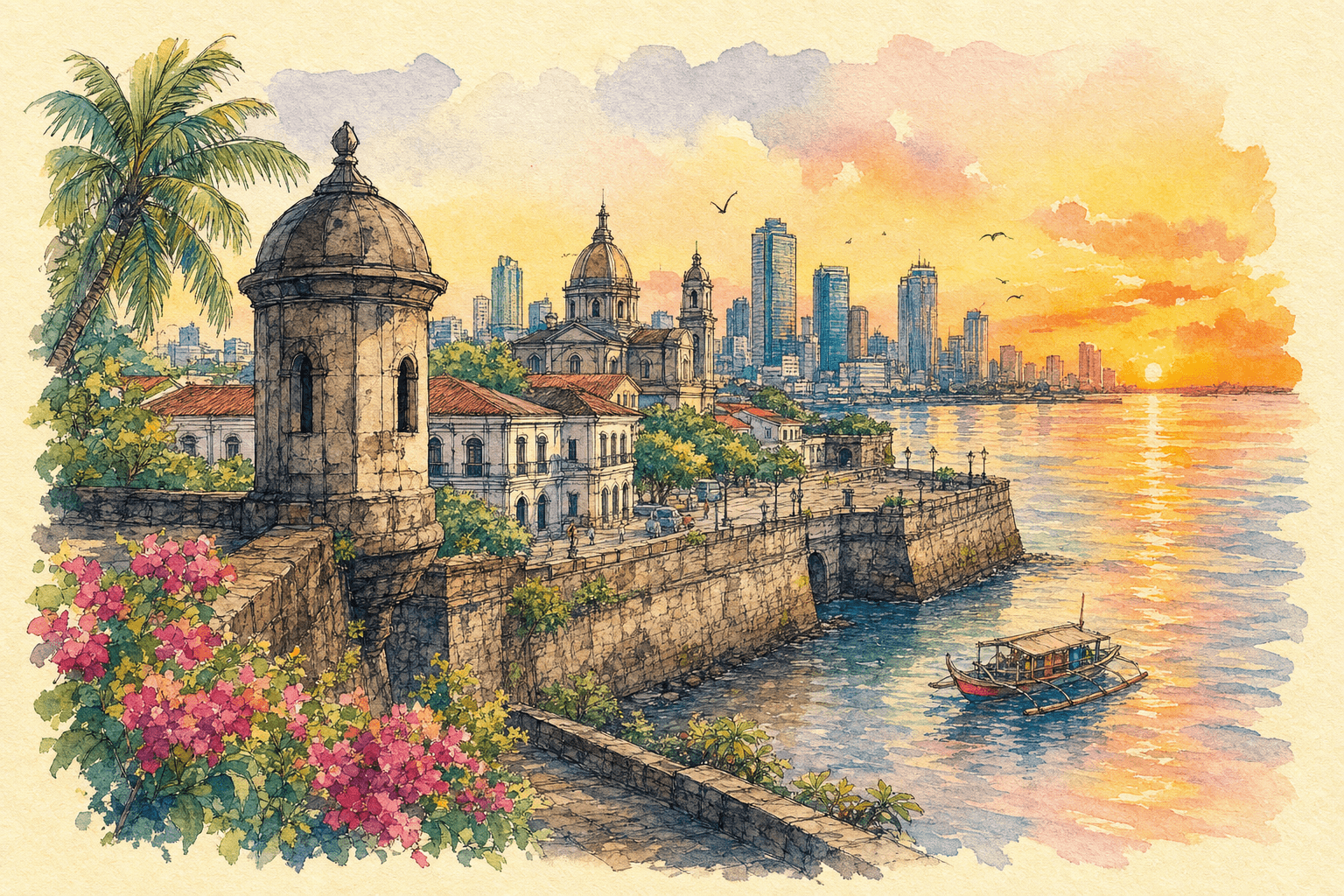
Les 300 ans de domination espagnole ont laissé une marque indélébile. La ville fortifiée d'Intramuros à Manille vous fait voyager dans le temps avec ses églises en pierre et ses rues pavées. Vigan, au nord, est la ville coloniale espagnole la mieux conservée d'Asie, avec ses maisons ancestrales et ses calèches.
Culture ancestrale et traditions vivantes
Dans les régions les plus reculées, vous pourrez découvrir les cultures indigènes des Philippines. Dans les montagnes de Luçon, les tribus Ifugao continuent d'entretenir leurs rizières en terrasses. À Sagada, vous pourrez observer la tradition unique des cercueils suspendus. La visite de ces communautés offre un aperçu fascinant de la diversité culturelle du pays.
Fêtes, couleurs et joie
La vie philippine est marquée par les fêtes. Presque chaque ville a sa propre fête, la plupart d'origine religieuse mais célébrée avec une ferveur incroyable. Le Sinulog de Cebu en janvier, l'Ati-Atihan de Kalibo et le Panagbenga (festival des fleurs) de Baguio sont parmi les plus grands et les plus spectaculaires, remplis de défilés, de musique et de danse.
Conseils de voyage
Salutations et courtoisie
L'hospitalité est essentielle. Les Philippins sont très amicaux et respectueux. Il est courant d'utiliser « po » et « opo » lorsque l'on parle aux personnes âgées pour montrer leur respect. Un sourire et un « Salamat » (merci) seront toujours bien reçus.
Transport interne
Pour se déplacer entre les îles, les vols intérieurs et les ferries sont la principale option. Dans les villes et villages, les moyens de transport les plus courants et les plus économiques sont les tricycles (motos avec side-car) et les jeepneys emblématiques et colorés. Mettez-vous toujours d’accord sur le prix du tricycle avant de monter à bord.
Langue
Les langues officielles sont le philippin (basé sur le tagalog) et l'anglais. L'anglais est largement parlé, notamment dans les zones touristiques et par les jeunes générations, ce qui facilite grandement la communication.
Conseils et négociations
Le pourboire n’est pas obligatoire mais est très apprécié, surtout si le service a été bon. Dans les restaurants, vous pouvez laisser 10 %. Le marchandage (« tawad ») est une pratique courante sur les marchés locaux et lorsque l'on prend un tricycle, mais cela doit toujours se faire avec le sourire et de manière respectueuse.
Ce guide vous offre un aperçu de l'immense beauté et de la diversité des Philippines. Chaque île a sa propre personnalité et ses secrets à découvrir. Nous vous encourageons à explorer au-delà des destinations connues, à interagir avec la population locale et à vous laisser emporter par le rythme détendu et joyeux de la vie insulaire. Les Philippines ne sont pas seulement un endroit à visiter, c'est un sentiment qui reste avec vous. Mabuhay et bon voyage !
Chargement peut-être...
Avant de partir
Réponses rapides pour planifier votre voyage en toute confiance
- 62Sécurité
- 32Abordable
Tout près d'ici
Escapades faciles et day trips pour prolonger votre itinéraire


TripPlanner
Créez votre itinéraire parfait
Chargement...
Votre profil de voyageur
Découvrez votre style de voyage
Chargement...