TripMatches · Remember · Plan
Been to Ubud or still want to go? Pick one and we'll take you straight to it.
About Ubud - Culture, History & Character
Indonesian is the official language and Balinese is spoken in daily life. English is very common in Ubud due to its intense international tourism.
Quick answers to plan your trip with confidence
95
95
93
93
93Easy day trips and short hops to stretch your itinerary
95
95
93
93
93
95
93
93
92.jpg&w=1920&q=75)

One of Southeast Asia's most important literary festivals, with international writers, debates and culture.
.jpg&w=1920&q=75)
The Balinese New Year, a day of total silence across the island with no activity, light or traffic. A unique experience.
Places that share a similar travel vibe
More ideas travelers often discover next
RankingRanked by art and culture: museums, heritage, and creative scenes.
RankingGreat destinations for digital nomads: wifi, coworking and lifestyle.
RankingUrban bases with the most nature nearby.
RankingCities with plenty of nature nearby — city life plus beach access.
RankingBalearics and Canaries ranked by natural beauty and island experience.


Plan your perfect trip with our personalized recommendations and local insights.
Plan my tripWe refresh this guide with geographic and community data so you can discover with confidence.
Explora el fascinante pasado de Ubud y descubre cómo se ha desarrollado a lo largo de los siglos.
Ubud grew around a temple and a royal palace (Puri Saren) of the Sukawati dynasty, which ruled the region from the 19th century. The area was historically a center of traditional medicine and Balinese spirituality, with the Campuhan river valley considered sacred.
In the 1930s, the arrival of Western artists such as Walter Spies and Rudolf Bonnet put Ubud on the world art map, boosting local painting, dance and crafts. Its fame grew in the following decades with Bali's cultural tourism boom, while keeping its artisanal and spiritual identity.
In the 21st century, Ubud has become a world reference for wellness tourism, yoga and healthy food, without losing its cultural essence. Elizabeth Gilbert's 'Eat, Pray, Love' and the rise of digital tourism have made Ubud one of Asia's most desired destinations, attracting millions of visitors every year.
La cronología histórica muestra los momentos clave que han definido el desarrollo de Ubud a lo largo de los siglos.
Discover what makes this city special with our comprehensive scoring system
A safe and quiet destination, with the usual risks of traffic and minor tourist scams.
Ubud's center is walkable, but streets are narrow with traffic; many attractions are spread out.
Public transport is almost nonexistent; renting a scooter, hiring a driver or using ride apps is the norm.
Very affordable: accommodation, food and wellness activities have excellent prices by Western standards.
Quiet, bohemian nightlife: cocktail bars, live music and wellness events, far from the bustle of Seminyak or Kuta.
Bali's artistic epicenter: Balinese dance, painting, sculpture, art market and Hindu ceremonies.
An excellent food scene: Balinese warungs, fusion restaurants and one of the world's best vegan and healthy food offerings.
The Ubud Art Market and its streets offer Balinese crafts, clothing, jewelry and decor at good prices.
Tropical climate, warm all year, with an ideal dry season (April-October) and winter rains.
A mature, welcoming tourist destination with something for everyone: culture, nature, wellness and food.
A good family destination: nature, monkeys, rice terraces and activities for kids, though traffic and heat require patience.
Bali is Indonesia's most tolerant area, and Ubud hosts an open international community, though Indonesian law remains restrictive.
Balinese people are famous for their kindness, smile and genuine hospitality.
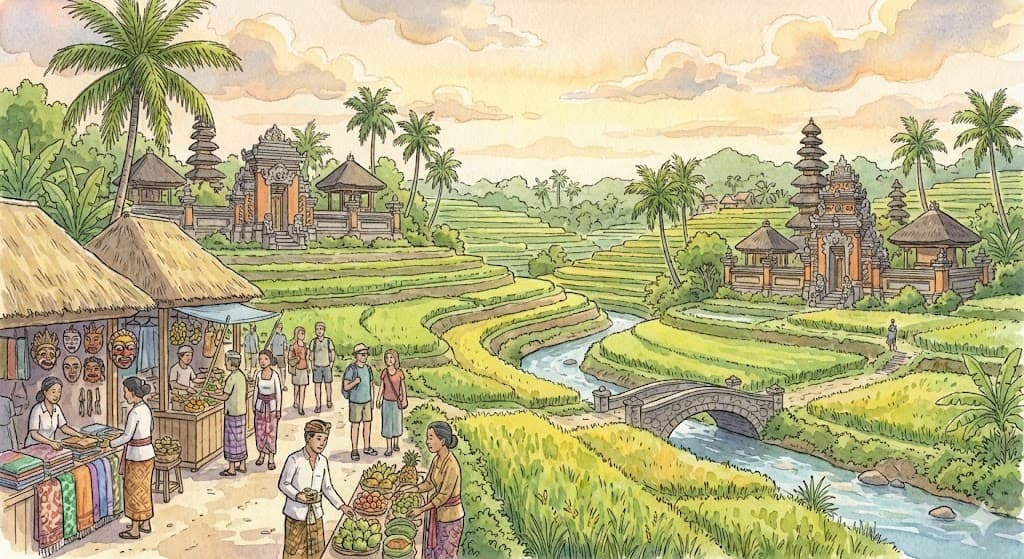
Emerald rice terrace landscapes, tropical jungle, rivers and volcanoes: lush, highly photogenic natural beauty.
Traditional Balinese architecture: ornate temples, 'candi bentar' gates, royal palaces and tropical-style villas.
Center of Balinese art, religion and royalty, with ancient temples and Hindu traditions unique in the world.
Surrounded by rice terraces, tropical forests and rivers: lush nature around the corner.
The center is clean and well kept, although waste management and traffic are a growing challenge in Bali.
An ecosystem of nomads, wellness startups and creative technology, though more limited than Canggu or South Bali.
One of the world's digital nomad capitals: fast wifi, work-friendly cafes, coworking spaces and a huge community.
Comprehensive assessment of this destination
Ubud is a unique experience: living Balinese culture, lush nature, wellness and exceptional food at unbeatable prices. Essential for any trip to Bali.
Discover the best times to visit Ubud and what to expect throughout the year.
Tropical climate, warm all year, with an ideal dry season (April-October) and winter rains.
Transition with occasional rain; the vegetation is lush.
Dry season and the best time for hiking and green rice terraces.
Pleasant climate and emerald landscapes; a good time to visit.
Rainy season (November to March): intense but brief showers and a fresh atmosphere.
Constantly warm temperatures.
Rain freshens the air and greens the landscape.
In the rainy season, afternoon storms are frequent.
The dry season (April-October) is the best time; in the wet season it often rains in the afternoon.
Temperatures are warm all year; it cools down in the early morning.
Plan your expenses and discover the best shopping areas
Daily spending per person
Ubud offers an excellent value for money: very affordable accommodation, cheap local food and reasonable prices for luxury and wellness options.
per day
per day
per day
Explore the most fascinating places this city has to offer
A natural sanctuary in the heart of Ubud where hundreds of long-tailed macaques live among temples and jungle. An unmissable and highly photogenic visit (with food safety rules).
The famous amphitheater-shaped rice terraces about 20 minutes from Ubud, with viewpoints, swings and trails through the fields. An icon of the Balinese landscape.
The royal palace of Ubud, residence of the Sukawati royal family, with traditional Balinese architecture and evening dance performances.
A sacred water temple about 30 minutes from Ubud, famous for its ritual purification pools (melukat) where locals and visitors bathe.
A scenic 2 km walk along a green ridge between rivers and palm trees, perfect at sunrise or sunset, with views over the rice fields and jungle.
An impressive waterfall in the jungle about 20 minutes from Ubud, with natural pools for swimming and observation platforms.
Ubud's traditional market, full of Balinese crafts: baskets, batik, jewelry, sculptures and souvenirs. Bargaining is essential.
Haz clic en "Tours" para encontrar las mejores actividades y entradas, o usa "Planificar" para crear tu itinerario personalizado.
Discover fascinating destinations near Ubud perfect for day getaways
Bali's largest and most important Hindu temple, on the slopes of Mount Agung, about 2 hours from Ubud. Spectacular scenery and deep spirituality.
An excursion to the north of the island to see the Gitgit waterfalls, the Jatiluwih rice terraces (UNESCO) and the atmosphere of Singaraja.
A sunrise climb of Mount Batur (1,717 m) to watch the sun rise over the lake, followed by a soak in the Toya Devasya hot springs.
Haz clic en "Tours" para encontrar excursiones organizadas, o usa "Plan" para crear tu itinerario personalizado.
Ready-made plans you can save — and soon turn into your trip.
Discover the unique character and charm of each city district.
Around the palace and market: shops, restaurants, cafes and the highest concentration of tourist life.
Area west of the river, with the Campuhan Ridge Walk, luxury boutique hotels and villas with jungle views.
Quieter, greener neighborhoods ideal for yoga and disconnection, with rice terraces and rivers.
Discover the best experiences and activities for each time of year
From April to October, the best time to explore the rice terraces, the Campuhan Ridge and the waterfalls under clear skies.
From November to March, afternoon rains green the landscape and temples fill with ceremonies; prices drop and there are fewer crowds.
Discover the most important events and festivals celebrated throughout the year
One of Southeast Asia's most important literary festivals, with international writers, debates and culture.
The Balinese New Year, a day of total silence across the island with no activity, light or traffic. A unique experience.
Fotos reales compartidas por la comunidad de viajeros que han estado en Ubud.