Preparing the experience...
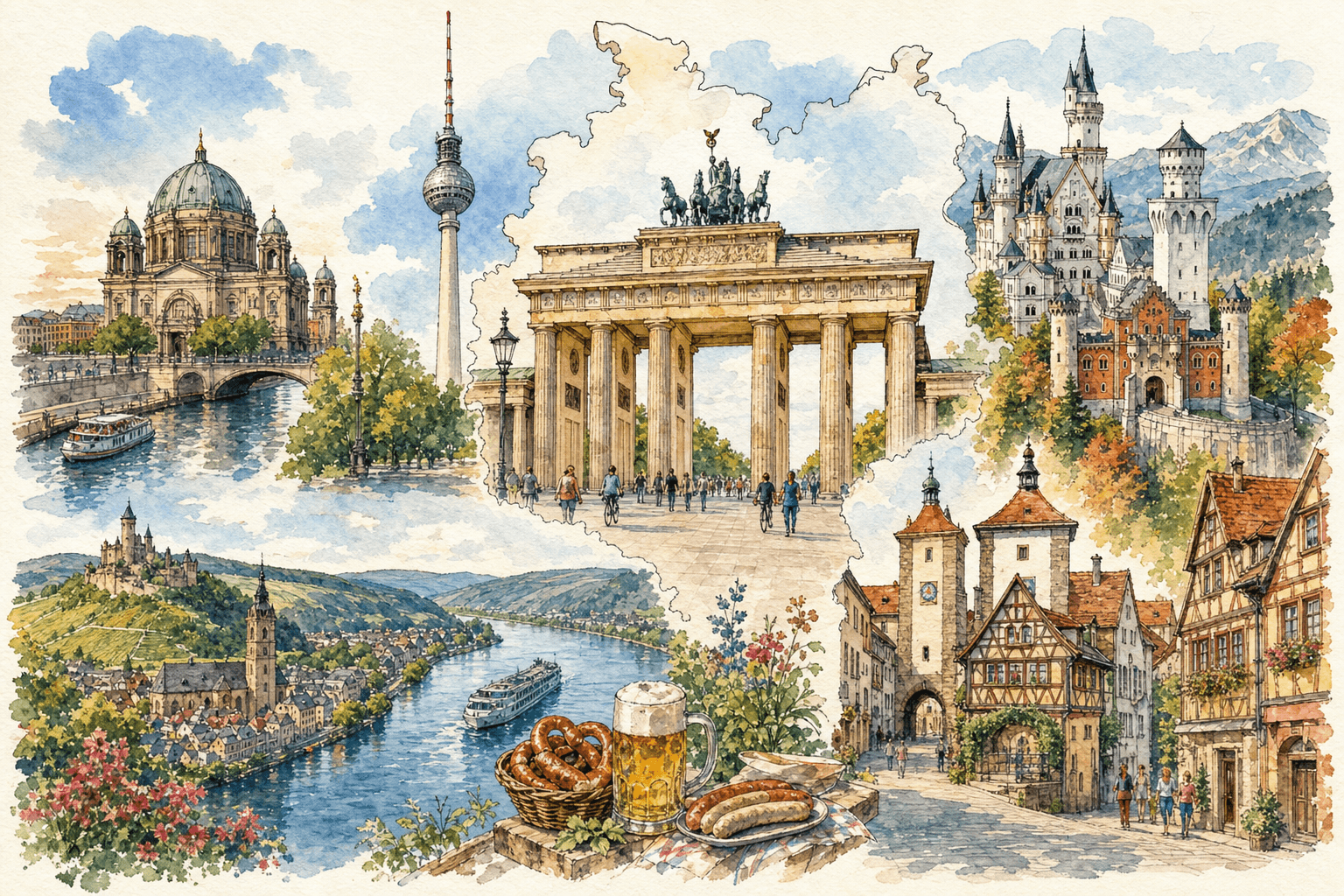
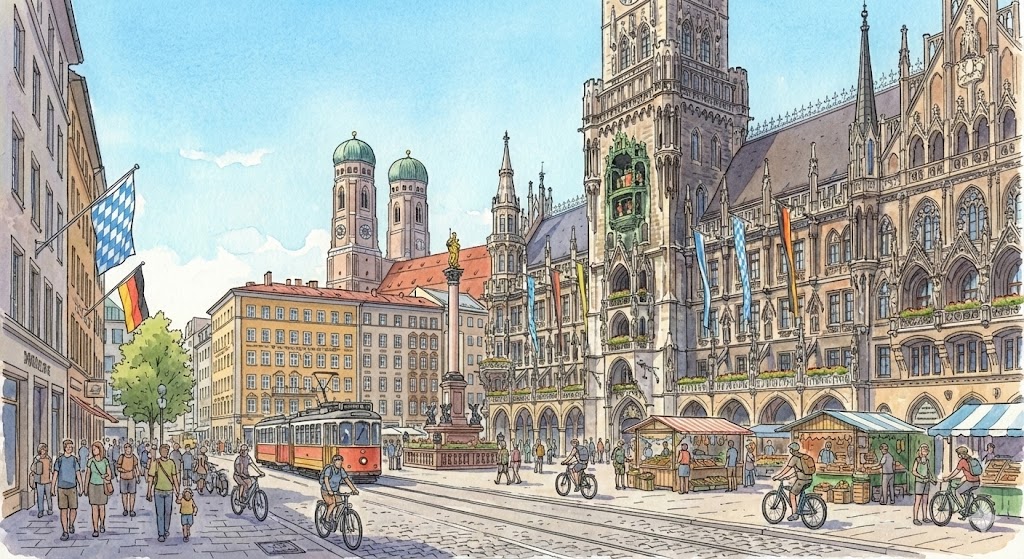
Bavaria is the proud and picturesque heart of Germany, a land of spectacular contrasts where the high-tech modernity of cities like Munich coexists with deeply rooted ancient traditions. It is a state of grandiose landscapes: from the snow-capped peaks of the Alps reflected in crystal-clear lakes like the Königssee, to the rolling vineyards of Franconia and the old-growth forests of the Bavarian Forest. Here, romance comes to life in the dream castles of King Ludwig II, the festive spirit explodes in the Oktoberfest tents and history resonates in the medieval towns of the Romantic Road. Traveling through Bavaria is a feast for the senses: the taste of a Weissbier beer in a Biergarten, the sound of an 'oompah' band, the view of a town with painted facades (Lüftlmalerei) and the magical atmosphere of the Christmas markets.
Descubre las ciudades más fascinantes de Bayern

Munich estará disponible próximamente con información completa y detallada.
Nuremberg estará disponible próximamente con información completa y detallada.
Augsburg estará disponible próximamente con información completa y detallada.
Regensburg estará disponible próximamente con información completa y detallada.
Bavarian festivals ('Feste') are legendary and a fundamental part of social life. They are celebrations of tradition, community, food and, above all, beer, lived with joy and pride.
From mid-September to the first Sunday in October.
The largest folk festival in the world. Millions of visitors gather in Munich in huge beer tents to drink the special 'Oktoberfestbier' beer, enjoy traditional food, fairground rides and live music.
Advent (end of November until December 24).
One of the oldest and most famous Christmas markets in the world. Its main square is filled with red and white striped wooden stalls selling mulled wine (Glühwein), Nuremberg gingerbread (Lebkuchen) and crafts.
During Lent (March/April).
The 'Strong Beer Festival' is the local and less touristy alternative to Oktoberfest. The breweries serve their extra strong 'Bock' beers in a rustic and traditional atmosphere.
Every four years, for three weeks in summer.
One of the largest historical recreations in Europe. The entire town of Landshut goes back to the Middle Ages to recreate a duke's wedding from 1475, complete with parades, knightly tournaments and medieval encampments.
Three weekends in July.
The largest medieval jousting tournament in the world, taking place on the grounds of Kaltenberg Castle. It includes a huge medieval market, shows and combats of knights on horseback.
Bavarian cuisine is hearty, rustic and tasty, designed to accompany its famous beer. It focuses on roast meat, sausages, doughs (Knödel) and sharing dishes in a cozy and communal atmosphere ('gemütlich').
White beef and pork sausage, a Bavarian breakfast classic. It is traditionally not eaten after midday and is served with sweet mustard, a 'Brezn' (pretzel) and wheat beer.
Pork knuckle slowly roasted until the skin is incredibly crispy and the meat is tender. It is usually served with a potato 'Knödel' and beer sauce.
The German version of macaroni and cheese. They are homemade egg noodles mixed with melted cheese and topped with crispy fried onion. A hearty vegetarian dish.
Literally 'liver cheese', although it usually does not contain liver or cheese. It is a type of baked meatloaf served hot in a thick slice inside a bun (Semmel).
Essential garnishes. They can be 'Semmelknödel' (made from rolls) or 'Kartoffelknödel' (made from potatoes), and are perfect for absorbing sauces from roasts.
A spicy Bavarian cream cheese spread, made by blending soft cheeses (such as Camembert) with butter, paprika, and other spices. It is a 'Biergarten' classic.
The national drink of Bavaria. It is essential to try a 'Weißbier' or 'Weissbier' (wheat beer), a 'Helles' (light blonde) or a 'Bock' (strong beer). It is served in half-liter or one-liter jugs ('Maß').
A refreshing and very popular mix of 'Helles' beer and lemonade or lemon soda. Ideal for hot days.
A very popular non-alcoholic drink, which mixes cola with orange soda. Several brands produce it, Paulaner Spezi being one of the best known.
The wine came from the Franconian region, north of Bavaria. It is known for its dry white wines, especially from the Silvaner grape, and its characteristic flattened bottle, the 'Bocksbeutel'.
A thin puff pastry filled with apples, raisins and cinnamon. Although it is of Austrian origin, it is a very popular dessert throughout Bavaria, often served hot with vanilla sauce or ice cream.
Another favorite of Austrian origin. They are a type of thick and spongy crepes, cut into pieces, sautéed with butter and sugar, and served with fruit compote.
Some steamed yeast dough buns, which can be sweet or savory. The sweet version is often served as a main course with vanilla sauce.
The famous Nuremberg gingerbread, a spiced cookie with dried fruits that is a symbol of Christmas markets. It has a protected geographical indication.
A baroque palace of exceptional magnificence and coherence.
A masterpiece of Bavarian Rococo, perfectly integrated into an alpine environment.
A unique example of a central European medieval city, with its town hall in the middle of the river.
The only large medieval urban center in Germany that has been preserved intact.
Remains of the ancient Roman border that crossed Bavaria.
Considered the most beautiful surviving baroque opera in the world.
A pioneering system of canals, water towers and fountains dating back to the 14th century.
Summer (June-August) is perfect for hiking in the Alps and enjoying the 'Biergärten'. Autumn (September-October) is ideal for the mild climate, the colors of the forest and, of course, the Oktoberfest. The Advent and Christmas season transforms cities with its magical markets. Spring (April-May) offers pleasant temperatures and fewer crowds than summer. Winter is the best time for snow sports.
Book accommodation for Oktoberfest a year in advance as prices skyrocket and availability is minimal. The weather in the Alps can change very quickly; Always be prepared for rain and cold, even in summer. Although credit cards are widely accepted in hotels and large stores, many small restaurants, markets and 'Biergärten' only accept cash. If you drive, be aware of the 'Umweltzonen' (environmental zones) in large cities, which require a special sticker for the vehicle.
Start planning your perfect trip to this amazing region