Preparing the experience...
Ceuta is a unique Spanish city, embraced by the sea on the northern coast of Africa and watched over by the mythical column of Hercules of Monte Hacho. Its strategic position in the Strait of Gibraltar, where the Atlantic and the Mediterranean meet, has marked its history as a stronghold and melting pot of civilizations. Its most impressive heritage is its Royal Walls, a monumental complex with a saltwater moat that is the only navigable one in the world and that turns the heart of the city into an island. Ceuta is a mosaic where Christian, Muslim, Hebrew and Hindu cultures coexist in harmony, reflected in its daily life and its Temple Route. Visiting Ceuta is discovering an impregnable fortress, enjoying a mild microclimate all year round and feeling the pulse of a city that is a natural bridge between Europe and Africa.
Descubre las ciudades más fascinantes de Ceuta
Start planning your perfect trip to this amazing region
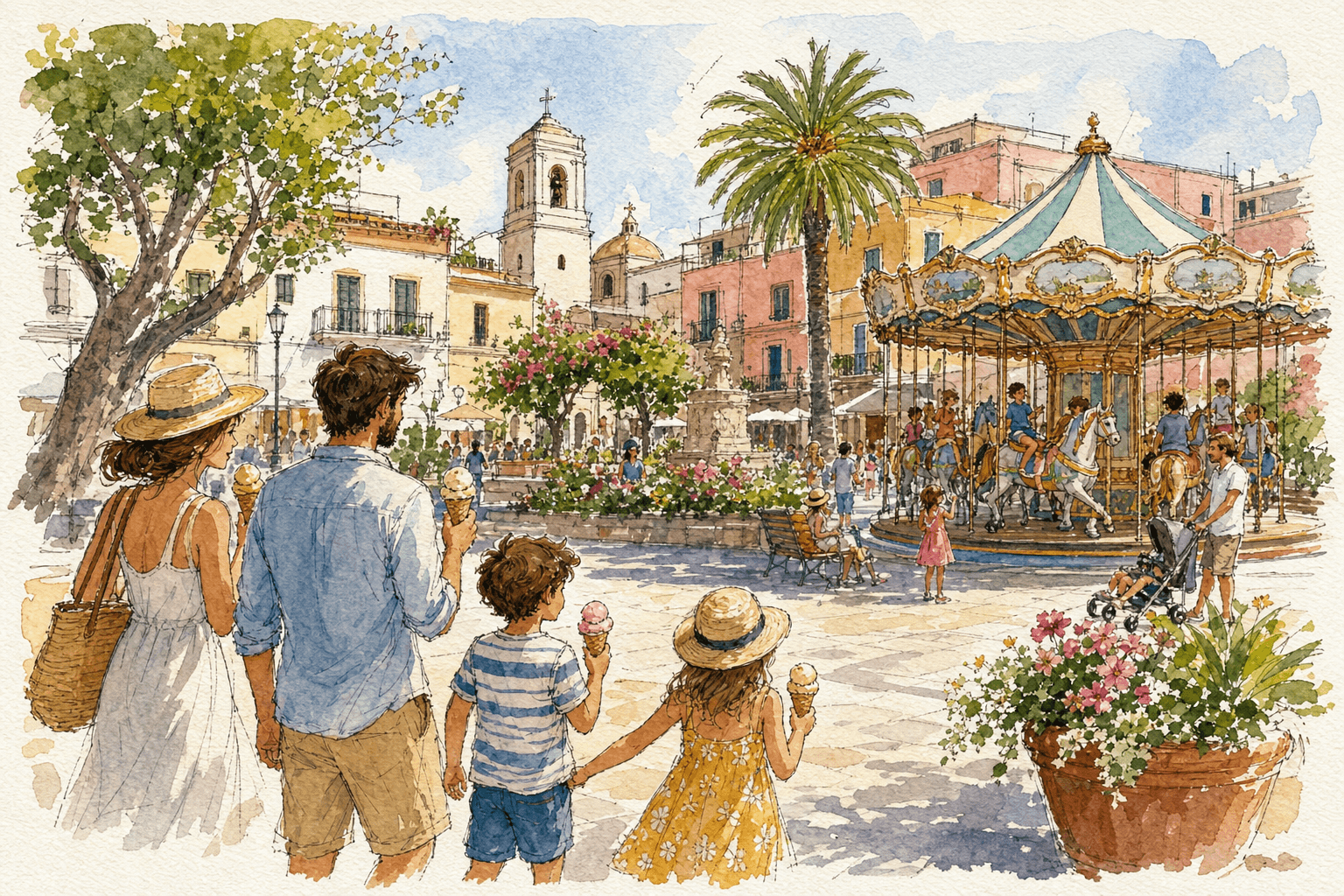
The gastronomy of Ceuta is, above all, seafood. The exceptional quality of the fish and seafood from the Strait is the basis of a cuisine with strong Andalusian influences and touches of Moroccan cuisine.
The absolute star. Try the 'almadraba tuna', the 'urta a la roteña', the 'gallineta' or the 'voraz'. Seafood, such as prawns, prawns or thin shells, is of superior quality.
The most unique and popular tapa in Ceuta. Small chicken hearts skewered on a skewer, marinated and grilled. An unexpected delicacy.
A traditional dish. Open mackerels, covered in salt and roasted on a 'laña' (metal plate). They are served with a tomato and pepper salad.
Two comforting soups. The picadillo, of Andalusian influence, with chicken, ham and hard-boiled egg. The garlic 'mackerel' soup is stronger and a poached egg is usually added.
A tasty seafood stew, made with melva (a small tuna), potatoes, peppers and peas.
There is a great tradition of eating snails in season, which are sold at street stalls. They are prepared with a tasty broth and a spicy touch.
Similar to Melilla, mint tea is a deeply rooted social drink. Prepared in a traditional way, it is a symbol of hospitality and a pillar in the social life of the city.
Being a free port, in Ceuta you can find and enjoy wines from all regions of Spain, especially those from nearby Andalusia such as Sherry or red wines from Cádiz, at competitive prices.
The most typical sweet from Ceuta. A braided puff pastry filled with angel hair or cream and covered with almonds. Created by the nuns of the San Antonio convent.
As in Melilla, in Ceuta's pastry shops you can find a wide variety of sweets of Moroccan origin, made with honey, nuts and puff pastry.
Ceuta's festivities are a reflection of its history and diversity, mixing Andalusian traditions, patron saint celebrations with a maritime flavor and the festivities of its different communities.
February.
The 'Mackerel Carnival' is a very popular festival, with a great competition of groups (chirigotas, comparsas) in the theater and colorful parades through the streets of the city.
Early August, with the big day on August 5.
The great fair of Ceuta. A fairground is installed and the city experiences a week of celebration with booths, attractions and concerts. The procession of the patron saint on the 5th is the central event.
September 2.
The institutional festival of the Autonomous City, which commemorates the date on which King John I of Portugal conquered the city in 1415. Civic and cultural events are celebrated.
Variable.
Like Melilla, Ceuta integrates the most important celebrations of its communities into its official holiday calendar, such as the end of Ramadan (Eid al-Fitr) or the Hindu New Year (Diwali).
Thanks to its microclimate, any time of year is good. Spring and Fall offer ideal temperatures. Summer is hot but the constant breeze from the Strait makes it very pleasant, making it perfect for enjoying its beaches and the Maritime Park. Winter is the mildest in all of Spain, ideal for a quiet getaway.
Ceuta, like Melilla, is a free port, which offers advantages in some purchases. It is accessed from the peninsula by ferry (from Algeciras, a very short journey of approximately one hour) or by helicopter. The wind from the Strait (East or West) can be very strong and sometimes conditions maritime connections. It is essential to always carry documentation (ID or passport).