

Explora la cultura de To Coruña: Tradición viva
Sumérgete en la rica historia y cultura de To Coruña a través de sus museos y monumentos.
Quick info
Maria Pita Square

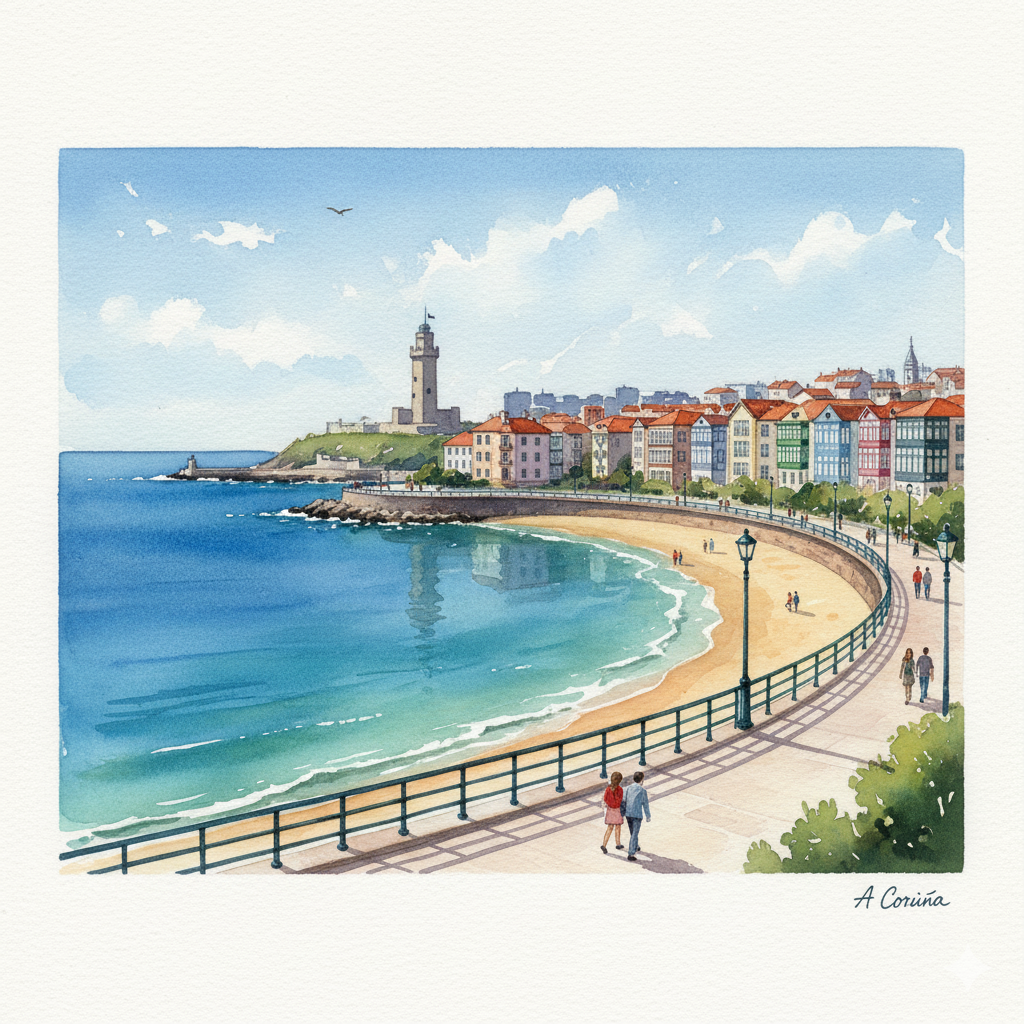
A Coruña is a port city located on the northwest coast of Spain, in the Galicia region, bathed by the Atlantic Ocean. With an approximate population of 245,000 inhabitants in the city and more than 400,000 in its metropolitan area, it is an important economic, cultural and tourist center. It stands out for its emblematic Roman lighthouse, the Tower of Hercules, declared a World Heritage Site, which symbolizes its ancient maritime history. The city combines a historic center with narrow streets and squares with modern avenues and glass buildings, which give it its nickname. Its strategic location on the A Coruña peninsula has been key to its development since ancient times, being a reference point on commercial and maritime routes. A Coruña is known for its gastronomy based on seafood, its lively cultural life and its urban beaches, which make it an attractive destination all year round. In addition, its mild and humid Atlantic climate contributes to a green and pleasant environment. The city is a benchmark in Galicia for its economic dynamism, its historical heritage and its quality of life.
Culture & Heritage
Discover the rich history, art and traditions of To Coruña
A Coruña has a rich cultural offer, with museums, theaters and festivals that reflect the Galician and Spanish identity.
Best of local culture
Museums & Galleries
Maria Pita Square
Heart of the historic center of A Coruña, presided over by the María Pita Palace that houses the City Hall. The statue of María Pita, a local heroine who defended the city against the Invincible Armada, stands out. Surrounded by porticoed buildings with glass galleries and a lively atmosphere with terraces.
Tower of Hercules
Oldest functioning Roman lighthouse in the world, declared a World Heritage Site by UNESCO. Located on a peninsula, it offers panoramic views of the Atlantic Ocean and is an emblematic symbol of the city.
San Anton Castle
16th century fortress located on a small island connected to the city by a bridge. It currently houses an archeology and history museum that explains the evolution of A Coruña and its maritime defense.
Marina Avenue
Emblematic boulevard known as the 'Crystal City' for its 19th-century glass galleries designed so that fishermen could keep an eye on the port. Outstanding example of urban and commercial architecture.
Festivals & Events
Remember Fest
September 5-6Musical festival held at the Battery Pier in A Coruña, with an outstanding lineup of pop, indie and urban artists. It is one of the most anticipated events of the summer in the city, with performances by groups such as La La Love You, Lori Meyers, Xoel López, Álvaro de Luna and others.
Atlantic Pride
From July 6 to 13Annual event that celebrates diversity and LGTBIQ+ rights with cultural, festive and musical activities in A Coruña. It includes concerts, parades and acts of social protest.
MorriñA Fest
July 25-26Indie and pop music festival held in A Coruña, with a lineup that combines national and international artists in an accessible urban environment.
Culture plan
Book a cultural tour in To Coruña
Skip-the-line access and verified local guides
History
Origins
The origins of A Coruña date back to pre-Roman settlements such as the Castro de Elviña and Nostián, inhabited by tribes such as the Brigantes and Ártabros. In Roman times, it was known as Brigantium and stood out for its port and the construction of the Tower of Hercules in the 1st century BC, the oldest functioning Roman lighthouse in the world. Julius Caesar arrived on these shores in 62 BC, consolidating the strategic and commercial importance of the area. Before the Romans, Phoenicians and Carthaginians would also have visited the region attracted by its mineral riches.
Development
During the Middle Ages, A Coruña grew in importance thanks to royal privileges that promoted commerce and navigation, such as the charter of foundation and repopulation in 1208 and the tax exemption in 1286. The old city expanded and seafarers' guilds were established that promoted maritime activity. In the 15th and 16th centuries, it established itself as a key port on the Atlantic routes, with regular connections to British ports such as Bristol. The city suffered Norman attacks but was able to recover and prosper thanks to its commercial and liberal vocation.
Modern era
In the 20th and 21st centuries, A Coruña has experienced significant urban development, with the modernization of its port infrastructure and the expansion of its metropolitan area. It has maintained its role as the economic and cultural center of Galicia, standing out in sectors such as the naval industry, technology and tourism. Recent events include the promotion of its historical heritage and the improvement of urban services. The city continues to be a reference in Galician politics and culture, with an active population and a diverse cultural offer that attracts national and international visitors.
Ratings
Scores by category
Culture
A Coruña has a rich cultural offer, with museums, theaters and festivals that reflect the Galician and Spanish identity.
Heritage
A Coruña has great historical importance, especially because of the Tower of Hercules, a functioning Roman lighthouse and symbol of the city.
Architecture
The architecture of A Coruña combines historical buildings such as the Tower of Hercules with modern constructions, offering an attractive and diverse urban landscape.
Want to know more about To Coruña?
Discover the full guide with history, detailed itineraries, practical tips and all the information you need.
View full guideTips for Culture & Heritage
Local secrets
Visit the Monte de San Pedro viewpoint for panoramic views and the Monte Alto neighborhood for urban art.
best moments
Avoid weekends on Riazor and Orzán beaches; Best to visit early in the morning or at dusk.
Local language
Spanish and Galician are spoken; Useful phrases: 'Ola' (hello), 'Grazas' (thank you), 'Please'.
Local customs
Greet with a handshake or kiss on the cheek; Punctuality is flexible in social gatherings.
Healthcare system
A Coruña University Hospital offers urgent care; For emergencies call 112.
Pharmacies
Pharmacies open 24 hours in the center and in tourist areas; Check schedules at on-call pharmacies.
General Security
A Coruña is a safe city with low crime, but it is recommended to keep an eye on belongings in busy tourist areas such as Plaza de María Pita and the port.
Areas to avoid
Avoid dimly lit and lonely streets at night, especially in peripheral neighborhoods far from the historic center.
Tickets and monuments in To Coruña
Check availability and pricesTripMatches · Remember · Plan
What do you want to do with To Coruña?
Been to To Coruña or still want to go? Pick one and we'll take you straight to it.
Quick info
Full destination guide
Access the full profile: attractions, weather, gastronomy, events and more.
Discover this destination in depthExplore more nearby
You might also like
Discover To Coruña in a different way
Explore different ways to experience this destination based on your travel style
To Coruña Theme Parks & Rides
Discover theme parks and amusement parks, from legendary roller coasters to immersive worlds and family experiences.
To Coruña Christmas Markets
European Christmas market guides with seasonal dates, activities and practical visit-planning advice.
To Coruña Digital Nomad
Connectivity, living costs and practical conditions for working remotely.
To Coruña Budget
Affordable travel, free activities and smart tips to save money.
To Coruña Train Travel
Scenic rail routes, historic stations and slow travel by train.
To Coruña Romantic
Couples getaways, sunsets, boutique hotels and intimate experiences.