Loading destination...
Loading destination...
Loading destination...
Loading destination...
Loading destination...
Loading destination...
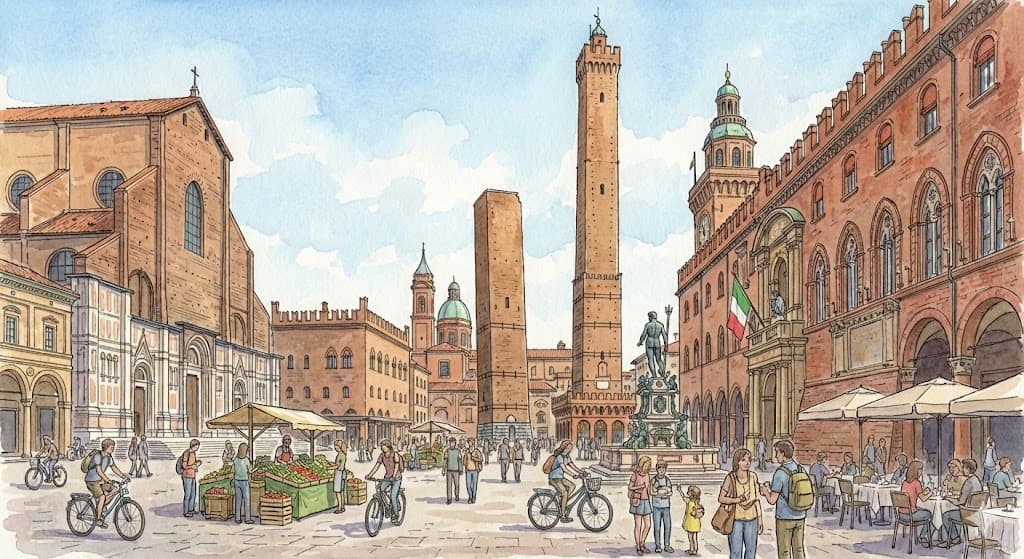
Sumérgete en la rica historia y cultura de Bolonia a través de sus museos y monumentos.
Bologna is a city located in northern Italy, capital of the Emilia-Romagna region. With a rich history dating back to the Etruscan civilization, it was known as Felsina and later became the Roman colony of Bononia. The city is famous for its porticoes, which are a World Heritage Site, and for being home to the University of Bologna, the oldest in the Western world. Its medieval architecture, with towers and historic buildings, makes it an attractive tourist destination. Additionally, Bologna is known for its gastronomy, being home to dishes such as tagliatelle and ragù alla bolognese. The city has a population of approximately 400,000 inhabitants in the urban area and more than 1 million in the metropolitan area.
TripMatches · Remember · Plan
Been to Bolonia or still want to go? Pick one and we'll take you straight to it.
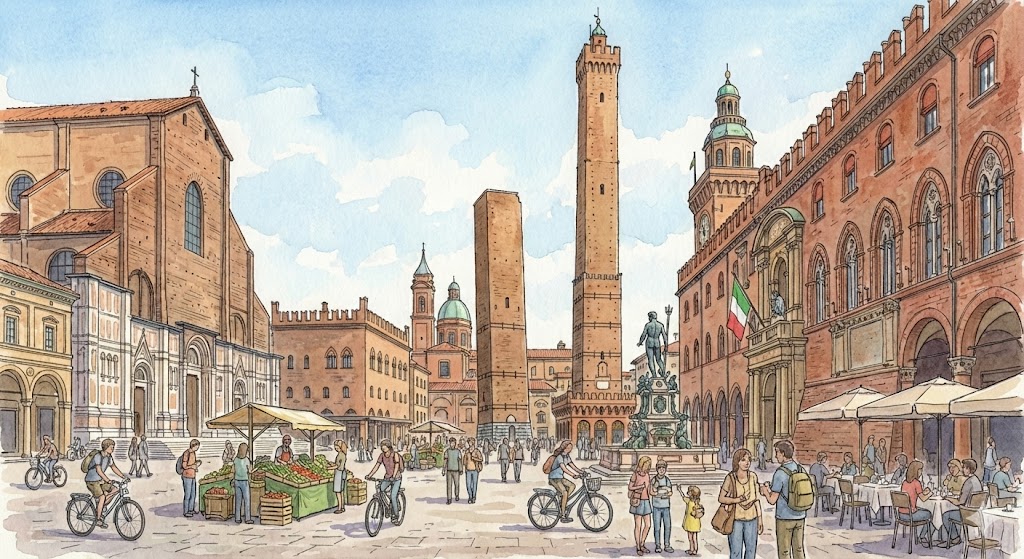
Discover the rich history, art and traditions of Bolonia
Bologna is a cultural center with a rich artistic tradition, home to the oldest university in Europe and numerous museums, theaters and festivals. The city offers a vibrant cultural scene that combines history with contemporary events.
The Museo Civico d'Arte Industriale houses a collection of applied art and industrial design.
Unique urban festival that transforms the UNESCO World Heritage-listed porticos into a stage for art, music and cultural performances over five days.
International music festival held in the Parco delle Caserme Rosse, with a program that includes international and emerging artists from various musical genres.
City-wide art week including the Arte Fiera art fair and related events under the motto 'The City Gates', with exhibitions and cultural activities in multiple spaces.
The history of Bologna begins with settlements of the Villanovan culture in the 9th century BC. Later, it was influenced by the Etruscans, who founded the city of Felsina in the 6th century BC. In the 4th century BC, the Boian Gauls occupied the area, and it later became the Roman colony of Bononia in 196 BC. During the decline of the Roman Empire, Bologna was sacked by the Goths and other barbarian peoples.
In the Middle Ages, Bologna became an important commercial and cultural center. In the 11th century, he joined the Lombard League, which allowed him to establish effective autonomy. The city experienced rapid urban growth and became a center of learning with the founding of its university in 1088. However, it also faced periods of political instability and was ruled by several noble families before being incorporated into the Papal States in 1506.
In the 20th century, Bologna suffered significant damage during World War II. In the postwar period, the city experienced rapid economic development and became a major industrial and cultural center. Today, Bologna is known for its vibrant cultural life, rich historical heritage and its role as an educational and innovation center in Italy.
Scores by category
Bologna is a cultural center with a rich artistic tradition, home to the oldest university in Europe and numerous museums, theaters and festivals. The city offers a vibrant cultural scene that combines history with contemporary events.
Bologna has great historical importance as a university and commercial center since the Middle Ages. Its architectural and cultural heritage reflects centuries of history and intellectual development.
Bologna stands out for its well-preserved medieval architecture, with its famous leaning towers and porticos that add up to kilometers of covered paths. The city combines historic buildings with Renaissance and Baroque elements, offering a unique and attractive urban landscape.
Discover the full guide with history, detailed itineraries, practical tips and all the information you need.
View full guideVisit the Saragozza neighborhood to discover authentic trattorias and Montagnola Park for a quiet walk away from mass tourism.
Avoid rush hours in the summer and visit the city in spring or fall to enjoy fewer tourists and pleasant weather.
Italian is the official language; Useful phrases include 'Buongiorno' (good morning) and 'Grazie' (thank you). Some English is spoken in tourist areas.
Greet with a handshake or a kiss on both cheeks in formal contexts; Respect rest hours and avoid speaking loudly in public places.
If necessary, go to public hospitals or health centers; For tourists, it is advisable to have international medical insurance.
Pharmacies are generally open from 9:00 a.m. to 1:00 p.m. and from 3:30 p.m. to 7:30 p.m.; There are pharmacies on call for emergencies after hours.
Bologna is generally safe, but it is recommended to be aware of pickpockets especially in stations, buses and busy tourist areas.
Avoid the University District at night due to noisy students and possible altercations; Caution is also recommended in Via del Pratello and surrounding areas.
TripMatches · Remember · Plan
Been to Bolonia or still want to go? Pick one and we'll take you straight to it.
Access the full profile: attractions, weather, gastronomy, events and more.
Discover this destination in depth