Loading destination...
Loading destination...
Loading destination...
Loading destination...
Loading destination...
Loading destination...
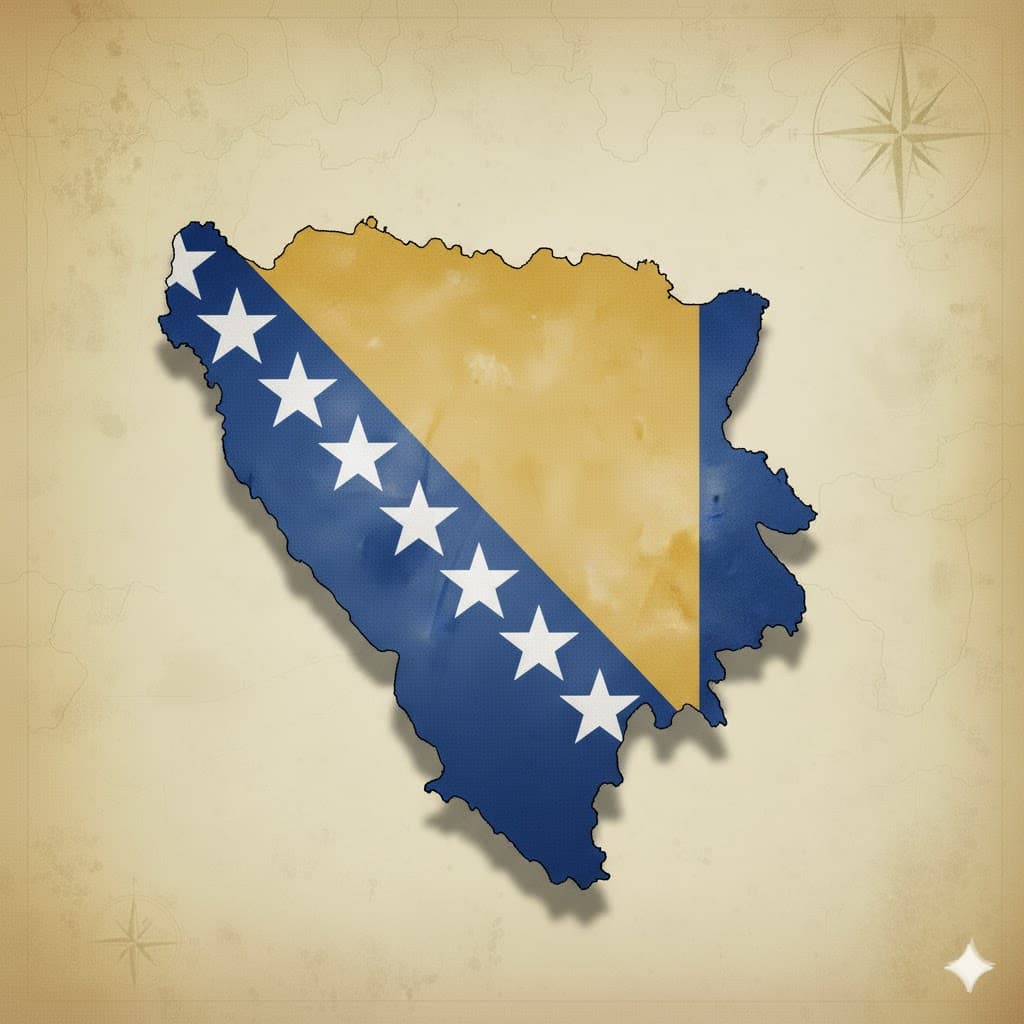
Sumérgete en la rica historia y cultura de Bosnia and Herzegovina a través de sus museos y monumentos.
Bosnia and Herzegovina is a heart-shaped country in the heart of the Balkans, known for its mountainous landscapes, emerald rivers like the Neretva, and a complex history that fuses Ottoman, Austro-Hungarian, and Slavic influences. It is a land of resilience, whose culture and cities reflect a past of coexistence, conflict and rebirth.
TripMatches · Remember · Plan
Been to Bosnia and Herzegovina or still want to go? Pick one and we'll take you straight to it.

Discover the rich history, art and traditions of Bosnia and Herzegovina
Bosnia and Herzegovina is a heart-shaped country in the heart of the Balkans, known for its mountainous landscapes, emerald rivers like the Neretva, and a complex history that fuses Ottoman, Austro-Hungarian, and Slavic influences. It is a land of resilience, whose culture and cities reflect a past of coexistence, conflict and rebirth.
Bosnian coffee ('bosanska kafa') is an institution. It is served in a 'džezva' (a copper coffee pot) on a tray with a sugar bowl and a glass of water. Drinking it is an art that involves enjoying the moment without rushing, a concept known as 'ćejf'. Doing it in one of the cafes in Baščaršija is the quintessential Sarajevite experience.
Mostar's 'Old Bridge', rebuilt after the war, is the soul of the city. Watching members of the local jumping club jump from 24 meters high into the cold waters of the Neretva River is an impressive spectacle and a tradition that dates back centuries.
Visiting the preserved fragment of the tunnel that was Sarajevo's only lifeline during the nearly four-year siege in the 1990s. Walking through this narrow underground gallery is a powerful and humbling experience that provides insight into the resilience of the city's inhabitants.
On a hot summer day, there is nothing like visiting the spectacular Kravica waterfalls. This natural amphitheater of waterfalls cascading over a lake of emerald waters is the perfect place to swim, have a picnic and relax in a paradisiacal setting.
Visiting the 'Tekija' (dervish monastery) of Blagaj is a mystical experience. This 16th century building, nestled at the base of a 200-meter cliff, overlooks the source of the Buna River, which emerges from a cave with incredible force. The sound of the water and the serenity of the place are unforgettable.
In the hills above Sarajevo, the bobsleigh track from the 1984 Winter Olympics lies abandoned, covered in graffiti. Walking through this concrete structure that winds through the forest is a surreal and photogenic experience, a remnant of the city's Olympic glory.
Discover the full guide with history, detailed itineraries, practical tips and all the information you need.
View full guideThe official currency is the Bosnian Convertible Mark (BAM or KM). It has a fixed exchange rate with the euro (1 EUR = 1.95583 BAM). Euros are accepted in many tourist places, but it is advisable to use the local currency to get better prices.
The bus network is the most efficient and widespread way to travel between cities. Trains are less frequent but can be very scenic, such as the route from Sarajevo to Mostar. Renting a car gives more flexibility to explore rural areas.
The official languages are Bosnian, Serbian and Croatian, which are mutually intelligible. In tourist areas, especially among young people, it is common to find people who speak English. German is also relatively widely spoken.
TripMatches · Remember · Plan
Been to Bosnia and Herzegovina or still want to go? Pick one and we'll take you straight to it.
Access the full profile: attractions, weather, gastronomy, events and more.
Discover this destination in depth