Loading destination...
Loading destination...
Loading destination...
Loading destination...
Loading destination...
Loading destination...
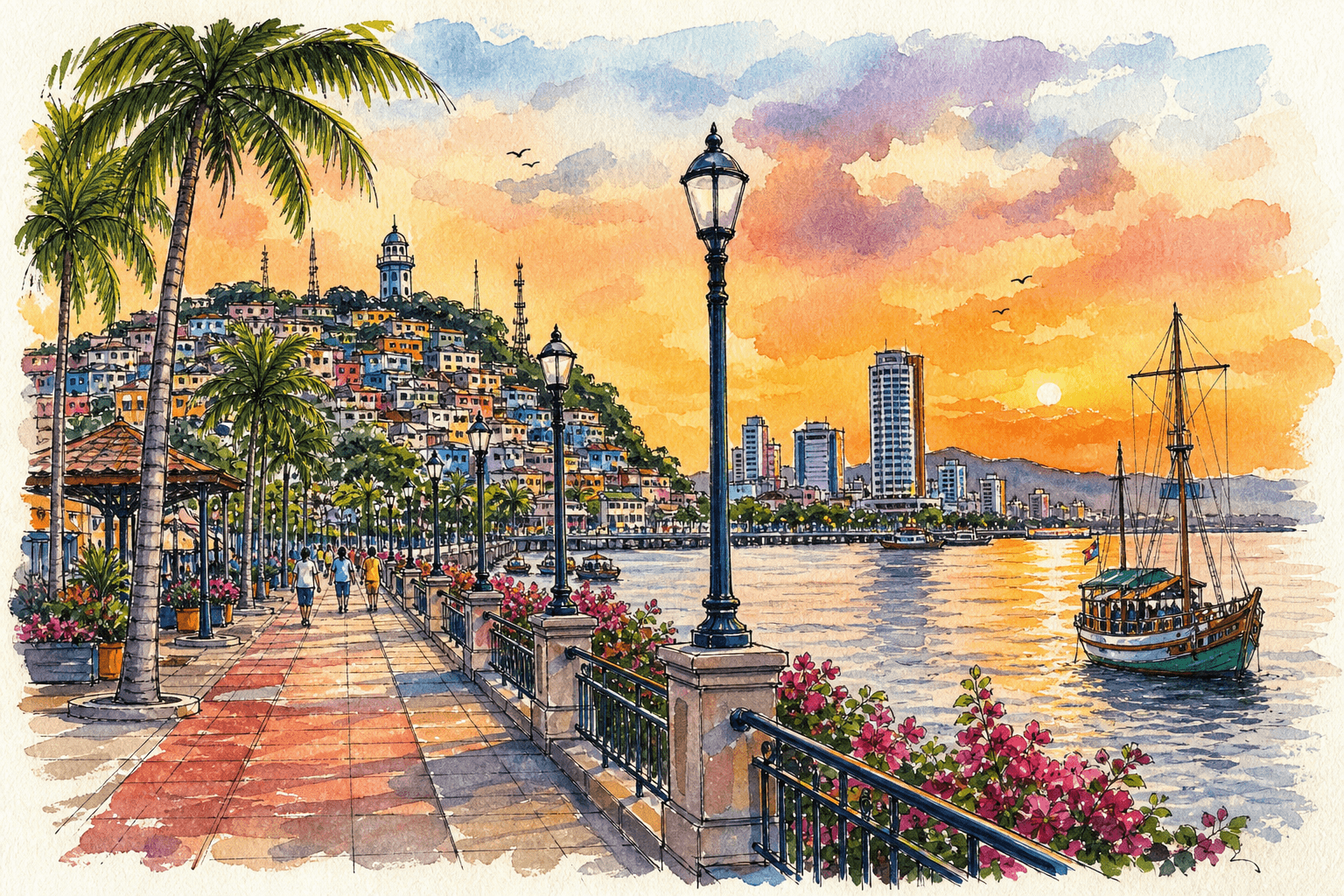
Sumérgete en la rica historia y cultura de Guayaquil a través de sus museos y monumentos.
Guayaquil is the largest and most populated city in Ecuador, located in the coastal region, on the banks of the Guayas River, near its mouth into the Pacific Ocean. It is the country's main seaport and a vital economic, commercial and industrial center for Ecuador. With a population that exceeds 2.7 million in its metropolitan area, Guayaquil stands out for its tropical climate, its vibrant cultural life and its historical importance as a gateway for international trade. The city combines modernity with traditions, offering tourist attractions such as the Malecón 2000, the historic neighborhood of Las Peñas and the Guayaquil Historical Park. Its strategic location makes it a key point for the export of agricultural and fishing products, in addition to being a nucleus of urban and technological development. Guayaquil is recognized for its warm and hospitable people, its seafood-based cuisine, and its fundamental role in Ecuadorian history and economy.
TripMatches · Remember · Plan
Been to Guayaquil or still want to go? Pick one and we'll take you straight to it.

Discover the rich history, art and traditions of Guayaquil
Guayaquil has an active cultural scene, with museums, theaters and festivals that reflect local and regional identity.
The oldest neighborhood in Guayaquil, known for its colonial houses and historical charm. It is a picturesque place ideal for walking.
A park that combines nature with the history of the city, including a replica of ancient Guayaquil and a variety of fauna.
A historical monument that houses the city clock, known for its unique architecture.
A cultural and artistic space that hosts events and exhibitions.
Cultural event that celebrates the 205 years of independence of Guayaquil with activities such as Guayas 2.0 (intensive course for content creators), Sábados de Artesperanza (art and culture caravans in neighborhoods), Guayasón (festival with music and gastronomy on the Malecón Simón Bolívar), Symphonic Reggaeton and Symphonic Night in the Cathedral.
Musical and cultural fair in Samanes Park with presentations by renowned artists such as Luis Fonsi, Elvis Crespo and Grupo Niche, as well as activities for more than 400,000 attendees.
Free festival on the Malecón and Illingworth that brings together more than 130 entrepreneurs, with live music from local and international artists and a gastronomic market that highlights the cuisine of Guayas.
Before the arrival of the Spanish, the Guayaquil area was inhabited by indigenous peoples such as the Huancavilcas, who had a developed culture based on fishing, agriculture and trade. These pre-Columbian people took advantage of the strategic geographical location at the mouth of the Guayas River to establish settlements and trade routes.
The founding of Guayaquil was a complex process during the Spanish conquest between 1534 and 1547, with several transfers and conflicts with the native peoples. Sebastián de Benalcázar made the first foundation in 1535, although the officially recognized date is July 25, 1537, when Francisco de Orellana established the definitive settlement called Santiago de Guayaquil. During the colonial era, Guayaquil grew as an important commercial port, facing pirate attacks and actively participating in Ecuador's independence in the 19th century.
In the 20th and 21st centuries, Guayaquil has established itself as the economic engine of Ecuador, with accelerated urban development, modernization of its port infrastructure and expansion of its metropolitan area. Recent events include the revitalization of Malecón 2000 and the promotion of cultural and ecological tourism. The city plays a key role in international trade and industry, maintaining its relevance in the contemporary global context.
Scores by category
Guayaquil has an active cultural scene, with museums, theaters and festivals that reflect local and regional identity.
Guayaquil has historical relevance as a key port and commercial center since colonial times, with emblematic sites that reflect its past.
Guayaquil's architecture combines modern styles with colonial and traditional constructions, highlighting the Malecón 2000 and the Las Peñas neighborhood.
Discover the full guide with history, detailed itineraries, practical tips and all the information you need.
View full guideVisit the Las Peñas neighborhood for local art and culture, and enjoy the view from Cerro Santa Ana, less crowded in the mornings.
Avoid weekends and holidays to visit Malecón 2000 and the Historical Park, when there are more tourists and events.
Spanish is the official language. Useful phrases include 'Where is...?', 'Thank you' and 'Please'. English is uncommon outside of tourist areas.
Greet with a handshake or a kiss on the cheek in informal settings. Punctuality is flexible, but respect is valued.
Guayaquil has public and private hospitals. In emergencies, go to hospitals such as the Luis Vernaza Hospital.
Pharmacies such as Fybeca and SanaSana are open late in central areas. Bring basic medications and consult before traveling.
Guayaquil is considered a high-risk destination due to crime rates, but most tourists report positive experiences if they visit recommended areas and take basic precautions.
Avoid districts such as Kennedy, Alborada, Urdesa and the Malecón Simón Bolívar as they are very crowded and have a higher risk of theft. Do not travel alone at night and avoid bus terminals at late hours.
TripMatches · Remember · Plan
Been to Guayaquil or still want to go? Pick one and we'll take you straight to it.
Access the full profile: attractions, weather, gastronomy, events and more.
Discover this destination in depth