

Explora la cultura de Santiago de Compostela: Tradición viva
Sumérgete en la rica historia y cultura de Santiago de Compostela a través de sus museos y monumentos.
Santiago de Compostela is the capital of the autonomous community of Galicia, located in the northwest of Spain.With an approximate population of 99,536 inhabitants in the city and more than 200,000 in its metropolitan area, it is an important cultural, historical and religious center.The city is known worldwide for being one of the main Christian pilgrimage destinations, housing the tomb of the apostle Saint James the Greater in its imposing cathedral, declared a World Heritage Site by UNESCO since 1985. Its historic center, one of the best preserved in Europe, combines Romanesque, Gothic and Baroque architectural styles, and attracts hundreds of thousands of visitors and pilgrims each year.In addition, Santiago is the headquarters of the Xunta de Galicia and the Galician Parliament, and has a century-old university that contributes to its cosmopolitan and dynamic environment.The city is located in an area with a temperate oceanic climate, with abundant rainfall and mild temperatures, which favors its lush vegetation and green landscapes.Its airport is the busiest in Galicia, facilitating access to this historic and vibrant city.
Tickets and monuments in Santiago de Compostela
Check availability and pricesTripMatches · Remember · Plan
What do you want to do with Santiago de Compostela?
Been to Santiago de Compostela or still want to go? Pick one and we'll take you straight to it.

Culture & Heritage
Discover the rich history, art and traditions of Santiago de Compostela
Santiago de Compostela is a cultural center with a vibrant artistic life, museums, festivals and a university that promotes local culture.
Best of local culture
Museums & Galleries
Galician Center for Contemporary Art (CGAC)
Museum dedicated to contemporary Galician and international art, designed by architect Álvaro Siza.It offers temporary and permanent exhibitions in a modern building integrated into the historical environment.
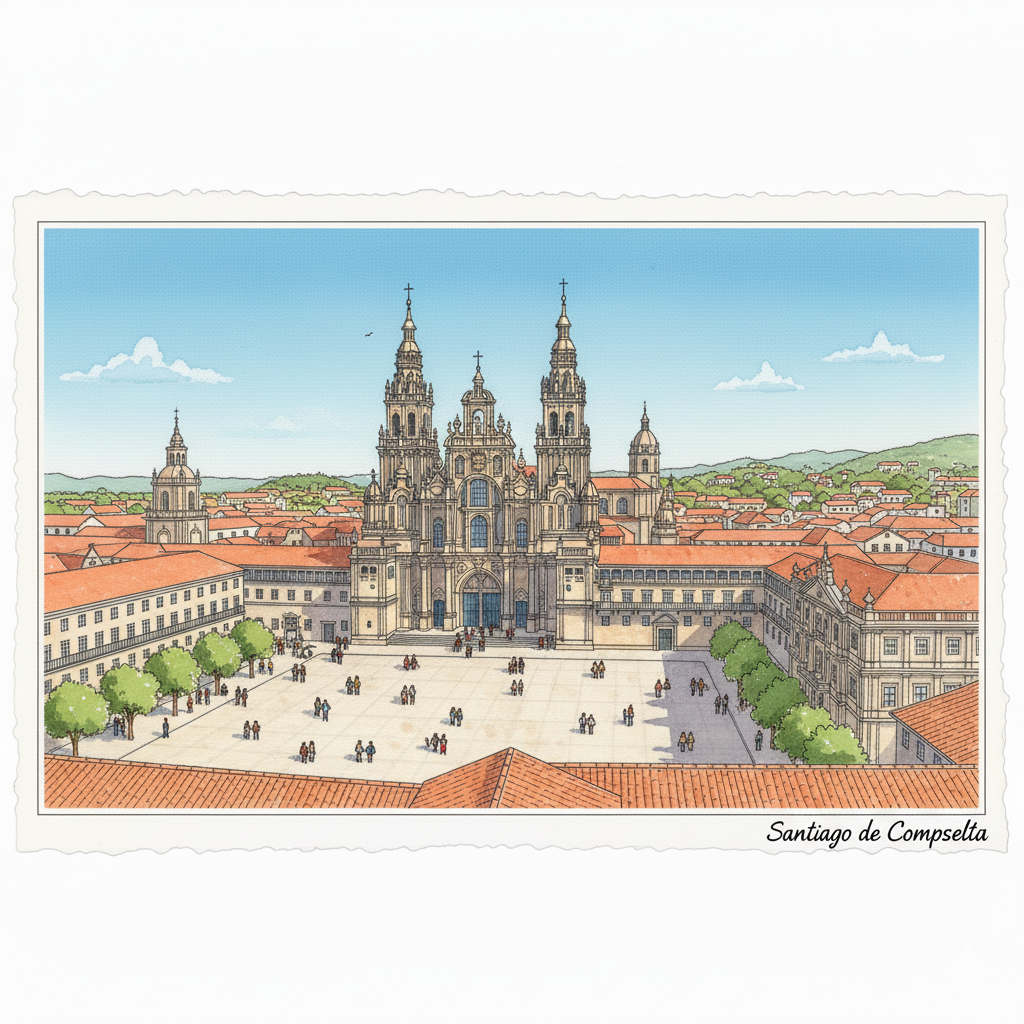
Obradoiro Square
Main square of Santiago de Compostela, in front of the cathedral.Meeting point for pilgrims and tourists, surrounded by historical buildings such as the Hostal de los Reyes Católicos and the Rajoy Palace.
Cervantes Square
Historic square known as the 'Forum' in the 12th century, with arcades and emblematic buildings such as the Church of San Bieito and the Baroque Old Town Hall.It presides over a bust of the writer Miguel de Cervantes.
Museum of Pilgrimages
Museum dedicated to the history of the Camino de Santiago and the pilgrimage, with archaeological, artistic and documentary collections that explain the cultural and religious importance of the Jacobean route.
Festivals & Events
O Son do Camiño
JunioMusical festival held in Monte do Gozo, brings together thousands of attendees with a lineup that mixes international and national pop and rock artists, in a natural environment with views of the city.
Fiestas del Apóstol Santiago
JulioReligious and cultural celebration in honor of the Apostle Santiago with activities such as concerts by local and international artists, fireworks, dances, workshops, sports and Galician folklore events in emblematic squares of the city.
WOS Festival
SeptiembreMultidisciplinary festival of alternative and avant-garde culture with electronic music, visual arts, cinema, performing arts, conferences and gastronomy, held in heritage spaces in Santiago.
History
Origins
The origins of Santiago de Compostela date back to Roman times, although its founding as a city is linked to medieval tradition that points to the discovery of the tomb of the apostle Saint James the Greater in the 9th century.Before Christian consolidation, the area was inhabited by Celtic peoples and later integrated into the Roman province of Gallaecia.The legend of the discovery of the tomb on Mount Libredón was key to the development of the city as a religious and pilgrimage center.
Development
During the Middle Ages, Santiago de Compostela established itself as one of the three great centers of Christian pilgrimage along with Jerusalem and Rome.The construction of its cathedral began in the 11th century, becoming a symbol of religious and cultural power.The city grew around this nucleus, developing an important historic center with churches, convents and palaces.In the modern era, Santiago maintained its relevance as the administrative and cultural center of Galicia, with moderate urban growth and the consolidation of its university.
Modern era
In the 20th and 21st centuries, Santiago de Compostela has experienced significant urban development, modernizing infrastructure and expanding its cultural and educational offering.The city continues to be a benchmark for religious and cultural tourism, with a constant increase in pilgrims, especially in the Compostela Holy Years.The University of Santiago has positioned itself among the best in Spain, and the city has diversified its economy by incorporating sectors such as technology and industry.Recent events include the improvement of the airport and the international promotion of the Camino de Santiago.
Ratings
Scores by category
Culture
Santiago de Compostela is a cultural center with a vibrant artistic life, museums, festivals and a university that promotes local culture.
Heritage
Santiago de Compostela is a city of great historical and religious importance, recognized worldwide for its cathedral and the Camino de Santiago.
Architecture
The city stands out for its historical architecture, especially the Cathedral of Santiago and the old town declared a World Heritage Site.
Want to know more about Santiago de Compostela?
Discover the full guide with history, detailed itineraries, practical tips and all the information you need.
View full guideTips for Culture & Heritage
Rincones poco conocidos
Explore Parque de la Alameda for panoramic views and the San Pedro neighborhood for authentic tapas away from mass tourism.
Best time to visit
Avoid Easter and the month of August to enjoy fewer crowds and a better experience at monuments.
Idiomas hablados
Galician and Spanish are official; Basic phrases in Galician like 'Bo dia' (good day) are well received.
Costumbres locales
Greet with a handshake or kiss on the cheek; respects religious traditions, especially in the Cathedral.
Acceso a salud
Tourists can go to public health centers by presenting the European health card or take out private insurance.
Farmacias locales
Pharmacies open during regular hours from 9:00 a.m. to 9:00 p.m., with night guards; located mainly in the center and commercial areas.
Presencia policial reforzada
The Civil Guard increases its surveillance in Santiago and the Camino de Santiago, especially in high season, with ground patrols, drones and international support to guarantee the safety of pilgrims and tourists.
Zonas céntricas seguras
The historic center and tourist areas are generally safe, but caution is recommended on poorly lit streets and avoiding areas far from the center at night.
TripMatches · Remember · Plan
What do you want to do with Santiago de Compostela?
Been to Santiago de Compostela or still want to go? Pick one and we'll take you straight to it.
Quick info
Full destination guide
Access the full profile: attractions, weather, gastronomy, events and more.
Discover this destination in depthExplore more nearby
You might also like
Discover Santiago de Compostela in a different way
Explore different ways to experience this destination based on your travel style
Santiago de Compostela Theme Parks & Rides
Discover theme parks and amusement parks, from legendary roller coasters to immersive worlds and family experiences.
Santiago de Compostela Christmas Markets
European Christmas market guides with seasonal dates, activities and practical visit-planning advice.
Santiago de Compostela Digital Nomad
Connectivity, living costs and practical conditions for working remotely.
Santiago de Compostela Budget
Affordable travel, free activities and smart tips to save money.
Santiago de Compostela Train Travel
Scenic rail routes, historic stations and slow travel by train.
Santiago de Compostela Romantic
Couples getaways, sunsets, boutique hotels and intimate experiences.