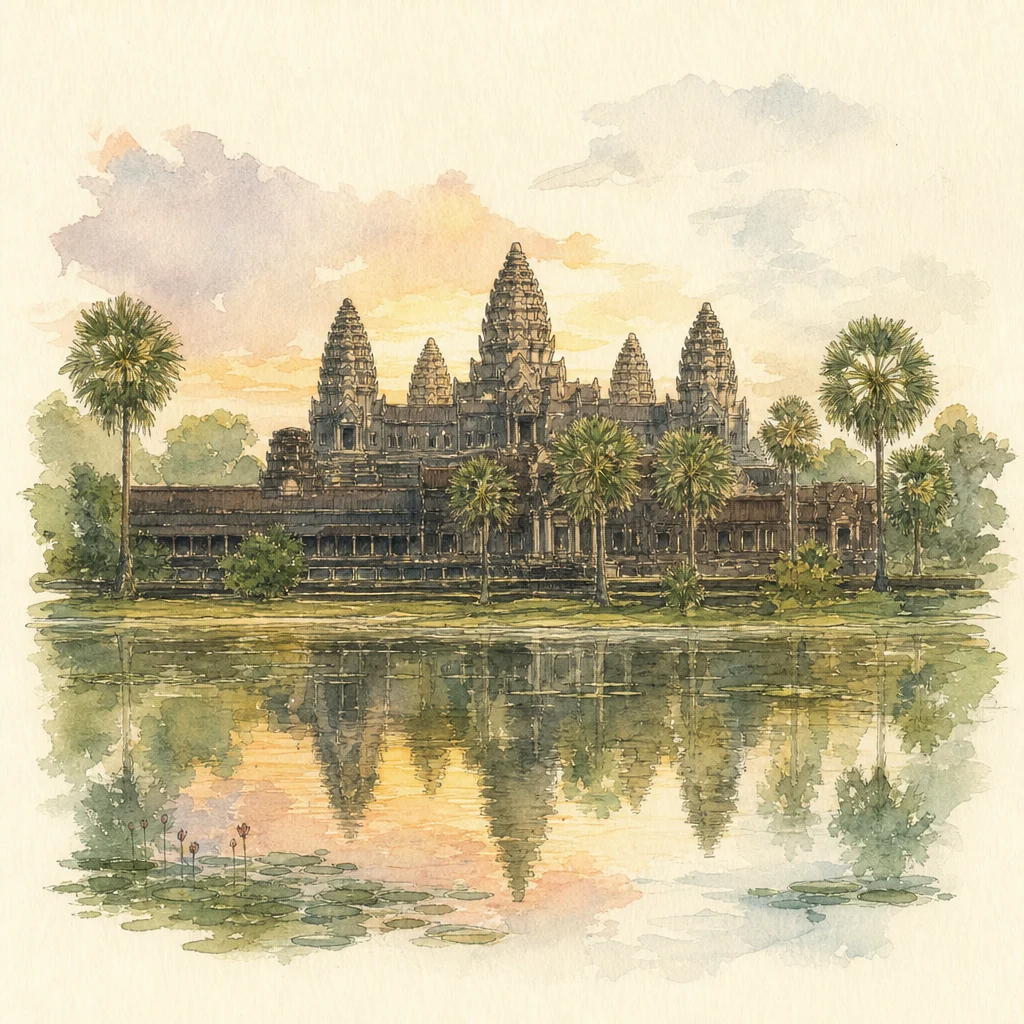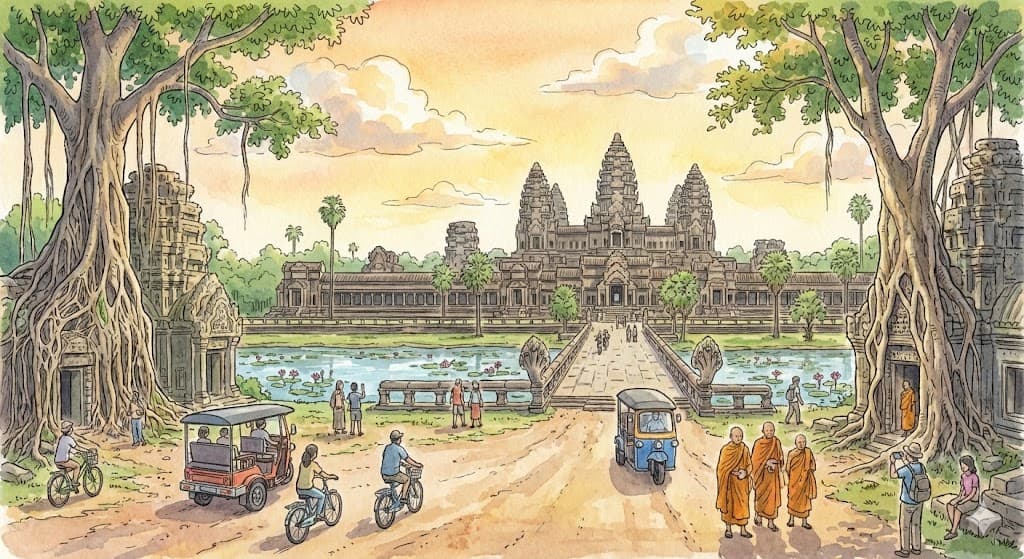
Vibrant Cambodian city and gateway to the ancient wonders of Angkor Wat, known for its hospitality and lively culture.
TripMatches
Trouvez des compagnons avec les mêmes dates et intérêts. Gratuit.
À propos Siem Reap - Culture, histoire et caractère
Planifiez votre voyage parfait avec nos recommandations personnalisées et nos conseils locaux.
Planifier mon voyageVotre expérience
Dites si vous voulez y aller — ou si vous y êtes déjà allé.
Vous ajoute à la carte Match Finder et ouvre le planificateur avec cette destination.
Je l'ai déjà été !Explora el fascinante pasado de Siem Reap y descubre cómo se ha desarrollado a lo largo de los siglos.
The history of Siem Reap is intrinsically linked to the Khmer Empire (9th-15th centuries). The imperial capital, Angkor, was located nearby. Siem Reap, meaning 'Defeat of Siam', commemorates a 16th century victory over Thailand and long served as a transit village to the great temples.
After the fall of Angkor in the 15th century, the region fell into oblivion. It was the 'rediscovery' of the temples by French explorers in the 19th century that put Siem Reap back on the world map. During the French protectorate, the city began to develop as a tourist destination, laying the foundations for its future.
After surviving the tragic Khmer Rouge era, Siem Reap has experienced a remarkable renaissance. Angkor's UNESCO World Heritage status fueled a tourism boom, transforming the city into Cambodia's most visited destination, filled with hotels, restaurants and vibrant energy.
La cronología histórica muestra los momentos clave que han definido el desarrollo de Siem Reap a lo largo de los siglos.
Découvrez ce qui rend cette ville spéciale grâce à notre système de notation complet
Generally a very safe city for tourists. The main problem is petty theft and small scams.
The city center is very compact and pleasant to walk, but transportation is essential to visit the temples.
There is no formal public transport system, but tuk-tuks are a way of life, being abundant, cheap and efficient.
One of the most affordable destinations in Southeast Asia. Money goes a long way, especially in food and transportation.
Lively and focused, with options for everyone, from relaxed cocktails to all-night parties.
An epicenter of ancient Khmer culture, with a vibrant performing arts and traditional crafts scene.
A delicious and affordable food scene, ranging from street food to Khmer fine dining.
Excellent for shopping for crafts, souvenirs and local products in its vibrant markets and fair trade boutiques.
Tropical climate with a very pleasant dry season, but it can be extremely hot and humid the rest of the year.
A completely tourism-oriented city, very easy to navigate for international visitors.
Excellent family destination, with temples that seem straight out of an adventure movie and a very welcoming culture for children.
Generally tolerant and welcoming, especially within the tourist bubble. The local culture remains conservative.
Cambodians are famous for their kindness, warm smiles and genuine hospitality towards visitors.
A unique beauty where ancient stone ruins merge with lush jungle and vast bodies of water.
Home to the Angkor complex, one of the architectural wonders of the ancient world, combining grandeur and intricate details.
As the capital of the all-powerful Khmer Empire, its historical importance is world-class.
The city itself has few parks, but is surrounded by a rural landscape of rice paddies and the vast jungle of Angkor Park.
Tourist areas and hotels are generally clean, but side streets and markets can be messy.
An emerging scene focused primarily on social enterprises and NGOs related to tourism and community development.
An increasingly popular destination for digital nomads due to its low cost of living, good internet connection and growing community.
Évaluation complète de cette destination
A world-class destination that combines unmatched historical significance with exceptional affordability and hospitality.
Discover the best times to visit this city and what to expect throughout the year.
Tropical climate with a very pleasant dry season, but it can be extremely hot and humid the rest of the year.
Very hot months (March-May) that precede the rainy season. April welcomes the Khmer New Year.
Rainy season (June-August), characterized by afternoon showers, green landscapes and fewer crowds.
The rainy season continues (September-October), with the vegetation in its maximum splendor. November marks the beginning of the dry season.
Best time to visit (December-February). Dry, sunny climate with cooler and more pleasant temperatures.
The season from November to February offers almost perfect weather.
Even in the rainy season, it usually rains in the afternoon, leaving the mornings free.
The landscape is greener and more lush during the rainy season.
The heat and humidity from April to May can be overwhelming.
Dust is a problem during the dry season.
The dry and cool season (November to February) is the most popular. The rainy season (May to October) offers lush landscapes and fewer tourists.
Planifiez vos dépenses et découvrez les meilleures zones commerciales
Dépense journalière par personne
Extremely affordable. The biggest single expense is the entrance fee to Angkor. Food, accommodation and local transportation are very affordable.
per day
per day
per day
Best areas for shopping
3 areas • Recommended Areas
Click for details
Click for details
Click for details
2 areas • Recommended Areas
Click for details
Click for details
2 areas • Recommended Areas
Click for details
Click for details
2 areas • Recommended Areas
Click for details
Click for details
Explorez les endroits les plus fascinants que cette ville a à offrir
The largest Hindu temple in the world and the heart of the Khmer Empire. An architectural masterpiece famous for its sunrises.
The last great capital of the empire, a walled city that is home to iconic temples such as the Bayon and the Terrace of the Elephants.
Famous for its more than 200 enigmatic and serene giant stone faces that watch you from its towers.
The 'Tomb Raider Temple', where giant silk-cotton tree roots intertwine with ancient stone ruins.
Known as the 'Citadel of Women', this small pink sandstone temple stands out for its incredibly detailed and well-preserved carvings.
The neon epicenter of Siem Reap nightlife, a pedestrian street full of bars, restaurants and clubs.
A bustling local market where tourists can buy souvenirs and locals do their daily fresh food shopping.
The largest freshwater lake in Southeast Asia, home to fascinating floating villages and a rich biosphere.
An energetic and emotional circus, theater and music show that tells Cambodian stories. Support young local artists.
A moving museum founded by a former child soldier that educates about the history of landmines in Cambodia and supports affected children.
A modern museum that offers an excellent introduction to the history, art and culture of the Khmer Empire through themed galleries.
A social enterprise that revives ancient Khmer arts and crafts. You can visit the workshops to see artisans working on silk, stone and wood.
A fashionable and charming street with designer boutiques, art galleries, cafes and spas.
A beautiful and colorful modern Buddhist monastery in the heart of the city, an oasis of peace near Pub Street.
Haz clic en "Tours" para encontrar las mejores actividades y entradas, o usa "Planificar" para crear tu itinerario personalizado.
dayTrips.dayTripsDescription
Considered the most sacred mountain in Cambodia. It is home to the River of a Thousand Lingas, a giant reclining Buddha and waterfalls where you can bathe.
Nature, Spiritualité, Randonnée
A huge temple devoured by the jungle and largely unrestored. It offers a more adventurous and less crowded experience, 'Indiana Jones' style.
Adventure, exploration, Photographier
A remote former capital of the Khmer Empire, the site of which is dominated by Prasat Thom, an impressive seven-tiered pyramid rising above the jungle.
Histoire, architecture, off the beaten path
Explore life above water at Tonlé Sap Lake. Kampong Phluk is more touristy, while Kampong Khleang is larger and more authentic.
Culture, local lifestyle, Photographier
Haz clic en "Tours" para encontrar excursiones organizadas, o usa "Plan" para crear tu itinerario personalizado.
Explorez les divers quartiers de la ville, chacun avec son caractère et son charme uniques.
Elegant and charming, with colonial architecture, boutiques and luxury restaurants.
The bustling and festive heart of the city, full of bars and tourists.
Quieter and more residential, with great boutique hotels and local restaurants.
A small modern and bohemian enclave, with design shops and specialty cafes.
A central and convenient area with a great mix of hotels, spas and restaurants.
Découvrez les meilleures expériences et activités pour chaque période de l'année
The biggest festival in Cambodia. It is celebrated for three days with temple rituals, family gatherings and wild water battles in the streets. Siem Reap organizes the great event 'Angkor Sankranta'.
A 15-day religious festival in which Cambodians honor their ancestors by visiting pagodas and making food offerings to monks. It is a time of great spiritual fervor.
Celebrates the reversal of the flow of the Tonlé Sap River. Exciting and colorful long boat races, concerts and fireworks are organized in Siem Reap and Phnom Penh.
Découvrez les événements et festivals les plus importants organisés tout au long de l'année
The most important holiday, celebrated with water battles, visits to pagodas and the massive Angkor Sankranta event in Siem Reap.
An important religious festival where families honor their ancestors with offerings at temples.
Celebrate the reversal of the flow of the Tonlé Sap River with spectacular boat races, concerts and fireworks.
It commemorates Cambodia's independence from France in 1953, with celebrations and parades, especially in Phnom Penh.
Conseils essentiels et connaissances locales pour rendre votre voyage mémorable et sûr
Choisissez une catégorie ci-dessus pour voir des conseils et des recommandations pertinents