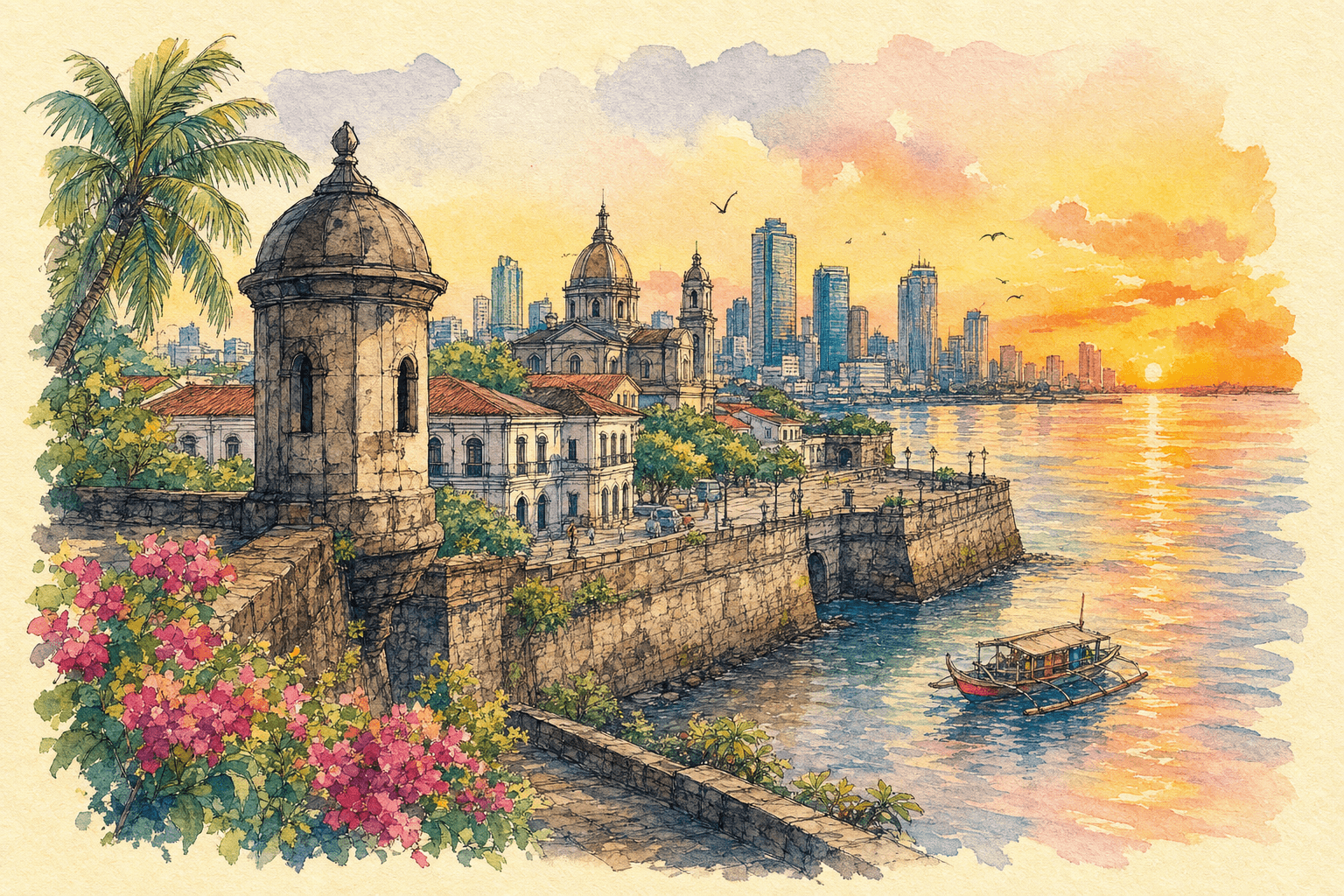
Cebu is the first Spanish city in the Philippines, a key historical and economic center in the Visayas archipelago.
TripMatches
Trouvez des compagnons avec les mêmes dates et intérêts. Gratuit.
À propos Zebu - Culture, histoire et caractère
Planifiez votre voyage parfait avec nos recommandations personnalisées et nos conseils locaux.
Planifier mon voyageVotre expérience
Dites si vous voulez y aller — ou si vous y êtes déjà allé.
Vous ajoute à la carte Match Finder et ouvre le planificateur avec cette destination.
Je l'ai déjà été !Explora el fascinante pasado de Zebu y descubre cómo se ha desarrollado a lo largo de los siglos.
Before the arrival of the Spanish, Cebu was an Indianized rakhanate known as Sugbu, founded by Sri Lumay, a prince of the Chola dynasty of India. The capital was Singhapala, and the region was divided into territories governed by his sons. Cebu was an important political and commercial center in the region, facing Moorish pirates and maintaining its own culture with Malay and Tamil influences.
During the Middle Ages and early modern era, Cebu was a strategic point for trade in Southeast Asia. In 1521, Ferdinand Magellan landed in Cebu, marking the beginning of European contact. In 1565, Miguel López de Legazpi founded the Villa de San Miguel de Cebu, establishing the first Spanish city in the Philippines and creating the first Christian institutions on the island. This period marked the beginning of Spanish colonization and the integration of Cebu into the colonial empire.
In the 20th and 21st centuries, Cebu has experienced significant urban and economic growth, becoming an industrial, commercial and tourist center. The city maintains its historical importance with monuments and cultural festivals, while its international airport and port facilitate connections with other regions and countries. Cebu plays a crucial role in the contemporary Philippine economy and is a popular tourist destination for its beaches, culture and historical heritage.
La cronología histórica muestra los momentos clave que han definido el desarrollo de Zebu a lo largo de los siglos.
Découvrez ce qui rend cette ville spéciale grâce à notre système de notation complet
Cebu is relatively safe for tourists and residents, although caution is advised in certain areas and times.
Walkability in Cebu is limited due to traffic, lack of adequate sidewalks, and scattered urban planning.
Public transportation in Cebu is functional but can be chaotic and inefficient at peak times.
Cebu offers a relatively affordable cost of living compared to other Asian cities, although prices have increased due to economic development.
Nightlife in Cebu is lively, with bars, clubs and cultural events, although less extensive than in Manila.
Cebu has a rich local culture with traditional festivals and a growing arts scene, although less developed than in Manila.
Gastronomy in Cebu is varied and renowned, highlighting local dishes and fresh seafood, with growing international offerings.
Cebu offers good shopping options, from traditional markets to modern shopping malls.
Cebu has a warm tropical climate all year round, ideal for outdoor activities and beach tourism.
Cebu is a popular tourist destination with good infrastructure and services for visitors, although there is room for improvement.
Cebu offers family-friendly options, with international schools and recreational activities, although safety and amenities may vary.
Cebu shows growing acceptance towards the LGBTQ+ community, although social and cultural challenges still exist.
The people of Cebu are generally friendly and hospitable to visitors and foreigners.
Cebu stands out for its natural beauty, with beaches, mountains and seascapes attracting tourists and residents.
Cebu's architecture combines Spanish colonial influences with modern constructions, reflecting its history and current development.
Cebu has great historical importance as the first Spanish settlement in the Philippines and a cultural center for centuries.
Cebu has some parks and natural areas, but rapid urbanization limits accessible green spaces in the city.
Cleanliness in Cebu varies by area, with tourist areas well maintained and others with garbage and pollution problems.
The startup ecosystem in Cebu is growing, with government support and emerging innovation spaces.
Cebu is increasingly popular among digital nomads for its connectivity and cost of living, although infrastructure can improve.
Évaluation complète de cette destination
Cebu is a vibrant city with a mix of history, culture and nature, suitable for tourists, digital nomads and families, although with challenges in infrastructure and services.
Discover the best times to visit this city and what to expect throughout the year.
Cebu has a warm tropical climate all year round, ideal for outdoor activities and beach tourism.
Spring in Cebu is warm and relatively dry, with pleasant temperatures ranging between 22 and 32 degrees Celsius, ideal for outdoor activities.
Summer is hot and humid, with maximum temperatures that can exceed 33 degrees Celsius, and the rainy season begins, especially in June and July.
Autumn presents moderate temperatures and a gradual decrease in rain, with favorable weather for tourism and cultural events.
Winter in Cebu is mild and dry, with minimum temperatures around 22 degrees Celsius, making it a comfortable season to visit the city.
Pleasant and constant temperatures between 25-32°C.
Dry season from November to May, ideal to visit.
Rainy and typhoon season between June and October.
High humidity that may be uncomfortable for some visitors.
The rainy season runs from June to November, with the greatest rainfall in July and August.
The months of March to May are the hottest and driest, considered the best to visit.
Planifiez vos dépenses et découvrez les meilleures zones commerciales
Dépense journalière par personne
Visiting Cebu is relatively inexpensive compared to other Asian cities. Costs vary depending on the type of traveler, but in general it offers affordable options for backpackers, middle-class travelers and luxury tourists.
per day
per day
per day
Best areas for shopping
3 areas • Recommended Areas
Click for details
Click for details
Click for details
3 areas • Recommended Areas
Click for details
Click for details
Click for details
3 areas • Recommended Areas
Click for details
Click for details
Click for details
2 areas • Recommended Areas
Click for details
Click for details
2 areas • Recommended Areas
Click for details
Click for details
Explorez les endroits les plus fascinants que cette ville a à offrir
The oldest church in the Philippines, founded in 1565, houses the venerated image of the Santo Niño, given by Magellan. It is the spiritual heart of Cebu and the epicenter of the famous Sinulog festival, which combines devotion, history and local culture with traditional parades and dances.
First Spanish fortress in the Philippines, built in 1738 to defend the city from pirates. Today it is a historical park and museum with colonial artifacts and panoramic views of Cebu Harbor.
A symbol of Catholicism in the Philippines, it marks the place where Magellan planted the original cross in 1521. It is a historical and religious emblem of the city.
One of the oldest churches in the country, built in 1565. It stands out for its colonial architecture and its importance in the religious history of the region.
House museum that shows how Filipino families lived during the Spanish colonial era. It houses furniture, art and everyday objects from the 19th century.
One of the oldest houses in Cebu, built in the 17th century. It is an example of traditional Filipino architecture and houses antiquities and religious art.
Chinese temple located in Beverly Hills, offers panoramic views of the city, replicas of the Chinese wall, green dragons and Taoist ceremonies. It is a place of peace and oriental culture in Cebu.
Located in the old town hall building, it exhibits a wide collection of historical and cultural artifacts, from pre-colonial to modern times.
Known as 'Little Amsterdam', it stands out for its extensive fields of Celosia flowers. Ideal for photography and quiet walks in a floral environment.
Panoramic viewpoint with spectacular views of Cebu, especially at sunset. It is accessed via a scenic route and is perfect for enjoying nature and the city from above.
One of the largest and most modern malls in Cebu, ideal for shopping, dining and entertainment. It is also a good place to exchange currency.
Historical place where Magellan died in battle against Lapu-Lapu. Today it is known for its resorts, beaches and water activities, in addition to its historical importance.
Famous waterfall with turquoise waters in Badian, ideal for jumping, canyoning and swimming in natural pools. It is one of the most popular natural attractions in the Philippines.
Less crowded waterfall than Kawasan, with turquoise blue waters, with a jumping area and rocker. Perfect for those seeking tranquility and contact with nature.
Coastal destination famous for snorkeling, diving and observing schools of sardines. It also offers white sand beaches and a relaxed atmosphere.
Known for whale shark watching, quiet beaches and the Tumalog waterfall. It is an ideal destination for lovers of nature and marine life.
Paradise island north of Cebu, famous for its white sand beaches, relaxed atmosphere and small colonial churches. Ideal to disconnect and enjoy the sea.
Historic church on Bantayan Island, an example of colonial architecture and spiritual center of the local community.
Central park in Cebu City, surrounded by historic buildings and near the Basilica del Santo Niño. Ideal place to walk and get to know local life.
Traditional market in downtown Cebu, famous for its vibrant atmosphere, fresh produce and authentic Filipino street food.
Haz clic en "Tours" para encontrar las mejores actividades y entradas, o usa "Planificar" para crear tu itinerario personalizado.
dayTrips.dayTripsDescription
Day trip to Bohol Island from Cebu including visit to the famous Chocolate Hills, Bilar Mahogany Forest, Tarsier Sanctuary, Loboc River cruise with lunch and the historic Baclayon Church. It is a perfect combination of nature, culture and history.
Nature, Histoire, Culture, Towns
Adventure and nature excursion on the coast of Moalboal, ideal for snorkeling and diving. You can see schools of sardines and sea turtles, as well as enjoy nearby beaches and waterfalls.
Nature, Plage, Adventure
Whale shark watching excursion in Oslob, with the option of visiting Tumalog Falls and Pescador Island to snorkel and enjoy marine nature.
Nature, Plage, Adventure
Cebu City Cultural Tour including Sirao Flower Farm, Leah Temple, Taoist Temple, Magellan's Cross, Sto. Niño, the Taboan Public Market and a walk through the CCLEX to the 10,000 Roses Café.
Culture, Histoire, Towns
Visit Simala Shrine, an important religious and tourist site near Cebu, known for its impressive architecture and spiritual atmosphere.
Culture, Histoire, Religion
Lunch cruise on the Loboc River in Bohol, surrounded by lush nature and tranquil landscapes, ideal for relaxing and enjoying the natural surroundings.
Nature, Relax, Culture
Excursion to visit Kawasan Falls, famous for its turquoise waters and canyoning and swimming activities in a spectacular natural environment.
Nature, Adventure, Mountain
Excursion to Sumilon Island to enjoy white sand beaches, snorkeling in coral reefs and a unique sandbank, ideal for lovers of the sea and nature.
Nature, Plage, Snorkel
Haz clic en "Tours" para encontrar excursiones organizadas, o usa "Plan" para crear tu itinerario personalizado.
Explorez les divers quartiers de la ville, chacun avec son caractère et son charme uniques.
Historical and cultural neighborhood, known for being one of the first Spanish settlements in Cebu, with an atmosphere that mixes tradition and local commerce.
Modern and dynamic neighborhood, with a mix of residential areas, shopping centers and green spaces, ideal for young people and families.
Quiet residential area with access to urban services and shopping centers, with a family and safe environment.
Upper-middle class residential neighborhood, with green areas and educational centers, ideal for those seeking tranquility and quality of life.
Urban neighborhood with a mix of residences and businesses, known for its proximity to educational centers and hospitals.
Découvrez les meilleures expériences et activités pour chaque période de l'année
Experience the largest religious and cultural festival in Cebu, dedicated to the Santo Niño. Enjoy colorful parades, traditional dances, live music and a festive atmosphere throughout the city.
Take advantage of the warm, dry climate to relax on the white sand beaches of Mactan Island, snorkel, dive or simply enjoy the sea and luxury resorts.
Visit mango plantations on the outskirts of the city during the harvest season. Taste fresh mangoes, take part in agricultural tours, and shop for local produce.
Explore trails in the nearby mountains, such as the famous Osmeña Peak, with cooler temperatures and green landscapes after the rainy season. Ideal for photography and contact with nature.
Enjoy the unique Christmas atmosphere of the Philippines with decorations, lights and special markets throughout the city. Sample local delicacies and shop for artisanal gifts.
Embark on a dolphin and whale watching tour in the Tañon Strait, a unique wildlife experience during the months of March to May.
Découvrez les événements et festivals les plus importants organisés tout au long de l'année
Sinulog is the largest festival in Cebu and the Philippines, celebrated in honor of the Santo Niño (Baby Jesus). It lasts nine days and culminates with a great parade. It includes a river procession at dawn, a solemn procession through the main streets and ritual dances representing the flow of the Pahina River. It is a mix of indigenous and Christian tradition, with music, dance and religious acts.
Annual festival in Cebu City that celebrates the Chinese New Year with traditional decorations, red lanterns, cultural events and community activities that highlight the Chinese heritage in the city.
Annual celebration in the municipality of Asturias, Cebu, which includes cultural nights, contests, musical performances, parade and community events that promote local identity and pride.
Agricultural and cultural festival in Tabuelan, Cebu, celebrating the harvest and local agriculture with parades, trade fairs, beauty pageants, and dances representing the planting and harvesting phases.
Festival in Madridejos, Cebu, honoring local fishermen and celebrating maritime culture with religious activities, fairs and cultural events related to the sea and fishing.
Conseils essentiels et connaissances locales pour rendre votre voyage mémorable et sûr
Choisissez une catégorie ci-dessus pour voir des conseils et des recommandations pertinents