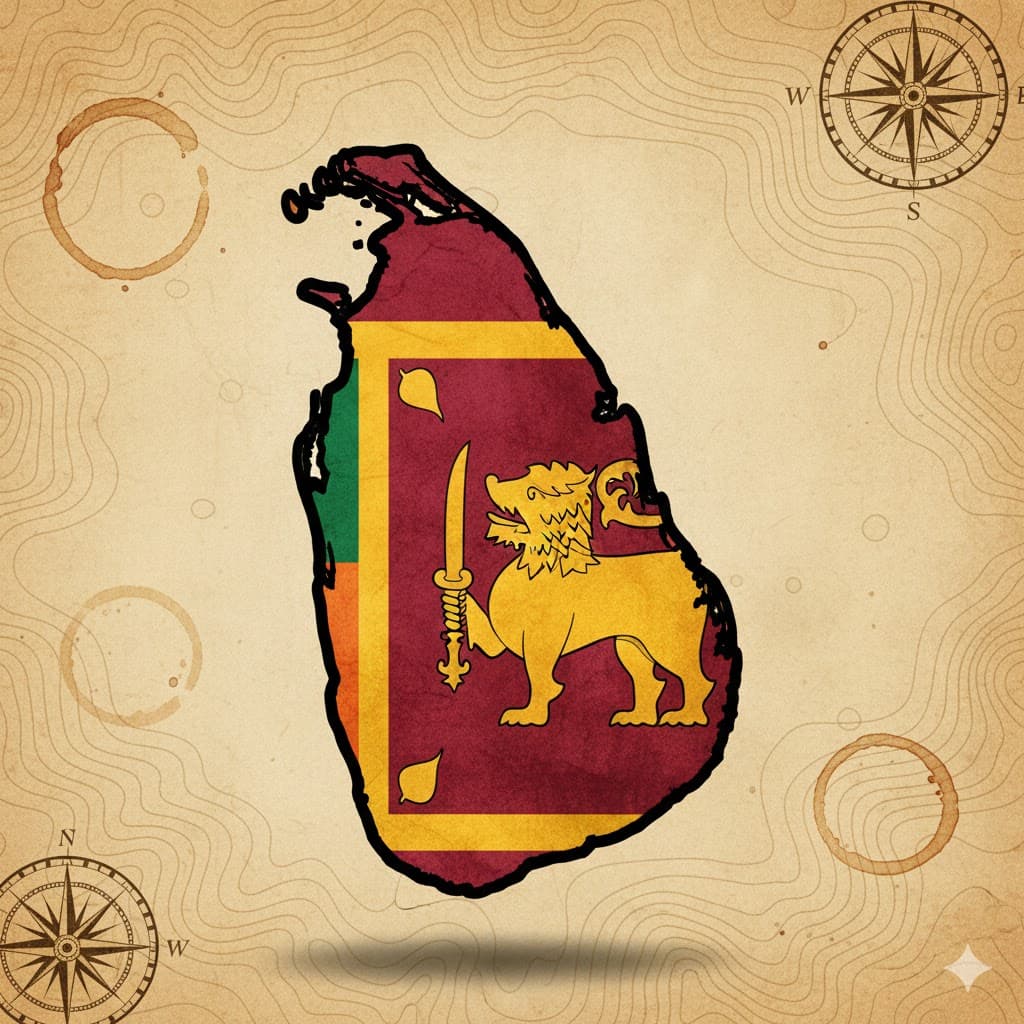
Guide de voyage général : l'essence du Sri Lanka
Le Sri Lanka est une destination qui semble conçue pour les sens. Historiquement connue sous le nom de Ceylan, cette île offre une densité de merveilles difficile à égaler – de huit sites classés au patrimoine mondial de l'UNESCO à l'une des plus grandes concentrations d'éléphants sauvages d'Asie. C'est un endroit où le temps semble s'arrêter entre les brumes des montagnes de thé et le rythme lent des vagues de l'océan Indien. Voyager au Sri Lanka, c'est s'immerger dans une spiritualité contagieuse, explorer des jungles sauvages et se laisser emporter par le sourire authentique de ses habitants. C’est sans aucun doute le joyau le plus brillant de l’océan Indien.
Capital
Colombo
Population
21.919.000
Langue
SI, TA
Sites du patrimoine de l'UNESCO
0
Indices de voyage
Scores basés sur des données réelles de 0 à 100
Le meilleur de Sri Lanka
Expériences uniques
Le train de Kandy à Ella : un rêve sur rails
Considéré comme l'un des plus beaux itinéraires ferroviaires de la planète. Le train serpente à travers les montagnes, traverse des ponts coloniaux et traverse d’innombrables champs de thé vert émeraude. Voyager avec les portes ouvertes, sentir la brise et voir les habitants des villages saluer est une expérience incontournable pour tout voyageur.
Grimper le rocher de Sigiriya
Gravir les 1 200 marches de cette ancienne forteresse creusée dans un rocher géant est un voyage dans le temps. Au sommet, les ruines du palais du roi Kasyapa offrent une vue à 360 degrés sur la jungle, tandis qu'à mi-hauteur, vous pourrez admirer les célèbres fresques des « Jeunes filles de Sigiriya » et les griffes de lion sculptées dans la pierre.
Safari dans le parc national de Yala
Le Sri Lanka est l'un des meilleurs endroits au monde pour observer des léopards dans leur habitat naturel. À Yala, ces chats évoluent librement aux côtés d'éléphants, de crocodiles, d'ours à grande gueule et d'innombrables oiseaux exotiques. Le frisson de tracer des empreintes de pas dans le sable à l'aube est une aventure incomparable.
Coucher de soleil au fort de Galle
Se promener le long des murs de ce fort hollandais du XVIIe siècle, c'est comme retourner à l'époque coloniale. Ses rues pavées sont bordées de demeures seigneuriales transformées en hôtels de charme, de galeries d'art et de vieux phares, le tout entouré par la mer. C'est l'endroit idéal pour regarder le soleil se fondre à l'horizon tandis que les jeunes locaux sautent dans la mer depuis les murs.
Pèlerinage au pic d'Adam
Pour les plus aventureux, gravir cette montagne sacrée la nuit pour atteindre le sommet à l’aube est un acte de perfectionnement personnel et de spiritualité. Partager la montée de milliers de marches avec des pèlerins bouddhistes, hindous et musulmans à la lumière des lanternes est un moment de profonde connexion humaine.
Un voyage d'épices et d'arômes
La cuisine sri lankaise est une explosion de saveurs intenses, où la noix de coco et les épices sont les protagonistes absolus. Influencé par son histoire commerciale, il mélange les techniques locales avec des touches indiennes, arabes et coloniales, créant des plats qui sont un régal pour le palais.
L'utilisation de la noix de coco
Rien n’est gaspillé avec la noix de coco. Son lait est utilisé pour les currys crémeux, sa viande râpée pour le sambol et son huile pour la cuisson. C'est la base fondamentale de l'alimentation de l'île.
Épices de qualité mondiale
Le Sri Lanka est le berceau de la vraie cannelle (Cinnamomum verum). Leurs marchés regorgent de cardamome, de clous de girofle, de poivre noir et de curcuma, des ingrédients moulus quotidiennement pour garantir un maximum de saveur et d'arôme.
Plats Iconiques
Riz et Curry
Le plat national. Il ne s'agit pas d'un plat unique mais d'un festin composé de plusieurs bols comprenant du riz, du dhal (lentilles), des currys de légumes de saison, de la viande ou du poisson et des papadums croustillants. Chaque bouchée est une combinaison différente de textures et de niveaux de piquant.
Kottu Roti
La street food par excellence. Il est préparé en coupant du pain plat (roti) sur une plaque chauffante en métal avec des légumes, des œufs, des épices et de la viande. Le son rythmé des couteaux coupant le kottu est la bande sonore des nuits dans les villes.
Trémies (Appa)
Un type de crêpes en forme de bol à base de farine de riz fermentée et de lait de coco. Les « Egg Hoppers » ont un œuf au centre. Ils sont traditionnellement servis avec du sambol épicé et sont idéaux pour le petit-déjeuner ou le dîner.
Pol Sambol
Un accompagnement omniprésent composé de noix de coco fraîchement râpée, de piment, d'oignon rouge, de jus de citron vert et parfois de poisson des Maldives séché. Il est frais, épicé et rehausse la saveur de n’importe quel plat principal.
Boissons typiques
Thé de Ceylan
La fierté de la nation. Le Sri Lanka est l'un des plus grands producteurs de thé au monde. Siroter une tasse de thé noir pur dans une plantation des Highlands est une expérience sensorielle en lien avec la terre.
Roi de la noix de coco (Thambili)
La noix de coco orange originaire de l'île. Son eau est extrêmement douce, riche en électrolytes et très rafraîchissante, idéale pour s'hydrater sous le soleil tropical. Il est vendu sur presque toutes les routes.
Arak
Liqueur distillée à partir de la sève fermentée des fleurs du cocotier. Il a une saveur qui rappelle le rhum ou le whisky et est généralement mélangé à de la bière au gingembre ou à des jus naturels.
Desserts traditionnels
Watalappam
Un pudding à la crème épicé avec une nette influence malaisienne, à base de lait de coco, de jaggery (sucre de palme), d'anis étoilé, de cardamome et de muscade. C'est le dessert star des fêtes.
Caillé à la mélasse
Yaourt au lait de bufflonne très épais et crémeux servi avec du miel de palme (mélasse). C'est un dessert simple, naturel et délicieux que l'on retrouve fréquemment dans les zones rurales du sud.
Que voir par thème
Le Sri Lanka offre une diversité étonnante sur un territoire compact. Voici les meilleures façons d’organiser votre visite selon vos intérêts.
Le Triangle Culturel
La zone centrale nord abrite les anciennes capitales d'Anuradhapura et de Polonnaruwa, où des stupas géants et des palais en ruines racontent l'histoire d'anciens royaumes. Il comprend également les grottes de Dambulla, un complexe de temples creusés dans la roche et remplis de statues de Bouddha dorées.
Hautes terres et montagnes de thé
Nuwara Eliya, connue sous le nom de « Petite Angleterre » pour son architecture coloniale, et Ella constituent le cœur vert de l'île. C'est une région au climat frais, avec des cascades impressionnantes et des sentiers de randonnée comme le Petit Pic d'Adam ou le célèbre Pont aux Neuf Arches.
Plages du sud et de l'est
De l'atmosphère des jeunes surfeurs de Weligama et Hiriketiya au sud aux plages immaculées et calmes de Nilaveli et Uppuveli à l'est (Trincomalee). Le Sri Lanka possède un littoral parfait à chaque période de l’année.
Faune et parcs nationaux
Outre Yala, le parc national de Minneriya est célèbre pour « The Gathering », où des centaines d'éléphants se rassemblent autour d'un ancien réservoir. Le parc national d'Udawalawe est un autre excellent endroit pour observer des pachydermes et visiter leur orphelinat d'éléphants.
Conseils de voyage
Vêtements dans les temples
Il est obligatoire de se couvrir les épaules et les genoux pour entrer dans tout lieu sacré. Vous devez également enlever vos chaussures et votre chapeau. Ne tournez jamais le dos à une statue de Bouddha pour prendre une photo, cela est considéré comme un grave manque de respect.
Transport interne
Le tuk-tuk est roi pour les courtes distances. Pour les longs trajets, les trains sont pittoresques mais lents ; Il est recommandé de réserver des semaines à l'avance. Les bus locaux sont très bon marché mais roulent très vite.
Visa et monnaie
La plupart des voyageurs ont besoin d'une ETA (autorisation de voyage électronique) qui est traitée en ligne. La monnaie est la roupie du Sri Lanka (LKR). Bien que les cartes soient acceptées dans les villes, les espèces sont indispensables pour les marchés, les pourboires et les zones rurales.
Respect culturel
Les tatouages de Bouddha doivent être couverts car ils peuvent entraîner des problèmes juridiques ou un refus d'entrée. La gentillesse est la norme ; un petit signe de tête sur le côté (« head bobble ») signifie généralement « oui » ou « compris ».
Ce guide n'est que le début de votre resplendissante aventure insulaire. De la spiritualité de ses temples à la force de sa nature sauvage, le Sri Lanka vous attend pour vous montrer pourquoi il est l'une des destinations les plus complètes et magiques au monde. Ayubowan !
Chargement peut-être...
Avant de partir
Réponses rapides pour planifier votre voyage en toute confiance
- 64Sécurité
- 33Abordable
Tout près d'ici
Escapades faciles et day trips pour prolonger votre itinéraire

TripPlanner
Créez votre itinéraire parfait
Chargement...
Votre profil de voyageur
Découvrez votre style de voyage
Chargement...