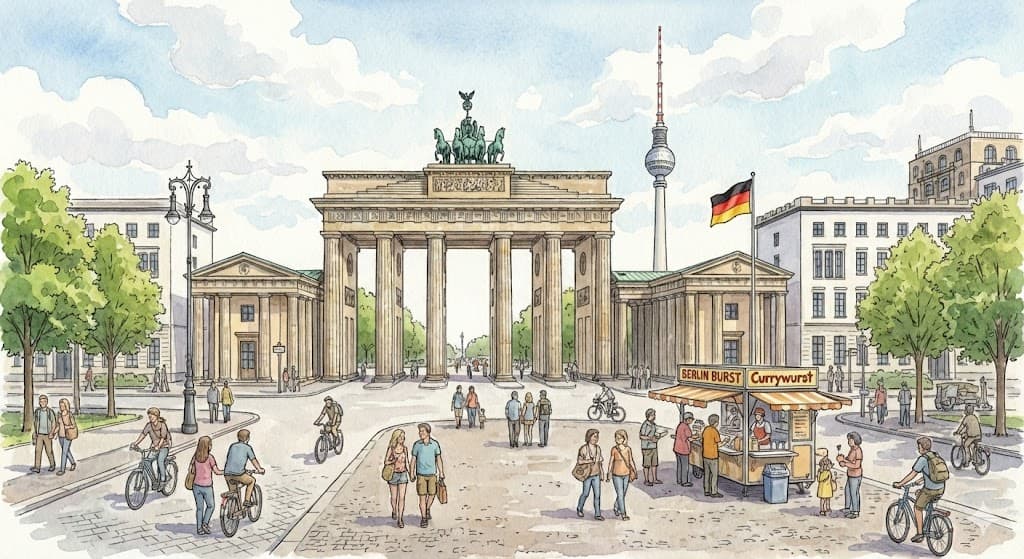
Guide de voyage général : L'âme de l'Allemagne
L’Allemagne est un pays d’une profondeur et d’une diversité surprenantes, qui va bien au-delà des stéréotypes. C'est un pays où les forêts des contes de Grimm cohabitent avec la scène artistique vibrante de Berlin, et où la précision de l'ingénierie automobile rencontre la chaleur d'un marché de Noël. Des sommets alpins de Bavière aux rives de la mer du Nord, l'Allemagne vous invite à un voyage à travers l'histoire, la culture et la nature. Préparez-vous à découvrir des villes soigneusement reconstruites, une gastronomie forte et délicieuse et une ville qui, après un passé complexe, regarde vers l'avenir avec innovation et hospitalité accueillante.
Capital
Berlin
Population
84.607.016
Langue
Allemand
Sites du patrimoine de l'UNESCO
52
Indices de voyage
Scores basés sur des données réelles de 0 à 100
Le meilleur de Allemagne
Expériences uniques
Boire dans un « Biergarten » bavarois
Par une journée ensoleillée, il n’y a rien de plus allemand que de s’asseoir dans un café en plein air à l’ombre des châtaigniers. Partagez de longues tables en bois avec les locaux, dégustez une chope d'un litre (« Maß ») de bière fraîche et accompagnez-la d'un bretzel géant, de saucisses ou d'une « Obatzda » (une préparation au fromage). C'est l'épicentre de la vie sociale bavaroise.
Plongez dans la magie d'un marché de Noël
Pendant l’Avent, les places de toute l’Allemagne se transforment en merveilles hivernales. L'arôme du vin chaud (« Glühwein »), des amandes grillées et du pain d'épices (« Lebkuchen ») emplit l'air. Promenez-vous parmi les étals en bois ornés, achetez des objets d'artisanat local et plongez dans l'esprit festif.
Conduire sur un tronçon illimité de l'autoroute
Pour les passionnés d’automobile, c’est une expérience unique. Sur les tronçons désignés (« unbegrenzt »), il n'y a pas de limite de vitesse fédérale. Conduire une voiture allemande sur ces autoroutes parfaitement entretenues, c'est ressentir l'ingénierie et la liberté à leur meilleur. Toujours responsable et en respectant la voie de gauche uniquement pour dépasser.
Randonnée à travers la Forêt Noire
Plongez dans l'un des paysages les plus emblématiques d'Allemagne. Ses denses forêts d'épicéas, ses lacs aux eaux cristallines et ses villages agricoles traditionnels ont inspiré d'innombrables contes de fées. Suivez l'un des nombreux itinéraires bien balisés et terminez la journée avec une part du célèbre gâteau Forêt-Noire.
Visitez la vallée du Rhin en bateau
Le tronçon du Rhin moyen, classé au patrimoine mondial, constitue un paysage culturel spectaculaire. Une croisière le long du fleuve entre Bingen et Coblence permet d'admirer plus de 40 châteaux et forteresses médiévaux perchés sur les collines, entourés de vignobles en pente. La légende de la sirène Lorelei ajoute une touche de mystère.
Explorez la scène alternative de Berlin
Berlin est une ville de créativité et de contre-culture. Explorez les quartiers de Kreuzberg et de Neukölln, découvrez le street art de renommée mondiale comme l'East Side Gallery (un morceau du mur de Berlin transformé en galerie d'art), visitez les marchés aux puces comme le Mauerpark et ressentez l'énergie d'une ville qui ne dort jamais.
Saveurs fortes et tradition régionale
La cuisine allemande est robuste, réconfortante et étonnamment diversifiée. Chaque région est fière de ses spécialités, avec une forte importance pour la viande (notamment le porc), les pommes de terre, le pain et bien sûr la bière. C'est une cuisine qui reflète la géographie et l'histoire du pays.
L'importance du pain (Brot)
L’Allemagne possède une culture du pain sans précédent, avec plus de 300 variétés. Du pain de seigle noir et dense (Pumpernickel) aux petits pains de toutes sortes (Brötchen) pour le petit-déjeuner. Une « Bäckerei » (boulangerie) est une institution à chaque coin de rue.
Kaffee und Kuchen (Café et Gâteau)
Le rituel de l'après-midi. Vers 15 ou 16 heures, les Allemands font une pause pour déguster une tasse de café et une généreuse part de gâteau fait maison. C'est un moment social et une délicieuse tradition respectée dans tout le pays.
Plats Iconiques
Bratwurst et autres saucisses (Wurst)
Il est impossible de parler de l’Allemagne sans évoquer son infinie variété de saucisses. La Bratwurst grillée est la plus connue, mais chaque région a la sienne : la Weisswurst bavaroise, la Currywurst de Berlin ou les petites de Nuremberg. Ils sont servis sur un petit pain ou avec de la choucroute et de la moutarde.

Schnitzel
Bien que le « Wiener Schnitzel » soit autrichien et composé de bœuf, la version allemande (souvent du porc, « Schnitzel Wiener Art ») est un plat omniprésent et apprécié. Un steak pané et frit jusqu'à ce qu'il soit doré et croustillant, généralement servi avec une tranche de citron et des frites ou une salade de pommes de terre.
Sauerbraten
Considéré comme l'un des plats nationaux. Il s'agit d'une viande rôtie (généralement du bœuf) qui est marinée pendant des jours dans un mélange de vin, de vinaigre et d'épices, ce qui lui confère une saveur douce-amère caractéristique. Il est cuit à feu doux et servi avec une sauce épaisse, du « Rotkohl » (chou rouge) et du « Knödel » (boulettes de pommes de terre ou de pain).
Spätzle
Une sorte de pâtes aux œufs irrégulières et tendres, typiques de la région Souabe. Il est souvent servi en accompagnement, mais la version « Käsespätzle » (avec du fromage fondu et des oignons frits) est un plat principal délicieux et très populaire, semblable aux macaronis au fromage.
Brezel (Bretzel)
L'oignon salé se retrouve partout, notamment dans le sud. Le bretzel bavarois est gros, moelleux à l’intérieur et avec une croûte sombre et salée. C'est l'accompagnement parfait pour une bière dans un 'Biergarten'.
Eintopf
Cela signifie « une marmite » et c'est la définition allemande du ragoût. Il s'agit d'un repas complet dans un seul plat qui combine du bouillon, des légumes, des pommes de terre et un certain type de viande ou de saucisse. Il existe d'innombrables variantes régionales et c'est un plat très populaire pendant les mois froids.
Boissons typiques
Bière
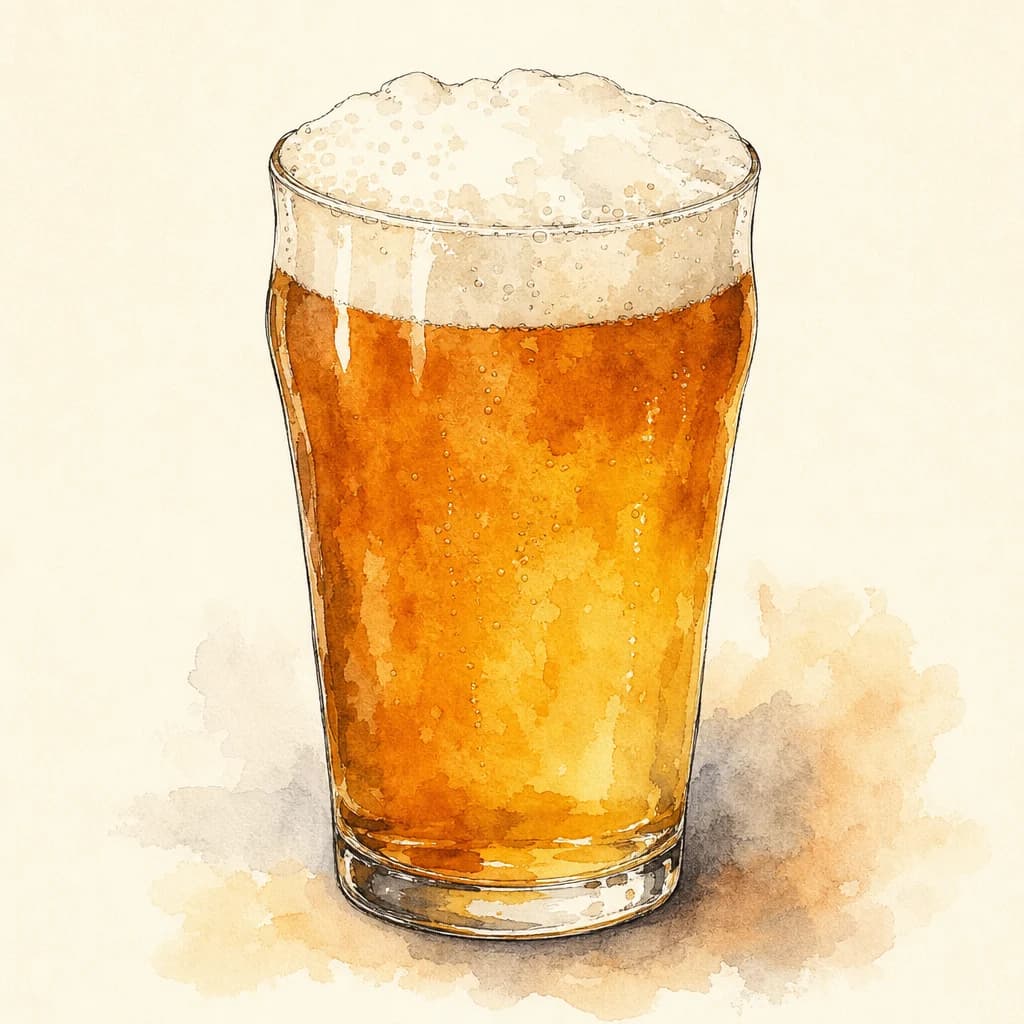
La boisson nationale. L'Allemagne est régie par la loi sur la pureté de 1516 (Reinheitsgebot). La variété est immense : Pils, Lager, Weissbier (blé), Kölsch (de Cologne), Bock (plus forte). Chaque région a son style et la culture de la bière est très forte.
Vin
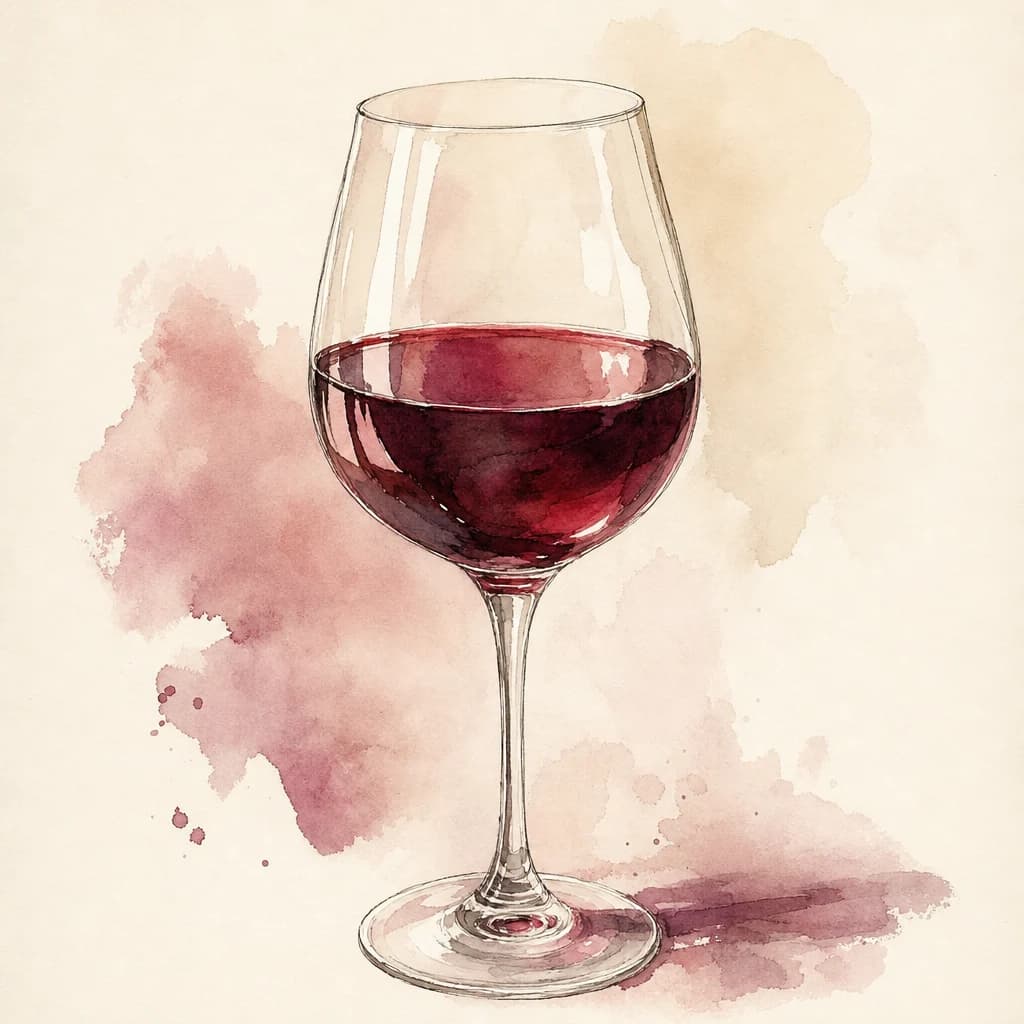
L'Allemagne est célèbre pour ses vins blancs, notamment le Riesling, qui pousse sur les pentes abruptes des vallées fluviales de la Moselle et du Rhin. Ce sont des vins élégants et aromatiques avec une acidité fantastique. Il existe également de bons rouges, comme le Spätburgunder (Pinot Noir).
Apfelschorle
La boisson non alcoolisée la plus populaire. C'est un mélange simple et rafraîchissant de jus de pomme et d'eau gazeuse. Vous le retrouverez sur tous les menus et c'est l'alternative parfaite aux boissons gazeuses sucrées.
Schnaps
Terme générique désignant les distillats forts, souvent des distillats de fruits (Obstler), pris en digestif après un repas copieux. Jägermeister est peut-être la liqueur aux herbes allemande la plus connue au niveau international.
Desserts traditionnels
Schwarzwälder Kirschtorte (Gâteau Forêt-Noire)
Le gâteau allemand le plus célèbre. Étages de génoise au chocolat imbibés de Kirsch (liqueur de cerise), entrecoupés de crème fouettée et de cerises. Il est décoré de plus de crème, de copeaux de chocolat et de cerises.
Apfelstrudel (Strudel aux pommes)
Bien qu'il soit d'origine autrichienne, c'est un dessert extrêmement populaire dans le sud de l'Allemagne. Une fine pâte roulée remplie de pommes, de raisins secs, de cannelle et de chapelure, cuite au four jusqu'à ce qu'elle soit dorée. Il est servi chaud, souvent avec une sauce vanille ou de la glace.
Lebkuchen
Sorte de pain d'épices épicé, moelleux et souvent glacé ou enrobé de chocolat. C'est une spécialité des marchés de Noël, notamment ceux de Nuremberg, et se présente sous de nombreuses formes, dont les fameux cœurs à messages.
Rote Grütze
Un dessert typique du nord de l'Allemagne. C'est une sorte de pudding épais ou de compote réalisé avec un mélange de fruits rouges (fraises, framboises, cerises, groseilles). Il est traditionnellement servi avec une sauce vanille, de la crème ou de la glace.
Que voir par thème
L’Allemagne est un pays de régions aux identités fortes. De la culture maritime du nord au folklore alpin du sud, chaque territoire propose un voyage différent. Voici quelques idées thématiques pour l’explorer.
Villes historiques et modernes
Découvrez le mélange d'histoire et d'avant-garde. Berlin, avec son passé mouvementé et son présent créatif. Munich, l'élégante capitale bavaroise. Hambourg, la « Venise du Nord ». Et des villes joliment reconstruites comme Dresde, ou des joyaux médiévaux parfaitement conservés comme Ratisbonne ou Quedlinburg.
Itinéraires des contes de fées
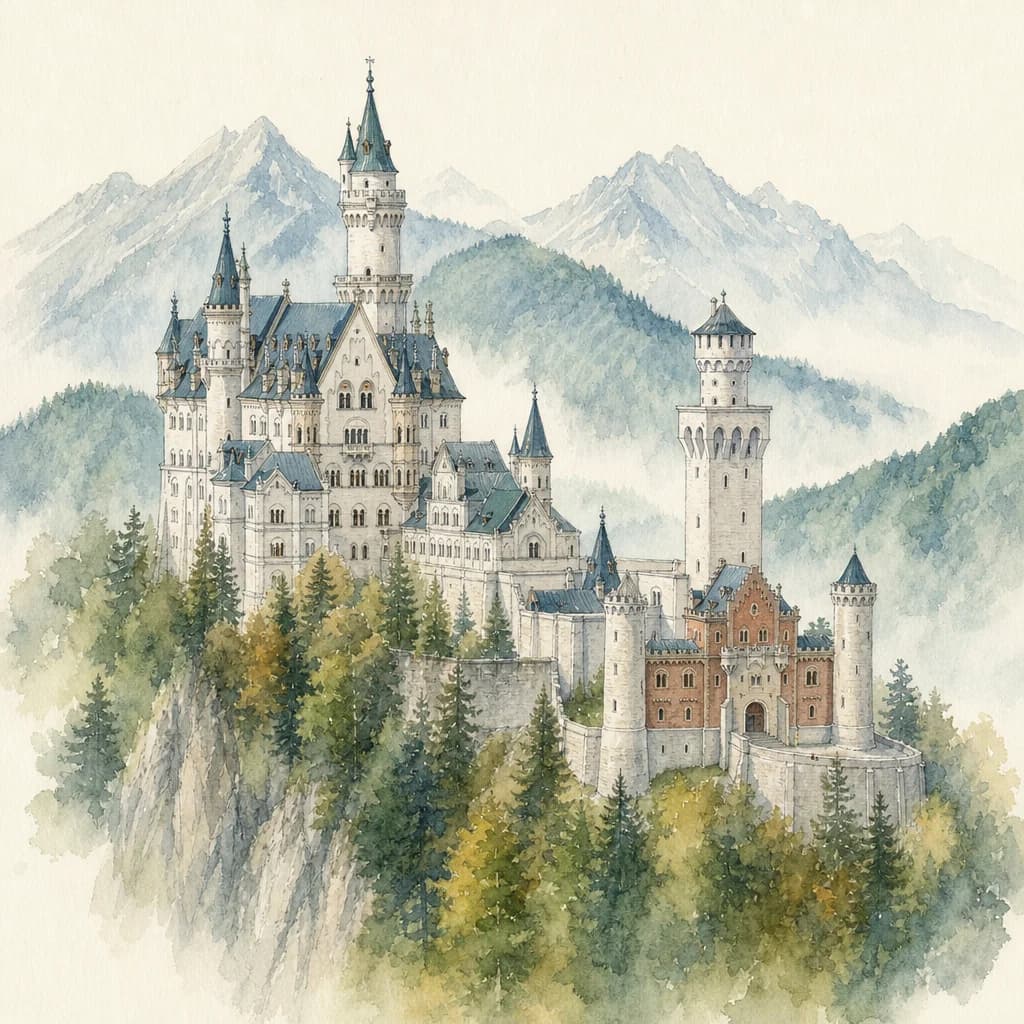
Suivez les traces des frères Grimm le long de la « Route des contes de fées » qui s'étend de Hanau à Brême. La « Route romantique » est encore plus célèbre, reliant Würzburg à Füssen à travers des villes fortifiées comme Rothenburg ob der Tauber et des châteaux de rêve comme Neuschwanstein.
Nature active et parcs nationaux
Les Alpes bavaroises sont un paradis pour la randonnée et le ski. La Forêt-Noire propose des itinéraires à travers forêts et cascades. La Suisse saxonne, près de Dresde, surprend avec ses formations rocheuses de grès. Et la région des lacs du Mecklembourg est idéale pour les activités nautiques.
Mémoire historique du XXe siècle
L’Allemagne prend son histoire au sérieux. Visitez les vestiges du mur de Berlin, le camp de concentration de Dachau près de Munich, le centre de documentation de Nuremberg ou Checkpoint Charlie pour comprendre les moments cruciaux qui ont marqué le XXe siècle et le monde.
Culture, musique et art
L'Île aux Musées de Berlin est un complexe culturel de premier ordre. Suivez les traces de grands compositeurs comme Bach à Leipzig ou Beethoven à Bonn. Assistez à un opéra au Semperoper de Dresde ou explorez le mouvement artistique Bauhaus à Weimar et Dessau.
Routes des vins
Découvrez le visage du vin de l'Allemagne. La route des vins allemande (« Deutsche Weinstraße ») dans la région du Palatinat est la plus ancienne. Les rives de la Moselle et du Rhin offrent des paysages spectaculaires de vignobles en pente où est produit le célèbre Riesling. De nombreux domaines viticoles proposent des dégustations.
Conseils de voyage
Ponctualité
Être ponctuel est très important dans la culture allemande. Arriver à un rendez-vous, même social, à l’heure convenue est un signe de respect. Les transports en commun sont également connus pour leur ponctualité.
Espèces (Bargeld)
Même si le paiement par carte est répandu, l’Allemagne reste une société à forte consommation d’argent liquide. Sur les marchés, les petits bars, les boulangeries ou pour de petits montants, il est courant et parfois nécessaire de payer en espèces. Ayez toujours de l’argent liquide avec vous.
Fermeture le dimanche (Sonntagsruhe)
Le « dimanche calme » est une norme culturelle et juridique. La plupart des magasins, supermarchés et centres commerciaux sont fermés le dimanche. Seuls quelques commerces sont ouverts dans les gares ou les aéroports, en plus des restaurants et des attractions touristiques.
Système de dépôt (Pfand)
De nombreuses bouteilles en plastique et en verre, ainsi que des canettes, disposent d'une « Pfand » ou consigne (normalement 0,25 €). Vous paierez ce supplément lors de l'achat et il vous sera restitué lorsque vous rapporterez le contenant vide aux distributeurs automatiques que l'on trouve dans tous les supermarchés.
Ce guide est une fenêtre sur la nation riche et complexe qu’est l’Allemagne. Chacun de ses 16 États fédéraux (« Länder ») offre une expérience différente. Nous vous invitons à découvrir les guides les plus spécifiques pour planifier votre voyage, que ce soit pour vous immerger dans la culture urbaine, profiter de la nature ou explorer l'histoire. Bonne Reise!
Chargement peut-être...
Explore Regions of Allemagne
Discover the most beautiful regions and plan your perfect trip
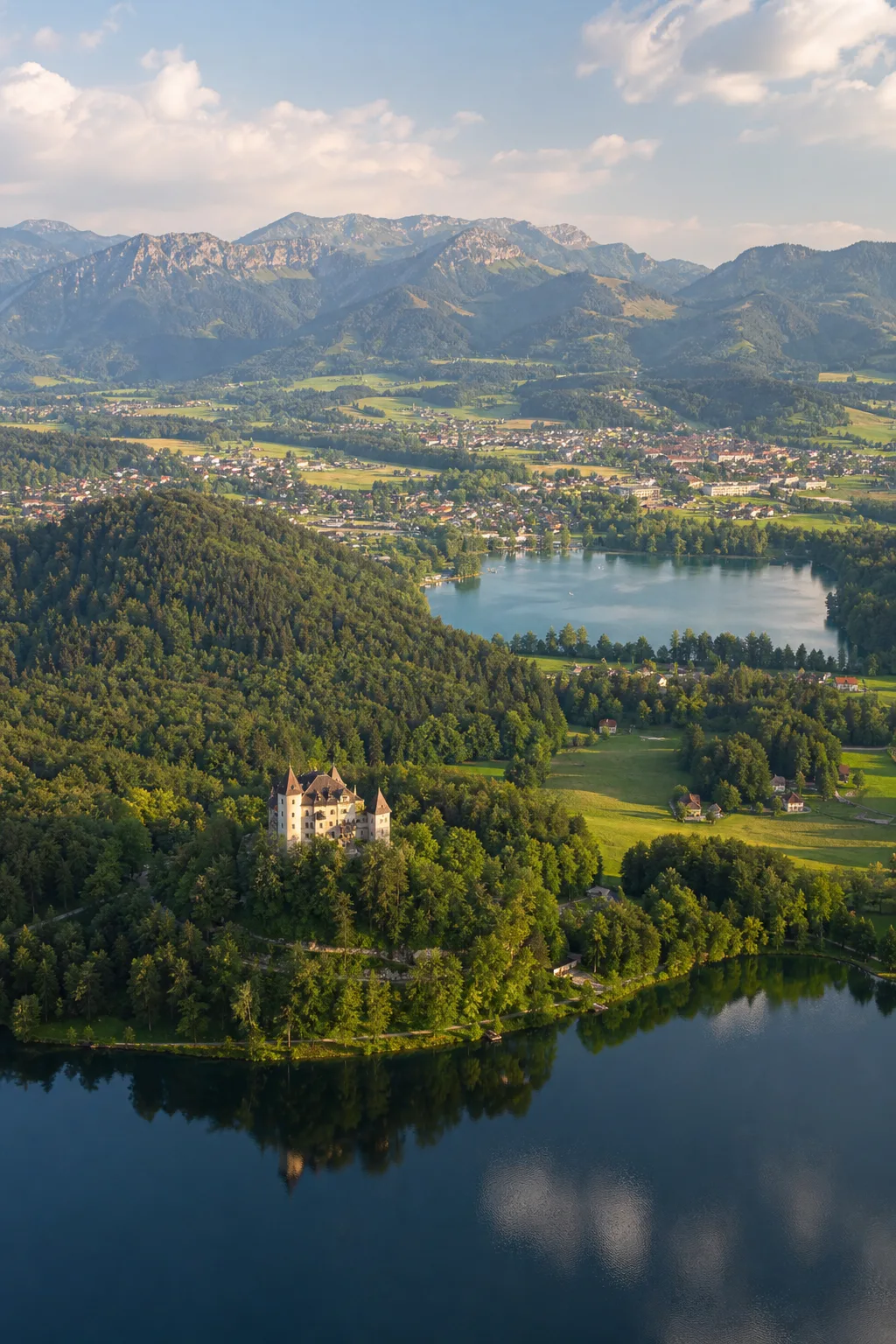
Baden-Württemberg
Baden-Württemberg offers distinctive landscapes, culture and experiences in Allemagne.
Bavaria
Bavaria offers distinctive landscapes, culture and experiences in Allemagne.
Berlin
Berlin offers distinctive landscapes, culture and experiences in Allemagne.
Brandenburg
Brandenburg offers distinctive landscapes, culture and experiences in Allemagne.
Avant de partir
Réponses rapides pour planifier votre voyage en toute confiance
Pourquoi cette destination
- Allemagne convient très bien aux familles (indice 90/100).
- Scène gastronomique au top : 80/100.
- Destination sûre : indice 85/100.
- 90Familles
- 80Gastronomie
- 85Sécurité
- 70Abordable
Styles de voyage
Classements liés
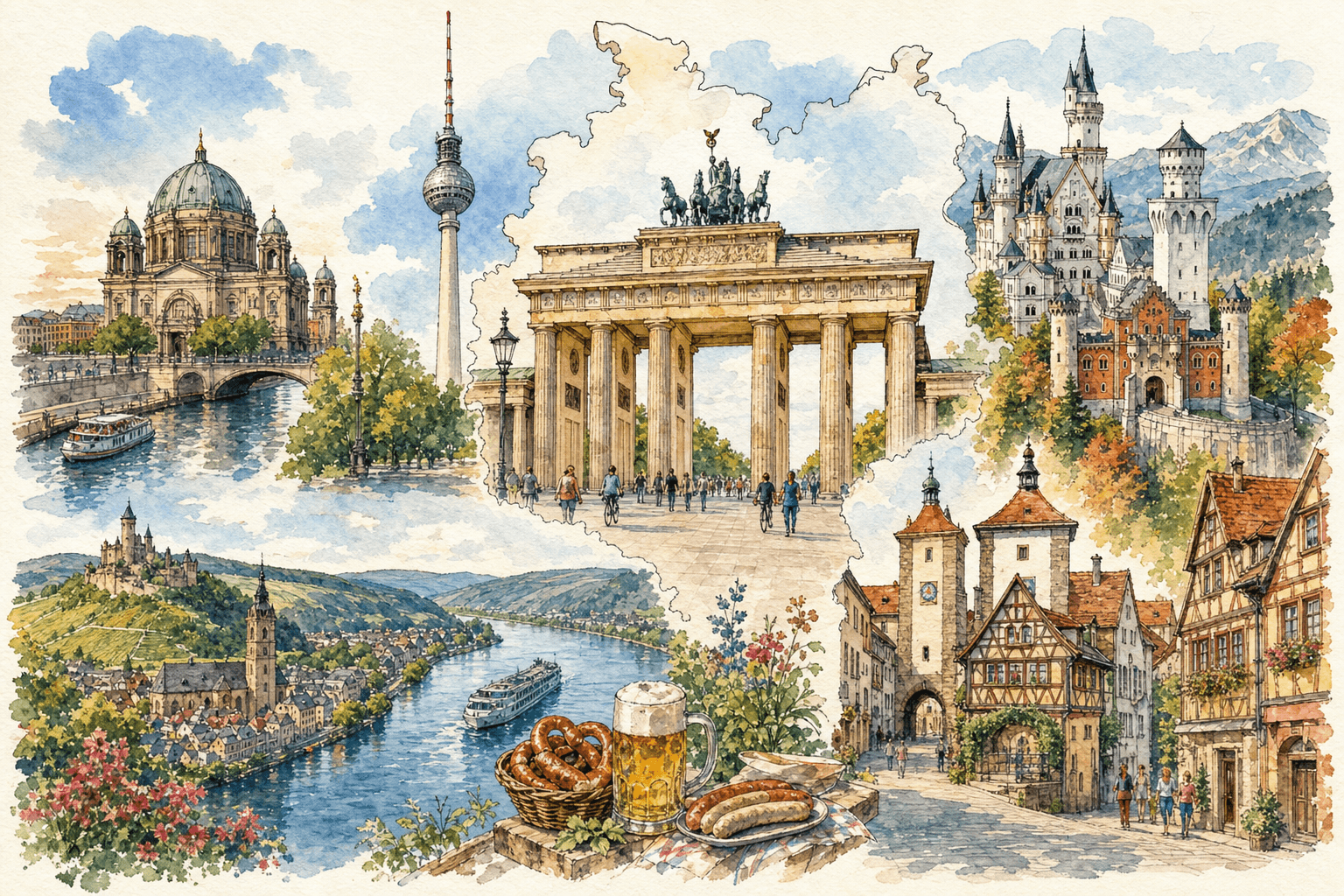 Meilleures villes à visiter en AllemagneLes meilleures villes allemandes pour voyager.
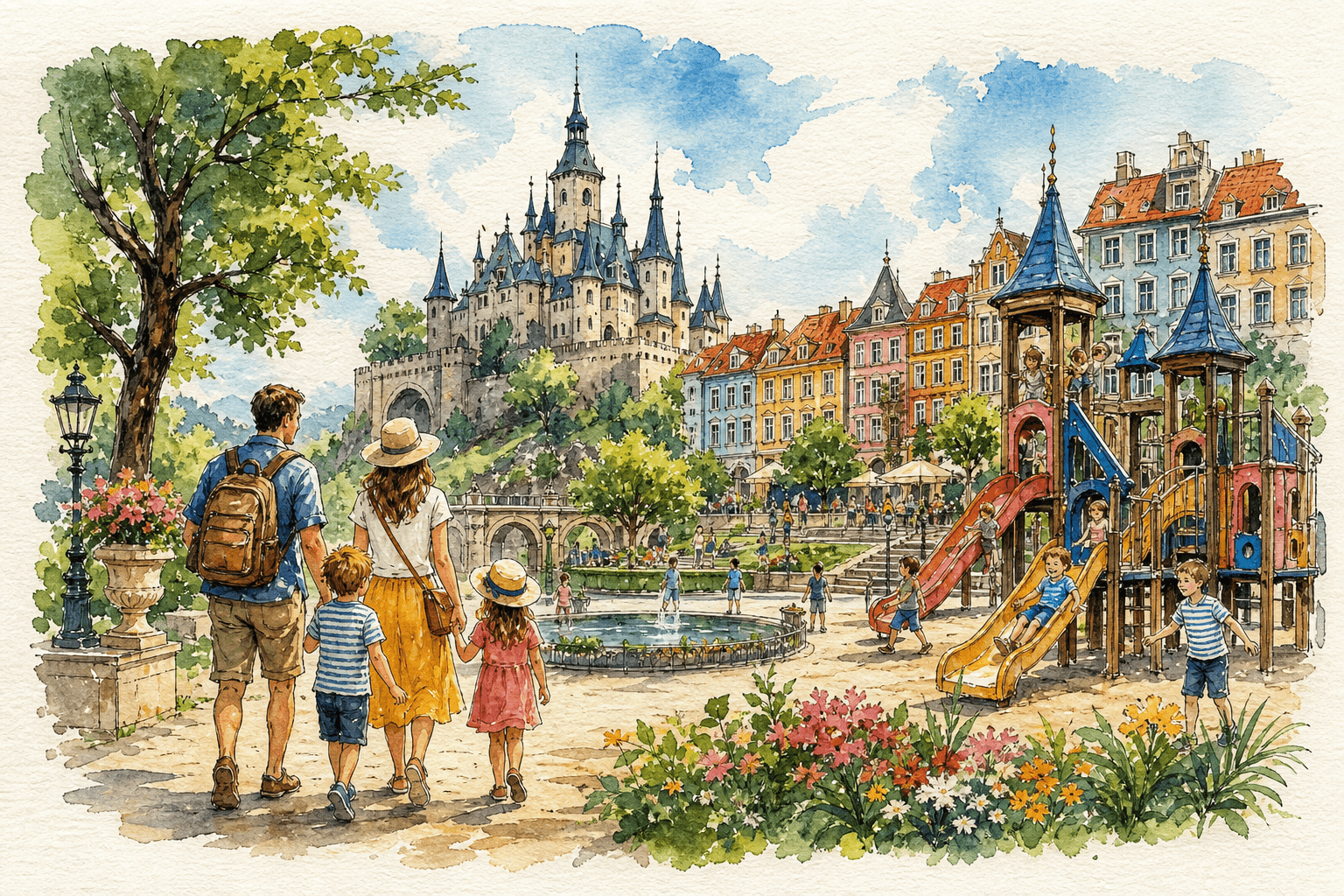 90Meilleures villes d’Europe pour voyager en familleVilles pensées pour les familles : sécurité, rythme et activités enfants.
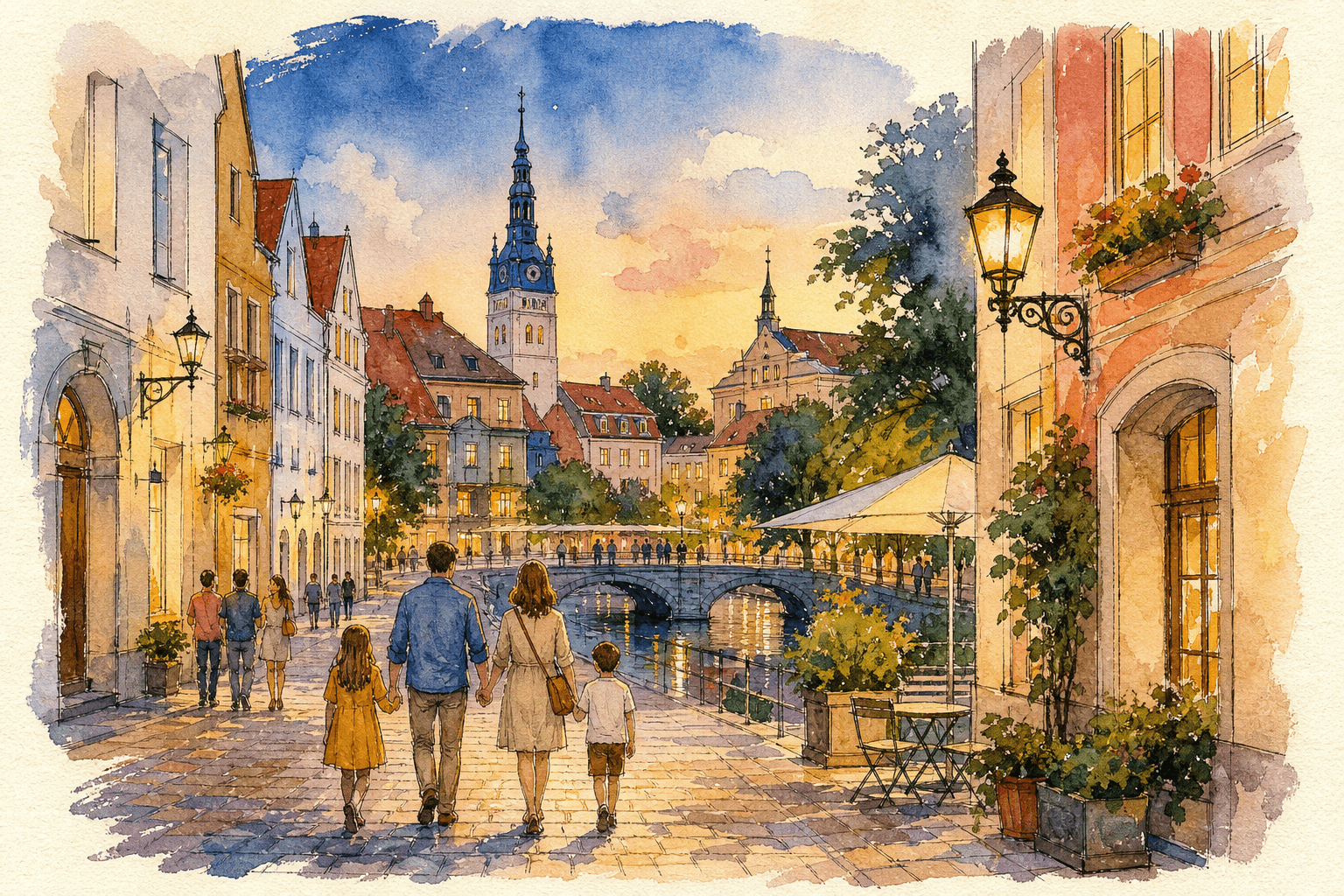 85Villes les plus sûres d’EuropeDestinations où voyager plus sereinement.
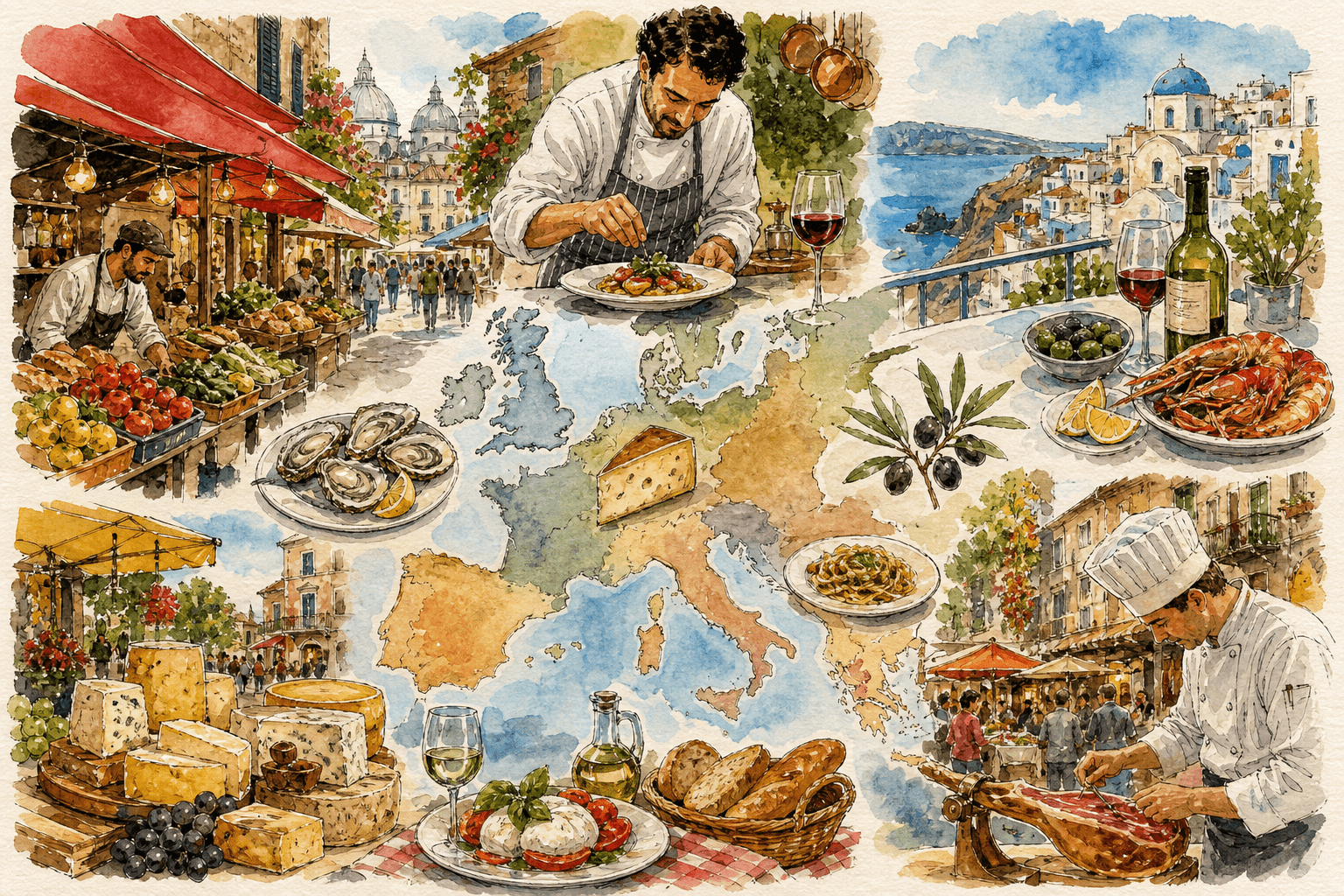 80Meilleures destinations gastronomiques d’EuropeVilles avec la meilleure scène gastronomique d’Europe.
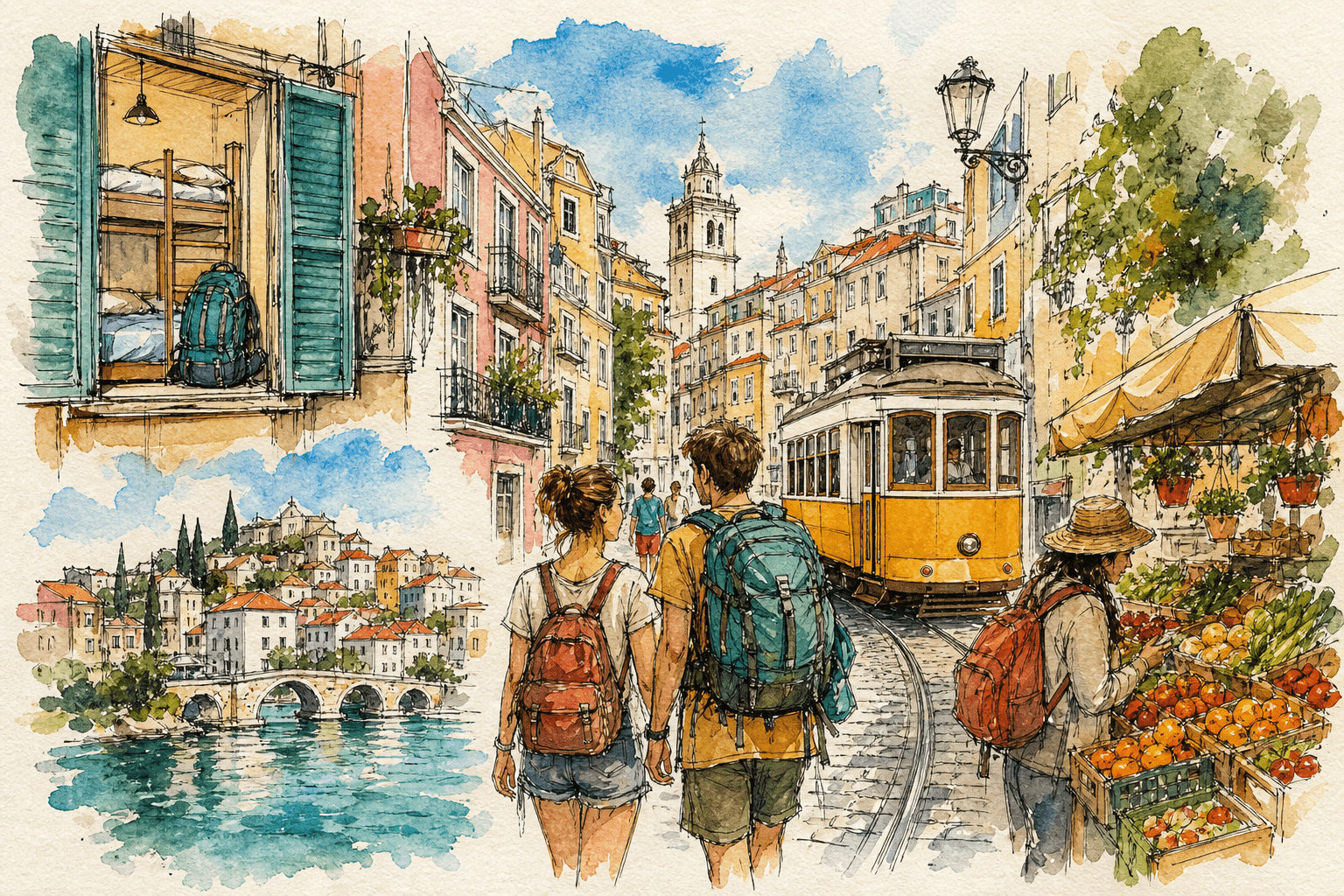 70Destinations les moins chères en EspagneVilles espagnoles où le budget va plus loin sans sacrifier l’expérience.
Tout près d'ici
Escapades faciles et day trips pour prolonger votre itinéraire
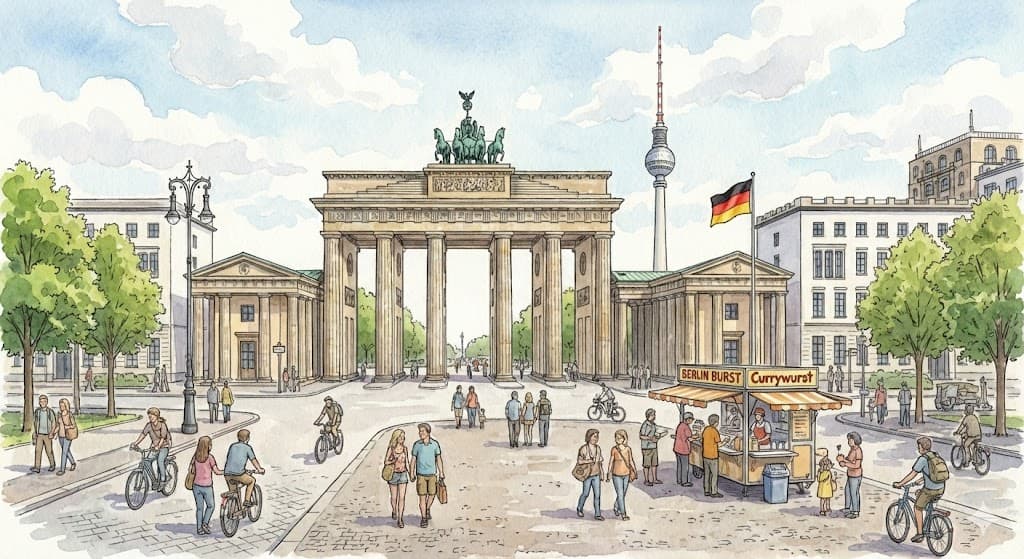


Collections et routes
- Meilleures villes à visiter en AllemagneLes meilleures villes allemandes pour voyager.
- 90Meilleures villes d’Europe pour voyager en familleVilles pensées pour les familles : sécurité, rythme et activités enfants.
- 85Villes les plus sûres d’EuropeDestinations où voyager plus sereinement.
- 80Meilleures destinations gastronomiques d’EuropeVilles avec la meilleure scène gastronomique d’Europe.
- 70Destinations les moins chères en EspagneVilles espagnoles où le budget va plus loin sans sacrifier l’expérience.
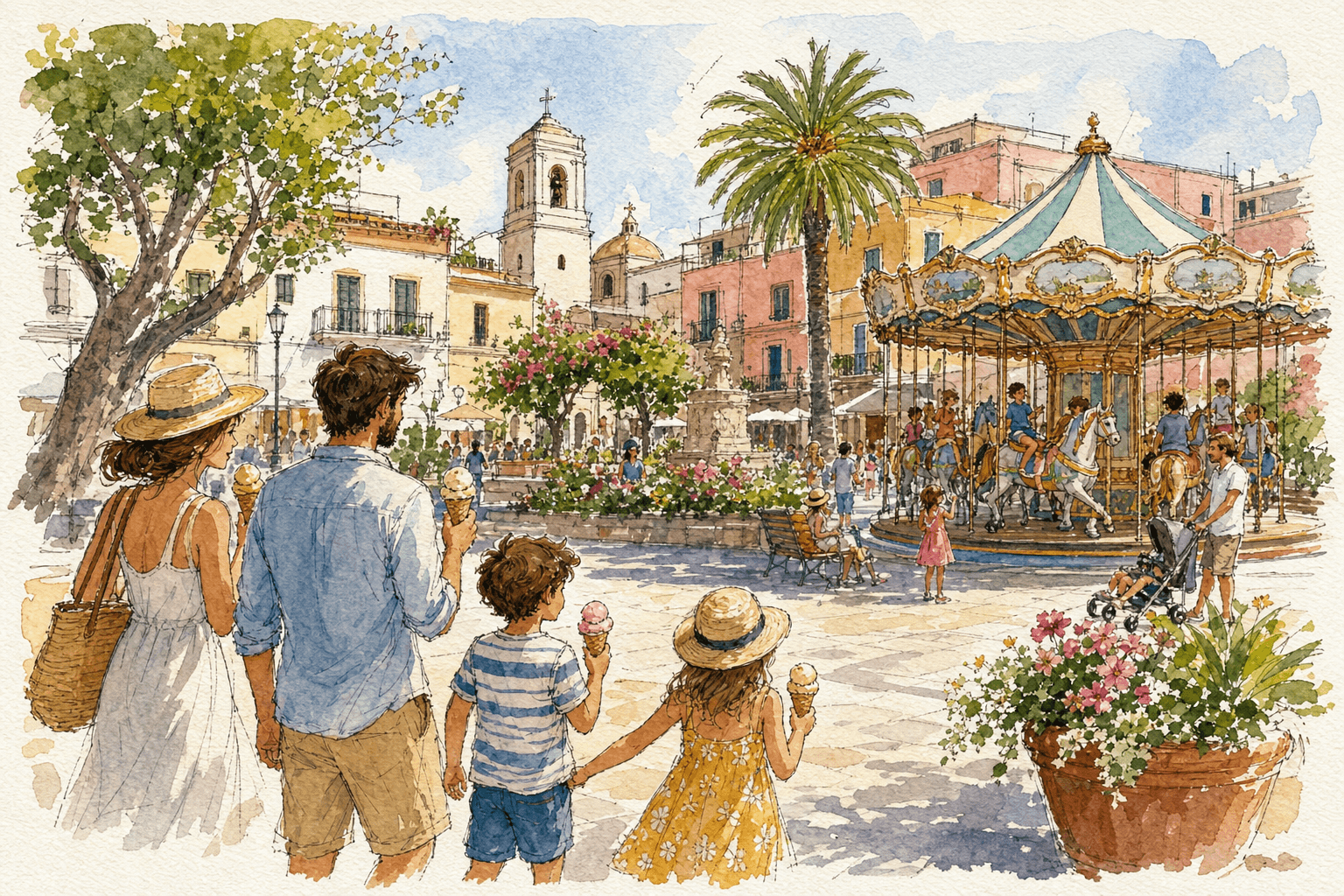 90Voyage en famille
 80Voyage gastronomique
 70Voyage petit budget
TripPlanner
Créez votre itinéraire parfait
Chargement...
Votre profil de voyageur
Découvrez votre style de voyage
Chargement...