

Explora la cultura de Samoa: Tradición viva
Sumérgete en la rica historia y cultura de Samoa a través de sus museos y monumentos.
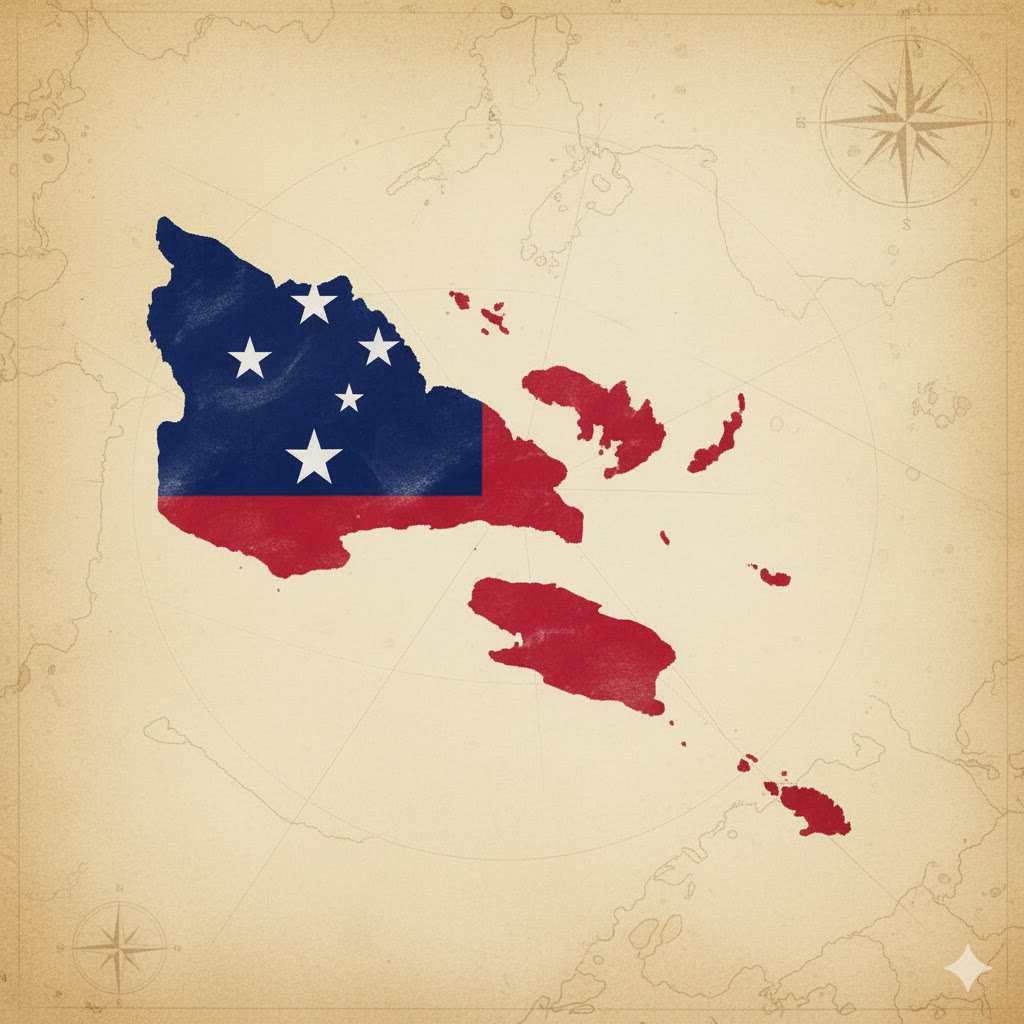
Les Samoa sont un magnifique État insulaire indépendant situé au cœur de l'océan Pacifique Sud, dans la région de la Polynésie. Composée de deux îles volcaniques principales (Upolu et Savai'i) et de plusieurs îlots plus petits, elle est mondialement connue pour avoir conservé avec une extraordinaire pureté le « Fa'a Samoa » (le mode de vie traditionnel samoan vieux de plus de 3 000 ans). Il se distingue par des monuments naturels emblématiques tels que la fosse marine de To Sua Ocean Trench, des cascades sauvages dans la jungle, des champs de lave noire qui se jettent dans la mer, des geysers marins qui expulsent l'eau à des dizaines de mètres de haut et des plages parfaites comme des cartes postales et exemptes de surpopulation.
TripMatches · Se souvenir · Planifier
Que voulez-vous faire avec Samoa ?
Êtes-vous déjà allé à Samoa ou aimeriez-vous encore y aller ? Choisissez et nous vous menons directement à l'action.
J'aimerais y aller
Enregistrez Samoa dans vos destinations ou commencez un nouveau plan.
Culture & Patrimoine
Découvrez la riche histoire, l'art et les traditions de Samoa
Les Samoa sont un magnifique État insulaire indépendant situé au cœur de l'océan Pacifique Sud, dans la région de la Polynésie. Composée de deux îles volcaniques principales (Upolu et Savai'i) et de plusieurs îlots plus petits, elle est mondialement connue pour avoir conservé avec une extraordinaire pureté le « Fa'a Samoa » (le mode de vie traditionnel samoan vieux de plus de 3 000 ans). Il se distingue par des monuments naturels emblématiques tels que la fosse marine de To Sua Ocean Trench, des cascades sauvages dans la jungle, des champs de lave noire qui se jettent dans la mer, des geysers marins qui expulsent l'eau à des dizaines de mètres de haut et des plages parfaites comme des cartes postales et exemptes de surpopulation.
Festivals et Événements
En plus de l'imposante tranchée To Sua, l'île d'Upolu abrite un circuit d'eau douce spectaculaire : la cascade Papapapaitai (avec une chute libre de plus de 100 mètres dans un canyon de la jungle), les chutes Sopoaga avec des jardins botaniques et les piscines naturelles rocheuses de Piula Cave Pool, où vous nagez dans une eau douce cristalline coulant sous une église méthodiste historique.
La plage de Lalomanu, à l'est d'Upolu, est régulièrement classée parmi les plus belles plages du Pacifique Sud pour son sable blanc et ses eaux turquoise. Des plages comme Salamumu et Return to Paradise captivent par leurs formations rocheuses volcaniques noires sur sable blanc, tandis que l'île inhabitée de Namua offre un paradis pour nager avec les tortues vertes en liberté.
Savai'i est l'île la plus grande et la moins peuplée des Samoa, dominée par une nature sauvage : les champs de lave noire de Saleaula, les geysers marins d'Alofaaga Blowholes, la cascade en escalier d'Afu Aau tombant dans un bassin turquoise dans la jungle et la mythique grotte des nains de Paia, un tube de lave volcanique long d'un kilomètre.
Plongez dans la fosse océanique de To Sua
Située sur la côte sud d'Upolu, To Sua (« Big Hole ») est une piscine naturelle de 30 mètres de profondeur formée par l'effondrement d'un ancien tube de lave volcanique relié à la mer. Descendre son escalier raide en bois jusqu'à une plate-forme flottante vous permet de nager dans des eaux émeraude transparentes entourées de parois rocheuses couvertes de vignes tropicales et de poissons colorés qui arrivent avec la marée.
Dormir sur un Fale de plage traditionnel à Lalomanu
Séjourner dans un « Beach Fale » (hutte samoane traditionnelle en bois et au toit de chaume, sans murs, avec des stores en feuilles de palmier qui s'abaissent la nuit) est l'expérience samoane déterminante. A Lalomanu Beach, se réveiller aux aurores sur le sable blanc avec vue sur la barrière de corail et l'îlot inhabité de Namua permet de vivre la vie polynésienne la plus pieds nus et la plus libre.
Regardez les noix de coco voler aux évents d'Alofaaga à Savai'i
Au sud-ouest de l'île sauvage de Savai'i, la houle du Pacifique s'écrase avec une force colossale contre les falaises de basalte, canalisant l'eau à travers d'anciens tubes de lave sous-marins. La pression projette dans le ciel de gigantesques geysers d’eau salée de plus de 30 mètres de haut ; Les villageois locaux jettent des noix de coco dans les trous pour qu'elles tirent avec la force d'un canon naturel.
Explorez les ruines volcaniques du champ de lave de Saleaula
Entre 1905 et 1911, l’éruption du volcan Matavanu ensevelit plusieurs villages sous une rivière de lave noire qui se dirigeait lentement vers la mer. Aujourd'hui, marcher sur ces coulées ondulantes de basalte pétrifié permet de visiter les ruines de l'église du LMS (dont la structure en pierre a survécu à la lave qui est entrée par la porte) et le mythique « Tombeau de la Vierge », un cimetière que la lave entourait sans toucher.
Visitez la résidence de Robert Louis Stevenson à Vailima
Le célèbre auteur de « L'Île au trésor » a passé les dernières années de sa vie aux Samoa, où il était surnommé avec révérence « Tusitala » (le conteur). Sa belle demeure coloniale en bois à Vailima, entourée de jardins botaniques, est aujourd'hui un musée qui conserve ses affaires, ses livres et sa cheminée ; de là, un chemin monte la colline du mont Vaea jusqu'à sa tombe en bord de mer.
Vivez l'émotion d'une nuit Fiafia et de la danse du feu
Une « Fiafia Night » est une grande fête communautaire polynésienne où les traditions samoanes sont célébrées. Après avoir profité d'un banquet cuit dans le four souterrain « Umu », les guerriers exécutent la « Siva Afi » (danse du couteau de feu), faisant tourner des machettes enveloppées de feu à une vitesse vertigineuse au rythme martial des tambours « Pātē », complété par l'élégance gracieuse des danseurs « Siva Samoa ».
Vous voulez en savoir plus sur Samoa ?
Découvrez le guide complet avec l'histoire, les itinéraires détaillés, les conseils pratiques et toutes les informations dont vous avez besoin.
Voir le guide completConseils de voyage pour Culture & Patrimoine
Le code « Fa'a Samoa » et l'étiquette du village (« Sa »)
Aux Samoa, toutes les plages, sentiers et cascades appartiennent aux communautés locales. Il est d'usage de payer une petite taxe d'accès communautaire (entre 5 et 20 WST) qui revient directement au village. Lorsque vous traversez des villages, vous devez vous habiller modestement (en couvrant les épaules et les genoux avec un paréo ou « Lavalava »). Entre 18h00 et et 19h00 'Sa' a lieu, un couvre-feu de prière du soir de 10 à 20 minutes où il faut garder le silence et ne pas se promener dans les rues des villes.
Conduite à gauche et limites de vitesse
En septembre 2009, les Samoa ont historiquement changé le sens de la circulation, conduisant sur le côté gauche de la route. Les limitations de vitesse sont très basses et strictes (40-50 km/h dans les villages et 56-65 km/h sur routes ouvertes) car les habitants, les enfants et les animaux marchent régulièrement sur les accotements. Pour louer une voiture, vous devez valider votre permis étranger en obtenant un permis temporaire délivré par l'autorité locale des transports (LTA).
Monnaie et paiements (Tala samoan)
La monnaie officielle est le Samoan Tala (WST). Bien que les cartes de crédit internationales soient acceptées dans les grands complexes hôteliers et les restaurants d'Apia, dans la grande majorité du pays, l'argent liquide est indispensable pour payer les « beach fales », les frais d'entrée aux plages des villages, les bus locaux en bois (« bus en bois ») et les achats sur les marchés.
TripMatches · Se souvenir · Planifier
Que voulez-vous faire avec Samoa ?
Êtes-vous déjà allé à Samoa ou aimeriez-vous encore y aller ? Choisissez et nous vous menons directement à l'action.
J'aimerais y aller
Enregistrez Samoa dans vos destinations ou commencez un nouveau plan.
Informations rapides
Guide complet de la destination
Accédez à la fiche complète : attractions, météo, gastronomie, événements et plus encore.
Découvrir cette destination en profondeurExplorer davantage autour
Vous aimerez aussi
Découvrez Samoa autrement
Explorez différentes façons de vivre cette destination selon votre style de voyage