

Explora la cultura de Algeria: Tradición viva
Sumérgete en la rica historia y cultura de Algeria a través de sus museos y monumentos.
Algeria is the largest country in Africa and the Mediterranean basin, stretching from the fertile northern coasts and the Atlas mountain ranges to the infinite depths of the Sahara Desert. It stands out for hosting seven sites declared World Heritage Sites by UNESCO, including the canyons and ancient rock art of Tassili n'Ajjer, the best preserved Roman cities on the planet (Timgad and Djemila), the Mozabite architecture of the M'Zab Valley, the mythical city of Constantine suspended over rocky gorges, and a rich Berber (Amazigh), Ottoman, Hispanic and Arab heritage.
TripMatches · Remember · Plan
What do you want to do with Algeria?
Been to Algeria or still want to go? Pick one and we'll take you straight to it.
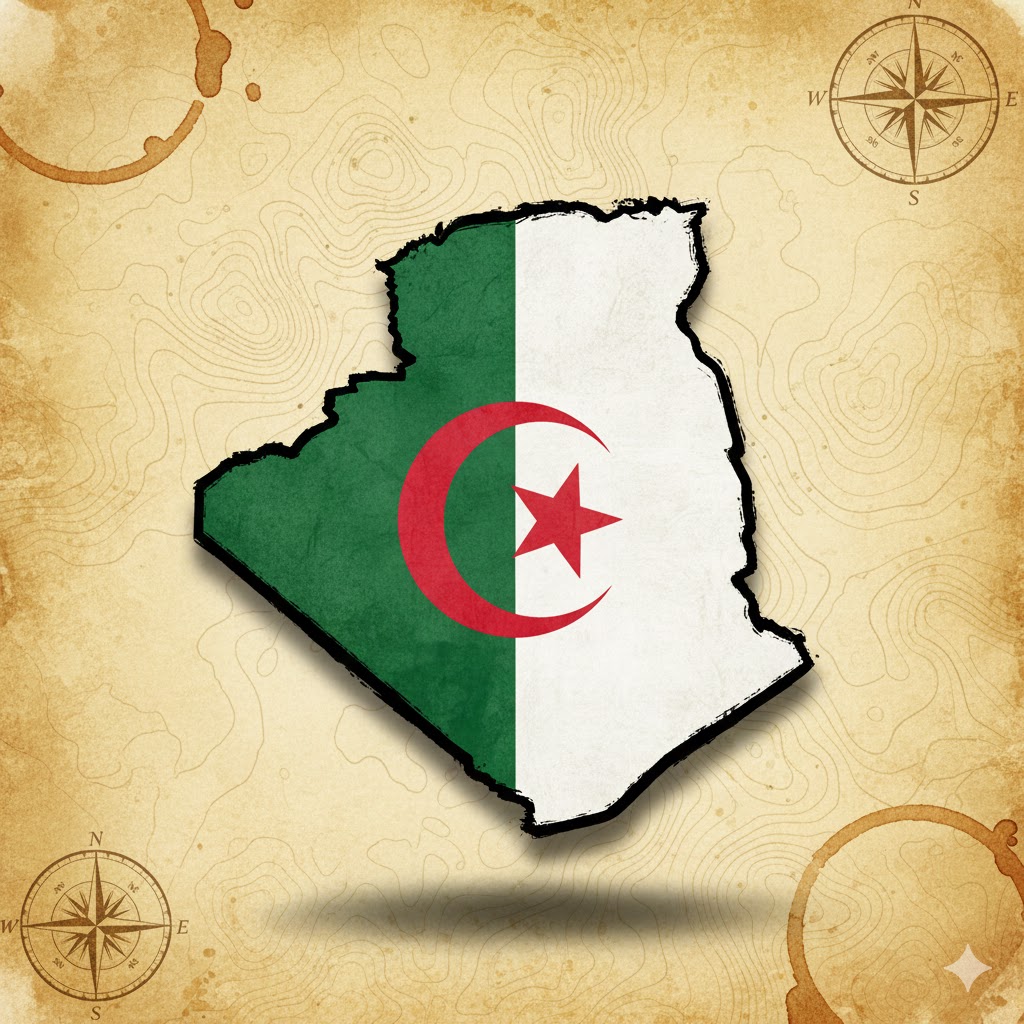
Culture & Heritage
Discover the rich history, art and traditions of Algeria
Algeria is the largest country in Africa and the Mediterranean basin, stretching from the fertile northern coasts and the Atlas mountain ranges to the infinite depths of the Sahara Desert. It stands out for hosting seven sites declared World Heritage Sites by UNESCO, including the canyons and ancient rock art of Tassili n'Ajjer, the best preserved Roman cities on the planet (Timgad and Djemila), the Mozabite architecture of the M'Zab Valley, the mythical city of Constantine suspended over rocky gorges, and a rich Berber (Amazigh), Ottoman, Hispanic and Arab heritage.
Festivals & Events
Djanet and the Tassili n'Ajjer plateau offer expeditions among red dunes, rock forests and rock carvings; Tamanrasset and the Hoggar massif dazzle with their volcanic landscapes and the Assekrem viewpoint; while northern oases like Taghit (in the Great Western Erg) captivate with their palm groves and adobe fortresses (*ksour*).
Algeria's Roman ruins are among the most complete in the world: the gridded military city of Timgad; the monumental Djemila with its mountain temples; Tipasa with its basilicas and forums on the shores of the Mediterranean Sea; and Cherchell, former capital of Caesarian Mauretania with its museum of classical sculptures.
The Pentapolis of the M'Zab Valley (Ghardaïa, Beni Isguen, Melika, Bounoura and El Atteuf) forms a unique medieval urban complex in the desert, with its traditional market squares, pyramidal minarets and ancestral irrigation and water distribution systems in the palm groves.
Explore the Great Open Air Museum of Tassili n'Ajjer
In the heart of the Eastern Sahara, near Djanet, the Tassili n'Ajjer plateau is one of the most important sets of prehistoric rock art on the planet. Guided by Tuareg nomads in 4x4 vehicles or on foot, you travel through labyrinths of eroded sandstone rock shaped like 'stone cities' (such as Tikoubaouine and Essendilene) to see thousands of ancient frescoes depicting elephants, giraffes and enigmatic anthropomorphic figures ('the round-headed gods') painted when the Sahara was a fertile savanna.
Get lost in the Mythical Kasbah of Algiers
Built on a steep hill facing the sea, the Kasbah is a living medina declared a World Heritage Site. Descending its steep staircases between whitewashed houses supported by wooden beams, Moorish tiled fountains and 16th century Ottoman palaces (such as the Dar Hassan Pacha Palace) allows you to immerse yourself in the history of Barbary corsairs and the scenes of the Battle of Algiers.
Cross the Suspended Bridges of Constantine
Constantine, the 'City of Bridges' and one of the oldest inhabited cities in the world, rises spectacularly on a limestone plateau cut by a chasm more than 200 meters deep excavated by the Rhumel River. Crossing the dizzying Sidi M'Cid Bridge or the Sidi Rached Bridge on foot offers breathtaking panoramic views of the canyon, gorges and the monumental War Memorial.
Live the Mystical Dawn in the Assekrem (Hoggar)
Deep in the southern desert near Tamanrasset, the Hoggar volcanic massif displays basaltic spiers and lava chimneys that look like they belong on another planet. Ascending at dusk or dawn to the summit of Assekrem (2,726 m), where the priest and hermit Charles de Foucauld built his spiritual retreat in 1911, offers one of the most breathtaking and silent sunrises on the planet over an infinite sea of black rock mountains.
Discover the Utopian Architecture of the M'Zab Valley
Located on the threshold of the Sahara, the M'Zab Valley is home to the 'Mozabite Pentapolis' (five fortified cities or *ksour*, including Ghardaïa and Beni Isguen). Founded in the 11th century by the Ibadi Muslim community, its pastel-colored cubic houses topped by conical minarets and narrow streets designed to preserve communal intimacy inspired avant-garde architects such as Le Corbusier.
Walk through Roman History in Timgad and Djemila
Timgad (the 'Pompeii of Africa') was founded by Emperor Trajan in 100 AD. It preserves with astonishing clarity its layout in a perfect Roman military grid, its colossal Arch of Trajan, its theater and its baths. Towards the north, Djemila (ancient Cuicul) impresses by adapting classical urbanism to a green mountain slope, crowned by its Severian Forum, pagan temples and a museum full of mosaics of extraordinary quality.
Want to know more about Algeria?
Discover the full guide with history, detailed itineraries, practical tips and all the information you need.
View full guideTips for Culture & Heritage
Tourist Visas and Facilitation for the Sahara
To visit the northern regions (Algiers, Constantine, Oran) foreign travelers need to apply for a standard tourist visa at the Algerian consulate in their country of origin. To travel to the South Sahara (Djanet, Tamanrasset, Taghit), the government offers a 'Visa on Arrival' system managed compulsorily through an authorized local Algerian travel agency that issues the official invitation letter.
Currency and Exchange System (Algerian Dinar)
The official currency is the Algerian Dinar (DZD). The use of international credit cards is extremely limited to large international chain hotels in Algiers or Oran. It is essential to travel with enough cash in Euros (€) or Dollars (USD), which can be legally exchanged at official banks and exchange offices, or use the widespread informal exchange market ('Square Port-Saïd' in Algiers).
Internal Transportation and Domestic Flights
Given the colossal size of the country, the fastest and most efficient way to connect the cities of the north with the Saharan oases and enclaves of the south is the extensive domestic flight network of the national airline Air Algérie. For intercity routes in the north (such as Algiers-Oran or Algiers-Constantine), the national railway company (SNTF) operates modern, comfortable and punctual trains.
TripMatches · Remember · Plan
What do you want to do with Algeria?
Been to Algeria or still want to go? Pick one and we'll take you straight to it.
Quick info
Full destination guide
Access the full profile: attractions, weather, gastronomy, events and more.
Discover this destination in depthExplore more nearby
You might also like
Discover Algeria in a different way
Explore different ways to experience this destination based on your travel style
Algeria Budget
Affordable travel, free activities and smart tips to save money.
Algeria Culture & Heritage
Museums, historic monuments, architecture and immersive cultural experiences.
Algeria Gastronomy
Discover local cuisine, traditional markets, wineries and unique culinary experiences.