

Explora la cultura de Kamakura: Tradición viva
Sumérgete en la rica historia y cultura de Kamakura a través de sus museos y monumentos.
Kamakura, nestled between leafy wooded hills and the waters of Sagami Bay, is one of Japan's most fascinating historic cities. Former seat of the country's first military shogunate in the late 12th century, the town preserves an extraordinary concentration of venerable Zen temples, Shinto shrines hidden in the forest, the emblematic bronze Great Buddha and a vibrant coastal culture connected by the nostalgic Enoden train.
TripMatches · Remember · Plan
What do you want to do with Kamakura?
Been to Kamakura or still want to go? Pick one and we'll take you straight to it.

Culture & Heritage
Discover the rich history, art and traditions of Kamakura
Formative epicenter of Zen Buddhism and the bushido warrior spirit, birthplace of the art of Kamakura-bori lacquerwork and medieval Buddhist sculpture.
Best of local culture
Museums & Galleries
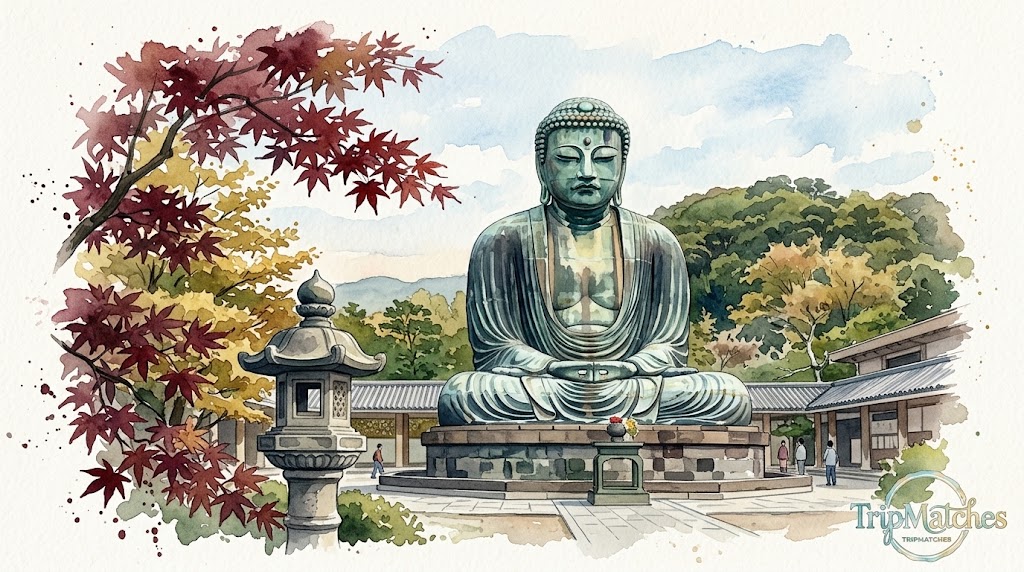
Great Buddha of Kamakura (Kotoku-in)
Kamakura's supreme monument; a colossal 11.4-meter, 121-ton bronze statue of Amida Buddha, erected outdoors in 1252 and open to visit on the inside.
Tsurugaoka Hachimangu Shrine
The spiritual and historic heart of the Minamoto clan, founded by Yoritomo in 1180; a majestic Shinto complex preceded by lotus ponds and vermilion bridges.
Kencho-ji Temple
Kamakura's oldest Zen temple and first of the Five Great Mountains, with solemn wooden pavilions, century-old juniper trees and a Zen garden founded in 1253.
Engaku-ji Temple
A Zen monastery founded in 1282 at the exit of Kita-Kamakura Station to honor those who fell in the Mongol invasions, housing the Shariden hall (National Treasure).
Festivals & Events
Kamakura Matsuri
Second to third Sunday of AprilThe city's big festival week centered on Tsurugaoka Hachimangu, famous for the performance of the medieval dance 'Shizuka no Mai' and the samurai mounted archery tournaments (Yabusame).
Bonbori Matsuri
Early AugustA magical night festival at Tsurugaoka Hachimangu where hundreds of paper lanterns (bonbori) hand-painted by renowned artists and illustrators light up the shrine's paths.
Yabusame Shinji
September 16A samurai military tradition with more than 800 years of ritual rigor in which archers at full gallop, dressed in feudal armor, shoot traditional bows at three successive wooden targets.
History
Origins
During the late Heian period, Kamakura's strategic natural location, protected on three sides by steep hills and open only to the sea, made it a natural military stronghold. In 1192, Minamoto no Yoritomo established the Kamakura shogunate (bakufu) here, shifting the center of political power away from the imperial court in Kyoto and ushering in the era of samurai rule.
Development
Under the patronage of the Minamoto and Hojo clans, the city flourished as the epicenter of the introduction and consolidation of Zen Buddhism in Japan, with the great monasteries of the 'Five Mountains of Kamakura' (Gozan) founded and the colossal Great Buddha of Kotoku-in erected in 1252. Although the shogunate fell in 1333 and political primacy returned to the west, Kamakura retained its spiritual and monastic importance.
Modern era
In the late 19th and early 20th centuries, with the arrival of the railway, Kamakura was reborn as the favorite seaside retreat of writers, artists and the Tokyo aristocracy. Today it is a heritage-protected city that combines cultural and spiritual tourism with the relaxed atmosphere of surfers, specialty cafes and hiking routes.
Ratings
Scores by category
Culture
Formative epicenter of Zen Buddhism and the bushido warrior spirit, birthplace of the art of Kamakura-bori lacquerwork and medieval Buddhist sculpture.
Heritage
One of the undisputed nerve centers of Japanese history, seat of the samurai government that redefined the laws and spirituality of the archipelago.
Architecture
An open-air sanctuary of samurai wooden monastic architecture, monumental Sanmon gates and temples integrated into the rocky terrain.
Want to know more about Kamakura?
Discover the full guide with history, detailed itineraries, practical tips and all the information you need.
View full guideTips for Culture & Heritage
Early Visit to Hase-dera and Meigetsu-in
If you travel in June to see the hydrangeas, arrive at 08:00 before opening; lines to access the flower path can exceed two hours at midday.
Sunset at Inamuragasaki
The rocky cape of Inamuragasaki, halfway along the Enoden line, is the photographers' favorite secret spot for framing the sunset with Mount Fuji and the silhouette of Enoshima.
Etiquette: Eating While Walking
A municipal courtesy ordinance asks pedestrians not to eat or drink while walking along Komachi-dori; enjoy your snacks next to the counter of the stall where you bought them.
Respect at Zen Monasteries
Many sites in Kita-Kamakura are cloistered monasteries with active meditation. Keep quiet, take off your shoes when entering the wooden halls, and respect the signs prohibiting photos of monks or inner altars.
Sun Protection and Hydration
During the summer months, coastal humidity worsens dehydration; make use of the cold drink vending machines found on almost every corner.
Safe Tap Water
Municipal tap water is completely drinkable and of excellent quality throughout the urban area.
Beware of Black Kites ('Tonbi')
On Yuigahama and Shichirigahama beaches, local raptors swoop down to snatch food or snacks straight out of passersby's hands.
Slippery Trails
The hill hiking trails have steps made of roots and clay that can become extremely slippery after rain; shoes with good grip are recommended.
TripMatches · Remember · Plan
What do you want to do with Kamakura?
Been to Kamakura or still want to go? Pick one and we'll take you straight to it.
Quick info
Full destination guide
Access the full profile: attractions, weather, gastronomy, events and more.
Discover this destination in depthExplore more nearby
You might also like
Discover Kamakura in a different way
Explore different ways to experience this destination based on your travel style