

Explora la cultura de Lhasa: Tradición viva
Sumérgete en la rica historia y cultura de Lhasa a través de sus museos y monumentos.
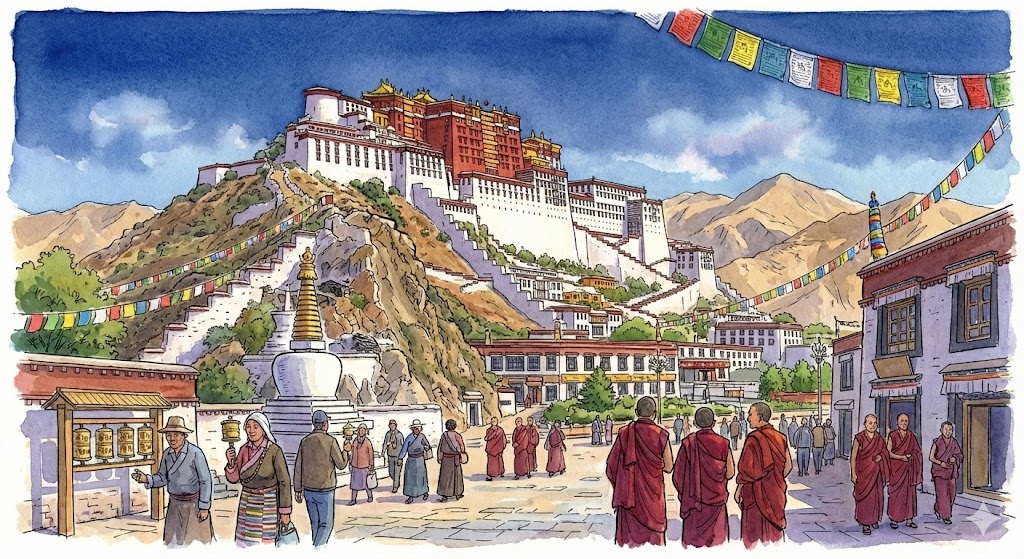
Lhasa, the spiritual and cultural capital of the Tibetan plateau at 3,656 meters above sea level, is one of the most fascinating and mystical cities on the planet. Crowned by the majestic Potala Palace and scented by juniper smoke and yak butter lamps, Lhasa offers a moving immersion into Tibetan Buddhism, where devout pilgrims perform continuous prostrations around the sacred Jokhang Temple.
TripMatches · Remember · Plan
What do you want to do with Lhasa?
Been to Lhasa or still want to go? Pick one and we'll take you straight to it.
Culture & Heritage
Discover the rich history, art and traditions of Lhasa
One of Asia's richest and most devout living cultures, centered on the traditions of Mahayana Tantric Buddhism, Thangka art and ritual music.
Best of local culture
Museums & Galleries
Barkhor Circuit and Street
The sacred pilgrimage circuit ('Kora') surrounding the Jokhang Temple. A human hive of pilgrims with prayer wheels, craft stalls and juniper smoke.
Sera Monastery
Famous for the dialectical debates that monks hold every afternoon in the tree-lined courtyard, accompanied by vigorous clapping and ritual gestures to refute Buddhist doctrines.
Drepung Monastery
Once the largest monastery in the world, housing more than 10,000 monks. Located at the foot of the Gambo Utse mountain, it preserves enormous assembly halls and ancient kitchens.
Norbulingka Palace and Park
The traditional summer palace of the Dalai Lamas, surrounded by lush botanical gardens, ponds and pavilions filled with historic frescoes.
Festivals & Events
Shoton Festival
August (Tibetan lunar month)Giant Buddha display in Drepung, yogurt feasts and Tibetan opera performances in Norbulingka.
Dawa Saga
Full moon of the fourth lunar month (May/June)The holiest month in Tibetan Buddhism, celebrated with mass pilgrimages and vegetarian food feasts.
Butter Lamp Festival (Chunga Choepa)
15th day of the first lunar monthBarkhor Street is transformed with stunning ephemeral sculptures modeled from colored yak butter and thousands of lit lamps.
History
Origins
Founded in the 7th century AD. by King Songtsen Gampo, who unified the Tibetan Empire and moved the capital to Lhasa. During this period, the first foundations of the Potala on the red hill (Marpo Ri) and the sacred Jokhang Temple were built to house the revered statue of Jowo Rinpoche.
Development
In the 17th century, the 5th Dalai Lama consolidated Lhasa as the religious and political epicenter of Tibet, initiating the monumental reconstruction of the Potala Palace and expanding the influential university monasteries of the Gelugpa order such as Drepung, Sera and Ganden.
Modern era
Incorporated into the People's Republic of China in the 1950s after the signing of the 17 Point Agreement, the city has experienced rapid urban modernization, historic railway infrastructure (Qinghai-Tibet train) and a continuous effort to preserve its Tibetan historical and religious core.
Ratings
Scores by category
Culture
One of Asia's richest and most devout living cultures, centered on the traditions of Mahayana Tantric Buddhism, Thangka art and ritual music.
Heritage
The pinnacle of the political and spiritual legacy of one of the most isolated and fascinating civilizations on the Asian continent.
Architecture
Unique monumental heritage in the world, characterized by imposing stone fortresses, sloping walls painted with natural pigments and golden roofs.
Want to know more about Lhasa?
Discover the full guide with history, detailed itineraries, practical tips and all the information you need.
View full guideTips for Culture & Heritage
Tea at Ani Tsankhung Nunnery
Pause your morning walk through Barkhor to eat homemade momos and drink sweet tea in the flowery courtyard of the Ani Tsankhung Female Nunnery, away from the crowds.
The Monk Debates at 3:00 p.m.
Arrive at Sera Monastery promptly at 3pm Monday to Saturday to stand in the shade of the gravel courtyard and watch the vibrant monastic debates.
Clockwise Sense ('Kora')
Always walk clockwise around temples, stupas ('Chortens'), monasteries and prayer wheels. Never turn in the opposite direction (reserved only for the Bön shamanic religion).
Temple Dress Code
Take off hats, sunglasses and dress warmly with covered shoulders and legs. Do not touch the heads of children or consecrated images.
Hydration and Extreme UV Protection
Always carry lip balm, factor 50+ sunscreen, polarized sunglasses and a hat. Ultraviolet radiation at this altitude burns quickly.
Use of Portable Oxygen Bottles
In any pharmacy or store in Lhasa you can buy small bottles of compressed oxygen for 20-30 yuan if you feel fatigue or dizziness when walking.
Acclimatization and Altitude Sickness (Soroche)
Lhasa is at 3,656 meters. The first day, rest completely at the hotel, do not make physical efforts, drink at least 3 liters of water and avoid showering with very hot water to prevent headaches or hypoxia.
Caution with Tibetan Mastiff Dogs
On the outskirts of monasteries and rural areas there may be shepherd dogs loose. Do not try to pet them or approach them without the presence of a local guide.
TripMatches · Remember · Plan
What do you want to do with Lhasa?
Been to Lhasa or still want to go? Pick one and we'll take you straight to it.
Quick info
Full destination guide
Access the full profile: attractions, weather, gastronomy, events and more.
Discover this destination in depthExplore more nearby
You might also like
Discover Lhasa in a different way
Explore different ways to experience this destination based on your travel style
Lhasa Budget
Affordable travel, free activities and smart tips to save money.
Lhasa Culture & Heritage
Museums, historic monuments, architecture and immersive cultural experiences.
Lhasa Gastronomy
Discover local cuisine, traditional markets, wineries and unique culinary experiences.