

Explora la cultura de lugo: Tradición viva
Sumérgete en la rica historia y cultura de lugo a través de sus museos y monumentos.
Lugo is a historic city located in the autonomous community of Galicia, in northwestern Spain.It is the capital of the province of Lugo and stands out for being the only city in the world that preserves its Roman wall intact, declared a World Heritage Site by UNESCO in 2000. Founded in the year 25 BC.Like Lucus Augusti, Lugo has a rich Roman heritage that is reflected in its monuments, streets and archaeological remains.The city is located on a plain crossed by the Miño River, which provides it with a privileged natural environment.With an approximate population of 98,000 inhabitants in the city and more in its metropolitan area, Lugo combines its historical importance with an active cultural life and modern urban development.It is known for its gastronomy, especially for Galician-style octopus, and for its calm and cozy atmosphere.The Roman wall is not only an architectural symbol but also a walking space that surrounds the old town, where the cathedral, museums and emblematic squares are located.Lugo is a destination that offers a unique mix of history, culture and nature, being a benchmark in Galicia and Spain for its heritage and quality of life.
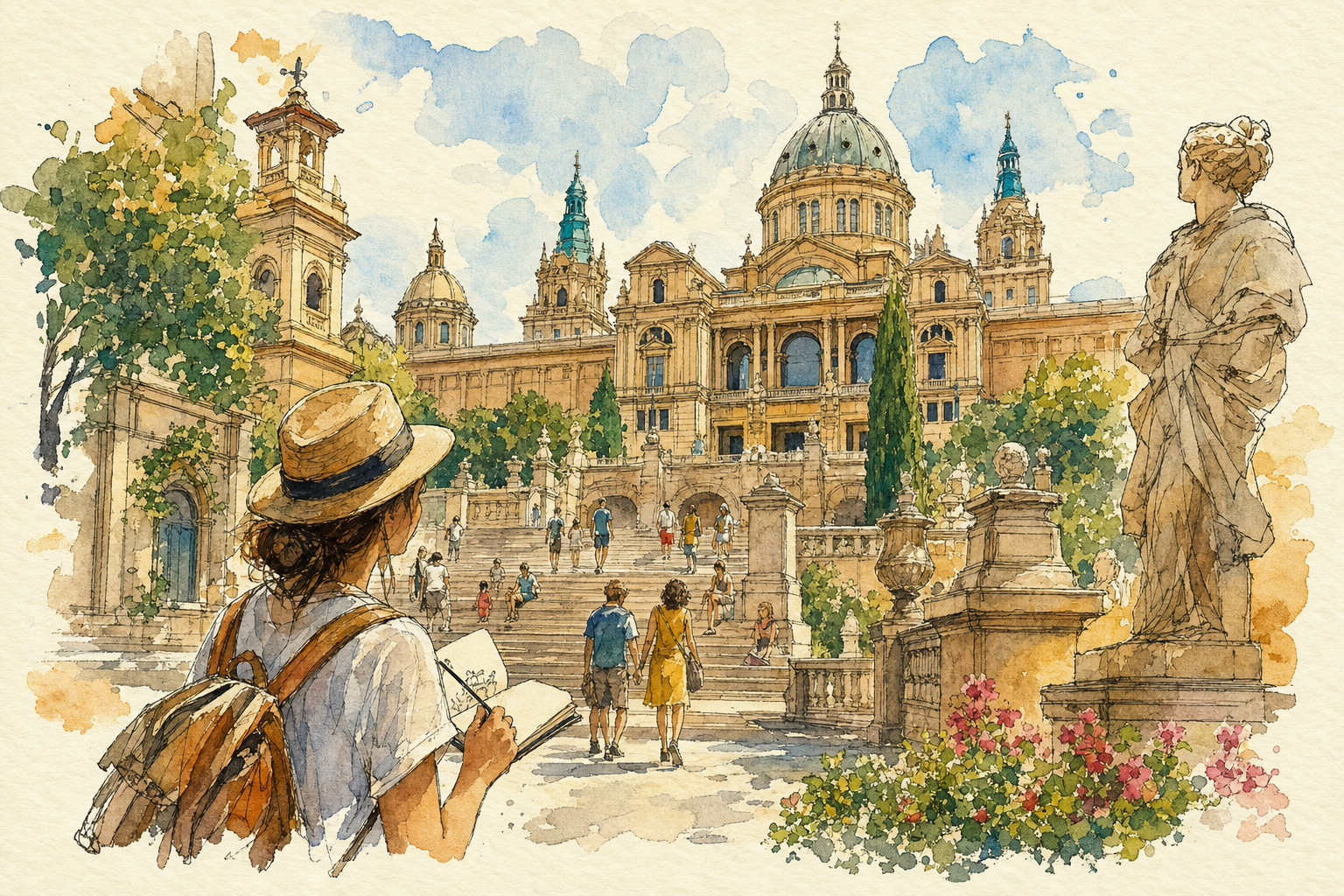
Tickets and monuments in lugo
Check availability and pricesTripMatches · Remember · Plan
What do you want to do with lugo?
Been to lugo or still want to go? Pick one and we'll take you straight to it.


Culture & Heritage
Discover the rich history, art and traditions of lugo
Lugo has a rich cultural offer based on Galician traditions, festivals, museums and local artistic events.
Best of local culture
Museums & Galleries
Santo Domingo Square
Central square where the Santo Domingo church and the Quiroga Ballesteros market are located, a key point to taste typical Galician products.In the center is the Do Bimilenario monument, a Roman eagle that commemorates the 2,000 years of the city.
Plaza Mayor (Spain Square)
Lugo's main square built in the 16th century, with emblematic buildings such as the Baroque Town Hall (1738), the Circle of Arts (1855) and the Casa do Cocello with its clock tower (1871).Nerve center of social and cultural life.
Porta Miñá
One of the ten gates of the Roman Wall, also known as Porta do Carmen, which gives access to the historic center.It is an emblematic point to start the tour of the wall and enjoy the views and history of Lugo.
Mosqueira Tower
One of the defensive towers of the Roman Wall, located in the lower part of the route.It stands out for its state of conservation and its importance in the historical defense of the city.
Festivals & Events
San Froilán Festival
October 4 to 12Traditional and very important festival in Lugo, declared of National Tourist Interest.It includes cultural and religious activities, fairs, live music, gastronomy and popular events that attract hundreds of thousands of visitors each year.
Flow Fest
September 19 and 20Indie and pop music festival held at the Xardín do Pazo de Feiras e Congresos de Lugo.It stands out for the presence of recognized artists from the Spanish music scene such as Love of Lesbian, Melendi and Carolina Durante, being one of the great parties to say goodbye to the summer.
Fa Ce La Fest
May 8 to 10Independent music festival held in Lugo, outside the Gustavo Freire Auditorium and the Clavicémbalo Club.It presents a varied program with national and international artists from indie and other alternative genres.
History

Origins
Lugo was founded as a Roman camp around 25 BC.by Gaius Antistius Vetus, under the command of Emperor Augustus, under the name of Lucus Augusti.It was settled on an ancient Celtic fort and became an important Roman urban center in the northwest of the peninsula.The city grew and prospered, reflecting Roman culture in its temples, baths and mosaics.The wall, built at the end of the 3rd century and the beginning of the 4th century, was erected to protect the city against the threats of the time.
Development
During the Middle Ages, Lugo maintained its importance as an episcopal seat and religious center, although its prominence declined with the founding of Oviedo and Santiago de Compostela.In the 7th century, Bishop Odoario rebuilt the city after a period of decline, transforming it into an ecclesiastical nucleus.The medieval urban configuration is partly preserved in the old town, with the wall as a central element.Throughout the Modern Age, Lugo grew slowly, maintaining its historical and religious character.
Modern era
In the 20th and 21st centuries, Lugo has experienced significant urban and cultural development, preserving its historical heritage, especially the Roman wall.The city has been modernized with infrastructure and services, consolidating itself as the provincial capital and a cultural and tourist center of Galicia.Recent events include the promotion of heritage tourism and the improvement of public spaces, maintaining a balance between tradition and modernity.
Ratings
Scores by category
Culture
Lugo has a rich cultural offer based on Galician traditions, festivals, museums and local artistic events.
Heritage
Lugo has great historical importance, especially for its Roman wall, which is a unique symbol and world heritage site.
Architecture
Lugo's architecture stands out for its unique and well-preserved Roman wall, along with historic buildings and a charming old town.
Want to know more about lugo?
Discover the full guide with history, detailed itineraries, practical tips and all the information you need.
View full guideTips for Culture & Heritage
Local secrets
Visit the Roman Wall walk at sunset for unique views and fewer tourists;Explore small taverns in the old town for authentic tapas.
best moments
Avoid Easter and local festivals to enjoy the city with fewer crowds;Spring and autumn offer pleasant weather.
Local language
Galician and Spanish are official languages;Learning basic Galician phrases like 'bo dia' (good day) is well received.
Local customs
Greet with a handshake or two kisses on the cheek;Punctuality is flexible at social events.
Healthcare system
Lugo has health centers and a public hospital;For emergencies, go to the Lucus Augusti University Hospital.
Pharmacies
Pharmacies are open during business hours and some offer night shifts;Check the sign on the door to see which one is on duty.
General Security
Lugo is a quiet city with low crime, ideal for tourists.It is recommended to maintain basic precautions in busy areas to avoid minor theft.
Areas to avoid
There are no highlighted dangerous areas in Lugo, but it is advisable to avoid dimly lit and lonely streets at night, especially in the outskirts.
TripMatches · Remember · Plan
What do you want to do with lugo?
Been to lugo or still want to go? Pick one and we'll take you straight to it.
Quick info
Full destination guide
Access the full profile: attractions, weather, gastronomy, events and more.
Discover this destination in depthExplore more nearby
You might also like
Discover lugo in a different way
Explore different ways to experience this destination based on your travel style
lugo Budget
Affordable travel, free activities and smart tips to save money.
lugo Train Travel
Scenic rail routes, historic stations and slow travel by train.
lugo Romantic
Couples getaways, sunsets, boutique hotels and intimate experiences.
lugo Culture & Heritage
Museums, historic monuments, architecture and immersive cultural experiences.
lugo Gastronomy
Discover local cuisine, traditional markets, wineries and unique culinary experiences.