

Explora la cultura de Mexico City: Tradición viva
Sumérgete en la rica historia y cultura de Mexico City a través de sus museos y monumentos.
Mexico City is the capital and largest city of Mexico, as well as one of the most important metropolises in Latin America. Located in the Valley of Mexico, at an approximate altitude of 2,240 meters above sea level, this city stands out for its rich history, cultural diversity and its role as the political, economic and cultural center of the country. With a population that exceeds 9 million inhabitants in the city itself and more than 21 million in its metropolitan area, it is one of the most populated urban areas in the world. Mexico City combines colonial architecture with modern skyscrapers, and is home to numerous museums, theaters, parks and archaeological sites, such as the Templo Mayor and the nearby Teotihuacán archaeological zone. Its importance also lies in being the headquarters of government institutions, prestigious universities and a vibrant artistic and gastronomic scene that attracts millions of tourists each year. Furthermore, its geographical location in a valley surrounded by mountains and volcanoes gives it a temperate climate with well-defined seasons, which makes it special and unique in its regional context.
Tickets and monuments in Mexico City
Check availability and pricesTripMatches · Remember · Plan
What do you want to do with Mexico City?
Been to Mexico City or still want to go? Pick one and we'll take you straight to it.

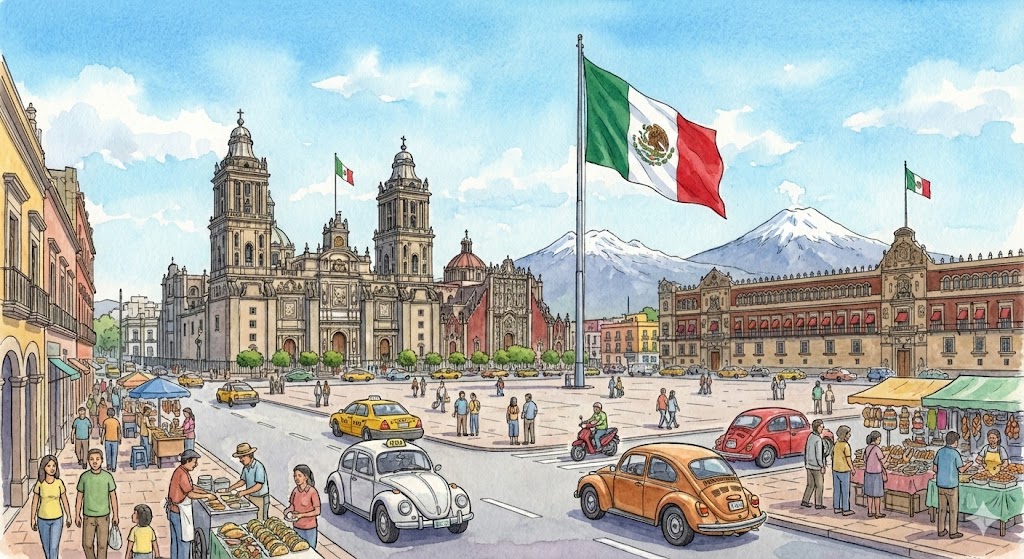
Culture & Heritage
Discover the rich history, art and traditions of Mexico City
The city is a cultural epicenter with world-renowned museums, festivals, galleries and a vibrant contemporary arts scene.
Best of local culture
Museums & Galleries
National Museum of Anthropology
One of the most important museums in the world, with 23 rooms that exhibit the archaeological and ethnographic heritage of Mexico. The Piedra del Sol and the reconstruction of the Templo Mayor stand out. The central umbrella is an architectural icon.
Frida Kahlo Museum
Known as The Blue House, it was the home of Frida Kahlo and Diego Rivera. It exhibits works, personal objects and the artist's studio. The garden and decoration reflect Frida's life and art.
Estanquillo Museum
Museum dedicated to Mexican popular culture, with collections of art, caricature, photography and curious objects. Located in a historic building in the center, it offers temporary and permanent exhibitions.
Museum of Modern Art
Dedicated to Mexican art of the 20th century, with works by Rivera, Kahlo, Siqueiros and Orozco. The building, from the mid-20th century, is surrounded by sculpture gardens in the Chapultepec Forest.
Festivals & Events
Day of the Dead Parade
end of octoberGreat parade with floats, catrinas, troupes and music on Paseo de la Reforma, celebrating the Mexican tradition of the Day of the Dead with unique visual and cultural shows.
Cantolla Multicultural Balloon Festival
Early NovemberRegional and national cantolla balloon competition (handmade paper balloons), accompanied by traditional dances, music and cultural activities in different parts of the city.
International Black and White Piano Festival
SeptemberConcerts and piano recitals with national and international artists in the Blas Galindo Auditorium of CENART, promoting classical and contemporary music.
History
Origins
Mexico City has its origins in the ancient city of Tenochtitlán, founded in 1325 by the Mexicas (Aztecs) on an island in Lake Texcoco. It was one of the largest and most advanced cities in Mesoamerica, with a complex social, political and religious organization. The city was the center of the Aztec Empire until the arrival of the Spanish in 1521, when it was conquered by Hernán Cortés and partially destroyed to build the new colonial capital.
Development
During the colonial era, the city was rebuilt on the ruins of Tenochtitlán and became the capital of the Viceroyalty of New Mexico. Its urban development included the construction of churches, palaces and squares that are still emblematic today. In the 18th and 19th centuries, the city grew in population and size, facing events such as the independence of Mexico in 1821 and the French intervention. Throughout the 20th century, Mexico City experienced accelerated growth, with the expansion of its infrastructure and the incorporation of new neighborhoods and municipalities.
Modern era
In the 20th and 21st centuries, Mexico City established itself as a global center, with important events such as the 1968 Olympic Games and the 1992 World's Fair. It has faced challenges such as environmental pollution, uncontrolled urban growth and natural disasters, including the 1985 earthquake. Today, it is a modern metropolis with an advanced transportation system, a diversified economy and a key role in the politics and culture of Mexico and Latin America.
Ratings
Scores by category
Culture
The city is a cultural epicenter with world-renowned museums, festivals, galleries and a vibrant contemporary arts scene.
Heritage
Mexico City is one of the most historic cities in America, with vestiges of pre-Hispanic civilizations and a historic center declared a World Heritage Site.
Architecture
Mexico City stands out for its architecture that mixes colonial, modern and pre-Hispanic styles, with emblematic buildings and well-preserved historical areas.
Want to know more about Mexico City?
Discover the full guide with history, detailed itineraries, practical tips and all the information you need.
View full guideTips for Culture & Heritage
Local secrets
Visit the Antique Toy Museum, the Sonora Market for curious objects and the San Ángel neighborhood on weekends.
best moments
Avoid weekends and holidays in tourist places; Early morning is ideal for museums and archaeological sites.
Local language
Spanish is the official language; Phrases like 'please', 'thank you' and 'excuse me' are highly valued.
Local customs
Greet with a handshake or kiss on the cheek; Respect meal times and avoid talking about politics or religion in public.
Healthcare system
The city has public and private hospitals; For emergencies, use 911 or go to nearby clinics.
Pharmacies
Pharmacies such as Farmacias del Ahorro and Guadalajara are open until late, many 24 hours in central areas.
General Security
Always stay alert, avoid displaying valuables and use safe tourist areas such as Polanco, Condesa, Roma and Coyoacán, which have good surveillance.
Areas to avoid
Avoid areas such as Tepito, Iztapalapa and some peripheral neighborhoods at night, as they have higher crime rates.
TripMatches · Remember · Plan
What do you want to do with Mexico City?
Been to Mexico City or still want to go? Pick one and we'll take you straight to it.
Quick info
Full destination guide
Access the full profile: attractions, weather, gastronomy, events and more.
Discover this destination in depthExplore more nearby
You might also like
Discover Mexico City in a different way
Explore different ways to experience this destination based on your travel style
Mexico City Theme Parks & Rides
Discover theme parks and amusement parks, from legendary roller coasters to immersive worlds and family experiences.
Mexico City Christmas Markets
European Christmas market guides with seasonal dates, activities and practical visit-planning advice.
Mexico City Digital Nomad
Connectivity, living costs and practical conditions for working remotely.
Mexico City Budget
Affordable travel, free activities and smart tips to save money.
Mexico City Train Travel
Scenic rail routes, historic stations and slow travel by train.
Mexico City Romantic
Couples getaways, sunsets, boutique hotels and intimate experiences.