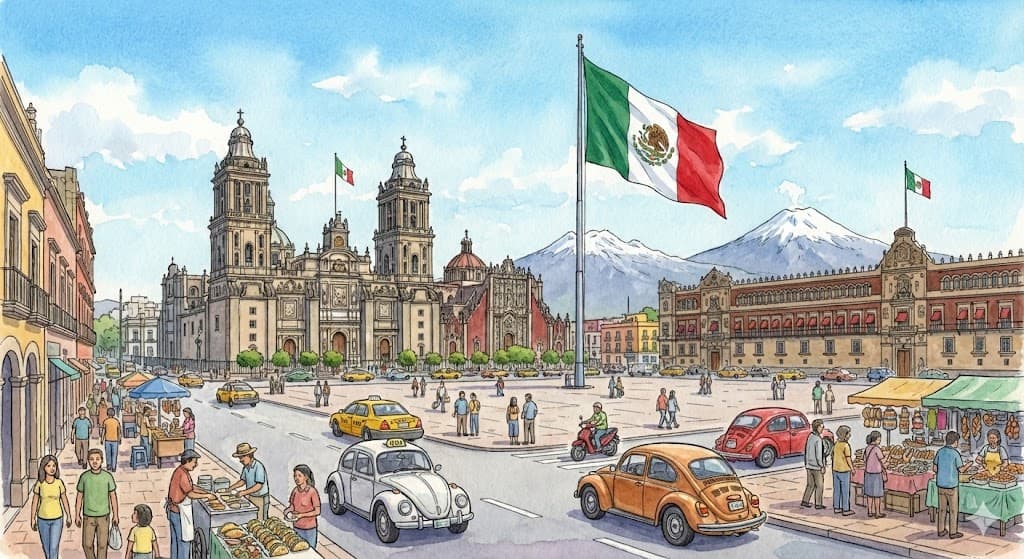
Capital of Mexico, vibrant and culturally rich, known as The City of Palaces.
TripMatches
Find companions with the same dates and interests. Free.
About Mexico City - Culture, History & Character
Plan your perfect trip with our personalized recommendations and local insights.
Plan my tripUpdated: July 2026
Guide content is refreshed periodically from geographic and community data.
Your experience
Tell us if you want to go — or if you have already been.
Adds you to the Match Finder map and opens the planner with this destination.
I've been there!Explora el fascinante pasado de Mexico City y descubre cómo se ha desarrollado a lo largo de los siglos.
Mexico City has its origins in the ancient city of Tenochtitlán, founded in 1325 by the Mexicas (Aztecs) on an island in Lake Texcoco. It was one of the largest and most advanced cities in Mesoamerica, with a complex social, political and religious organization. The city was the center of the Aztec Empire until the arrival of the Spanish in 1521, when it was conquered by Hernán Cortés and partially destroyed to build the new colonial capital.
During the colonial era, the city was rebuilt on the ruins of Tenochtitlán and became the capital of the Viceroyalty of New Mexico. Its urban development included the construction of churches, palaces and squares that are still emblematic today. In the 18th and 19th centuries, the city grew in population and size, facing events such as the independence of Mexico in 1821 and the French intervention. Throughout the 20th century, Mexico City experienced accelerated growth, with the expansion of its infrastructure and the incorporation of new neighborhoods and municipalities.
In the 20th and 21st centuries, Mexico City established itself as a global center, with important events such as the 1968 Olympic Games and the 1992 World's Fair. It has faced challenges such as environmental pollution, uncontrolled urban growth and natural disasters, including the 1985 earthquake. Today, it is a modern metropolis with an advanced transportation system, a diversified economy and a key role in the politics and culture of Mexico and Latin America.
La cronología histórica muestra los momentos clave que han definido el desarrollo de Mexico City a lo largo de los siglos.
Discover what makes this city special with our comprehensive scoring system
Security in Mexico City is variable; There are very safe areas and others with high crime rates, so caution is recommended.
Walkability is good in central and tourist areas, but limited in peripheral areas due to the extension and intense traffic.
Public transport is extensive and affordable, with subways, buses and bicycle systems, although it can be overcrowded at peak times.
The cost of living in Mexico City is moderate compared to other global capitals, although higher than in other Mexican cities. Rents in central areas can be high, but transportation and food are accessible.
Nightlife in Mexico City is vibrant and diverse, with bars, clubs, theaters and cultural events to suit all tastes.
The city is a cultural epicenter with world-renowned museums, festivals, galleries and a vibrant contemporary arts scene.
Gastronomy in Mexico City is diverse and internationally recognized, with options ranging from street food to fine dining restaurants.
Mexico City offers a wide variety of shopping options, from traditional markets to modern shopping centers.
The climate of Mexico City is temperate with distinct seasons, cool winters and rainy summers, ideal for those who prefer moderate temperatures.
Mexico City is tourist-friendly with good infrastructure, guides, signage and a variety of accommodations, although security and transportation can be challenges.
The city has parks, museums, and family-friendly activities, although safety and pollution may be concerns in some areas.
The city is considered one of the most LGBTQ+-friendly in Latin America, with events, bars, and progressive legislation.
The inhabitants of Mexico City are generally friendly and hospitable, although the high population density can make interaction more impersonal in busy areas.
The natural beauty within the city is limited due to its urbanization, but the surrounding area offers impressive mountain landscapes and volcanoes.
Mexico City stands out for its architecture that mixes colonial, modern and pre-Hispanic styles, with emblematic buildings and well-preserved historical areas.
Mexico City is one of the most historic cities in America, with vestiges of pre-Hispanic civilizations and a historic center declared a World Heritage Site.
Although it is a dense metropolis, Mexico City has large parks and green areas, although the distribution is not homogeneous.
Cleanliness in Mexico City varies depending on the area; Tourist and commercial areas are usually well maintained, but some neighborhoods have garbage and pollution problems.
The city has a growing startup ecosystem with incubators, accelerators and access to talent, although it faces challenges in financing and bureaucracy.
Mexico City offers good connectivity, coworking spaces, and a growing community of digital nomads, although traffic can be a challenge.
Comprehensive assessment of this destination
Mexico City is a vibrant and culturally rich metropolis with a good quality of life in many aspects, although it faces challenges in safety, pollution and costs in certain areas.
Discover the best times to visit this city and what to expect throughout the year.
The climate of Mexico City is temperate with distinct seasons, cool winters and rainy summers, ideal for those who prefer moderate temperatures.
Spring in Mexico City is mild and pleasant, with temperatures ranging between 15 and 26 °C, and little rain, ideal for outdoor activities.
Summer is the rainy season, with warm temperatures that can reach up to 26°C and frequent rainfall, especially in June and July, which cools the atmosphere.
Autumn presents a temperate and dry climate, with pleasant temperatures and clear skies, making it one of the best times to visit the city.
Winter is cool and dry, with minimum temperatures that can drop to 6 °C, but with sunny days and little humidity.
Temperate climate most of the year.
Pleasant dry season between November and April.
Rainy season can be intense and cause flooding.
Cold in winter for those who prefer warm climates.
The altitude of the city influences that temperatures are moderate throughout the year.
The rainy season runs from June to September, with the greatest rainfall in July.
Plan your expenses and discover the best shopping areas
Daily spending per person
The budget to visit Mexico City is moderate compared to other international capitals. It is possible to find affordable options for accommodation and food, as well as luxury experiences. The city offers excellent value for money for tourists.
per day
per day
per day
Best areas for shopping
2 areas • Recommended Areas
Click for details
Click for details
3 areas • Recommended Areas
Click for details
Click for details
Click for details
2 areas • Recommended Areas
Click for details
Click for details
2 areas • Recommended Areas
Click for details
Click for details
2 areas • Recommended Areas
Click for details
Click for details
Explore the most fascinating places this city has to offer
Majestic white marble building, cultural symbol of Mexico City. It houses murals by Diego Rivera, Siqueiros and other great artists, in addition to hosting opera, ballet and classical music shows. Its glass dome and art deco style make it unique in Latin America.
One of the most important museums in the world, with 23 rooms that exhibit the archaeological and ethnographic heritage of Mexico. The Piedra del Sol and the reconstruction of the Templo Mayor stand out. The central umbrella is an architectural icon.
The only royal castle in America, located at the top of the Chapultepec Forest. It houses the National Museum of History, with rooms that tell the history of Mexico from the conquest to the Revolution. The panoramic views of the city are impressive.
The largest cathedral in Latin America, built on the Aztec Templo Mayor. It combines baroque, neoclassical and churrigueresque styles. Inside, the Altar of the Kings and the monumental organ stand out.
Main square of Mexico City, one of the largest in the world. Surrounded by historic buildings such as the Cathedral, the National Palace and the Old Town Hall Palace. Scene of cultural events and demonstrations.
Known as The Blue House, it was the home of Frida Kahlo and Diego Rivera. It exhibits works, personal objects and the artist's studio. The garden and decoration reflect Frida's life and art.
Historic skyscraper and symbol of modernity in Mexico City. It has a viewing point on the 44th floor, a museum and a restaurant. It survived several earthquakes, demonstrating its engineering.
Headquarters of the federal executive branch, famous for Diego Rivera's murals that narrate the history of Mexico. It houses the Dolores bell and the presidential office. Its architecture combines colonial and neoclassical styles.
Museum dedicated to Mexican popular culture, with collections of art, caricature, photography and curious objects. Located in a historic building in the center, it offers temporary and permanent exhibitions.
Colonial building covered in Talavera tiles, currently housing a restaurant and a traditional cafeteria. It is a unique example of New Spain baroque architecture in the city center.
Dedicated to Mexican art of the 20th century, with works by Rivera, Kahlo, Siqueiros and Orozco. The building, from the mid-20th century, is surrounded by sculpture gardens in the Chapultepec Forest.
The oldest public park in America, ideal for walking, resting and enjoying fountains, sculptures and cultural events. Surrounded by museums and historic buildings.
Private museum with one of the largest art collections in Latin America, including works by Dalí, Van Gogh and Rodin. Its building, covered in aluminum hexagons, is an architectural icon.
Located in the Palace of the Counts of Santiago de Calimaya, it exhibits the history and evolution of the city from pre-Hispanic times to the present. Its central patio and its temporary exhibitions stand out.
Museum dedicated to promoting historical memory, tolerance and human rights. It has exhibitions on genocides, discrimination and the importance of diversity.
Contemporary art museum with works by international and Mexican artists. The building, designed by David Chipperfield, is a benchmark of modern architecture in the city.
Museum dedicated to international contemporary art, founded by the artist Rufino Tamayo. It houses temporary avant-garde exhibitions and is located in the Chapultepec Forest.
Museum located in an 18th century colonial building, dedicated to the cultural diversity of the world. It exhibits art, objects and traditions from different civilizations.
Museum that occupies the old Archbishop's Palace, with exhibitions of sacred art, colonial painting and contemporary art. Its collection of votive offerings and its baroque architecture stands out.
Museum specialized in historical and contemporary photography in Mexico City. It houses temporary exhibitions and a permanent collection that documents urban life.
Museum that shows the history of telecommunications in Mexico, with old equipment, documents and a recreation of a telegraph office from the early 20th century.
Museum dedicated to the charrería, a Mexican equestrian tradition declared Intangible Cultural Heritage. It exhibits suits, spurs, saddles and objects related to this practice.
Museum located in the old Palace of the Inquisition, dedicated to the history of medicine in Mexico. It exhibits surgical instruments, documents and recreations of old offices.
Museum that tells the military history of Mexico, with exhibits of weapons, uniforms, vehicles and historical documents related to the army and air force.
Haz clic en "Tours" para encontrar las mejores actividades y entradas, o usa "Planificar" para crear tu itinerario personalizado.
dayTrips.dayTripsDescription
Visit the impressive Pyramids of Teotihuacán, a pre-Hispanic archaeological site with the Pyramid of the Sun and the Pyramid of the Moon. Explore the Causeway of the Dead and the Temple of Quetzalcoatl, enjoying the history and architecture of one of the most important cities in Mesoamerica.
History, Culture
Magical town famous for its colonial architecture and its silver mining tradition. Stroll through its cobbled streets, visit the Parish of Santa Prisca and enjoy local silver crafts. Ideal for those looking for culture, history and artisanal purchases.
History, Culture, Towns
A natural paradise in Hidalgo with hot springs, natural pools and waterfalls inside a cave. Ideal for relaxing and enjoying nature, with hiking and zip lining options for the most adventurous.
Nature, Adventure, Mountain
Famous for its canals and trajineras, Xochimilco offers a traditional boat ride with mariachi music, typical food and a festive atmosphere. It is an ideal place to learn about popular culture and enjoy a day outdoors in contact with nature.
Culture, Nature, Towns
Colonial city with a rich history and baroque architecture. The Cathedral, the Rosario Chapel and the Zócalo stand out. In addition, it is famous for its gastronomy, including mole poblano and typical sweets.
History, Culture, Gastronomy
Historic city with a well-preserved colonial center, declared a World Heritage Site. It offers museums, squares and 17th-century architecture, as well as a vibrant cultural and gastronomic life.
History, Culture, Towns
Charming town in the State of Mexico, known for its colonial plaza and the La Concepción and Tixhiñú waterfalls. It is ideal for those looking for nature, tranquility and traditional architecture.
Nature, Towns, History
Magical town in Hidalgo famous for its basaltic prisms, unique rock formations and natural landscapes. It offers hiking, bike rides and visits to old haciendas.
Nature, Mountains, Towns
Haz clic en "Tours" para encontrar excursiones organizadas, o usa "Plan" para crear tu itinerario personalizado.
Discover the unique character and charm of each city district.
Coyoacán is a historical and cultural neighborhood, known for its cobblestone streets and colonial houses. It is a quiet and welcoming place, ideal for families and tourists looking to explore the city's rich history.
Polanco is an elegant and modern neighborhood, known for its luxury shops and fine dining restaurants. It is ideal for those seeking a sophisticated shopping and nightlife experience.
Condesa is a bohemian and chic neighborhood, known for its art deco architecture and relaxed atmosphere. It is ideal for young people and families looking for a quiet and cultural environment.
Rome is a vibrant and cultural neighborhood, known for its mix of neoclassical and art nouveau architecture. It is ideal for tourists and young people looking for a dynamic urban experience.
Juárez is a diverse and lively neighborhood, known for its nightlife and mix of shops and restaurants. It is ideal for those looking for an intense urban experience.
Discover the best experiences and activities for each time of year
Spring Activities in Mexico City
Discover the most important events and festivals celebrated throughout the year
Great parade with floats, catrinas, troupes and music on Paseo de la Reforma, celebrating the Mexican tradition of the Day of the Dead with unique visual and cultural shows.
Regional and national cantolla balloon competition (handmade paper balloons), accompanied by traditional dances, music and cultural activities in different parts of the city.
Concerts and piano recitals with national and international artists in the Blas Galindo Auditorium of CENART, promoting classical and contemporary music.
Exhibition and sale of Mexican crafts from all over the country, with workshops, demonstrations and cultural activities in the Zócalo and other public spaces.
One of the most important cultural festivals in Latin America, with music, theater, dance, visual arts and gastronomy in the historic heart of the city.
Gastronomic fair dedicated to artisanal ice cream and snow, with tastings, contests and family activities in the San Juan de los Lagos neighborhood.
Exhibition of independent, national and international cinema, with screenings, workshops and meetings with directors at various venues in the city.
Multicultural event that brings together more than 90 countries with gastronomic and craft stands, shows and activities for the whole family in the Zócalo.
Essential advice and local insights to make your trip memorable and safe
Choose a category above to see relevant tips and advice