

Explora la cultura de Naxos: Tradición viva
Sumérgete en la rica historia y cultura de Naxos a través de sus museos y monumentos.
Quick info
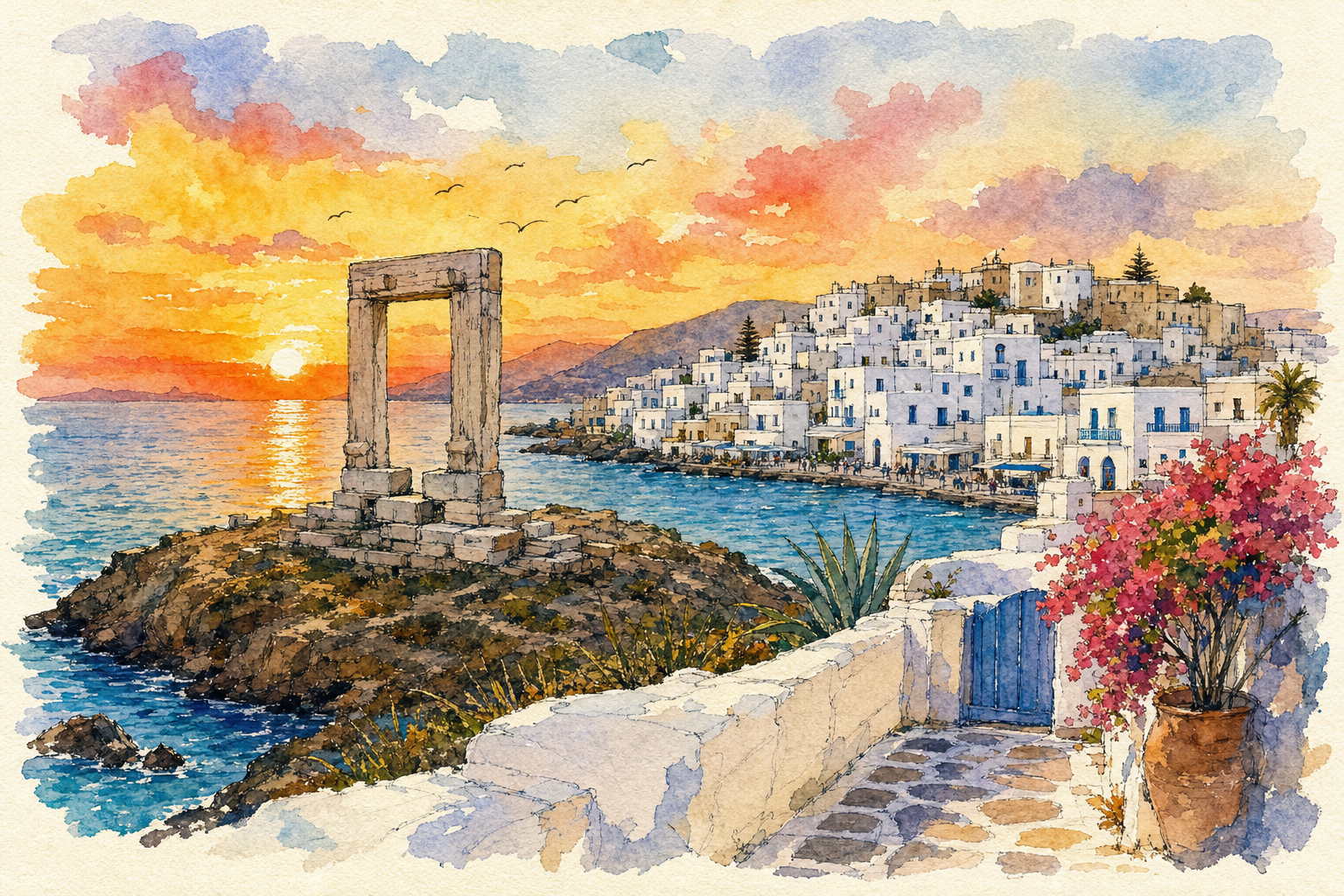
La Puertoara (Temple of Apollo)

Naxos is the largest and most fertile island in the Cyclades, a destination that offers a more authentic and diverse version of the Greek experience. Unlike its more famous neighbors, Naxos combines world-class golden sand beaches with a mountainous interior and lush valleys dotted with traditional villages and ancient ruins. From the imposing Portara that welcomes visitors at its port, to the trails that lead to the top of Mount Zas and the taverns that serve local products, Naxos is an island of surprising natural and cultural wealth, ideal for families, explorers and anyone looking for more than just a postcard.

Culture & Heritage
Discover the rich history, art and traditions of Naxos
A very deep-rooted and lively local culture, with a rich tradition in music, dance and gastronomy.
Best of local culture
Museums & Galleries
La Puertoara (Temple of Apollo)
The gigantic marble door of an unfinished temple from the 6th century BC. It is the symbol of Naxos and the best place to watch the sunset.
Kouroi of Naxos
Two colossal unfinished marble statues of young people ('kouroi') from the archaic period, abandoned more than 2,500 years ago in the old quarries.
Halki Village (Chalki)
A charming neoclassical village in the fertile Tragea valley. Former capital of the island, it is home to the historic Kitron distillery.
Apiranthos Village
Known as the 'marble town', its streets and houses are paved with local marble. It has a unique atmosphere and several small museums.
Festivals & Events
Summer Festival
Annual cultural celebration with music, art and local cuisine.
Local Panigiri
Traditional Greek party with music, dance and typical food.
Culture plan
Book a cultural tour in Naxos
Skip-the-line access and verified local guides
History

Origins
In mythology, Naxos is strongly associated with Dionysus, god of wine, and with the legend of Ariadne, abandoned here by Theseus. During the Cycladic and Archaic period, it was an important center of trade and sculpture, as demonstrated by the colossal unfinished statues of the 'Kouroi' that still lie in its ancient quarries.
Development
In the 13th century, the Venetian Marco Sanudo conquered the island and made it the capital of the Aegean Duchy. The Venetian influence is still very visible in the 'Kastro' (castle) that crowns Chora, the capital. Following Venetian and Ottoman rule, the island relied on its rich agriculture, producing wine, olive oil, citrus fruits and its famous potatoes.
Modern era
Tourism on Naxos developed later and more gradually than on Mykonos or Santorini. This slower development has allowed it to retain a much more authentic character. Today, it is appreciated precisely for that balance: an excellent tourist infrastructure that has not overshadowed the local life, agriculture and traditions of an island that feels genuine and 'real'.
Ratings
Scores by category
Culture
A very deep-rooted and lively local culture, with a rich tradition in music, dance and gastronomy.
Heritage
An important center of the Greek archaic period and capital of the Duchy of Naxos.
Architecture
A charming Cycladic labyrinth in the capital and unique stone mountain villages.
Want to know more about Naxos?
Discover the full guide with history, detailed itineraries, practical tips and all the information you need.
View full guideTips for Culture & Heritage
Look for the southwest beaches
Beyond the popular Plaka, the beaches of Mikri Vigla (ideal for kitesurfing), Kastraki and Glyfada are quieter, wilder and more spectacular.
Dinner in a mountain village
For an unforgettable dining experience, drive to a village like Filoti or Apiranthos at night. The taverns serve incredible quality meat and local produce at very low prices.
A 'real' island
Unlike other islands, Naxos has a strong agricultural economy and a significant permanent population. You will see tractors on the road and authentic local life. Enjoy that authenticity.
tap water
Although it is considered safe in Chora, most people, including locals, drink bottled water for the taste and to be safe.
Be careful on dirt roads
To reach some of the more remote beaches, you may have to drive on dirt roads. Drive slowly and make sure your rental car is insured accordingly.
Tickets and monuments in Naxos
Check availability and pricesTripMatches · Remember · Plan
What do you want to do with Naxos?
Been to Naxos or still want to go? Pick one and we'll take you straight to it.
Quick info
Full destination guide
Access the full profile: attractions, weather, gastronomy, events and more.
Discover this destination in depthExplore more nearby
You might also like
Discover Naxos in a different way
Explore different ways to experience this destination based on your travel style
Naxos Theme Parks & Rides
Discover theme parks and amusement parks, from legendary roller coasters to immersive worlds and family experiences.
Naxos Christmas Markets
European Christmas market guides with seasonal dates, activities and practical visit-planning advice.
Naxos Digital Nomad
Connectivity, living costs and practical conditions for working remotely.
Naxos Budget
Affordable travel, free activities and smart tips to save money.
Naxos Train Travel
Scenic rail routes, historic stations and slow travel by train.
Naxos Romantic
Couples getaways, sunsets, boutique hotels and intimate experiences.