

Explora la cultura de Bhoutan: Tradición viva
Sumérgete en la rica historia y cultura de Bhoutan a través de sus museos y monumentos.
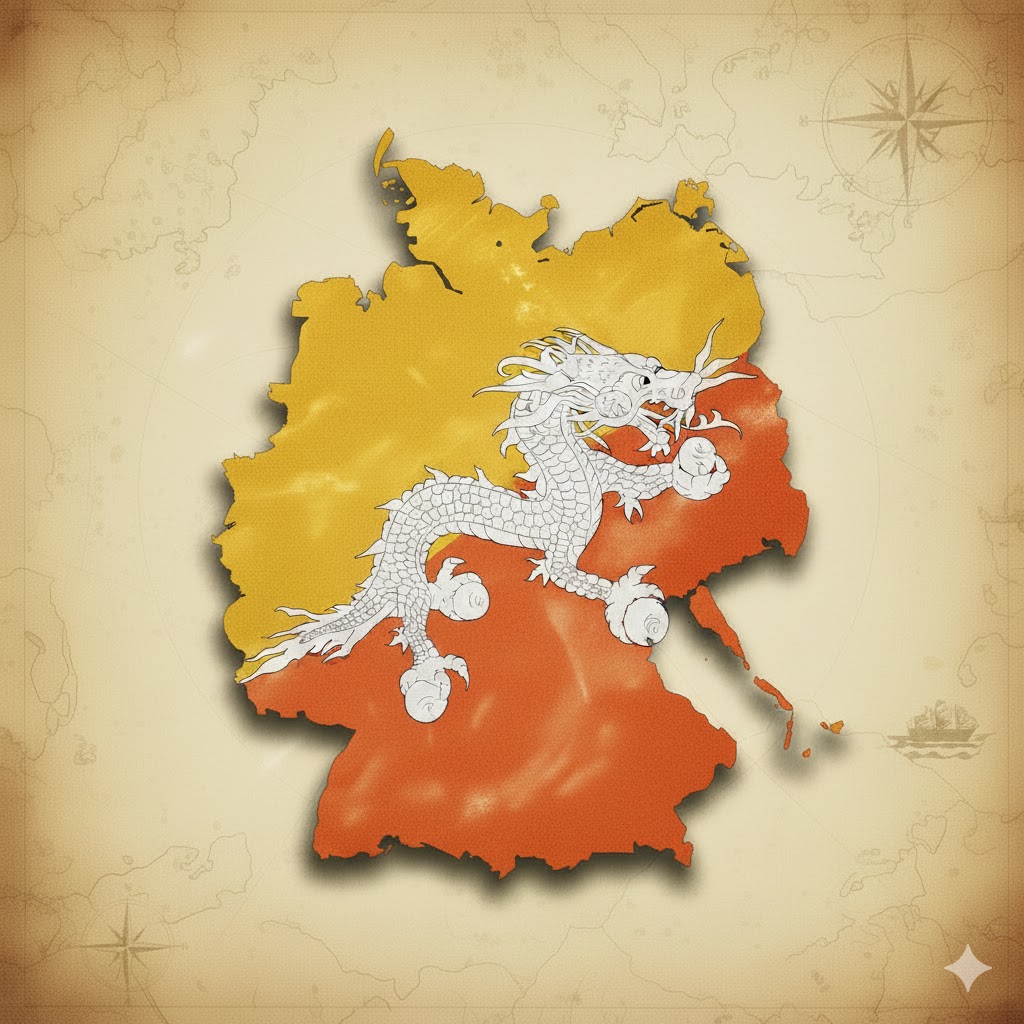
Le Bhoutan est un royaume bouddhiste fascinant et isolé situé sur le versant oriental de l’Himalaya, pris en sandwich entre la Chine et l’Inde. Poétiquement connu sous le nom de « Druk Yul » (le pays du dragon-tonnerre), c'est le seul pays au monde à bilan carbone négatif et un pionnier dans la mesure de son développement à l'aide de l'indice du bonheur national brut (BNB). Elle se distingue par ses paysages vierges de haute montagne, ses monastères accrochés aux falaises comme celui de Paro Taktsang, ses monastères-forteresses monumentales (dzongs), sa dévotion spirituelle intacte et la stricte préservation de ses anciennes traditions.
TripMatches · Se souvenir · Planifier
Que voulez-vous faire avec Bhoutan ?
Êtes-vous déjà allé à Bhoutan ou aimeriez-vous encore y aller ? Choisissez et nous vous menons directement à l'action.
J'y suis déjà allé
Importez votre voyage à Bhoutan et gardez ce que vous avez vécu.
Importer un voyageJ'aimerais y aller
Enregistrez Bhoutan dans vos destinations ou commencez un nouveau plan.

Culture & Patrimoine
Découvrez la riche histoire, l'art et les traditions de Bhoutan
Le Bhoutan est un royaume bouddhiste fascinant et isolé situé sur le versant oriental de l’Himalaya, pris en sandwich entre la Chine et l’Inde. Poétiquement connu sous le nom de « Druk Yul » (le pays du dragon-tonnerre), c'est le seul pays au monde à bilan carbone négatif et un pionnier dans la mesure de son développement à l'aide de l'indice du bonheur national brut (BNB). Elle se distingue par ses paysages vierges de haute montagne, ses monastères accrochés aux falaises comme celui de Paro Taktsang, ses monastères-forteresses monumentales (dzongs), sa dévotion spirituelle intacte et la stricte préservation de ses anciennes traditions.
Festivals et Événements
Les Dzongs constituent le cœur administratif et religieux du pays : Punakha Dzong au confluent des rivières ; Tashichho Dzong à Thimphu (siège du gouvernement et trône du Roi Dragon) ; Paro Rinpung Dzong avec son pont au toit de bois ; et Trongsa Dzong, la forteresse la plus colossale stratégiquement perchée au-dessus d'une gorge au centre du pays.
Outre le Nid du Tigre (Paro Taktsang), les points forts incluent Chimi Lhakhang (le célèbre temple de la fertilité de Drukpa Kunley, le « Divin Fou »), le monastère de Gangtey à Phobjikha et Kyichu Lhakhang à Paro, l'un des plus anciens temples du Bhoutan, fondé au 7ème siècle par le roi tibétain Songtsen Gampo.
Le Bhoutan protège jalousement ses sentiers de montagne. Le « Druk Path Trek » relie Paro et Thimphu en traversant des lacs glaciaires sacrés à plus de 4 000 mètres d'altitude ; Le « Jomolhari Trek » mène au camp de base du mont sacré Jomolhari (7 326 m) ; et le légendaire « Snowman Trek » est considéré comme l'une des expéditions de trekking les plus exigeantes de la planète, traversant des cols de plus de 5 000 mètres.
Pèlerinage au Nid du Tigre (Paro Taktsang)
Construit en 1692 sur une corniche rocheuse verticale à 900 mètres au-dessus du fond de la vallée de Paro, Paro Taktsang est l'icône sacrée du pays. La tradition raconte que le grand maître Guru Padmasambhava est arrivé ici au 8ème siècle, volant sur le dos d'une tigresse, pour méditer dans une grotte et vaincre les mauvais esprits. La randonnée à travers des forêts denses de conifères couvertes de mousse et de drapeaux de prière offre l'une des vues les plus époustouflantes au monde lorsque vous traversez la cascade qui précède le monastère.
Admirez la majesté du Punakha Dzong
Situé dans une vallée subtropicale au climat tempéré au confluent des rivières « mère » (Mo Chhu) et « père » (Pho Chhu), le Punakha Dzong est unanimement considéré comme le plus beau du Bhoutan. Construit sans l'utilisation d'un seul clou métallique en 1637, ses cours blanchies à la chaux, ses sculptures complexes en bois doré et ses jacarandas en fleurs servent de résidence d'hiver au corps monastique central et de scène des couronnements royaux.
Soyez témoin du mysticisme d'un festival de Tshechu
Les Tshechus sont des fêtes religieuses annuelles qui célèbrent les actes sacrés de Guru Rinpoché dans les cours des dzongs. Des moines et des laïcs vêtus de somptueuses robes de soie et de masques sculptés exécutent des danses « Cham », des danses rituelles qui purifient les participants de leurs mauvais karmas et transmettent les enseignements bouddhistes. L'exposition d'un gigantesque « Thongdrel » (tapisserie sacrée brodée) à l'aube est le point culminant du festival.
Voir les grues à cou noir à Phobjikha
La vallée glaciaire de Phobjikha (Gangtey) est un sanctuaire naturel protégé d’une extraordinaire beauté. Chaque hiver (d'octobre à mars), des centaines de grues à cou noir, une espèce en voie de disparition, migrent du plateau tibétain. La croyance locale affirme que ces oiseaux sacrés volent trois fois en cercle au-dessus du monastère de Gangtey à leur arrivée et à leur départ en signe de dévotion et de respect bouddhistes.
Vivez le rituel du tir à l'arc et le bain Dotsho
Le tir à l'arc (« Dha ») est le sport national par excellence. Deux cibles situées à une distance étonnante de 145 mètres sont la cible des archers qui s'affrontent entre chants traditionnels, danses de célébration à chaque succès et plaisanteries entre équipes. Après la journée, rien ne vaut une immersion dans un « Dotsho » (bain traditionnel en bois où l'eau de source est chauffée en introduisant de grosses pierres de rivière chauffées au rouge imprégnées d'herbes médicinales aromatiques).
Traversez les 108 Chörtens du col de Dochula
Sur la route de montagne qui relie Thimphu à Punakha, le col de Dochula culmine à 3 100 mètres d'altitude. Par temps clair, le point de vue offre un panorama époustouflant sur l'Himalaya bhoutanais et le pic Gangkhar Puensum (7 570 m, la plus haute montagne non escaladée de la planète), encadré par les 108 chörtens commémoratifs dressés entre des collines de rhododendrons.
Vous voulez en savoir plus sur Bhoutan ?
Découvrez le guide complet avec l'histoire, les itinéraires détaillés, les conseils pratiques et toutes les informations dont vous avez besoin.
Voir le guide completConseils de voyage pour Culture & Patrimoine
Taxe de Développement Durable (SDF) et Visa Obligatoire
Le Bhoutan applique une politique touristique stricte de « haute valeur et faible impact ». Tous les touristes étrangers (à l'exception des citoyens de l'Inde et des Maldives) doivent obtenir un visa préalable et payer des frais de développement durable (SDF) quotidiens par personne pour financer les soins de santé publics gratuits, l'éducation et la conservation écologique du royaume.
Guide officiel et chauffeur obligatoires
Pour voyager au Bhoutan, la loi est obligatoire de faire appel aux services d'un guide touristique bhoutanais agréé et d'un chauffeur professionnel pour toute la durée de votre séjour. L'itinéraire doit être organisé par l'intermédiaire d'un voyagiste agréé ou sur le site officiel du département du tourisme du Bhoutan.
Code vestimentaire et respect dans les dzongs et les temples
Pour accéder à l'intérieur des Dzongs, temples et monastères actifs, il est obligatoire de s'habiller avec un maximum de décorum : manches longues, pantalons longs ou jupes en dessous du genou et chaussures fermées (les chaussures doivent être retirées en entrant dans les salles de prière). Photographier l’intérieur des sanctuaires sacrés et des statues bouddhistes est strictement interdit.
TripMatches · Se souvenir · Planifier
Que voulez-vous faire avec Bhoutan ?
Êtes-vous déjà allé à Bhoutan ou aimeriez-vous encore y aller ? Choisissez et nous vous menons directement à l'action.
J'y suis déjà allé
Importez votre voyage à Bhoutan et gardez ce que vous avez vécu.
Importer un voyageJ'aimerais y aller
Enregistrez Bhoutan dans vos destinations ou commencez un nouveau plan.
Informations rapides
Guide complet de la destination
Accédez à la fiche complète : attractions, météo, gastronomie, événements et plus encore.
Découvrir cette destination en profondeurExplorer davantage autour
Découvrez Bhoutan autrement
Explorez différentes façons de vivre cette destination selon votre style de voyage