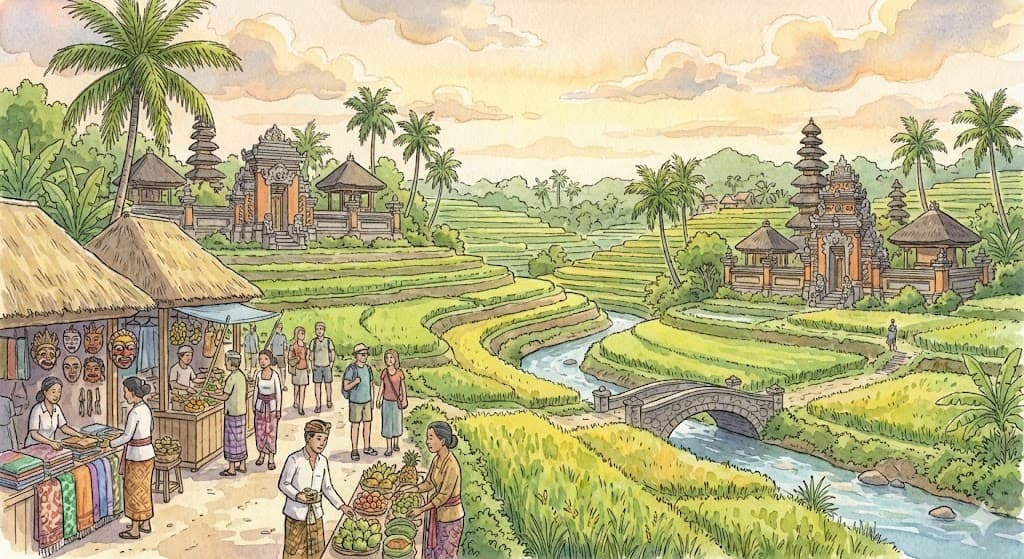
Bali is an island and province of Indonesia located in Southeast Asia, forming part of the Lesser Sunda Islands. Located between the islands of Java to the west and Lombok to the east, Bali extends approximately 140 km from east to west and 90 km from north to south, with an area of nearly 5,000 km². Its geographical position places it about eight degrees south of the equator, which gives it a warm and humid tropical climate all year round. The island is famous for its rich Balinese Hindu culture, ancient temples, volcanic landscapes dominated by Mount Agung, and lush nature that includes beaches, jungles, and terraced rice paddies. Bali is a world-renowned tourist destination for its unique combination of spirituality, nature and recreational activities such as surfing, yoga and diving. Bali's population is around 4.3 million, concentrated mainly in urban areas such as Denpasar, the capital. The island also includes several nearby smaller islands such as Nusa Penida, Nusa Lembongan and Nusa Ceningan, which complement its tourist attraction. Its importance lies in being a cultural and spiritual center of Indonesia, as well as an economic engine based on tourism, agriculture and local crafts.
Bali has approximately 4.3 million inhabitants, concentrated mainly in the capital Denpasar and its surroundings, as well as in other cities and tourist towns. The population includes a mix of indigenous Balinese communities and residents from other parts of Indonesia.
Languages
balinésindonesio
El idioma principal es el balinés, usado en la vida cotidiana y rituales, mientras que el indonesio es el idioma oficial y común para la educación y administración. El inglés es ampliamente hablado en zonas turísticas, facilitando la comunicación con visitantes internacionales. También existen dialectos locales y minoritarios.
History of bali
Explore the fascinating past of bali and discover how it has developed over the centuries.
Historical Journey
Ancient Period
The first inhabitants of Bali arrived thousands of years ago, with archaeological evidence showing human settlements since the Neolithic. The island was influenced by Hindu and Buddhist civilizations from India and Java, establishing Balinese kingdoms that developed a unique culture based on Balinese Hinduism. Bali was an important religious and cultural center in the region, with temples and traditions that still exist.
Development Period
During the Middle Ages, Bali maintained its independence from Islamic expansion in Indonesia, preserving its Hindu religion and traditions. In the 16th and 17th centuries, the island experienced conflicts internally and with European colonial powers, especially with the Dutch who eventually incorporated it into the Dutch colonial Empire in the 19th century. During this period, Bali maintained its traditional social and cultural structure, although with external influences.
Modern Period
In the 20th century, Bali was fully integrated into the Republic of Indonesia following its independence in 1945. Since then, it has experienced accelerated tourism growth, becoming one of the most important destinations in the world. In recent decades, Bali has developed modern infrastructure, although it retains its cultural and spiritual essence. Recent events include the promotion of sustainable tourism and the protection of its natural and cultural heritage against tourist overcrowding.
Historical Timeline
The historical timeline shows the key moments that have defined the development of bali through the centuries.
City Scores
City Scores
Discover what makes this city special with our comprehensive scoring system
Safety
Excellent
80100
Bali is generally safe, although precautions should be taken in crowded areas.
Click to view analysis
About:
Bali is generally safe, although precautions should be taken in crowded areas.
Advantages:
Low crime rate
Safe beaches
Challenges:
Minor thefts in tourist areas
Walkability
Good
70100
Some areas of Bali are easy to navigate on foot, but traffic can be a problem.
Click to view analysis
About:
Some areas of Bali are easy to navigate on foot, but traffic can be a problem.
Advantages:
Pedestrian areas in Ubud
Nature walks
Challenges:
Congested traffic in urban areas
Public Transport
Good
60100
Public transportation in Bali is limited, but taxis and private transportation services are accessible.
Click to view analysis
About:
Public transportation in Bali is limited, but taxis and private transportation services are accessible.
Advantages:
Taxis and private transportation services available
scooter rental
Challenges:
Poor public transport coverage
Congested traffic
Affordability
Excellent
82100
Strong value for money. You can travel comfortably without a high budget.
Click to view analysis
About:
Strong value for money. You can travel comfortably without a high budget.
Advantages:
Affordable Accommodation Accessibility
Affordable local food
Challenges:
High prices in tourist areas
Transportation costs
Nightlife
Excellent
80100
Bali offers a lively nightlife, especially in Kuta and Seminyak.
Click to view analysis
About:
Bali offers a lively nightlife, especially in Kuta and Seminyak.
Advantages:
Bars and clubs in Kuta
Relaxed atmosphere in Seminyak
Challenges:
Can be noisy in tourist areas
Art & Culture
Excellent
95100
Bali is a vibrant cultural center with traditional dance, music and art.
Click to view analysis
About:
Bali is a vibrant cultural center with traditional dance, music and art.
Advantages:
Traditional dances such as Legong
Local crafts
Challenges:
Little exposure to modern culture
Food Scene
Excellent
95100
Balinese cuisine is famous for its unique flavors and vegetarian options.
Click to view analysis
About:
Balinese cuisine is famous for its unique flavors and vegetarian options.
Advantages:
Traditional dishes such as Nasi Goreng
Vegetarian options
Challenges:
Little variety of international food
Shopping
Excellent
85100
Bali offers a variety of shopping options, from local markets to shopping malls.
Click to view analysis
About:
Bali offers a variety of shopping options, from local markets to shopping malls.
Advantages:
Traditional markets like Ubud
Modern shopping centers
Challenges:
High prices in some shopping centers
Weather
Excellent
90100
Bali has a tropical climate with two main seasons: dry and rainy.
Click to view analysis
About:
Bali has a tropical climate with two main seasons: dry and rainy.
Advantages:
Warm climate all year round
Dry season ideal for tourism
Challenges:
Rainy season can be uncomfortable
Tourist Friendly
Excellent
95100
Bali is very accessible for tourists, with well-developed infrastructure.
Click to view analysis
About:
Bali is very accessible for tourists, with well-developed infrastructure.
Advantages:
Well-developed tourist infrastructure
Guides and tours available
Challenges:
Crowds in popular areas
Family Friendly
Excellent
90100
Bali is ideal for families with outdoor activities and safe beaches.
Click to view analysis
About:
Bali is ideal for families with outdoor activities and safe beaches.
Advantages:
Family beaches like Kuta and Seminyak
Outdoor activities
Challenges:
Some areas can be busy
LGBTQ+ Friendly
Good
60100
Although Bali is more open than other parts of Indonesia, it still faces challenges for the LGBTQ+ community.
Click to view analysis
About:
Although Bali is more open than other parts of Indonesia, it still faces challenges for the LGBTQ+ community.
Advantages:
More open community than other areas of Indonesia
Challenges:
Legal and social limitations
Local Friendly
Excellent
90100
The Balinese are known for their hospitality and kindness towards visitors.
Click to view analysis
About:
The Balinese are known for their hospitality and kindness towards visitors.
Advantages:
Friendly and welcoming people
Inclusive cultural festivals
Challenges:
Little interaction in very touristy areas
Natural Beauty
Excellent
98100
Bali is famous for its beaches, volcanoes and stunning natural landscapes.
Click to view analysis
About:
Bali is famous for its beaches, volcanoes and stunning natural landscapes.
Advantages:
Dream beaches like Nusa Dua
active volcanoes
Challenges:
Coastal erosion in some areas
Architecture
Excellent
90100
Bali is known for its traditional Balinese architecture, with temples and historical monuments.
Click to view analysis
About:
Bali is known for its traditional Balinese architecture, with temples and historical monuments.
Advantages:
Impressive temples like Tanah Lot
Traditional Balinese architecture
Challenges:
Little modern influence on local architecture
Historical Significance
Excellent
95100
Bali has a rich cultural and religious history, with numerous temples and historical sites.
Click to view analysis
About:
Bali has a rich cultural and religious history, with numerous temples and historical sites.
Advantages:
Ancient temples like Uluwatu
Cultural festivals
Challenges:
Little documentation in some places
Green Spaces
Excellent
85100
Bali has beautiful natural landscapes, although urbanization affects some green spaces.
Click to view analysis
About:
Bali has beautiful natural landscapes, although urbanization affects some green spaces.
Advantages:
Impressive natural landscapes
botanical gardens
Challenges:
Urbanization in natural areas
Cleanliness
Good
70100
Bali faces cleanup challenges in tourist areas, but local efforts improve the situation.
Click to view analysis
About:
Bali faces cleanup challenges in tourist areas, but local efforts improve the situation.
Advantages:
Local initiatives to improve cleanliness
Well maintained beaches
Challenges:
Garbage in non-touristy areas
Pollution problems
Startup Scene
Good
70100
Although Bali attracts entrepreneurs, the startup ecosystem is still in its infancy.
Click to view analysis
About:
Although Bali attracts entrepreneurs, the startup ecosystem is still in its infancy.
Advantages:
Active community of entrepreneurs
Coworking spaces
Challenges:
Limitations in infrastructure and financing
Digital Nomad Friendly
Excellent
85100
Bali is a popular destination for digital nomads thanks to its infrastructure and relaxed lifestyle.
Click to view analysis
About:
Bali is a popular destination for digital nomads thanks to its infrastructure and relaxed lifestyle.
Advantages:
Active community of digital nomads
Cafes with good Wi-Fi
Challenges:
Congestion in popular areas
Rising costs
Overall City Score
Comprehensive assessment of this destination
89/ 100
Weather & Climate
Descubre las mejores épocas para visitar bali y qué esperar durante todo el año.
Monthly Temperatures
January
Max31°
Min24°
February
Max31°
Min24°
March
Max31°
Min24°
April
Max32°
Min24°
May
Max32°
Min24°
June
Max31°
Min23°
July
Max30°
Min22°
August
Max30°
Min22°
September
Max31°
Min23°
October
Max31°
Min23°
November
Max31°
Min24°
December
Max31°
Min24°
Legend
Best Months
Hot Months
Cold Months
Rainy Periods
Weather Summary
Bali has a tropical climate with two main seasons: dry and rainy.
Weather Tips
Warm climate all year round
Dry season ideal for tourism
Rainy season can be uncomfortable
Bali has two main seasons: dry and rainy, influenced by the monsoons.
The temperature remains stable throughout the year, with minimal variations between months.
Overview
Spring
Spring in Bali (March to May) is a transitional season with warm temperatures and a gradual decrease in rainfall, ideal for outdoor activities and tourism.
More Information
Summer
Summer (June to August) is the dry and cooler season, with sunny days and pleasant temperatures, considered the best time to visit the island.
More Information
Autumn
Autumn (September to November) presents a warm climate with a gradual increase in rain towards November, maintaining good conditions for tourism until the end of October.
More Information
Winter
Winter (December to February) is the season of heavy rain and high humidity, with the risk of tropical storms, which can affect outdoor activities.
More Information
Presupuesto y Compras
Plan your expenses and discover the best shopping areas
Budget Planning
Daily spending per person
The budget for visiting Bali is generally affordable compared to Western tourist destinations, although it may vary depending on the type of accommodation and activities. Bali offers options for backpackers, middle class travelers and luxury tourism, being an accessible destination for most budgets.
Budget Travel
15-30€
per day
Mid-Range Travel
40-80€
per day
Luxury Travel
100€+
per day
Guía de Compras
Best Areas
Traditional fashion and clothing
2 areas
Bali Center
Clic para ver detalles
San Juan Market
Clic para ver detalles
Local gastronomic products
2 areas
Bali Central Market
Clic para ver detalles
Gourmet shops in the old town
Clic para ver detalles
Crafts and souvenirs
2 areas
Plaza Mayor
Clic para ver detalles
Artisanal shops in pedestrian streets
Clic para ver detalles
Electronics and technology
2 areas
Main shopping area
Clic para ver detalles
Shopping centers
Clic para ver detalles
Points of Interest
Explore the most fascinating places this city has to offer
Mount Batur
An active volcano 1717 meters high, famous for its impressive sunrises and trekking trails.
Nature
Besakih Temple
The mother temple of Bali, considered the most sacred on the island and known for its Hindu architecture.
Religious
Bali rice fields
Rice terraces that offer picturesque landscapes and are a sample of traditional Balinese agriculture.
Nature
Bali Beaches
Bali is famous for its paradise beaches such as Kuta, Seminyak and Nusa Dua.
Nature
Gili Islands
An archipelago of three islands near Bali, known for their diving and marine life.
Nature
Nusa Penida
An island near Bali, famous for its impressive cliffs and hidden beaches.
Nature
Nung Nung Waterfalls
One of the highest waterfalls in Bali, ideal for bathing and enjoying the natural environment.
Nature
Ubud
The cultural capital of Bali, known for its arts, traditional dances and rice fields.
Cultural
Luhur Uluwatu Temple
A Hindu temple situated on a cliff with stunning views of the Indian Ocean.
Religious
Pura Tanah Lot
A temple famous for being located on a rock in the sea, surrounded by crystal clear waters.
Religious
Sekumpul Waterfall
One of the most impressive waterfalls in Bali, located in the north of the island.
Nature
Ulun Danu Bratan Temple
A temple dedicated to the goddess of water, located on the shore of Lake Bratan.
Religious
Canggu
A popular area with digital nomads and surfers, known for its vibrant nightlife.
Cultural
Tirta Empul
A temple famous for its sacred fountains where visitors can bathe.
Religious
Goa Gajah
An ancient Buddhist and Hindu temple known for its caves and statues.
Historical
Discover every corner of bali!
Sponsored links by GetYourGuide for your convenience
Day Trips
Discover fascinating destinations near bali perfect for day getaways
1-2 hours by boat from Bali
Nusa Penida
Nature, Beach
Enjoy a full-day tour to Nusa Penida, exploring iconic locations such as Kelingking Beach, Broken Beach and Angel's Billabong. You can swim in Crystal Bay and relax on its stunning beaches.
Discover the cultural heart of Bali in Ubud, visiting the Royal Palace, the Art Museum and the surrounding rice fields. Enjoy traditional Balinese dance.
Discover the unique character and charm of each city district.
Seminyak
Residential area known for its beaches, nightlife and relaxed atmosphere. It offers Western shops and restaurants.
Highlights
Beaches
Nightlife
Western shops
Best For
Young peopleTouristsNightlifeShopping
Ubud
Cultural and artistic city with a mystical and relaxed atmosphere. Ideal for exploring nature and Balinese culture.
Highlights
Art
Culture
Nature
Best For
FamiliesTouristsHistory
Canggu
Coastal area popular with surfers and young people, known for its relaxed atmosphere and nightlife.
Highlights
Surfing
Nightlife
Cafes
Best For
Young peopleTouristsNightlife
Kuta
Very lively tourist area, known for its nightlife and beaches.
Highlights
Nightlife
Beaches
Shopping
Best For
Young peopleTouristsNightlifeShopping
Nusa Dua
Luxury tourist area, known for its dream beaches and high-end resorts.
Highlights
Dream beaches
luxury resorts
Best For
FamiliesTouristsLuxury
Uluwatu
Coastal area famous for its cliffs and surf beaches.
Highlights
Cliffs
Surfing
Uluwatu Temple
Best For
TouristsSurfersHistory
Jimbaran
Quiet coastal area, known for its beaches and seafood restaurants.
Highlights
Beaches
Seafood
sunsets
Best For
FamiliesTouristsFood
Lovina
Coastal area in the north of Bali, known for its dolphins and calm atmosphere.
Highlights
Dolphins
Quiet environment
Beaches
Best For
FamiliesTouristsNature
Seasonal Experiences
Discover the best experiences and activities for each time of year
spring experience
Spring
Spring Activities in Bali
Festivals & Local Celebrations
Experience the vibrant culture and traditions of this city through its unique festivals
March (according to the Balinese Saka calendar)
Nyepi (Day of Silence)
Hindu festival marking the Balinese New Year. The day before (Pengerupukan) there are parades of Ogoh-Ogoh (demon statues) through the streets, accompanied by music and fireworks. During Nyepi, the island remains completely silent: there is no traffic, no outdoor activities, and no use of lights. Even the airport closes. It is a day of reflection and spiritual purification.
April–May (variable dates according to the Balinese calendar)
Galungan and Kuningan
Galungan celebrates the victory of good over evil and the visit of the ancestors to the earth. The streets are decorated with penjor (bamboo decorated with offerings). Ten days later, Kuningan marks the end of the festival with ceremonies at temples such as Sakenan. Families gather, make offerings and participate in rituals.
June–July
Pesta Kesenian Bali (Bali Arts Festival)
Month-long cultural festival showcasing traditional Balinese dance, music, theater and visual arts. It includes parades, village competitions and a variety of performances in Denpasar. There is also a food fair with regional specialties such as sate lilit, lawar and babi guling.
July–August
Bali Kite Festival
Traditional celebration where village teams compete with giant, colorful kites on the beaches of Sanur. The kites, some several meters long, represent mythical animals and cultural symbols. It attracts participants and spectators from all over the island.
October
Lovina Beach Festival
Festival in northern Bali near Kalibukbuk, including craft exhibitions, opening ceremonies, traditional band performances, fruit and flower offerings, and classical dances such as Gong Kebyar and Ki Barak Panji Sakti. It is an opportunity to experience local culture in a relaxed environment.
All year round (variable dates depending on each temple)
Odalan (Anniversary of the Temples)
Each Balinese temple celebrates its anniversary (odalan) every 210 days according to the Balinese Pawukon calendar. Celebrations include processions, offerings, dances and traditional music. It is an authentic experience of Balinese spirituality and community life.
October
Ubud Writers & Readers Festival
International event that brings together writers, thinkers and artists from all over the world in Ubud. Includes talks, workshops, book presentations and cultural activities. It is the most important literary festival in Southeast Asia.
August
Sanur Village Festival
Community festival in Sanur that promotes local culture, art, gastronomy and sports. It includes markets, art exhibitions, sports competitions, concerts and tastings of traditional and international food.
Traveler Tips
Essential advice and local insights to make your trip memorable and safe
Safety Tips
1
General Security
Bali is generally safe for walking and exploring, but petty theft and scams are common in tourist areas like Kuta. Always keep your valuables in the hotel room and avoid carrying a lot of cash with you.
2
Areas to avoid
Avoid dimly lit and lonely areas at night, especially in rural areas where security may be less and access to services limited.
3
Emergencies
General emergency number in Bali: 112. It is also advisable to have the contact of your embassy and private hospitals in tourist areas on hand.
Food & Dining Tips
1
Local dishes
Try the 'Nasi Goreng' (fried rice), 'Babi Guling' (Balinese roast pork) and 'Sate Lilit' (spiced fish skewers).
2
Local drinks
Enjoy 'Arak', a traditional Balinese liquor, and 'Jamu', a natural herbal drink with medicinal properties.
3
Local desserts
Don't miss the 'Dadar Gulung' (crepe filled with coconut and palm sugar) and the 'Klepon' (rice balls with palm sugar).
4
Where to eat
Visit local warungs for authentic food and markets like Pasar Badung in Denpasar for variety and affordable prices.
5
Meal times
Breakfast is usually between 7-9am, lunch from 12-2pm and dinner from 6-9pm, although warungs can have flexible hours.
Transportation Tips
1
Public transport
Public transportation is limited; The majority use bemos (minibuses) or private shuttles, but they are not very frequent or punctual.
2
Taxis and apps
Use apps like Gojek or Grab for motorcycles and cars, which are safe and economical to get around Bali.
3
Vehicle rental
Renting a motorcycle is the most common and practical way to explore the island, but drive with caution and always wear a helmet.
Culture & Etiquette
1
Local language
The official language is Indonesian, but Balinese is spoken in Bali. English is common in tourist areas. Learn basic phrases like 'Terima kasih' (thank you).
2
Local customs
Respect the temples by wearing appropriate clothing (covering shoulders and knees) and follow local guidelines for ceremonies and rituals.
3
Tips and payments
Tipping is not mandatory, but is welcome (5-10%). Cards are accepted in tourist areas, but in rural areas it is better to carry cash.
Local Laws & Regulations
1
Basic laws
Drug consumption and trafficking is prohibited, with very severe penalties. Alcohol is allowed but not sold everywhere.
2
Rules of behavior
Do not touch people's heads or point with your foot, as these are considered offensive gestures in Balinese culture.
3
Documentation
You need a passport with at least 6 months validity and a visa on arrival for Spaniards. Always carry a copy of your passport with you.
Health & Hygiene
1
Healthcare system
Bali has private hospitals in tourist areas with adequate care, but quality can vary outside of these areas.
2
Pharmacies
24-hour pharmacies are available in Denpasar and tourist areas; In rural areas the hours are more limited.
3
Vaccines and precautions
Vaccinations against hepatitis A and B, tetanus and typhoid fever are recommended. Avoid drinking tap water and only consume bottled water.
Insider Tips
1
Local secrets
Visit lesser-known beaches like Amed or Sidemen for an authentic, less touristy experience.
2
best moments
Avoid peak season (July-August and December) for fewer crowds and better prices.
3
Free activities
Explore the rice fields of Tegallalang, walk through the monkey forest in Ubud (cheap entry), and enjoy the public temples at sunrise.
Before you go
Quick answers to plan your trip with confidence
About 3 days covers the essentials. Add 1–2 days for neighborhoods or day trips.
Mid-range is around 40-80€ per person per day (stay, food, local transport). See the budget section for ranges.
A solid starting area is Seminyak. Compare neighborhoods and hotels on this page.
Public transportation is limited; The majority use bemos (minibuses) or private shuttles, but they are not very frequent or punctual.
Family-friendliness rated 90/100. It usually works well for family trips.
Safety rated 80/100. Bali is generally safe for walking and exploring, but petty theft and scams are common in tourist areas like Kuta. Always keep your valuables in the hotel room and avoid carrying a lot of cash with you.
Ready to visit bali?
Plan your perfect trip with our personalized recommendations and local insights.