TripMatches
Find companions with the same dates and interests. Free.
About Pisa - Culture, History & Character
Quick answers to plan your trip with confidence


The perfect combination with Pisa. A charming city famous for its intact Renaissance walls on which you can walk or cycl

A short train ride takes you to the capital of the Renaissance for a day of immersion in incomparable art and architectu

Pisa is one of the best bases for a day trip to the five famous colorful villages clinging to the cliffs of the Ligurian

A trip to the heart of Tuscany to visit the 'Manhattan of the Middle Ages', famous for its impressive medieval towers.
100
95
95
85
85Easy day trips and short hops to stretch your itinerary
Places that share a similar travel vibe
More ideas travelers often discover next
RankingRanked by walkability: pedestrian centers and easy urban exploration.
RankingDestinations with the highest TripMatches safety scores.
RankingDestinations with the strongest romantic vibe by TripMatches signals.
RankingRanked by TripMatches family-friendly score: safety, pace, and kid-friendly activities.
RankingCities with the strongest food scenes by TripMatches scores.
Register to unlock Match Finder, saved destinations, and trip plans for Pisa.
Plan your perfect trip with our personalized recommendations and local insights.
Plan my tripWe refresh this guide with geographic and community data so you can discover with confidence.
Your experience
Tell us if you want to go — or if you have already been.
Adds you to the Match Finder map and opens the planner with this destination.
I've been there!Explora el fascinante pasado de Pisa y descubre cómo se ha desarrollado a lo largo de los siglos.
The origins of Pisa are uncertain, possibly Etruscan or Ligurian. During the Roman era, it became an important port and naval base, key in the expeditions against Carthage and in the campaigns in Gaul.
Pisa's golden age spanned from the 11th to the 13th century, when it became one of the four great Maritime Republics of Italy. Its commercial and military power extended throughout the Mediterranean. The wealth obtained financed the construction of the magnificent Piazza dei Miracoli complex. The decline of its power began with the catastrophic naval defeat against its rival Genoa at the Battle of Meloria in 1284, being finally conquered by Florence in 1406.
Under the rule of the Medici, the University of Pisa, where Galileo Galilei studied and taught, regained its prestige. After forming part of the Grand Duchy of Tuscany, he joined the Kingdom of Italy. The city suffered serious damage during World War II, but its main monuments were saved. Today, its economy revolves around tourism generated by its iconic square and its prestigious university, which gives it a young and dynamic atmosphere.
La cronología histórica muestra los momentos clave que han definido el desarrollo de Pisa a lo largo de los siglos.
Discover what makes this city special with our comprehensive scoring system
A very safe city.
Perfect for walking. You can cross the historic center from one end to the other in less than 30 minutes.
There's no need. The center is so small that you can walk everywhere easily.
A Tuscan city with good value for money, as long as you avoid restaurants with tower views.
Lively thanks to its large student population, but relaxed. It focuses on bars and squares.
A city with a rich medieval past and a scientific legacy, although it cannot compete with the artistic wealth of Florence.
Good Tuscan cuisine with local specialties and a lively student atmosphere.
Good for everyday shopping, with the main Italian shopping streets.
Pleasant Tuscan climate, with hot summers and ideal springs/autumns.
Completely adapted for the crowds of tourists who visit it every day.
Excellent for a short visit. The Leaning Tower is a great attraction for children.
As a university and tourist city, it is a safe and open place.
Beyond the crowds of Piazza dei Miracoli, it is a university town with a genuine and friendly local atmosphere.
The beauty of Pisa is predominantly architectural. It is located on a plain, but close to the coast and the Tuscan countryside.
It houses one of the most perfect and amazing architectural complexes in the world, a masterpiece of the Pisan Romanesque style.
Of global importance as one of the four great Maritime Republics and as the birthplace of Galileo Galilei, father of modern science.
Piazza dei Miracoli is in itself a large green space. The city also has the oldest botanical garden in Europe.
The Piazza dei Miracoli remains immaculate. The rest of the city is functional.
Little developed, although it has one of the most prestigious technical universities in Italy.
Nice for a short stay, but not a hub for digital nomads.
Comprehensive assessment of this destination
A global icon that deserves much more than an hour's visit. Its 'Field of Miracles' is truly one of the wonders of the world, and the surrounding university town is a lovely place to explore, especially when the crowds of day-trippers have left.
Discover the best times to visit this city and what to expect throughout the year.
Pleasant Tuscan climate, with hot summers and ideal springs/autumns.
Perfect weather, ideal for exploring the city and Tuscany.
Hot and very busy, especially with day trippers.
Pleasant temperatures and beautiful light. Fewer crowds.
Cold and wet, but a chance to see the famous square with very few people.
Very long and pleasant visiting season.
The summer heat can be intense.
Summers can be hot and humid.
Spring and fall are the best times to visit, with ideal weather and fewer crowds.
Plan your expenses and discover the best shopping areas
Daily spending per person
Generally more affordable than Florence or Rome. You can eat and drink at reasonable prices outside Piazza dei Miracoli. The main attraction is expensive.
per day
per day
per day
Best areas for shopping
1 area • Recommended Areas
Click for details
1 area • Recommended Areas
Click for details
1 area • Recommended Areas
Click for details
Explore the most fascinating places this city has to offer
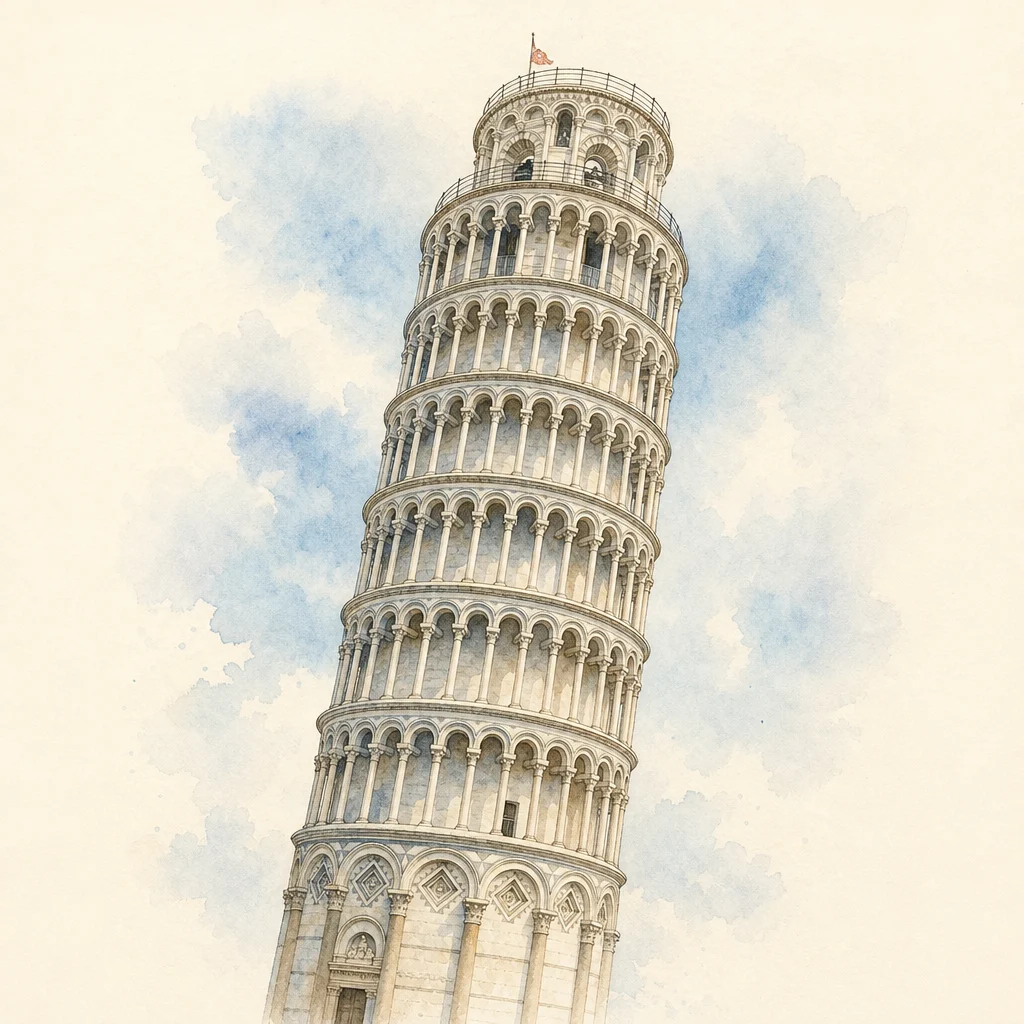
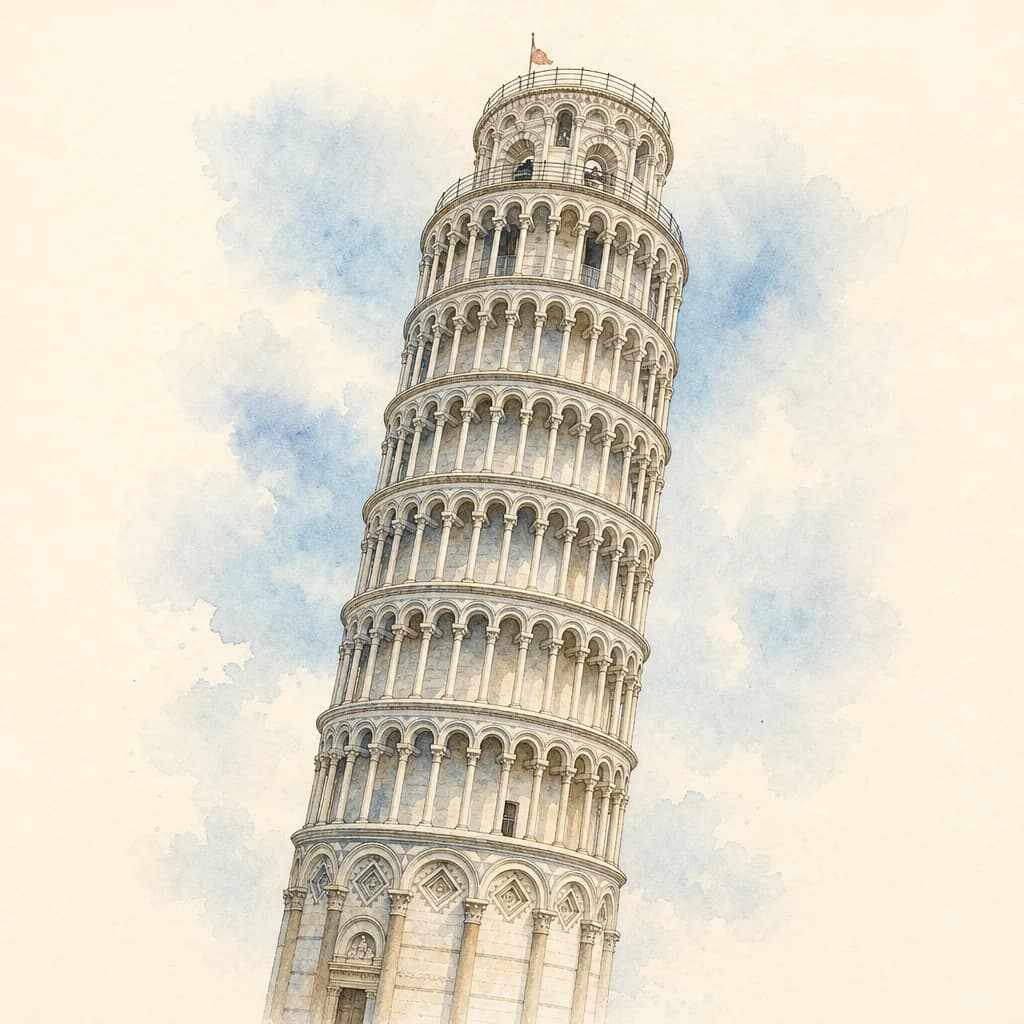
The cathedral's bell tower, world famous for its unintentional tilt. Climbing its 294 steps is a unique experience.
An absolute masterpiece of the Pisan Romanesque style, with a stunning marble façade and an interior with a pulpit by Giovanni Pisano.
The largest baptistery in Italy, an architectural marvel that mixes Romanesque and Gothic styles, famous for its incredible acoustics.
A monumental cemetery with Gothic cloisters, which houses a collection of Roman sarcophagi and medieval frescoes (seriously damaged in the Second World War but partially restored).
The name given to the vast grassy esplanade that houses the Tower, the Cathedral, the Baptistery and the Cemetery. A unique monumental complex in the world.
The second most important square in Pisa, it was the political center of the medieval city and was redesigned in Renaissance style by Giorgio Vasari.
American artist Keith Haring's latest public work, a huge, vibrant mural painted on a convent wall celebrating peace and harmony in the world.
One of the most elegant and characteristic streets in the city, with medieval arcades, shops and cafes. Galileo Galilei's birthplace is nearby.
Pisa Botanical Garden is one of the most emblematic places in Pisa, known for its rich history and architecture.
Borgo Stretto is one of the most emblematic places in Pisa, known for its rich history and architecture.
Sinopie Museum is one of the most emblematic places in Pisa, known for its rich history and architecture.
Palazzo Blu is one of the most iconic places in Pisa, known for its rich history and architecture.
Cittadella Nuova is one of the most emblematic places in Pisa, known for its rich history and architecture.
Church of San Paolo a Ripa d'Arno is one of the most emblematic places in Pisa, known for its rich history and architecture.
Medieval Walls is one of the most emblematic places in Pisa, known for its rich history and architecture.
Haz clic en "Tours" para encontrar las mejores actividades y entradas, o usa "Planificar" para crear tu itinerario personalizado.
dayTrips.dayTripsDescription
The perfect combination with Pisa. A charming city famous for its intact Renaissance walls on which you can walk or cycle, and its 'Piazza dell'Anfiteatro'.
Charming towns, relaxation, architecture, cycling
A short train ride takes you to the capital of the Renaissance for a day of immersion in incomparable art and architecture.
Art, Renaissance, museums, History
Pisa is one of the best bases for a day trip to the five famous colorful villages clinging to the cliffs of the Ligurian coast.
Landscapes, sea, Hiking, Photography
A trip to the heart of Tuscany to visit the 'Manhattan of the Middle Ages', famous for its impressive medieval towers.
Medieval history, Tuscan landscapes, charming towns
Haz clic en "Tours" para encontrar excursiones organizadas, o usa "Plan" para crear tu itinerario personalizado.
Discover the unique character and charm of each city district.
The Piazza dei Miracoli district, dominated by tourism.
The university heart, with lively squares and a young atmosphere.
South of the Arno, near the train station and with the Keith Haring mural.
A quieter, residential area south of the Arno, ideal for finding authentic trattorias.
Discover the best experiences and activities for each time of year
The eve of the patron saint's day of Pisa. A magical night in which all the buildings along the Arno River are illuminated with thousands of small candles ('lampanini'), creating an unforgettable light show that culminates with fireworks.
The 'Bridge Game'. A spectacular historical event in which teams from the north and south neighborhoods of the city, dressed in period costumes, compete to push a giant cart over the main bridge.
Discover the most important events and festivals celebrated throughout the year
The entire month is filled with historical and cultural events, including the Luminara, the Gioco del Ponte and a historical regatta.
Essential advice and local insights to make your trip memorable and safe
Choose a category above to see relevant tips and advice