Preparing the experience...
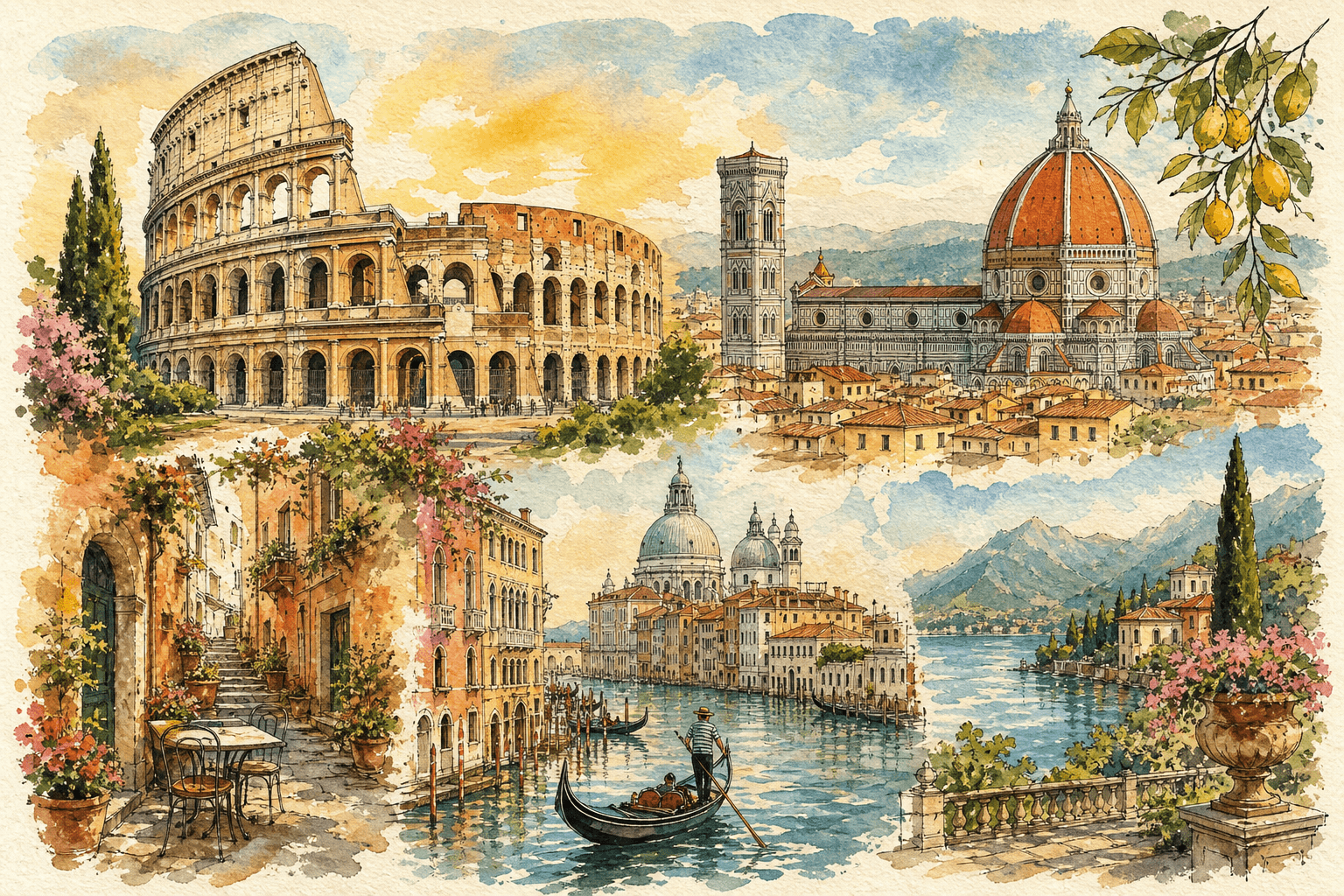
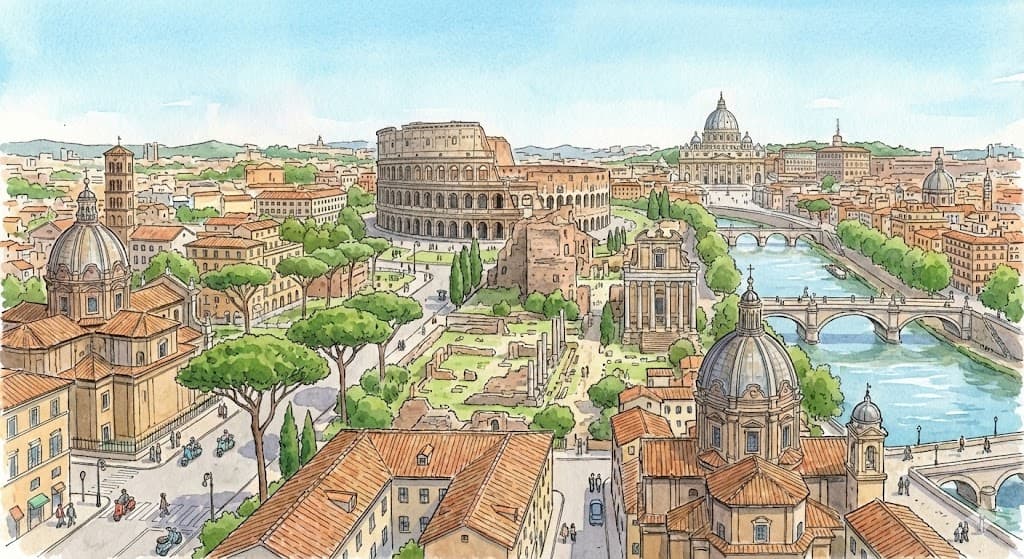
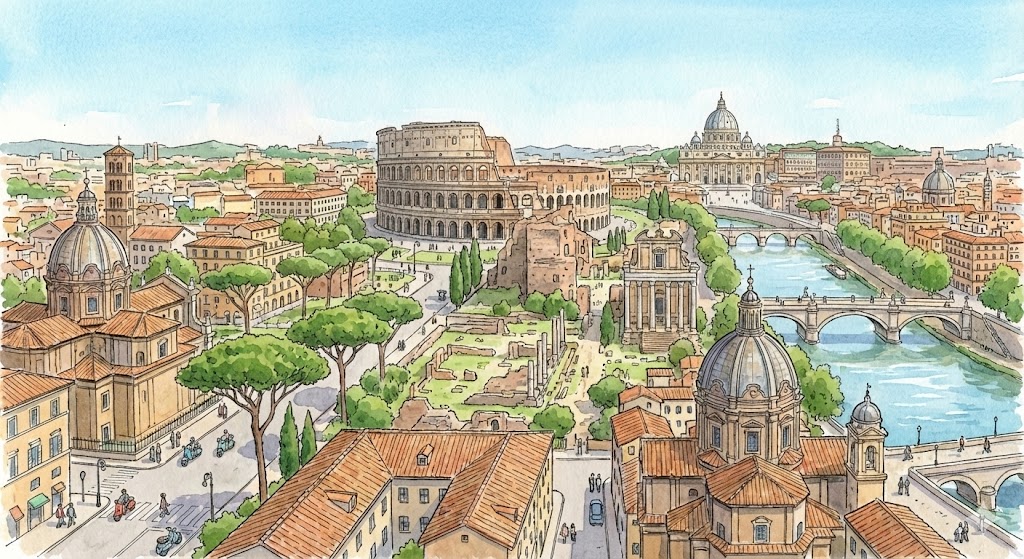
Lazio is the cradle of Western civilization, a region dominated by the monumental presence of Rome, its capital and an inexhaustible treasure of art, history and spirituality. Here, more than two millennia of history overlap into a unique urban landscape, from the majestic ruins of the Roman Empire to the baroque opulence of its squares and the dome of St. Peter's that dominates the skyline. But Latium is much more than Rome. It is a land of diverse landscapes: from the volcanic lakes of Castelli Romani and Bolsena, to the Etruscan necropolises of Cerveteri and Tarquinia that whisper stories of a mysterious civilization. It includes medieval villages perched on hills, the Renaissance villas of Tivoli, and a coast with beaches such as those of Sperlonga. Traveling through Lazio is walking through history, feeling the power of an empire, marveling at artistic genius and savoring cuisine with direct and memorable flavors.
Descubre las ciudades más fascinantes de Lazio

Rome estará disponible próximamente con información completa y detallada.
Latina estará disponible próximamente con información completa y detallada.
Guidonia Montecelio estará disponible próximamente con información completa y detallada.
Fiumicino estará disponible próximamente con información completa y detallada.
The celebrations in Lazio are deeply marked by the Catholic religious calendar, with Rome as the global epicenter, but also by vibrant popular festivals that celebrate local gastronomy and traditions.
The week before Easter Sunday.
The most important religious event. The Pope celebrates the Palm Sunday mass in St. Peter's Square and presides over the breathtaking Good Friday Stations of the Cross next to the illuminated Colosseum.
April 21.
Rome's legendary birthday is celebrated. The main event is a grand historical parade with hundreds of participants dressed as legionnaires, senators and vestals marching through the city centre.
June 2.
Italian National Day. In Rome, a large military parade is held along the Via del Fori Imperiali, with a display by the Frecce Tricolori acrobatic patrol over the city sky.
Second half of July.
The most authentic festival in the Trastevere neighborhood, in honor of the Madonna del Carmine. For more than a week, the neighborhood is filled with food stalls, live music and religious processions.
Corpus Christi Sunday (June).
A spectacular tradition in which an entire street in Genzano di Roma, in the Castelli Romani, is covered with a carpet of more than 350,000 flowers that form intricate designs.
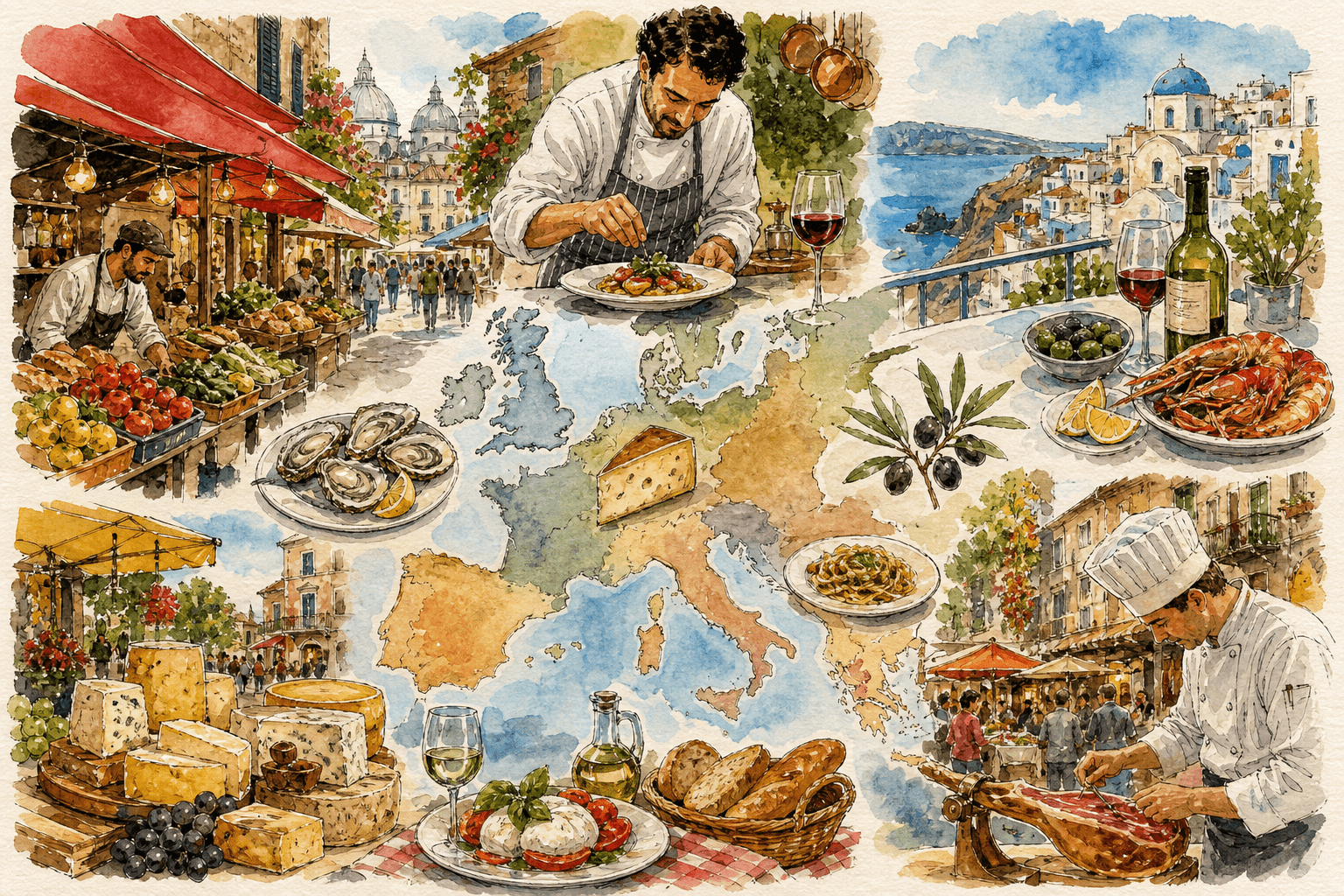
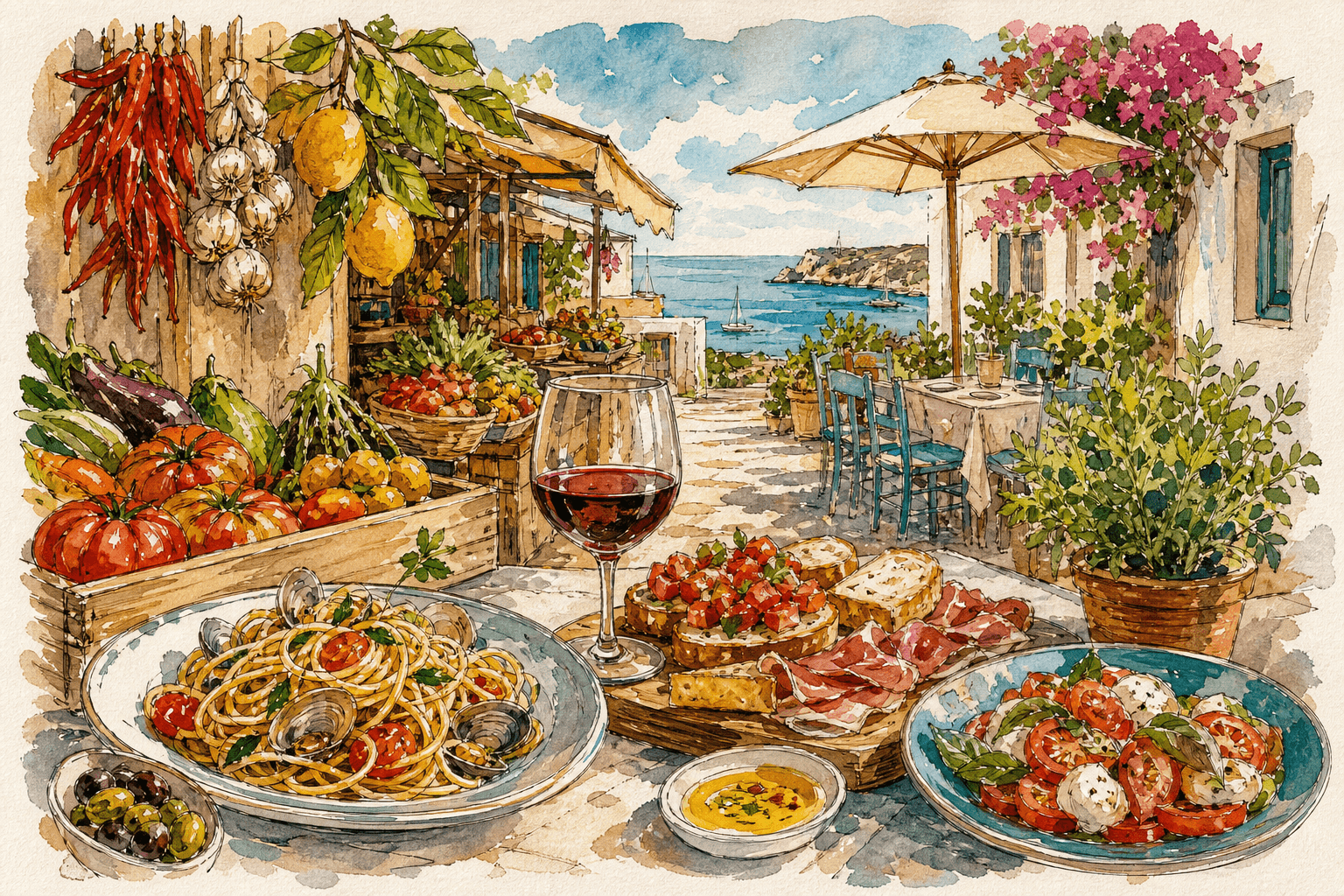
Roman and Lazio cuisine is direct, tasty and unpretentious. It is based on poor but flavorful ingredients ('cucina povera'), such as 'guanciale' (cured pork jowl), Pecorino Romano cheese and seasonal vegetables. It is famous for its iconic pasta dishes and the tradition of 'quinto quarto' (using the less noble parts of the animal).
The queen of Roman pastas. A creamy sauce made with egg yolks, Pecorino Romano cheese, crispy guanciale and freshly ground black pepper.
A robust sauce of guanciale, tomato and Pecorino cheese, originally from the town of Amatrice.
Deceptively simple, incredibly delicious. Pasta (often tonnarelli) mixed with Pecorino Romano cheese and plenty of black pepper, emulsified with the pasta cooking water.
A pillar of Roman cuisine. They are prepared 'alla Romana' (braised with garlic, parsley and mint) or 'alla Giudia' (flattened and fried until crispy), a specialty of the Jewish ghetto.
Thin beef fillets topped with a slice of prosciutto and a sage leaf, cooked quickly in butter and white wine. Its name means 'jumps in the mouth'.
Marinated and grilled suckling lamb ribs. They are called 'scottadito' (finger burner) because tradition dictates eating them hot with your hands.
The Roman croquette par excellence. A rice ball with meat sauce and a heart of melting mozzarella that, when broken, creates a 'telephone wire'.
The most famous white wine of the Castelli Romani, traditionally served in the 'fraschette' (local taverns). Light, dry and perfect to accompany Roman cuisine.
A white wine with a legendary history, from the Lake Bolsena area. Its name comes from a story about a bishop and his servant in search of the best wine.
Although it is a northern tradition, in Rome it has been adopted with enthusiasm. Enjoying a Spritz or a cocktail with an appetizer buffet at sunset is a deep-rooted social custom.
A sweet and tender bun, split in half and generously filled with whipped cream. It is the breakfast of Roman champions.
A shortcrust pie filled with ricotta cheese and cherry jam, a sweet and sour specialty typical of the Jewish ghetto of Rome.
The traditional Roman granita. Ice shaved by hand from a large block and seasoned with different syrups and pieces of fresh fruit. Ideal for summer.
Rome is full of exceptional artisanal ice cream parlors. Trying a pistachio or hazelnut ice cream while walking through the center is a must-do experience.
A vast site encompassing the monuments of antiquity (Colosseum, Forum), papal Rome and extraterritorial buildings of the Vatican.
An exceptional residential complex that innovatively recreates the architectural styles of different cultures of the Roman Empire.
One of the most notable and refined examples of Renaissance culture, with its gardens and impressive fountain system.
A unique and exceptional testimony of the ancient Etruscan civilization, with different types of tombs spanning several centuries.
Spring (April-June) and Fall (September-October) are by far the best times. The weather is warm and pleasant, perfect for walking, and the crowds, although present, are more manageable. Summer (July-August) is extremely hot and humid, and the city is packed with tourists. Winter is mild but can be rainy, although it is ideal for visiting museums and archaeological sites with much fewer people.
It is essential to book tickets well in advance for the Colosseum and the Vatican Museums to avoid queues lasting several hours. Be very careful with pickpockets on public transport and in the busiest tourist areas. Respectful attire (shoulders and knees covered) is required to enter churches, especially St. Peter's Basilica. Driving in Rome is chaotic and access to the center is restricted (ZTL); Public transport, although often crowded, is the best option.
TripMatches
Find companions with the same dates and interests. Free.
Cities, day trips, and practical tips for the area

The most important religious event. The Pope celebrates the Palm Sunday mass in St. Peter's Square and presides over the

Rome's legendary birthday is celebrated. The main event is a grand historical parade with hundreds of participants dress

Italian National Day. In Rome, a large military parade is held along the Via del Fori Imperiali, with a display by the F

The most authentic festival in the Trastevere neighborhood, in honor of the Madonna del Carmine. For more than a week, t

A spectacular tradition in which an entire street in Genzano di Roma, in the Castelli Romani, is covered with a carpet o

96
85
85
72Key stops for your route through the area
Sibling areas to compare or combine
Coasts, cities, and areas to extend the trip
RankingItalian cities ranked by overall TripMatches score.
RankingCities with the strongest food scenes by TripMatches scores.
RankingCities with the best affordability scores for budget-friendly trips.
RankingRanked by TripMatches family-friendly score: safety, pace, and kid-friendly activities.
RankingDestinations with the highest TripMatches safety scores.
Register to unlock Match Finder, saved destinations, and trip plans for Lazio.
We refresh this guide with geographic and community data so you can discover with confidence.
Start planning your perfect trip to this amazing region