Preparing the experience...
Castilla y León is the monumental heart and historical soul of Spain. It is a vast land, carved out of the plateau, where the horizon seems infinite and the sky has a special color. This is the land of the castles that give it its name, of the cathedrals that rise towards the sky like those of Burgos or León, and of the walls that still protect legendary cities like Ávila. It is the cradle of the Spanish language and home to Spain's first university in Salamanca. Its landscape is superb but powerful, from the cereal plains of Tierra de Campos to the summits of the Picos de Europa or the Sierra de Gredos. Visiting Castilla y León is taking a deep journey into the history, art and literature of Spain, while enjoying a strong and honest gastronomy, where Ribera del Duero wine and roast lamb are religion.
Descubre las ciudades más fascinantes de Castile And León

Valladolid estará disponible próximamente con información completa y detallada.

León estará disponible próximamente con información completa y detallada.

Burgos estará disponible próximamente con información completa y detallada.

Salamanca estará disponible próximamente con información completa y detallada.

Segovia estará disponible próximamente con información completa y detallada.

Ávila estará disponible próximamente con información completa y detallada.
The festivals in Castilla y León are marked by the solemnity of its Holy Week, historical reenactments and ancestral traditions linked to the land.
The week before Easter Sunday.
Declared of International Tourist Interest in many of its cities (Valladolid, Zamora, León, Salamanca...). It is a sober celebration with a deep artistic and religious feeling. The silent processions, the carvings of image makers such as Gregorio Fernández and the sound of bugles create an overwhelming atmosphere.
Traveling exhibition, every one or two years in a different location.
The most important exhibition of sacred art in Spain. A unique opportunity to see masterpieces of the heritage of the Church of Castilla y León gathered in spectacular venues such as cathedrals or monasteries.
May.
The streets and squares of Valladolid become a gigantic stage for theater, dance and circus companies from all over the world. One of the most important performing arts festivals in the country.
August festivities.
One of the most unique and refreshing festivals. Thousands of people dance through the streets to the sound of a pasodoble while neighbors throw water at them from their balconies. A tradition that is repeated for several days.
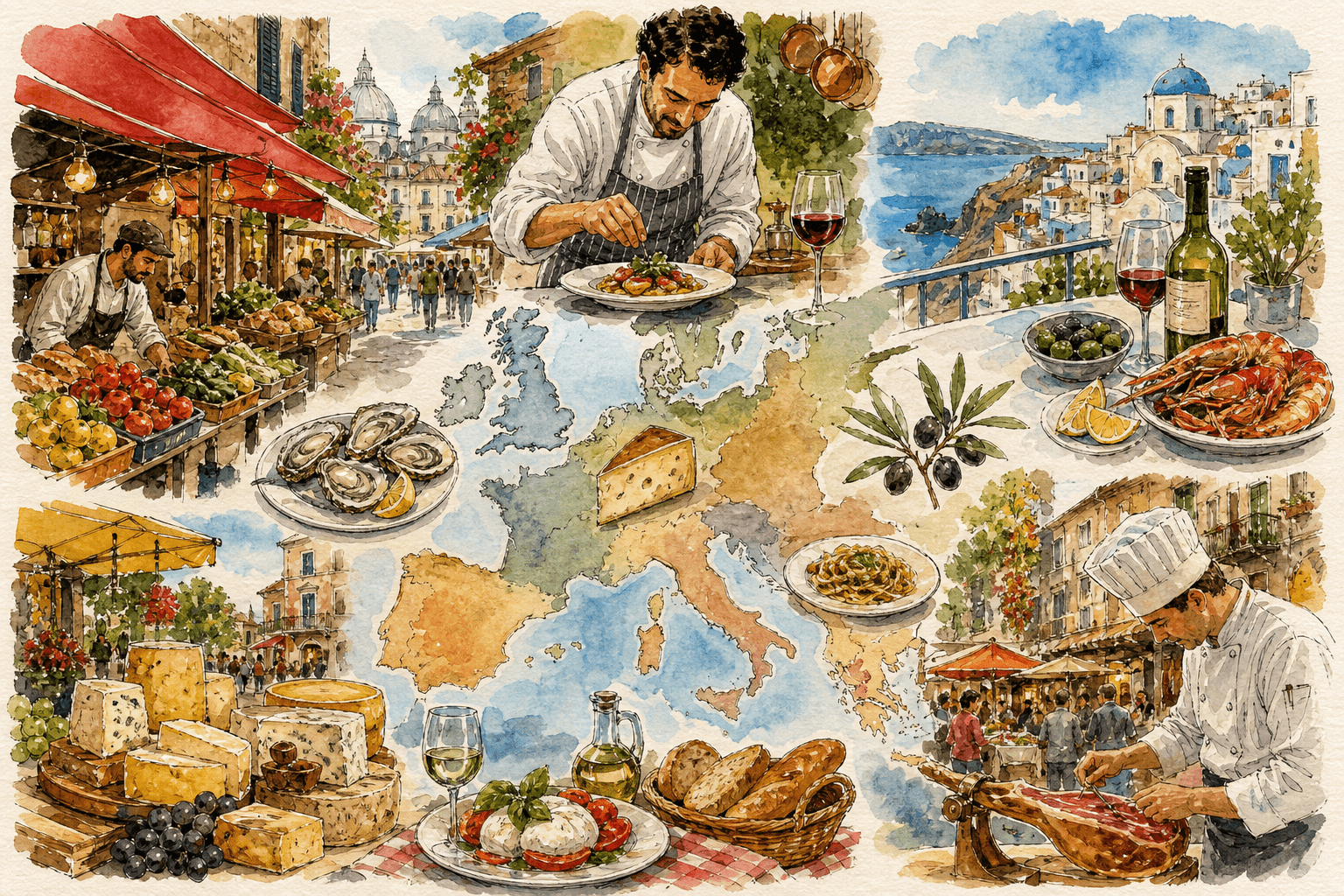
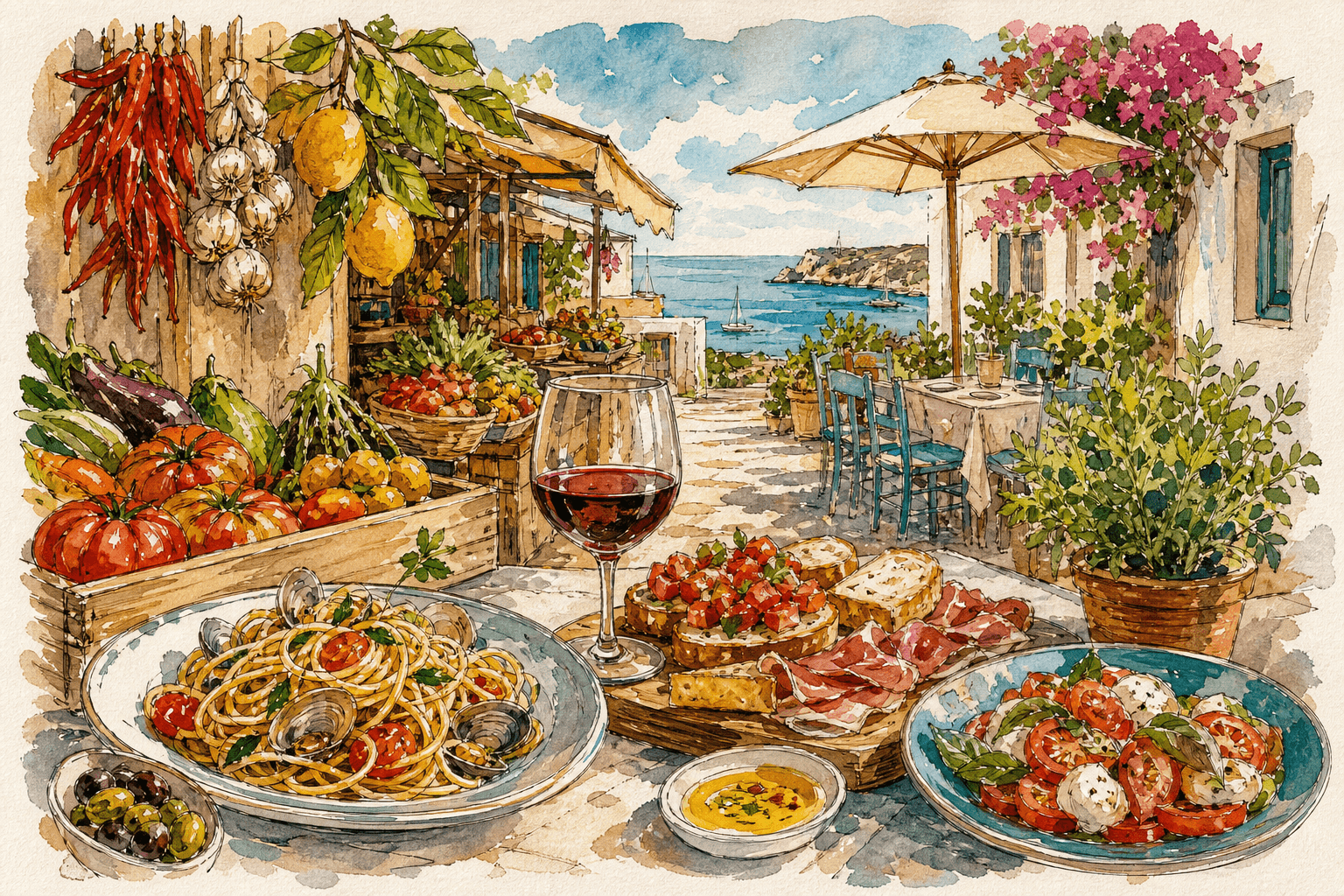
The gastronomy of Castilla y León is a cuisine of roasts, legumes and stews, robust and honest, based on the excellence of the raw materials. It is the kingdom of lamb and suckling pig roasted in a wood-fired oven and the birthplace of some of the best wines and sausages in Spain.
The star dish. Suckling lamb (that has only suckled) slowly roasted in a wood oven in a clay pot, with only water and salt. The skin is crispy and the meat incredibly tender. Famous in Aranda de Duero and Peñafiel.
The emblem of Segovia. A young suckling pig roasted until the skin is so crispy that it can be cut with the edge of a plate, as tradition dictates. The meat is white and juicy.
A blood sausage made of rice, onion, butter and spices, which is usually fried in slices or used in stews. It is one of the most famous in Spain.
One of the most prestigious Iberian hams with Designation of Origin. Produced in Guijuelo (Salamanca), it is famous for its sweet flavor and not very fibrous texture.
The basis of spoon dishes. Don't miss a good stew of Judiones de La Granja (huge and buttery beans) or Lentils de la Armuña (small and thin).
A humble and comforting soup, made with stale bread, garlic, paprika and ham. A poached egg is often added at the last minute.
A strong delicacy from the El Bierzo region (León). Different pieces of pig meat (rib, tail, backbone) stuffed into the pig's cecum and then smoked and semi-cured. It is cooked and served with potatoes and cabbage.
One of the most prestigious designations of origin for red wine in the world. Their wines, made mainly with Tempranillo grapes (Tinta del País), are powerful, structured and of high quality.
Side. of white wine par excellence from the region, famous for its fresh and aromatic wines made with the Verdejo grape. It is one of the most consumed white wines in all of Spain.
It is not a conventional lemonade. It is a traditional drink of Leonese Holy Week, which consists of red wine macerated with lemons, oranges, sugar and cinnamon. It is said that you have to 'kill Jews' by going from bar to bar trying it.
Typical rosé wine from the D.O. Cigales. Traditionally it was made by mixing red and white grapes during fermentation, resulting in a light wine that was very popular in the region.
The most famous sweet in Ávila. Small balls of egg yolk and sugar, with a soft texture and intense flavor.
A drunken sponge cake filled with pastry cream and covered by a layer of toasted marzipan with a diamond pattern.
Sheets of puff pastry dipped in a icing sugar syrup. A delicious and delicate sweet.
An individual cake, very spongy and buttery, presented in its traditional paper box.
The best example of a medieval fortified city, with a complete wall that can be explored.
A monumental complex with one of the most impressive works of Roman engineering in the world.
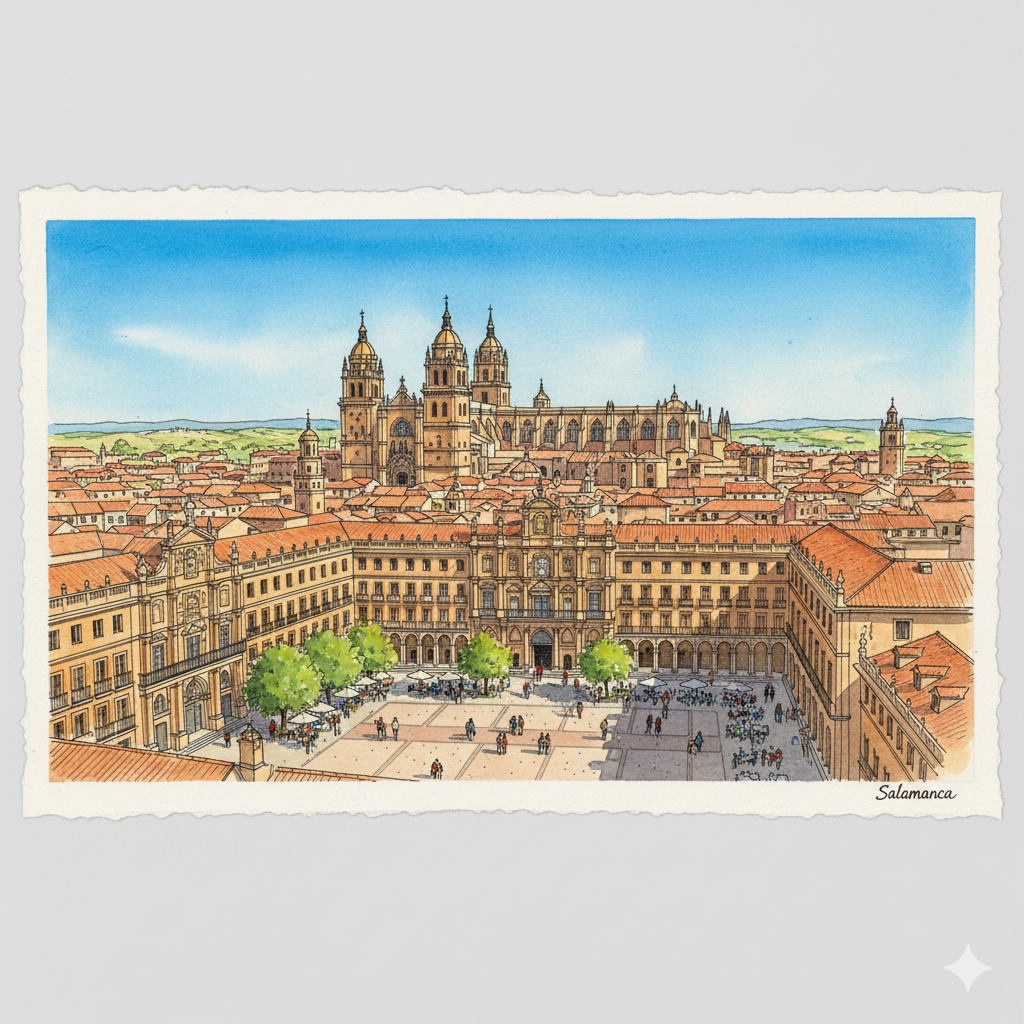
An exceptional example of a Renaissance university city, with its Plaza Mayor considered one of the most beautiful in the world.
A masterpiece of Spanish Gothic, the only cathedral in Spain independently declared a World Heritage Site.
A fundamental enclave for the study of human evolution.
A unique cultural landscape, the result of Roman mining engineering for gold extraction.
The Vía de la Plata and the Camino Frances cross the community, leaving an incalculable heritage legacy.
Spring (April-June) and Autumn (September-October) are the best times, with a very pleasant climate to visit the cities and enjoy nature. Winter is very cold and dry, with frequent frosts and snowfalls, but it offers a special atmosphere and the possibility of enjoying hearty spoon cuisine. Summer is hot and dry, although the nights are usually cool.
The climate of the plateau is extreme continental: very cold winters and very hot summers. It is important to wear appropriate clothing for each season. The distances between cities and points of interest can be great, so the car is the most recommended means of transport to explore the region in depth. The gastronomy is overwhelming; Get ready for heavy meals.
TripMatches
Find companions with the same dates and interests. Free.
Cities, day trips, and practical tips for the area

Declared of International Tourist Interest in many of its cities (Valladolid, Zamora, León, Salamanca...). It is a sober

The most important exhibition of sacred art in Spain. A unique opportunity to see masterpieces of the heritage of the Ch

The streets and squares of Valladolid become a gigantic stage for theater, dance and circus companies from all over the

One of the most unique and refreshing festivals. Thousands of people dance through the streets to the sound of a pasodob

94
86
78Key stops for your route through the area
Sibling areas to compare or combine
Coasts, cities, and areas to extend the trip
RankingTop Spanish cities by overall TripMatches score.
RankingDestinations with the highest TripMatches safety scores.
RankingCities with the strongest food scenes by TripMatches scores.
RankingRanked by TripMatches family-friendly score: safety, pace, and kid-friendly activities.
Travel type
Travel typeRegister to unlock Match Finder, saved destinations, and trip plans for Castile And León.
We refresh this guide with geographic and community data so you can discover with confidence.
Start planning your perfect trip to this amazing region